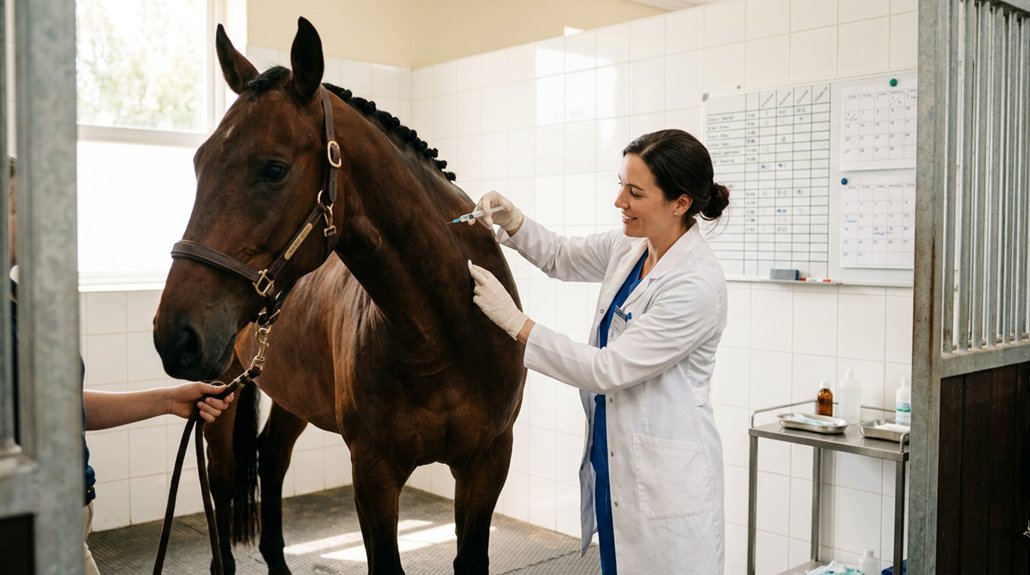
Your horse’s vaccination schedule is essential for protection against serious diseases like rabies and West Nile Virus. Core vaccines, including EEE/WEE, Tetanus, and Rabies, are administered annually, while some require biannual boosters. Foals begin vaccinations at 4-6 months. Seasonal timing is vital; spring for mosquito-borne illnesses and fall for flu boosters. Tailor this plan with your vet based on lifestyle and exposure risks. Discover how a custom strategy enhances your horse’s health and safety.
Key Takeaways
- Horses require annual vaccinations for diseases like EEE/WEE, Tetanus, Rabies, and West Nile Virus to maintain herd immunity.
- Vaccination schedules for foals start at 4-6 months, with crucial boosters for prolonged immunity.
- Spring vaccines, administered in April, prepare horses for mosquito-season diseases like EEE/WEE and West Nile Virus.
- Customized vaccination plans consider factors like travel, disease prevalence, and horse activities for optimal health protection.
- Veterinarian consultations ensure vaccination schedules adapt to changing exposure risks and provide comprehensive equine health protection.
Why Equine Vaccinations Matter
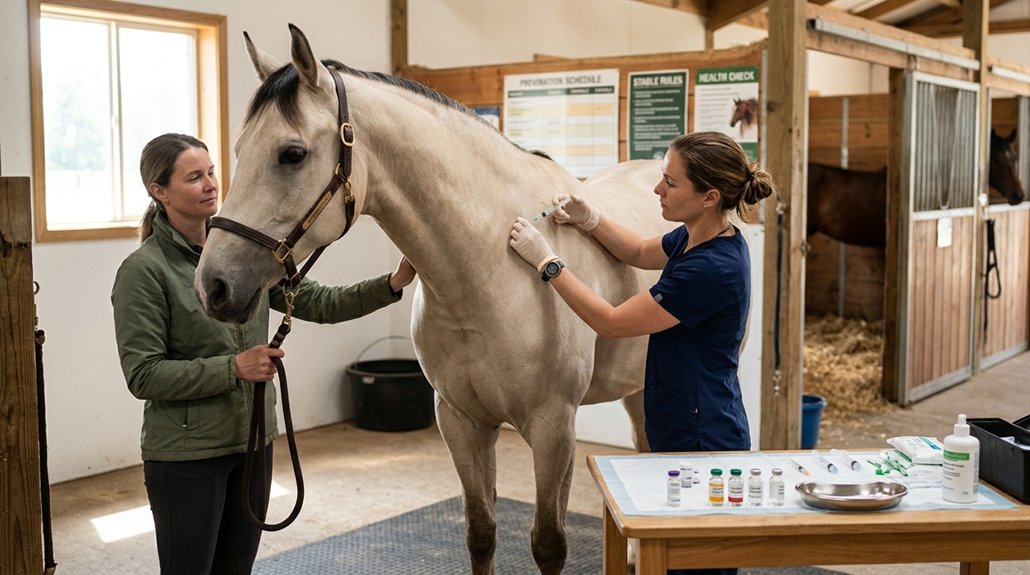
Although it might seem burdensome, equine vaccinations are indispensable to safeguarding horses from life-threatening diseases like rabies, West Nile Virus, and equine encephalitis. These preventive measures are vital for disease prevention, greatly enhancing horse health. By routinely vaccinating, you not only protect individual horses but also promote herd immunity, effectively minimizing the risk of widespread outbreaks. Collaboration with a veterinarian guarantees you adhere to a tailored vaccination schedule, offering best protection tailored to your horse’s specific needs. This proactive approach is economically advantageous, as the costs of vaccinations are far lower than the expenses incurred from treating preventable diseases. Ultimately, an effective vaccination regimen contributes to the overall well-being and performance of your horse, allowing for safe participation in various equestrian activities.
Core Vaccines Required Annually for Horses
Making sure your horse receives annual vaccinations is a fundamental part of maintaining equine health. Core vaccine types like Eastern and Western Equine Encephalomyelitis (EEE/WEE), Tetanus, Rabies, and West Nile Virus (WNV) are vital for disease prevention. Administered yearly, the Rabies vaccine effectively protects your horse’s nervous system from this deadly virus. Likewise, EEE/WEE and WNV boosters for horses that have been previously vaccinated are important to sustain immunity against these region-specific threats. Annual Tetanus shots are necessary for vaccinated horses, while two doses are required for initial immunity in the unvaccinated. Maintaining a regular vaccination schedule provides thorough protection from established endemic diseases, mitigating severe health risks and enhancing the overall well-being of your equine companion.
Foal Vaccination: A Step-by-Step Guide
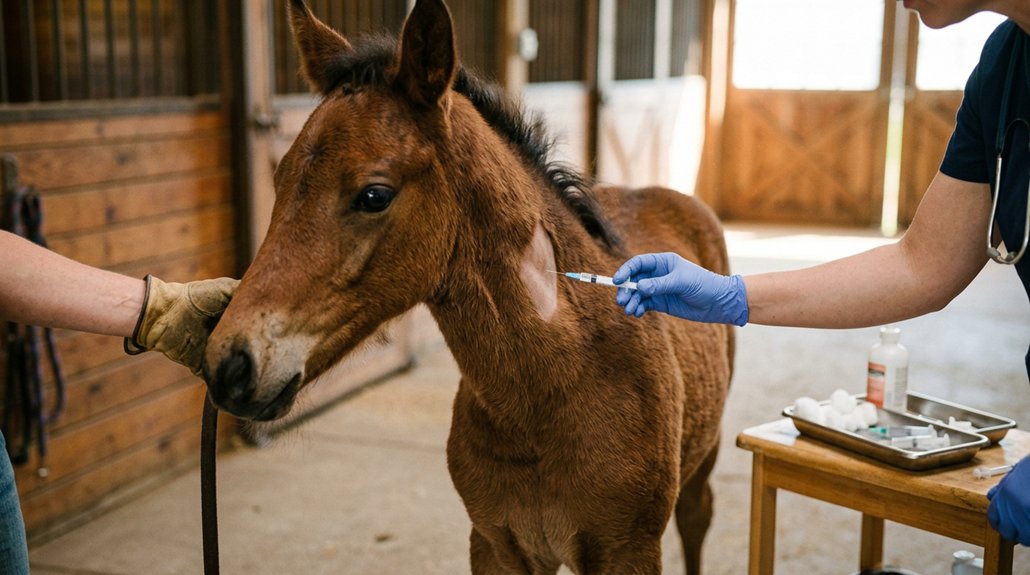
At 4-6 months of age, you’ll begin administering the initial vaccines to your foals, which are vital for establishing early immunity. You’ll follow with booster doses, like those for EEE/WEE and West Nile Virus, to guarantee continued protection as the foals grow. Tailoring vaccination strategies according to the mare’s vaccination history is key—for instance, additional rabies doses are needed if the mare was vaccinated pre-foaling.
Timing of Initial Vaccines
Establishing an effective vaccination schedule is essential in safeguarding your foal’s health against various diseases. Timing of initial vaccinations plays a vital role in ensuring strong immunity. Begin with the EEE/WEE vaccine at 4-6 months, administering a follow-up dose 4-6 weeks later. This vaccination timeline helps achieve robust immune protection. Rabies vaccines are important as well, given around the same age, with an additional dose if the mare was vaccinated during pregnancy. For tetanus, initiate vaccination at 3-4 months for unvaccinated foals or 4-6 months if the dam was vaccinated, preventing early exposure to this potentially fatal disease. Finally, the West Nile Virus vaccine is administered at 4-6 months, with boosters 4-6 weeks later, and again at 10-12 months.
Boosters for Continued Protection
As you complete the initial vaccinations for your foal, it’s important to understand the significance of booster shots to maintain immunity. Booster vaccines are critical in guaranteeing vaccination effectiveness against diseases, as young foals rely on proper dosing schedules to combat pathogens effectively. For instance, your foal will need a West Nile Virus booster at 10-12 months following the first dose at 4-6 months to fully fortify their immune system. Similarly, the rabies and tetanus vaccines require adherence to timed boosters to compensate for the waning maternal antibodies. To keep your foal healthy, consider these guidelines:
- Follow up with booster doses as scheduled.
- Guarantee completion of the West Nile series.
- Monitor for signs of immunity lapses.
- Coordinate boosters post maternal antibody decline.
- Track vaccination records diligently.
Tailored Vaccination Strategies
When crafting vaccination strategies for foals, it’s essential to customize the schedule to accommodate various maternal antibody levels and health needs. Begin with EEE/WEE at 4-6 months, repeating at 4-6 weeks and 10-12 months. Rabies follows the same initial timing, plus an extra dose if the mare was vaccinated before foaling. Tetanus varies by maternal vaccination status: 3-4 months for unvaccinated mares’ foals, 4-6 months otherwise. West Nile Virus protocols are similar, maintaining foal health by preventing infections. Always monitor for vaccine reactions early on.
| Vaccine | Initial Age | Additional Boosters |
|---|---|---|
| EEE/WEE | 4-6 months | 2nd: 4-6 weeks later, 3rd: 10-12 months |
| Rabies | 4-6 months | Additional for vaccinated mares |
| Tetanus | 3-6 months | Varies by maternal status |
| West Nile | 4-6 months | 4-6 weeks later, 10-12 months |
When and Why Booster Shots Are Necessary
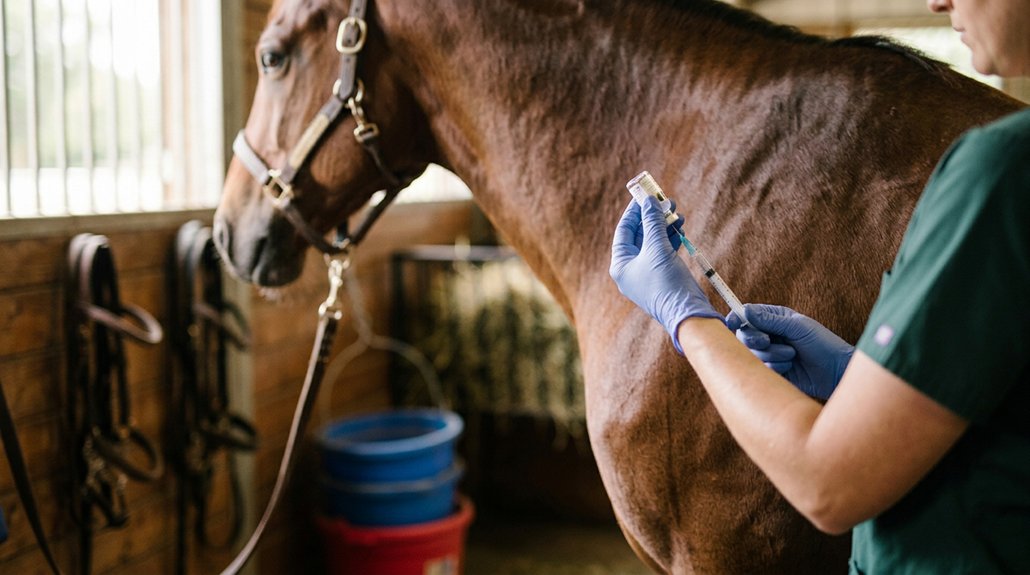
Ensuring that horses receive booster shots on schedule is an essential component in maintaining their health. The booster shot importance can’t be overstated, as the initial vaccine’s effectiveness generally wanes after four to six months. This necessitates vaccination timeline adjustments to bolster immunity. For example, the Flu/Rhino vaccine should protect against influenza and herpesvirus with twice-yearly doses. Similarly, the EWT/WN vaccine requires biannual administration to guard against encephalomyelitis, tetanus, and West Nile virus. Here’s what to keep in mind:
Booster shots are crucial as vaccine effectiveness diminishes within months; maintain biannual schedules for optimal horse health.
- Frequency: Booster shots often need biannual scheduling for effectiveness.
- Disease Coverage: Flu/Rhino and EWT/WN have specific timeline needs.
- Foals: Start booster series between 4-6 months.
- Annual Needs: Rabies and West Nile vaccines require yearly boosters.
- Communication: Coordinate with your vet for ideal timing.
Customized Vaccination Plans for Your Horse
To guarantee your horse receives ideal protection, it’s essential to establish a tailored vaccine protocol that aligns with their specific lifestyle and exposure risks. A veterinarian will evaluate your horse’s activities and health history to recommend both core and risk-based vaccines, adjusting the schedule as needed. Regular expert consultations will help refine these plans, particularly during significant developmental stages or changes in geographical exposure.
Tailored Vaccine Protocols
Despite the importance of standard vaccination protocols, a one-size-fits-all approach might not be sufficient to protect every horse from potential health threats. Tailored protocols consider individual factors such as lifestyle, exposure risks, and health needs, ensuring the most effective protection. Through vaccination assessments, you can identify specific requirements for your horse.
Consult your veterinarian to craft a customized plan by accounting for:
- Travel and events: Determine necessary vaccines based on exposure.
- Geographical disease prevalence: Protect against locally common diseases.
- Horse’s activities: Consider exposure risks from specific sports or shows.
- Exposure to other horses: Evaluate areas with frequent interactions.
- Local outbreaks: Stay updated on regional health alerts.
Regular assessments and communication with your vet keep the vaccination protocol updated, maintaining peak disease prevention.
Assessing Horse’s Lifestyle
How do you guarantee your horse’s vaccination plan effectively mirrors its lifestyle? Start by examining horse demographics and vaccination trends. If your horse frequently travels to shows or interacts with others, additional risk-based vaccinations are essential. Customized vaccination plans account for specific activities and environmental exposure, providing thorough protection against infectious diseases.
Consider this emotional impact:
| Consideration | Impact | Emotion Evoked |
|---|---|---|
| Frequent Travel | Higher disease risk | Vulnerability |
| Social Interactions | Increased exposure | Concern |
| Enhanced Protection | Tailored immunity | Reassurance |
| Regular Updates | Adaptive management | Confidence |
| Health History | Informed decisions | Preparedness |
Recognizing your horse’s lifestyle and adjusting plans accordingly offers them the best protection. Tailoring vaccines guarantees they’re safeguarded against regional specific diseases and reflects thoughtful care.
Veterinarian’s Expert Guidance
A veterinarian plays an essential role in customizing a vaccination plan tailored to your horse’s specific needs, delivering expert guidance that aligns with its lifestyle and risk factors. Through veterinary consultation, they assess individual horse requirements by considering factors like travel, exposure risks, and routine activities. This guarantees the implementation of both core vaccines (e.g., rabies, West Nile Virus) and region-specific non-core vaccines. Regular consultations validate your horse’s vaccination schedule remains updated, recognizing health changes or new exposure risks. The customized plan offers substantial vaccination benefits, enhancing disease prevention and promoting overall health, ensuring your horse can safely engage in various equestrian activities.
- Assess lifestyle and exposure risks
- Identify core and non-core vaccines
- Develop schedules for all life stages
- Provide updated health recommendations
- Ensure thorough disease prevention
Tips for Spring and Fall Vaccination Timing
While planning your horse’s health regimen, timing spring and fall vaccinations accurately is crucial to optimizing disease prevention. For spring readiness, aim to vaccinate in April before mosquito season, safeguarding against West Nile Virus and Eastern/Western Equine Encephalomyelitis (EEE/WEE). These vaccinations require timely administration to counter insect-borne diseases effectively.
In terms of fall preparation, schedule vaccinations from September to early October. Prioritize booster shots for equine influenza, equine herpesvirus, and EEE/WEE, focusing on maintaining immunity as the effective duration typically lasts four to six months. This scheduling guarantees ongoing coverage against prevalent seasonal pathogens.
Consider your horse’s activities and exposure risk, tailoring protocols to enhance protection. Regular vet consultations guarantee precise timing in alignment with these critical seasonal disease risks.
Work With Your Vet for a Custom Vaccination Plan
Creating a custom vaccination plan alongside your veterinarian is essential for addressing your horse’s unique needs and circumstances. By doing so, you’ll effectively counter vaccine myths, focusing on real health benefits tailored to your horse. Your vet evaluates possible exposure to pathogens by considering your horse’s travel patterns, interactions with other horses, and local disease threats. This results in a strategy involving mandatory core vaccines and non-core ones specific to your horse.
Collaborate with your vet for a tailored vaccination strategy addressing your horse’s specific health needs and threats.
Regular vet consultations help stay on schedule, ensuring no lapses in protection. Consider these points:
- Annual core vaccinations like rabies, tetanus, and West Nile Virus.
- Assessment of travel-related risks for disease exposure.
- Geographical disease prevalence influences vaccine choices.
- Boosters as needed to maintain immunity.
- Vet guidance for better understanding of protocols.
Frequently Asked Questions
How Long Does It Take for Horse Vaccines to Work?
Horse vaccines generally take about two weeks to achieve full efficacy. You’ll notice the primary immune response varies with vaccine types, typically between 10-14 days. It’s essential that the immune response stabilizes before demanding strenuous activities.
Do Muslims Get Their Children Vaccinated?
Yes, many Muslims choose to vaccinate their children, guided by supportive vaccination beliefs and religious endorsements. Parental concerns about safety and efficacy are addressed through informative health campaigns, reassuring them about this important community health responsibility.
Can I Ride My Horse the Day After Vaccination?
Yes, you can typically ride your horse the day after vaccination if they’re feeling well. Confirm post-vaccination care, checking for any vaccination reactions like fatigue or soreness. If any adverse signs appear, consult your veterinarian.
What Time of Year Is Best to Vaccinate Horses?
For ideal protection, schedule spring vaccinations by April and fall boosters in September or early October. Did you know timely vaccines can reduce virus-related illnesses in horses by up to 90%? Timing guarantees their year-round health.
Conclusion
As you navigate the roadmap of your horse’s health, think of vaccinations as the safety net that protects your equine companion from unseen threats. Securing timely core vaccinations, tailored plans, and necessary boosters is essential in safeguarding their well-being. Collaborate with your vet to craft a personalized vaccination strategy, harmonizing with seasonal changes. Just like a well-tuned orchestra guarantees a flawless symphony, a strategic vaccination schedule fortifies your horse’s defense, helping them thrive throughout the seasons.