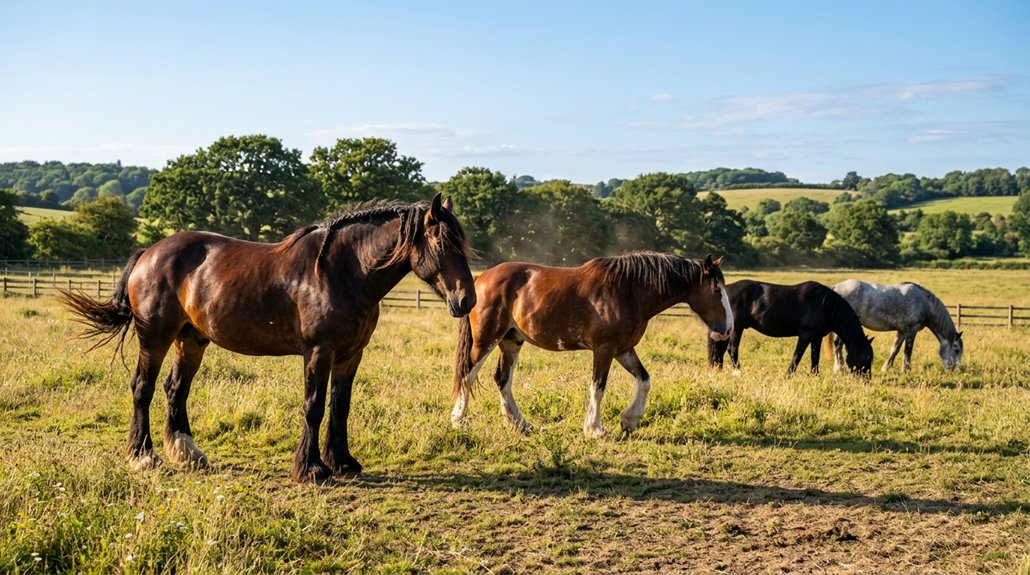
When you explore large horse breeds, expect to encounter majestic giants like Shire Horses and Clydesdales. These breeds are known for their formidable height, often exceeding 16 hands, and impressive strength. Their calm demeanor and robust build make them perfect for heavy tasks, whether in agriculture or competitive sports. They require significant care, including proper nutrition and regular exercise, to maintain health. There’s much more to uncover about these magnificent animals and their unique characteristics.
Key Takeaways
- Large horse breeds, like Shire and Clydesdales, often stand over 17 hands high, requiring ample space and care.
- These breeds have strong, robust bodies and broad hooves, suitable for heavy-duty tasks like agriculture or competition.
- Expect higher management costs due to their increased feed intake and specific care requirements, including regular veterinary check-ups.
- Calm temperaments make them suitable for both work and recreational activities, though consistent training and exercise are crucial.
- Engaging in equine communities provides valuable insights and support for managing large horse breeds effectively.
What Are the Largest Horse Breeds?
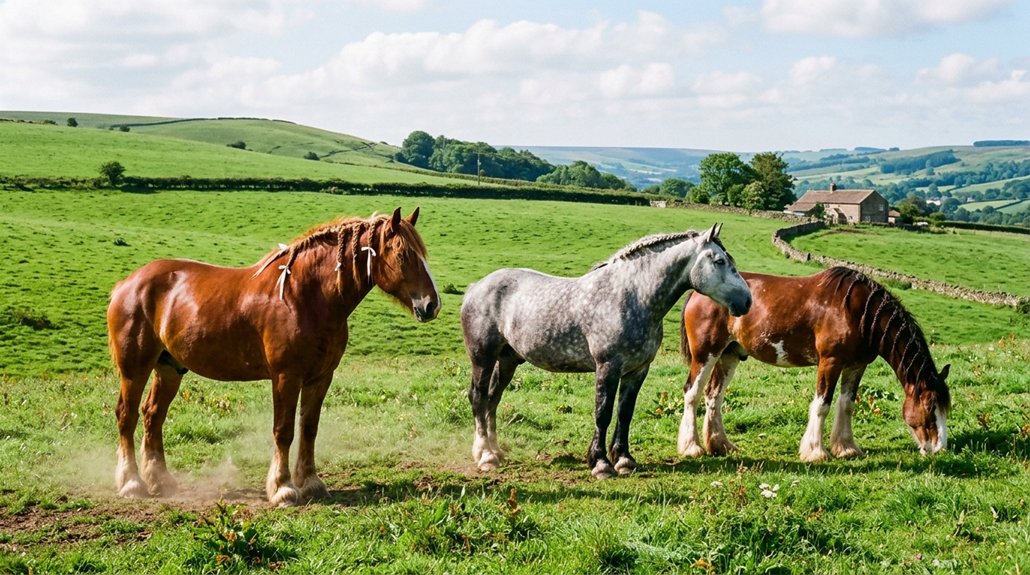
When it comes to the largest horse breeds, several stand out due to their impressive size and strength. A detailed horse physiology analysis shows Shire Horses as the top contenders, standing between 17 to 19 hands and weighing up to 2,400 pounds. Breed comparisons reveal Clydesdales, with their iconic bay coat, typically reach 16 to 18 hands and weigh around 1,800 to 2,000 pounds. Belgian Drafts, known for muscularity, range from 15 to 18 hands and weigh up to 2,200 pounds. In contrast, Percherons, bred initially for war, are highly versatile, standing 15 to 19 hands and weighing 2,600 pounds. Meanwhile, Dutch Draft horses, slightly smaller, stand 15 to 17 hands tall, noted for their sturdy build.
Defining a Large Horse Breed: Height and Characteristics
For defining large horse breeds, a primary determinant is their height, typically exceeding 15 hands. Height classifications are vital, with breeds such as the Shire and Clydesdale often surpassing 17 hands. Adhering to breeding standards, Shires range from 17 to 19 hands, while Clydesdales stand 16 to 18 hands high.
Beyond height, large breeds exhibit robust body structures, strong legs for endurance, and broad hooves supporting their significant mass. Feathering, often seen on breeds like Clydesdales, along with muscular builds, enhance both their aesthetic appeal and functional capabilities. Significant care considerations stem from their size, requiring larger space, robust fencing, and increased feed intake, affecting management and ownership costs relative to smaller breeds. Understanding these elements is essential for potential owners.
Shire Horses: Champions of Height and Strength
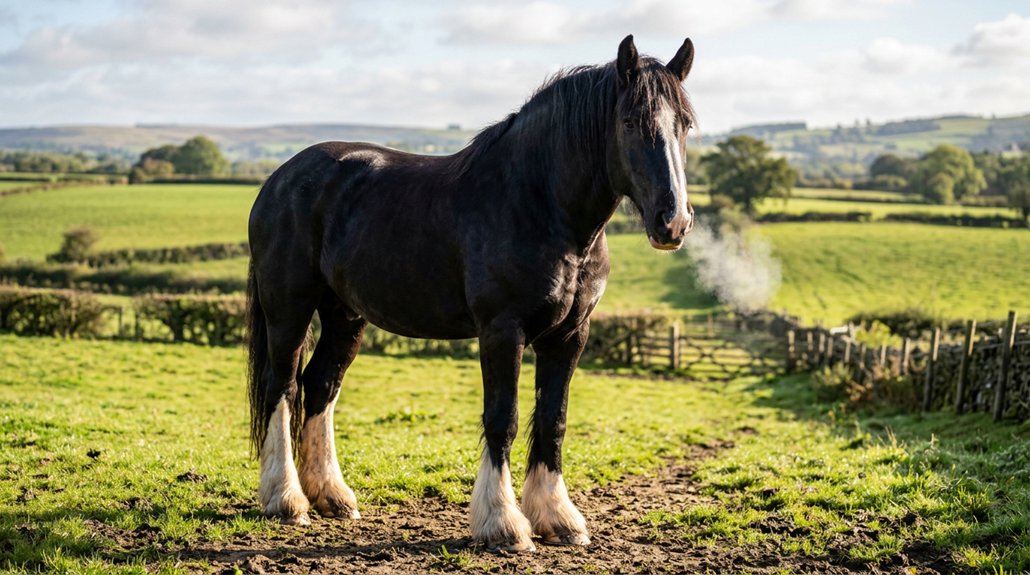
Although not everyone appreciates their colossal stature, Shire horses stand among the tallest equine breeds, typically measuring between 17 and 19 hands, with exceptional individuals like Sampson reaching a staggering 21.2½ hands. These giants weigh between 1,800 and 2,400 pounds, showcasing a muscular build ideal for demanding tasks.
Originally bred for agricultural work, their Shire history highlights a legacy of strength and perseverance in farming and forestry. Despite their size, they display a calm and docile Shire temperament, making them excellent companions. This gentle nature, combined with their distinctive feathering on the lower legs, contributes to their impressive appearance. You’ll find them both in show rings and as reliable partners in modern farming tasks.
Clydesdales: The Majestic Parade Icons
You’ll find Clydesdales standing proudly between 16 to 18 hands tall and weighing up to 2,000 pounds, showcasing their origins in Scotland where they were bred for heavy agricultural tasks. Recognizable by their bay coats, white markings, and distinctive leg feathering, these horses impress with a strong yet elegant presence. Their high-stepping, parade-ready gaits make them favorites in various ceremonies, further popularized by their iconic role in Budweiser commercials.
Historical Role and Origin
Originating from the fertile valleys near the River Clyde in Scotland, Clydesdales were initially bred to meet the demands of robust agricultural work and heavy draft tasks. With an impressive stature ranging from 16 to 18 hands, these horses were renowned for their strength and versatility. The Clydesdale origins reflect their historical significance as indispensable assets in farming and transportation. Known for pulling heavy loads, their unwavering stamina made them ideal for various roles, from agriculture to ceremonial duties as royal drum horses. By the early 20th century, Clydesdales gained iconic status in America, prominently showcased through Budweiser’s promotional efforts. Their broad recognition underscores a rich history, marking them not just as workhorses but as national treasures in both Scotland and America.
Iconic Appearance Features
Clydesdales command attention with their iconic appearance, marked by signature bay coats and striking white facial and leg markings. Standing tall between 16 and 18 hands, these horses blend strength and elegance, a testament to their storied Clydesdale history. Their majestic presence is further enhanced by luxurious, silky leg feathering, a feature requiring diligent feathering maintenance to prevent debris build-up and guarantee pristine condition. This care combines washing, combing, and trimming to maintain the feathering’s silky allure. Often associated with Budweiser commercials, Clydesdales are embedded in popular culture, symbolizing grace and power. Their high-stepping action and graceful gait amplify their showy nature, enchanting audiences and showcasing the refined traits developed through years of specialized breeding and training.
Parade Performance Highlights
Admire the Clydesdale’s iconic presence, highlighted by their signature appearance, and you’ll find their parade performances equally enchanting. Their majestic high-stepping gait is central to parade choreography, demonstrating elegance and engaging the audience. Clydesdales, standing between 16 and 18 hands tall with striking bay coats and white markings, create visual allure, while their feathered legs enhance graceful movements.
Incorporate Clydesdales into celebrations, and they’ll certainly boost audience engagement. These majestic horses often pull themed wagons, like the iconic Budweiser beer wagon, playing a significant role in community festivities.
Witness their impressive performances:
- High-stepping gait that exudes elegance.
- Harmonious teamwork while pulling wagons.
- Unmistakable visual appeal due to distinctive markings.
Their choreography, combined with charisma, turns every parade into a memorable spectacle.
Belgian Drafts: Brawn and Calmness Combined
Belgian Draft horses, often distinguished by their formidable size, typically stand between 16 and 17 hands and weigh from 1,800 to 2,200 pounds. Despite their imposing stature, they’re renowned for a gentle temperament. This calm demeanor makes them ideal for families and equestrians seeking a reliable, friendly companion. Originally bred for intense farm labor, their pulling capacity is extraordinary. Belgian Drafts excel in weight-pulling competitions, showcasing remarkable strength. Their muscular build guarantees they’re well-suited for agriculture, forestry, and various roles requiring substantial power. Versatility further enhances their appeal, as they’re also popular in recreational riding. With these strengths, Belgian Drafts are highly valued, known as “gentle giants” among horse enthusiasts. Their unique combination of brawn and calmness remains unmatched.
Percherons: From Battlefields to Farm Fields
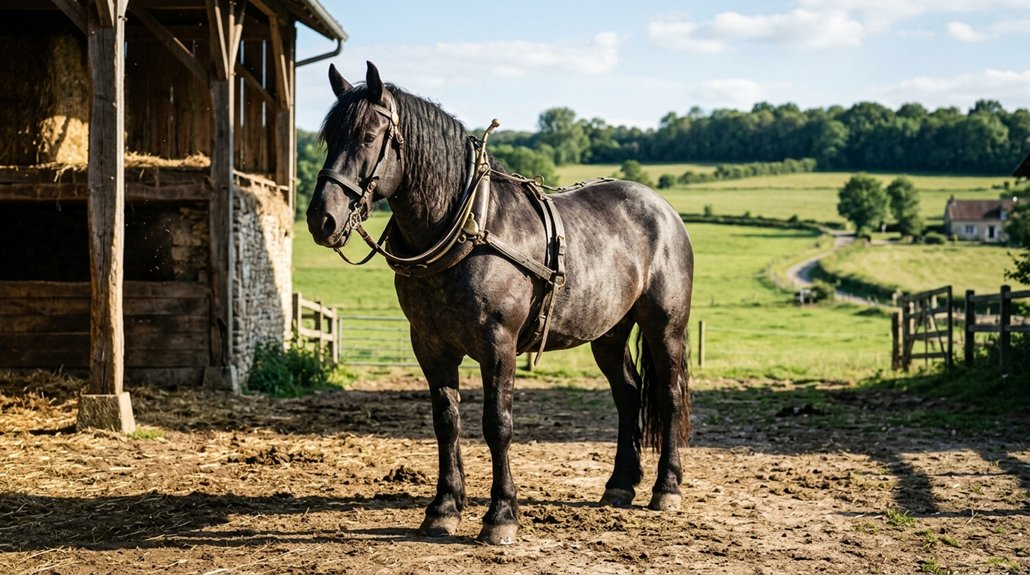
From the renowned strength of Belgian Drafts, we turn to the equally remarkable Percherons. Originating in France, Percheron History reveals a breed initially used as war horses. Their stamina and agility were crucial on battlefields. Standing 15 to 19 hands tall and weighing 1,900 to 2,600 pounds, these horses are giants in their field. Notable Percheron Traits include their calm, gentle nature and impressive pulling power, making them versatile for:
- Agricultural work: Historically essential in farming and forestry, their strength aids in heavy-duty tasks.
- Recreational riding: Due to their gentle disposition, they suit both experienced and novice riders.
- Conservation efforts: Increasingly used in ecological restoration and maintaining biodiversity.
In modern times, they thrive in both work and companionship roles.
The Appeal of Dutch Draft Horses in Equestrian Sports
When examining Dutch Draft Horses, you’ll note their combination of power and performance, which makes them exceptional competitors in various equestrian sports. Their robust build and endurance are assets in both competitive pulling events and more traditional riding disciplines. With their versatility, they adapt seamlessly to different competitions, enhancing their appeal within the equestrian community.
Power and Performance
Here’s what you can expect:
- High Trainability: Their calm temperament allows for effective strength training, facilitating improved performance in sports.
- Endurance: With notable stamina, they excel in activities requiring sustained effort.
- Competitive Presence: Their robustness is complemented by an elegant and composed demeanor in competitions.
These features make Dutch Draft Horses a top choice in equestrian sports.
Versatility in Competitions
Dutch Draft Horses exhibit remarkable versatility in equestrian sports due to their distinctive blend of size, strength, and agility. Standing at 15 to 17 hands, they’re perfectly built for various competition demands. Effective training techniques capitalize on their calm demeanor and high trainability, making them ideal for pulling events—highlighting their power and stamina. You can also see their agility and endurance shine in dressage and driving competitions, where specific competition strategies are essential for peak performance. Originally bred for heavy farm work, their robust body serves them well in team-driven events, showing impressive teamwork and athletic prowess. By understanding and applying advanced training techniques, these versatile horses demonstrate excellence across multiple equestrian disciplines, enchanting audiences with their prowess.
Caring for Large Horse Breeds: Essential Tips
Caring for large horse breeds requires meticulous attention due to their distinct needs. Their feeding habits are important; they typically consume 20-30 pounds of high-quality forage daily, supplemented to maintain health and energy. Equally essential are their exercise routines, which should be tailored to each horse’s fitness level, preventing inactivity-related health issues. Consider these critical tips:
- Feeding and Nutrition: Supply a consistent diet with balanced nutrients, emphasizing quality forage to meet their dietary demands.
- Hoof and Space Management: Schedule regular hoof trimming and shoeing. Guarantee they have ample living space, secured with strong fencing, to support their substantial size.
- Health Monitoring: Schedule regular veterinary check-ups to identify health problems early and guarantee sound management of large breeds’ unique requirements.
Why Learning Equine Care Matters for Owners
When you own large horse breeds like Shires or Clydesdales, understanding their specific care needs is key to their health and performance. It’s vital to educate yourself on breed characteristics and tailor your care regimen to suit their unique feeding, exercise, and space requirements. Regular health monitoring, proper nutrition, and responsible ownership are not only important but essential in fostering a strong bond and ensuring their well-being.
Essential Knowledge for Health
Although mastering equine care may seem challenging, it’s an important aspect of responsible horse ownership, especially for large breeds. You must understand their nutritional requirements, including a daily feed intake of 20 to 30 pounds, to guarantee ideal health and performance. Regularly monitoring health through veterinary check-ups is significant, as large horses are prone to specific complications. Proper health monitoring can mitigate these risks and guarantee long-term well-being. Educated ownership leads to better partnerships, encompassing tailored exercise and care routines to prevent health issues. Additionally, hoof care is crucial due to the significant weight of large breeds. Neglect in this area can lead to serious mobility and well-being issues.
- Daily Feeding: 20-30 pounds for nutrition.
- Veterinary Checks: Important for monitoring.
- Hoof Care: Prevents mobility problems.
Customized Care for Breeds
Tailoring care for large horse breeds is fundamental, as each breed has its unique needs. Understanding the dietary needs of a Belgian Draft, for instance, is imperative; they typically require 20 to 30 pounds of feed daily to maintain ideal health and energy. Similarly, customizing exercise routines guarantees breeds like Clydesdales and Shire Horses remain muscular and healthy, mitigating potential health issues. Additionally, proper hoof care is essential due to the substantial weight of breeds like the Percheron, necessitating more frequent trimming.
Engaging With the Equine Community Successfully
Successfully engaging with the equine community often begins with understanding the significant impact of active participation in various activities centered around large horse breeds. Community outreach and equine networking play pivotal roles in enhancing your knowledge and experience with breeds like Shires and Clydesdales. Here’s how you can engage effectively:
Active engagement and community outreach are key to enhancing your experience with large horse breeds.
- Participate in Local Events: Attending or helping at shows fosters connections and camaraderie among horse enthusiasts.
- Volunteer at Organizations: Gain hands-on experience with large horse breeds, enriching your understanding of their care and attributes.
- Join Online Platforms: Engage in forums or social media groups to exchange insights from a global community, enhancing your advocacy for responsible ownership and care practices.
These strategies empower you to contribute positively to the equine community.
Frequently Asked Questions
What Are the Calmest Large Horse Breeds?
For calm large horse breeds, you’ll want to contemplate Belgian Drafts, Percherons, and Clydesdales. These gentle giants are known for their relaxed temperament traits, making them ideal for both work and leisure. They’re very adaptable and reliable.
Which Is Bigger, Clydesdale or Percheron?
Percherons are generally bigger than Clydesdales, often weighing more and reaching greater heights. If you’re interested in Clydesdale temperament or Percheron history, note that Percherons typically exhibit greater muscle mass and size variability.
How Do You Say “Hi” in Horse Language?
To say “hi” in horse language is like orchestrating a symphony of equine communication. Greet them with a soft nicker for friendship or a gentle whinny for recognition, observing horse behavior like relaxed ears, signaling trust and approachability.
What Is the Best Large Horse Breed for Riding?
You’d likely find the Shire Horse ideal for riding due to its impressive riding abilities and gentle temperament traits. It’s one of the largest breeds, combining strength and affable characteristics, making it well-suited for leisurely rides.
Conclusion
In exploring these colossal horse breeds, you’re stepping into a world where strength meets grace. Understanding their unique needs and characteristics is like piecing together a complex puzzle. You must immerse yourself in the equine community to succeed, learning every detail about care and companionship. Remember, owning one of these magnificent creatures isn’t just a hobby—it’s a commitment to a lifelong partnership that can gallop through the years with elegance and power.