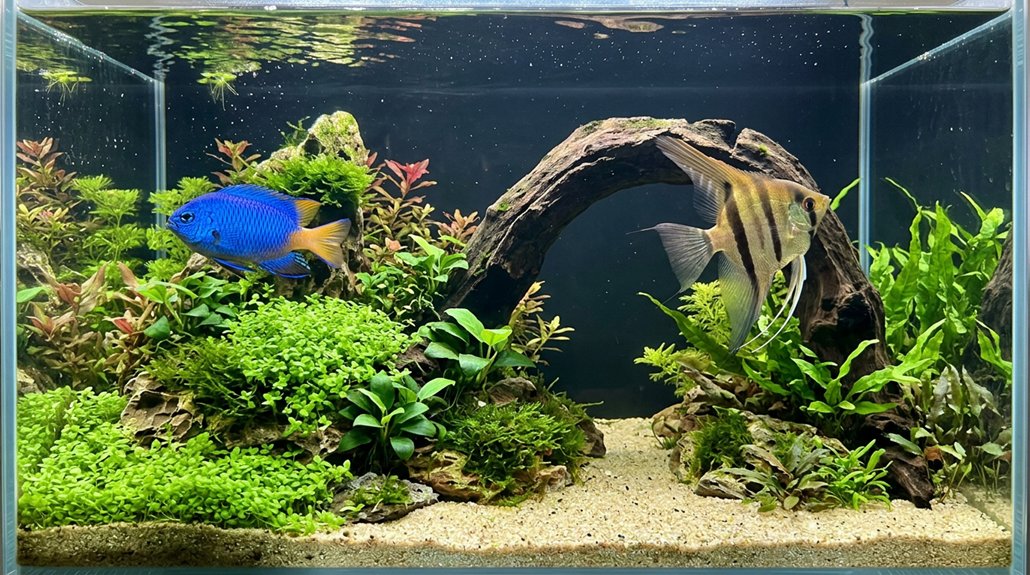
Fish don’t get along when space, mates, food, or shelter are limited, or when you mix species with mismatched size, sex ratios, or territorial biology. Stress from poor water quality, sudden temperature or pH shifts, bright light, or overcrowding can also trigger attacks. You’ll see chasing, fin-nipping, hiding, faded color, and clamped fins. Fix it by separating bullies, adding cover, improving water stability, and reworking stocking and territory layout for longer-term peace.
Key Takeaways
- Fish clash over territory, food, mates, and shelter, especially when tanks are crowded or cover is limited.
- Aggression rises with breeding, skewed sex ratios, mismatched sizes, and naturally territorial species.
- Stress from poor water quality, sudden parameter changes, bright light, or overcrowding can trigger hostile behavior.
- Warning signs include chasing, nipping, chasing, hiding, clamped fins, faded color, and torn fins or wounds.
- Fix conflicts by isolating bullies, adding plants and hiding places, improving water quality, and rehoming persistent aggressors.
Why Fish Fight in Aquariums
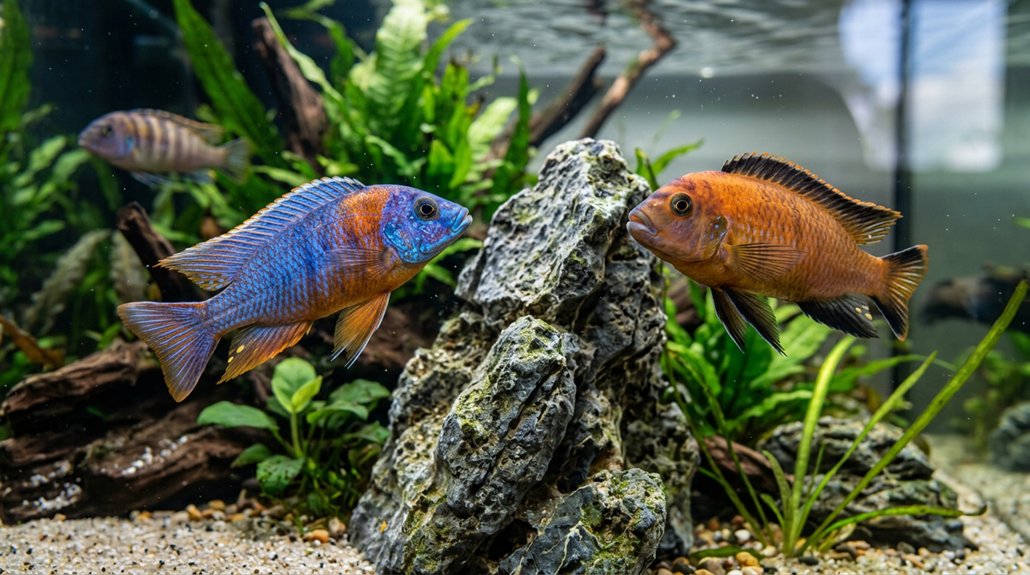
Fish aggression in aquariums usually reflects competition for limited resources: tankmates may chase, nip, or even kill one another to defend mates, territory, food, or preferred shelter, especially when space and hiding places are scarce. You’ll also see conflict when social cues establish hierarchy; dominant fish, especially males, often harass subordinates, and skewed sex ratios can intensify this. Breeding triggers can further elevate aggression, because courtship, spawning, and mate defense increase territoriality. Environmental stressors such as high temperature, bright light, overcrowding, and bare decor can amplify these responses. Species biology matters too: territorial or predatory fish, and mismatched sizes, are more likely to attack smaller tankmates. If you disturb established territories, you can sometimes reduce persistent targeting.
Common Causes of Fish Aggression
Aggression in aquariums usually has a few predictable drivers, and identifying the specific trigger is the first step toward fixing it. You’ll often see territorial defense when fish guard caves, rockwork, or spawning sites, especially during breeding season. Conflict also rises if your sex ratio is wrong, because too many males or too few females can trigger relentless chasing and fin-nipping. Size and species mismatch matter too; a larger predator may eat or harass anything that fits in its mouth. Environmental stressors such as overstocking, bare decor, bright light, and high temperature intensify attacks. A diet imbalance can worsen irritability, and individual history matters too: isolated, captive-bred fish may show persistent aggression compared with socially reared fish.
Spot the Tank Bully Fast
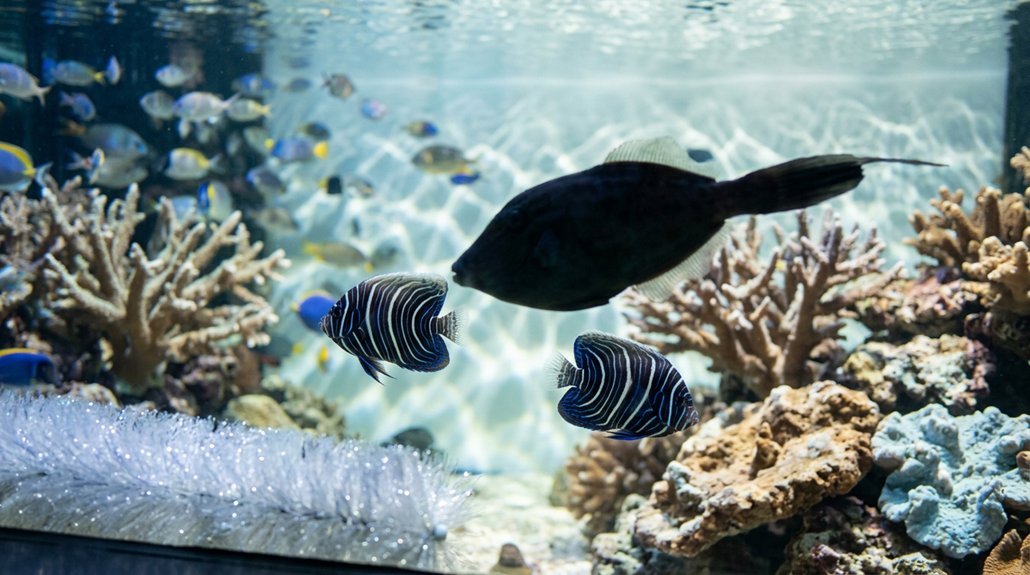
A tank bully usually reveals itself through a repeated pattern, not a single incident: relentless chasing, fin-nipping, mouth-locking, and confident patrolling of one rock, plant, or cave system are strong signs that one fish is defending territory. Use this quick screen:
| Signal | Meaning |
|---|---|
| Rapid nipping | Chronic aggression |
| Daytime-only harassment | Vision-driven territoriality |
| Smaller fish vanish | Predatory size bias |
| Lone dominant male | Social imbalance |
| Mirror testing stops attacks | Primary aggressor identified |
You should also watch for rapid injury in smaller tankmates and for aggression that peaks under bright light but fades at night. A lone dominant male can be 6–12× more aggressive than subordinates over days. If harassment ceases during mirror testing or isolation, you’ve likely found the bully.
How to Stop Fish Fighting
Once you’ve identified the bully, the next step is to interrupt the behavior before it escalates into injury. Remove the aggressor at once and place it in a breeder box or quarantine tank while you assess whether you can rehome it or move it to a species-specific tank of proper size. Add behavioral enrichment: dense plants, rocks, caves, and visual barriers, or rearrange décor to disrupt territory ownership and give victims refuges. Tighten feeding strategies by offering smaller, more frequent meals, not just larger portions, so competition drops. You can also dim lights during introductions and shift temperature slightly toward the species’ preferred range to blunt aggression peaks. If one fish stays hostile, isolate it for 1–2+ weeks or permanently remove it; learned dominance can persist and keep fighting recurring.
Fix Compatibility and Stocking Issues
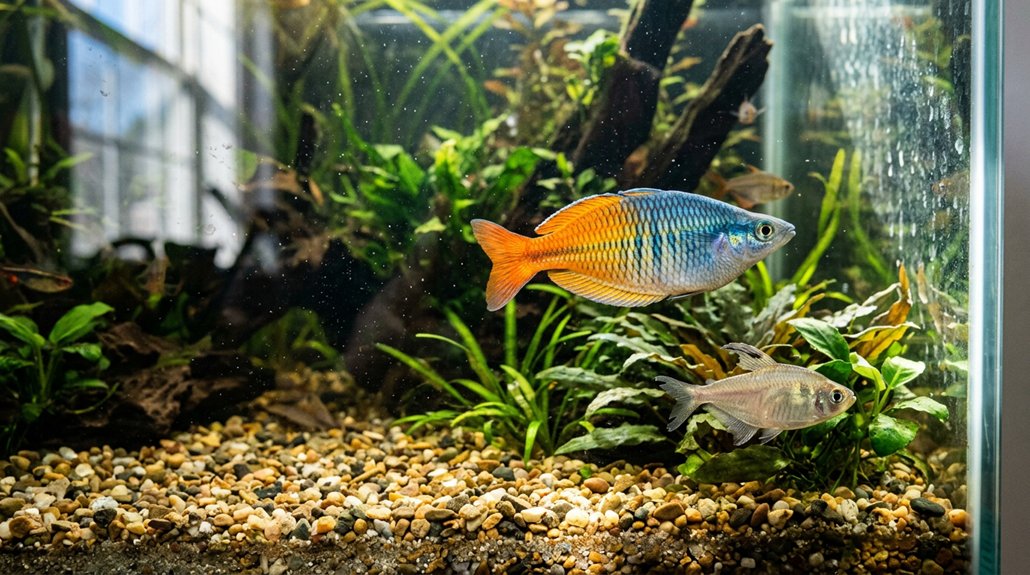
When compatibility problems stem from stocking decisions, you need to correct the fish assemblage itself, not just the behavior. Match adult size and mouth gape; don’t pair fish that’ll exceed a 2:1 size ratio, because predation and harassment rise with disparity. Use proper sex ratios for livebearers, ideally 2–3 females per male, and cut male numbers if courtship aggression persists. Treat the 1 inch per net gallon rule as a baseline only; territorial or active species need expanded space planning and wider tanks. Add plants, rocks, and caves to break sight lines and create multiple territories. Synchronize feeding schedules to reduce competition. If you see killing, severe fin damage, or constant harassment, remove the aggressor to a quarantine or breeder tank, or rehome it.
When to Separate Aggressive Fish
You should separate a fish when aggression escalates to repeated chasing, biting, fin tearing, or death of tankmates, because those are clear markers of sustained harm. Remove the aggressor immediately into a quarantine box or spare tank for at least 1–2 weeks, and stop adding new fish while you assess whether territorial rearrangement or added cover can reduce the behavior. If the fish remains a persistent bully, you’ll need a safer permanent rehome or rehoming plan to protect the community.
Signs Of Escalating Aggression
Escalating aggression in a community tank is marked by sustained chasing, repeated mouth-locking, persistent fin-nipping, or prolonged lateral displays that intensify over several days, not by brief sparring. You should treat these escalation cues as actionable, especially when fins become torn, wounds appear, or one fish is repeatedly cornered and denied food or shelter for more than a day. Constant hiding, faded color, clamped fins, rapid breathing, and appetite loss are stress indicators that the conflict’s intensity is harming the subordinate fish. Sudden losses, missing fins, bite marks, or a rising death rate can also reveal a persistent bully or predator. If aggression continues despite habitat changes, you’ll need to isolate the aggressor or the victim before chronic stress and injury worsen.
Immediate Separation Steps
Once aggression has progressed from brief sparring to repeated chasing, nipping, or outright killing, separate the aggressor immediately to prevent additional injuries and social destabilization. You should move it to a quarantine or breeder box, hospital tank, or sump refugium with heater and sponge filter for 1–2 weeks. | Method | Use | Notes |
| — | — | — |
|---|---|---|
| Net | Fast capture | Best if accessible |
| Baited traps | Low-stress capture | Useful when it evades |
| Rearranged decor | Corral fish | Reduce escape routes |
Do not add new fish while the predator’s behavior is active. During isolation, perform a decor reset in the main tank: shift rocks, plants, and cover to disrupt territory mapping. Match temporary housing size to body mass; adult livebearers may need 5–10+ gallons. Reintroduce only after injuries heal and stress falls.
Safer Tank Rehoming
When a fish has killed multiple tankmates or repeatedly driven them into hiding, stop adding new fish and remove the aggressor to a breeder box or quarantine tank immediately. You should keep it in temporary housing, ideally a separate 10–20 L quarantine tank, for 1–2 weeks so social memory can reset before any reintroduction. If aggression persists, don’t force reintegration; instead, practice ethical rehoming by placing the fish in a species-appropriate dedicated tank or returning it to a retailer or new owner. Size permanent housing to adult length, using ~1 inch per gallon as a baseline, and more for territorial species. Before reintroduction, rearrange décor and add dense cover to disrupt territory. If sex ratio drives aggression, reduce males or maintain a 2–3:1 female:male ratio.
Prevent Fish Fights Long-Term
You can reduce long-term fish fights by engineering territory and cover with plants, caves, and broken sight lines, which lowers visual contact and territorial pressure. Keep stocking ratios balanced and species-appropriate so aggression from mating, dominance, or crowding doesn’t escalate inappropriately. Maintain stable water conditions, including temperature and feeding consistency, because chronic environmental stress amplifies hostile behavior.
Territory And Cover
Territorial aggression usually escalates in bare or cramped aquaria, where fish can’t establish stable boundaries, so the most effective long-term fix is to add structured cover and spatial complexity. You should increase cover complexity with caves, driftwood, dense plants, and rockwork to create habitat mimicry and multiple defensible zones. Break line-of-sight so one dominant fish can’t visually track subordinates across the tank, and provide several similar hiding sites so no single individual monopolizes refuge. If aggression persists, rearrange décor periodically to reset territories and interrupt chronic harassment. In small tanks, space matters more than generic stocking rules, especially for territorial species. When needed, isolate aggressors in breeder boxes or quarantine tanks, then reintroduce them after social tension drops.
Balanced Stocking Ratios
Even with good cover and clear territory boundaries, aggression can persist if the social structure is unbalanced, so stocking ratios need to match each species’ behavior and adult size. You should set sex ratios to limit harassment: for guppies or swordtails, keep 2–3 females per male. For schooling fish, use group sizes of six or more so aggression gets dispersed and no individual’s behavior is singled out. Don’t mix fish with sharply different adult sizes; calculate capacity from adult length, not juveniles, and treat one inch per gallon only as a baseline. For territorial cichlids, restrict dominant males to one per territory unless you can expand tank size and complexity. If you overstock, competition rises, so add space, cover, and defensible sites.
Stable Water Conditions
Stable water conditions are essential for preventing chronic aggression, because rapid shifts in ammonia, nitrite, pH, temperature, or mineral content stress fish and can trigger fighting. You should verify chemical stability with test kits, keeping ammonia and nitrite at 0 ppm and nitrate under 20–40 ppm. Maintain consistent temperature within each species’ preferred range, ideally within ±1–2°F, since even slight warming can raise metabolism and aggression. Match salinity, hardness, and pH to the stocked species’ tolerance range, and don’t mix fish from incompatible water chemistries. Perform 10–25% partial water changes weekly, adjusted for stocking density, to remove dissolved wastes. Keep lighting and feeding schedules consistent, and avoid sudden rearrangements or abrupt light changes that force territorial reestablishment.
Frequently Asked Questions
What to Do if Fish Aren’t Getting Along?
Remove the aggressor immediately and isolate it. You should break territory displays by rearranging décor, add cover, and verify feeding schedules, stocking, and sex ratios. If aggression continues, you’ll need to rehome the incompatible fish.
How Do I Make My Fish Get Along?
You can make your fish get along by matching sizes and temperaments, balancing stocking, and tuning water chemistry precisely. Add tank decor to break sightlines, adjust sex ratios, and isolate bullies; otherwise, chaos’ll erupt like fireworks.
How to Tell if a Fish Is Unhappy?
You’ll notice visible signs like hiding, clamped fins, torn scales, or rapid gill movement. You may also see feeding changes, darting, fading color, lethargy, or weight loss, which usually indicate stress, disease, or aggression.
How to Stop Fish From Bullying Other Fish?
Pull the bully immediately; continued aggression can injure or kill. You’ll improve behavior with tank enrichment, a stricter feeding schedule, more hiding spaces, and adjusted stocking ratios. If it persists, you’ll need permanent separation.
Conclusion
In your aquarium, conflict usually blooms from crowded water, mismatched species, or stress-driven territorial behavior. When you correct stocking levels, adjust décor, and separate persistent aggressors, the tank settles like silt after a storm. Watch closely for torn fins, chasing, and faded color, because early intervention prevents injury and mortality. With stable parameters, compatible tankmates, and regular observation, you can turn a churning battleground into a balanced, low-stress ecosystem.