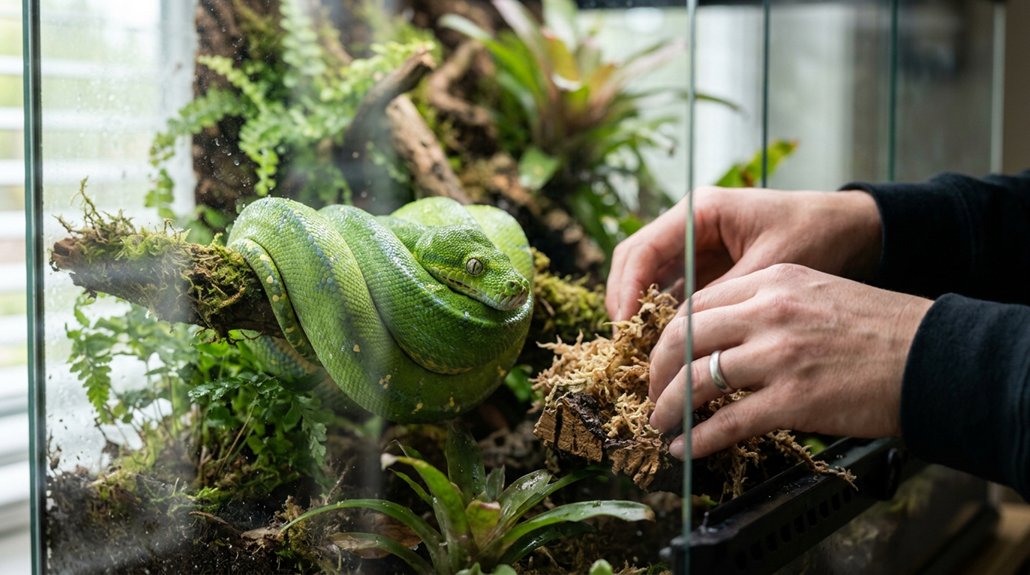
To prevent common reptile care mistakes, guarantee you provide proper temperature gradients for thermoregulation, and use reptile-specific UVB bulbs to support vitamin D3 synthesis. Tailoring hydration and offering a meticulously-crafted diet are critical for species-specific needs. Enrich habitats with substrate, hides, and climbing structures, and monitor humidity to avoid respiratory issues. Routine health checks and veterinary visits help address parasites and stress. Attention to these aspects will greatly enhance your reptile’s well-being and longevity, and there’s more to uncover.
Key Takeaways
- Avoid incorrect lighting by using reptile-specific UVB bulbs and replacing them every 6-12 months for effective vitamin D3 synthesis.
- Prevent dehydration by incorporating humidity-monitoring tools and providing humid hides or soaking options for species-specific needs.
- Ensure proper thermoregulation by creating temperature gradients within the enclosure to support reptile health and stress reduction.
- Mismanaging diets can harm health; tailor feeding habits to the species’ specific nutritional needs and supplement appropriately.
- Bypass overlooked health issues with regular veterinary care and maintain detailed logs for feeding, shedding, and behavior monitoring.
Understanding Common Reptile Needs
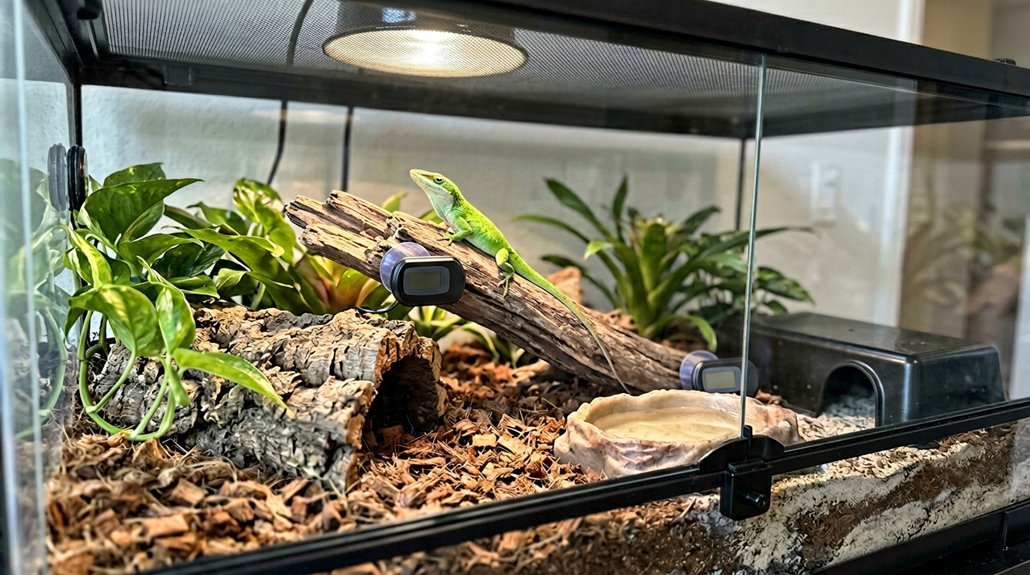
When caring for reptiles, understanding their specific needs is essential to guarantee their health and well-being. Creating appropriate temperature gradients within the enclosure is critical, as reptiles rely on these gradients to thermoregulate effectively. Different species require distinct temperature ranges, so researching your reptile’s natural habitat is important. Furthermore, habitat enrichment plays a central role in reducing stress and promoting mental and physical health. Incorporate diverse elements like substrate, hides, and climbing structures suitable for your reptile’s behavior and lifestyle. These enrichments encourage natural activities, enhancing their quality of life. Don’t forget, monitoring humidity levels is equally important as it prevents respiratory issues and aids proper skin shedding. By carefully tailoring these conditions, you greatly boost your reptile’s well-being.
Set Up Perfect Lighting for Your Reptile
Establishing the right lighting environment is vital for your reptile’s health, and some might underestimate its importance. Providing proper UVB placement is essential for species like turtles, iguanas, and chameleons. UVB lighting helps them synthesize vitamin D3, necessary for calcium metabolism and overall health. Confirm your UVB bulbs are reptile-specific, as standard bulbs often lack necessary wavelengths. Aim for 10-12 hours of exposure daily to mimic natural sunlight, supporting their circadian rhythms and immune function. Position bulbs so reptiles bask within 12-18 inches, providing shaded retreat areas. Remember, even if a bulb emits light, replace it every 6-12 months; UVB output diminishes over time, potentially compromising your reptile’s health. This diligence guarantees ideal care conditions.
Keeping Your Reptile Hydrated and Comfortable
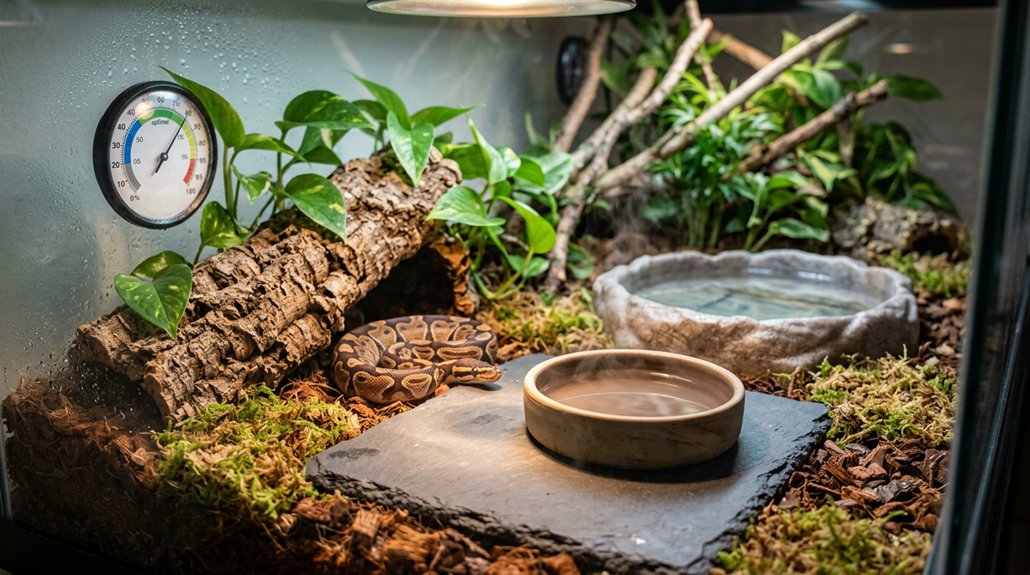
Although often overlooked, maintaining proper hydration and comfort is essential for your reptile’s well-being. Humidity management and hydration techniques must be tailored to each species. Many tropical reptiles thrive at humidity levels between 70-90% to prevent dehydration. Here’s how you can guarantee your reptile stays hydrated:
- Soak Regularly: Species like tortoises and bearded dragons benefit from regular soaking in lukewarm water, aiding hydration and digestion.
- Create Humid Hides: For arid species, provide humid hides so they can access moisture-rich environments when necessary.
- Monitor Conditions: Regularly check enclosure humidity and temperature to mitigate dehydration risks.
- Incorporate Live Plants: Adding live plants can enhance enclosure humidity and comfort for your reptile.
These techniques promote ideal hydration and comfort.
Create a Nutritious Diet for Different Species
Proper nutrition is essential for the health and longevity of reptiles, and it must be meticulously tailored to each species’ dietary requirements. Understanding diet variations is significant. Insectivores thrive on a variety of gut-loaded insects like dubia roaches, while leafy greens, vegetables, and occasional fruits benefit herbivores. For carnivorous reptiles, provide whole prey like frozen/thawed rodents. Omnivores need a balance of both greens and insects. Feeding frequency is important; juveniles often require daily meals, whereas adult insectivores might be fed 2-4 times per week depending on their species and size. Supplements such as calcium and multivitamins, dusted on food 1-2 times a week, are essential to address nutritional gaps in captivity. Avoiding high-sugar fruits, seeds, and pits prevents obesity.
Regular Health Checks and Veterinary Care for Reptiles
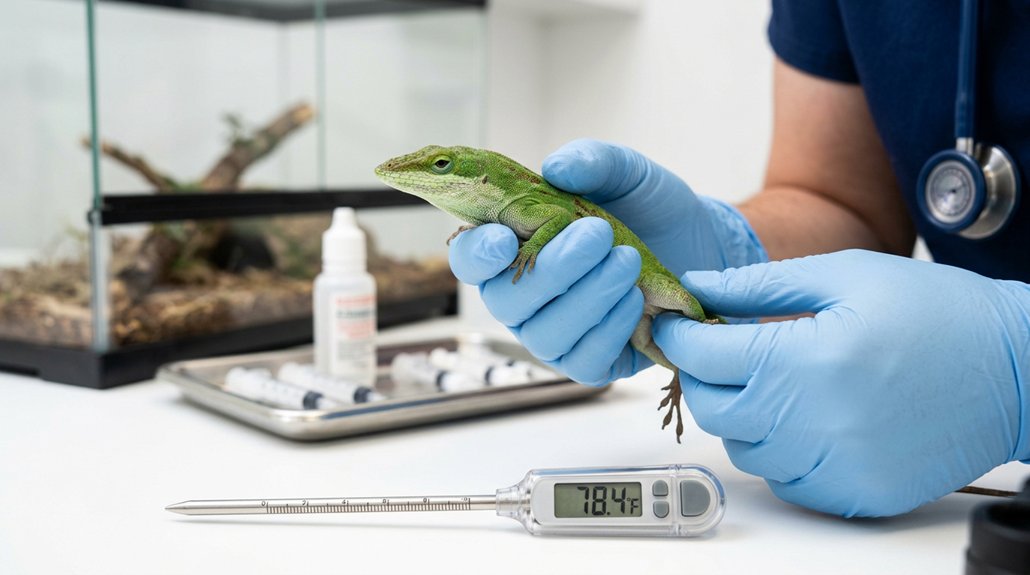
Guaranteeing regular health checks and veterinary care for reptiles is essential to maintaining their well-being in captivity. Regular veterinary screenings are vital because they help identify hidden parasites and pathogens. Even captive-bred reptiles can carry diseases, making initial screenings necessary for early detection of health issues. Stress from captivity can worsen these problems, so routine evaluations are a must. To aid in this process, you should:
- Schedule regular visits with a qualified reptile veterinarian found through resources like www.arav.org.
- Maintain detailed health logs documenting feeding schedules, shedding, weight, and behavior.
- Monitor environmental conditions, as they’re often linked to stress-related illnesses.
- Act swiftly on unusual signs, using health logs to inform veterinary assessments for precise diagnosis.
This proactive approach guarantees reptiles thrive in their environment.
Frequently Asked Questions
What Is the Hardest Reptile to Care For?
The Green Tree Python poses significant challenges in advanced reptile husbandry. As an exotic reptile species, its care demands precise control over humidity and temperature, careful stress management, and provision of a diverse diet and arboreal habitat.
Can Lizards Hear Your Voice?
Yes, lizards can hear your voice. Even though “seeing is believing,” vocal communication plays a role in lizard hearing. They perceive lower frequencies, responding to familiar sounds, which can reduce stress and foster bonds with their owner.
What Animal Moves Like a Snake?
Animals like eels, legless skinks, and caecilians exhibit snake locomotion effectively. Their elongated, limbless bodies facilitate reptile movement by emulating the serpentine motion seen in snakes, enabling them to navigate their environments seamlessly and efficiently.
What Did the Bible Say About Reptiles?
Look before you leap—explore biblical references to reptiles such as serpents symbolizing temptation and sin in Genesis. Leviticus’s cleanliness laws classified many reptiles as unclean, while Proverbs and Exodus highlight their symbolism for wisdom and divine power.
Conclusion
Caring for reptiles might seem intricate, but avoiding common mistakes guarantees their well-being. Did you know that improper lighting is responsible for up to 85% of captive reptile health issues? By understanding their specific lighting needs, you’re not just providing comfort—you’re preventing disease. Always prioritize hydration, a balanced diet, and regular veterinary checkups to create a thriving environment for your reptilian friend. A well-informed approach leads to healthier, happier reptiles and more rewarding experiences for you.