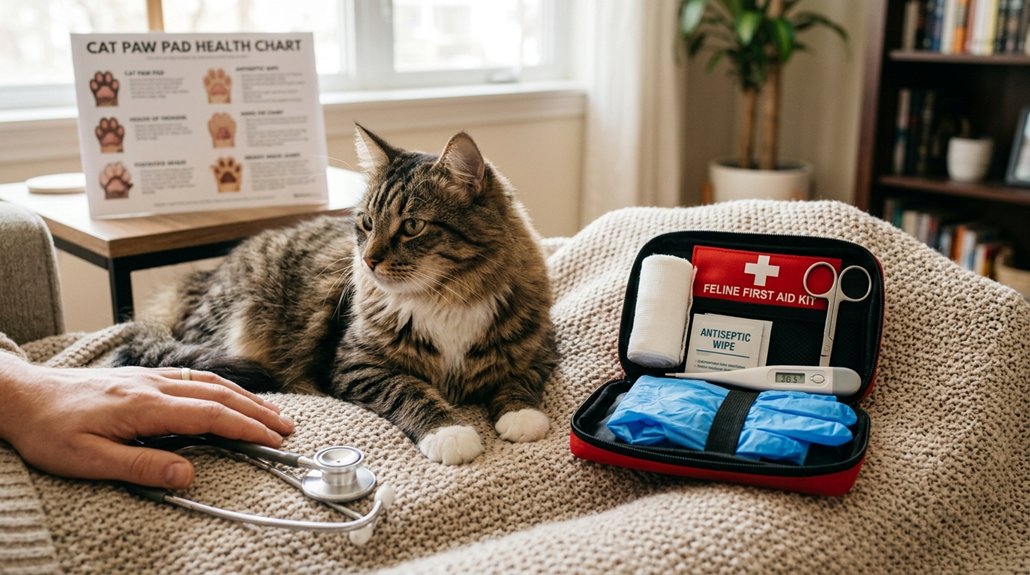
Knowing essential first aid for cats can save lives. If your cat is choking, inspect the airway and remove obstructions with tweezers. For severe bleeding, apply direct pressure without lifting the cloth. Identify poisoning by symptoms like drooling or vomiting, and seek veterinary guidance. Learn CPR for cats as outlined by experts. Recognize signs of breathing distress and emergencies such as seizures or heat stroke. Stay prepared; there’s always more to discover about keeping your feline safe.
Key Takeaways
- Position the cat on its right side when performing CPR for effective chest compressions.
- Recognize signs of poisoning like drooling and seizures, and avoid inducing vomiting without expert advice.
- Apply firm, direct pressure on bleeding wounds, and do not lift cloth to check bleeding.
- Observe for breathing difficulties indicated by open mouth or blue gums and seek veterinary help if persistent.
- Download the American Red Cross Pet First Aid app for step-by-step emergency guidance and videos.
CPR and Life-Saving Techniques for Cats
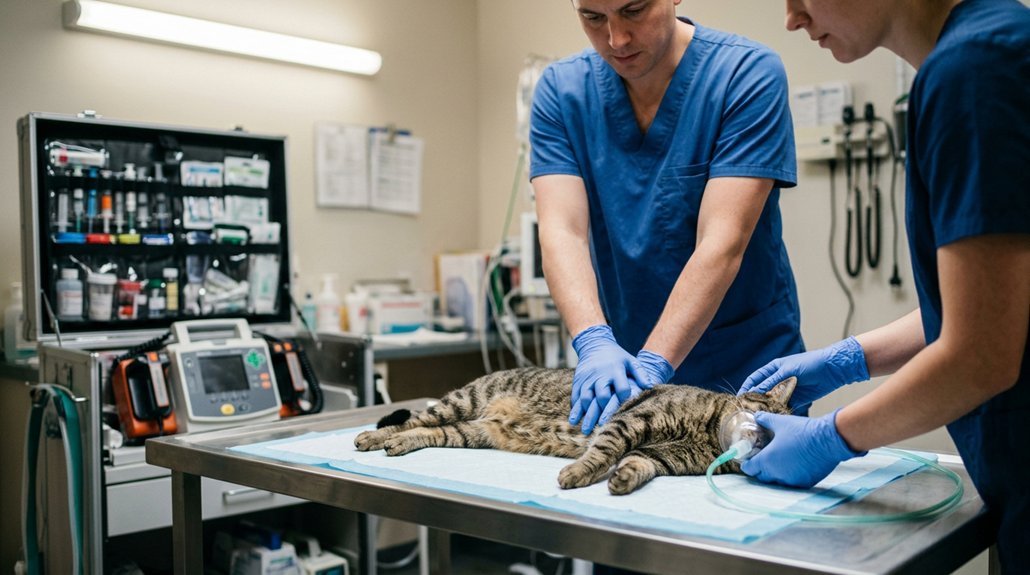
When your feline friend is unresponsive and appears not to be breathing, knowing CPR and life-saving techniques could make a critical difference. Begin by placing your cat on its right side. This foundational cat first aid step sets the stage for effective intervention. Check for any signs of life, like chest movement or pulse. If absent, perform feline CPR by delivering chest compressions at a rhythm of 100-120 per minute, reminiscent of “Stayin’ Alive” by the Bee Gees. Ascertain no choking obstructions are present; cautiously remove any visible ones with tweezers. If the cat has a pulse but isn’t breathing, provide gentle rescue breaths. Remember, after administering CPR, rush to a veterinarian to prevent complications and guarantee your cat’s recovery.
Recognizing Emergencies in Cats
Recognizing emergencies in your cat swiftly can mean the difference between life and death, so it’s essential to be aware of the critical symptoms. Immediate attention is required if you notice excessive bleeding, visible distress in breathing, or a sudden inability to stand. By quickly identifying these signs and evaluating the severity, you can take effective action and get your cat the urgent care they need.
Identifying Critical Symptoms
Spotting critical symptoms in cats is essential for any cat owner to guarantee their pet’s well-being. Immediate attention should be given for excessive bleeding, where blood may soak through a cloth, signaling a severe wound. Such common symptoms demand urgent responses and quick intervention to prevent further harm. Equally crucial is recognizing poisoning signs like drooling, vomiting, or diarrhea; these require instant contact with a vet or poison hotline. If your cat exhibits sudden inability to stand or loss of consciousness, it could be a medical emergency such as seizures, demanding immediate veterinary care. Finally, monitor for dehydration by pinching the skin; if it remains, it’s a critical symptom needing prompt veterinary assistance. Being proactive can save your cat’s life.
Assessing Breathing Difficulties
Having a keen eye for your cat’s symptoms can make a life-saving difference. Breathing assessment should be your priority if you notice distress signals such as rapid, shallow breaths, or noisy breathing. These may indicate an emergency. Pay attention to restlessness, pawing at the mouth, or an extended neck, as they can be signs of respiratory difficulty. Check your cat’s gums; pale or blue-tinged gums signal a lack of oxygen, requiring urgent veterinary care. An open mouth or excessive drooling could also mean severe respiratory distress or choking. Perform a quick assessment—if breathing difficulties last more than a few minutes, contact a veterinarian immediately. Prompt recognition and action in these scenarios can be critical for your cat’s survival.
Spotting External Bleeding
Should your cat suffer an injury that leads to external bleeding, immediate action is imperative. Recognize bleeding causes promptly by observing red blood oozing from the wound, signaling the need for rapid intervention. First, apply firm, direct pressure using a clean cloth or gauze. This wound care step is essential to halt blood loss. If the blood saturates the cloth, avoid lifting it, as this could disrupt clot formation. Instead, add additional layers while maintaining pressure.
Given that cats have a small blood volume, they’re susceptible to shock from excessive bleeding. Stay vigilant for signs of distress, such as lethargy or difficulty breathing, that could accompany significant injuries. Prioritizing prompt wound care and seeking veterinary attention can make a critical difference.
Stop Severe Bleeding in Cats
Encountering severe bleeding in your cat can be alarming, but knowing how to respond swiftly can save your pet’s life. Immediate bleeding control is essential. Start by applying firm, direct pressure to the wound with a clean cloth or sterile gauze from your emergency supplies. Do not lift the material to check if bleeding has stopped, as it may disturb clotting. If the blood soaks through, add more layers while maintaining steady pressure.
Due to their small blood volume, cats can quickly become critically ill from significant blood loss. Once the bleeding is controlled, promptly transport your cat to a veterinarian for further medical assessment. If the bleeding does not subside or if there’s a deep wound, seek veterinary assistance without delay to guarantee your cat’s safety.
What to Do if Your Cat Is Choking?

When a cat is choking, immediate action can mean the difference between a quick recovery and a dire emergency. First, assess the signs: gagging, pawing at the mouth, or difficulty breathing. These require swift intervention. Using first aid tools like tweezers, carefully check for visible obstructions without pushing deeper. Avoid using your fingers, which might cause more harm. If the object is unreachable or your cat can’t breathe, seek emergency veterinary care. If they lose consciousness, perform 3-4 quick, firm compressions to the ribcage to help dislodge the object on the way to the clinic. For cat choking prevention, keep small objects and indigestible materials out of reach. Always have your vet’s contact details and an emergency clinic’s number handy.
Performing CPR on Cats
In the event your cat is unresponsive and not breathing, performing CPR could be an essential, life-saving measure. To guarantee effective feline first aid and injury prevention, start by laying your cat on its right side. Confirm there’s no pulse or breathing before proceeding with chest compressions. Follow these steps:
- Compressions: Wrap one hand around the cat’s chest, using your fingers on one side and thumb on the other. Compress at 100-120 per minute. Sync to the “Stayin’ Alive” beat.
- Rhythm Check: After every 30 compressions, pause and check for breathing signs.
- Monitor: If breathing resumes, monitor closely until veterinary help arrives.
- Seek Help: Immediate veterinary attention is vital to address underlying issues following CPR.
Mastering CPR bolsters your feline first aid skills.
Identifying and Responding to Cat Poisoning Symptoms

Recognizing the signs of cat poisoning is essential for pet owners, as timely intervention can save your feline friend’s life. Common symptoms include drooling, vomiting, diarrhea, abnormal behavior, and seizures. These can manifest within minutes to hours of ingesting toxic substances. Use a symptom checklist to quickly spot potential poisoning. Foods like chocolate, onions, and grapes are toxic, alongside household items such as antifreeze and cleaning products. Poison prevention involves keeping these out of reach. Should you suspect poisoning, contact your vet immediately; avoid inducing vomiting without professional guidance. Awareness of harmful plants like lilies helps prevent renal and gastrointestinal issues.
| Symptom | Toxins to Avoid | Prevention Tips |
|---|---|---|
| Drooling | Chocolate, Xylitol | Secure storage |
| Vomiting | Grapes, Onions | Monitoring diet |
| Abnormal behavior | Antifreeze, Medications | Secure cabinets |
| Seizures | Lilies, Azaleas | Plant awareness |
What to Do When Your Cat Is Burned or Seizing
If your cat suffers a burn or starts seizing, quick and calm action is essential to prevent further harm. Burn treatment and seizure management are critical skills every cat owner should master. Here’s what to do:
- Minor Burns: Rinse the area with cool water for 10 minutes. Avoid ice or ointments.
- Severe Burns: Cover the burn with a clean cloth and seek veterinary care immediately.
- Seizures: Don’t restrain your cat. Instead, make certain the area is safe from sharp or hard objects.
- Post-Seizure Care: Time seizures and call your vet if it lasts more than five minutes. Afterward, provide a calm environment as your cat will likely be disoriented.
Immediate, informed action aids recovery.
First Aid Apps for Cat Owners
For cat owners, having a first aid app like the American Red Cross Pet First Aid app can be a lifesaver during emergencies. It’s available on both iOS and Android devices, offering essential features such as step-by-step guidance, instructional videos, and a customizable section for your cat’s medical history. Simply text GETPET to 90999 for easy download instructions, ensuring you have vital first aid information readily accessible when it’s needed most.
Essential App Features
While maneuvering through the challenges of pet care, turning to reliable first aid apps can make a significant difference for cat owners. With the American Red Cross Pet First Aid app, you’re equipped to handle emergencies with ease due to its intuitive user interface and seamless user experience. Here’s what you can expect:
- Step-by-step guidance: Tailored instructions for cat emergencies are crucial for swift response.
- Video tutorials: Detailed visual demonstrations guarantee that you execute first aid techniques accurately.
- Interactive quizzes: Test your knowledge with quizzes that reinforce essential first aid concepts.
- Emergency contacts: Quick access to veterinarians and poison control guarantees immediate action in critical situations.
Compatible on both iOS and Android, this app is a significant companion for cat owners.
Download and Access
Cat owners will find the American Red Cross Pet First Aid app indispensable when managing urgent pet care situations, thanks to its innovative features. This app provides immediate veterinary advice for emergencies, guaranteeing your feline friend receives prompt and effective care. With instructional videos, quizzes, and step-by-step guides, the app empowers you to handle crises with confidence, enhancing your emergency preparedness.
Downloading the app is straightforward. It’s available on the iOS App Store and Google Play, providing seamless access anywhere. Additionally, by texting GETPET to 90999, you’ll receive straightforward instructions to keep emergency resources at your fingertips. Regularly updating the app guarantees you benefit from the latest guidance, optimizing your capability to address potential health issues with expertise and calm.
Recognizing When Your Cat Needs Immediate Help
When it comes to swiftly identifying critical situations in your feline companion, being adept at recognizing the signs can be lifesaving. Common emergencies arise from sudden changes in cat behavior, and recognizing these can be important:
Recognizing sudden changes in your cat’s behavior can swiftly identify life-threatening emergencies.
- Excessive Bleeding: If your cat is bleeding profusely and it doesn’t stop with direct pressure, seek immediate veterinary care. Cats have a small blood volume, making this urgent.
- Choking: Watch for pawing at the mouth, gagging, or breathing difficulties. These indicate a life-threatening state needing immediate intervention.
- Poisoning Symptoms: Drooling, seizures, abnormal behavior, or dilated pupils require urgent contact with a vet or Animal PoisonLine.
- Heatstroke: Indicators include collapsing, body temperatures over 104°F, and intense mucous membrane redness, all demanding prompt medical attention.
Frequently Asked Questions
What Is the 3-3-3 Rule for Cats?
The 3-3-3 rule outlines a cat’s behavioral adjustment: 3 days for initial hiding, 3 weeks for exploring their home, and 3 months for showing true personality. Patience aids in understanding feline first aid for their emotional wellbeing.
What Is “I Love You” in Cat Language?
“I love you” in cat language involves cat vocalizations like purring and trilling, and feline body language such as slow blinking, head-butting, and a raised tail. These gestures show affection, trust, and an appreciation for your companionship.
What Should a First Time Cat Owner Know?
As a first-time cat owner, understand cat behavior to predict needs and temperament. Stock basic supplies, like food, litter, toys, and a first aid kit. Studying emergency procedures guarantees your readiness for unforeseen health crises.
What Is the #1 Cause of Death in Cats?
Your furry companion’s gentle fade often results from chronic kidney disease, a top feline health concern. In cat health emergencies, proactive check-ups are key since this silent issue quietly advances, leading, unfortunately, to many cats leaving us.
Conclusion
So, you’ve become a feline first aid expert armed with life-saving skills and a smartphone app. Ironically, now that you’re ready for anything, your cat will probably avoid disaster by napping an extra 22 hours a day. But should an emergency arise, you’ll be the calm, collected hero of the moment. Remember, though, even with a stethoscope and a bandage in hand, some situations still need a vet’s touch—after all, they’re the real cat whisperers.