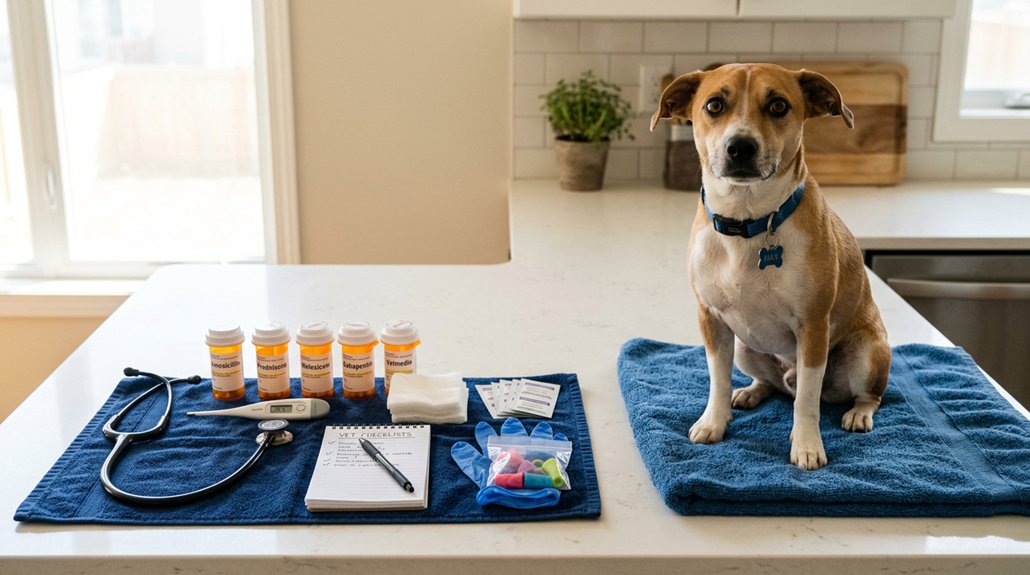
To prepare for unexpected dog health issues, regularly schedule veterinary check-ups and keep vaccinations current. Create a first-aid kit with essentials like bandages, antiseptic wipes, and a digital thermometer for pets. Plan financially by setting up a pet emergency fund and exploring insurance options to cover unplanned expenses. Familiarize yourself with crisis signs, such as respiratory distress, and develop an emergency response plan. Equip yourself with this knowledge to guarantee your dog’s health and safety, and discover additional strategies.
Key Takeaways
- Build a pet emergency fund to cover unexpected veterinary costs.
- Keep vaccinations current and schedule regular health and dental checkups.
- Assemble a comprehensive first-aid kit with essential supplies and emergency contacts.
- Understand pet insurance policies, reviewing coverage and reimbursement options.
- Learn and practice basic first aid techniques including CPR and the Heimlich maneuver for dogs.
Spotting Serious Symptoms Early
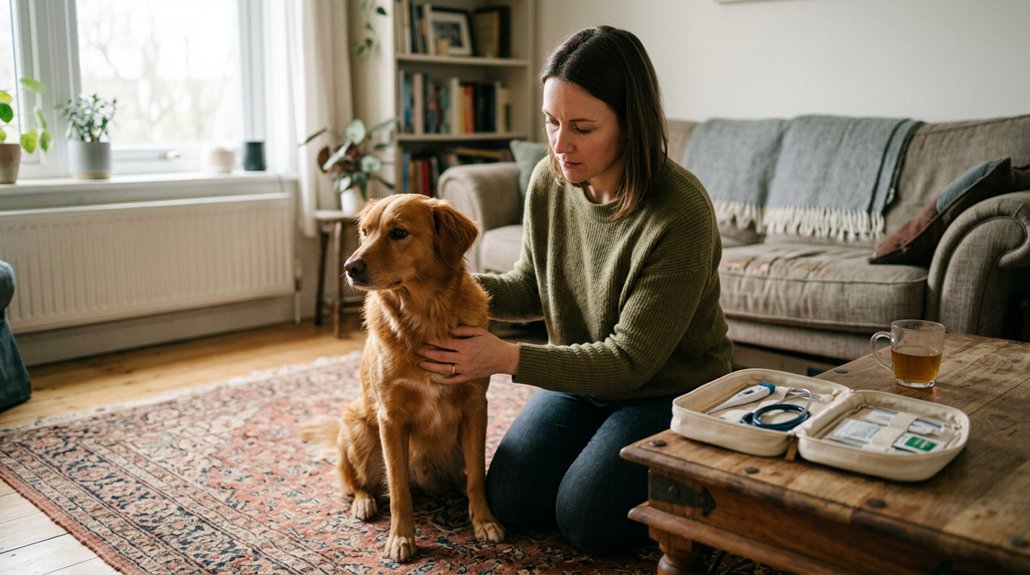
Could you imagine the peace of mind in knowing exactly when your dog might be experiencing a health crisis? The key lies in mastering symptom recognition for early intervention. Spotting respiratory distress is essential; look for rapid breathing or bluish-gray gums. Behavioral changes such as lethargy and refusal to eat are red flags indicating potential health issues. Gastrointestinal symptoms like persistent vomiting or a swollen abdomen require immediate action. Pain, evidenced by limping or difficulty standing, can signal injury or medical conditions needing urgent care. Don’t overlook neurological symptoms; seizures lasting over a minute or sudden paralysis demand swift veterinary attention. By recognizing these signs early, you can effectively intervene, potentially saving your dog from escalating emergencies.
Proactive Steps to Prevent Dog Emergencies
To guarantee your dog’s safety and prevent emergencies, regularly schedule health checkups to catch any potential issues early. Make your home a safer place by securing hazardous items like toxic plants and chemicals, minimizing risks for your furry companion. Additionally, be vigilant during outdoor activities by supervising your dog closely, particularly near roads or water, to prevent accidents.
Regular Health Checkups
- Annual or biannual examinations to catch potential issues, adjusting frequency for older or high-risk breeds.
- Vaccinations to prevent life-threatening illnesses, keeping your dog protected and healthy.
- Routine blood tests to spot underlying concerns like kidney or liver issues early.
- Dental check-ups to prevent systemic problems, safeguarding your dog’s overall well-being.
Regular check-ups guarantee your dog thrives.
Secure Hazardous Items
Protecting your furry friend from potential dangers within your home is a critical aspect of responsible pet ownership. Begin by ensuring hazardous storage of human medications, chemicals, and cleaning supplies. Use childproof latches to secure cabinets, preventing access to harmful substances. Be aware of plant toxicity; some household plants can be toxic if ingested by dogs, causing severe health issues.
| Potential Hazards | Prevention Tips |
|---|---|
| Human Medications | Store out of reach; use secure cabinets |
| Cleaning Supplies | Install childproof latches on storage areas |
| Toxic Houseplants | Remove or secure away from your dog’s access |
| Electrical Cords | Use cord organizers to prevent chewing and electrical hazards |
Secure electrical cords with organizers to avoid chewing risks. Always check for potential hazards to keep your pet safe indoors.
Supervise Outdoor Activities
Monitoring your dog during outdoor activities is essential in preventing potential emergencies and guaranteeing their safety. Outdoor supervision minimizes risks, such as accidents and injuries near roads or water. Here’s a detailed guide to enhance dog safety:
- Leash Use or Fencing: Always use a leash or guarantee secure fencing in unfenced areas to prevent your dog’s escape and encounters with traffic or other animals.
- Yard Inspection: Regularly inspect your backyard to eliminate toxic plants and small objects that might choke or harm your dog during play.
- Monitor Behavior: Keep an eye on signs of fatigue or overheating, especially on hot days, and guarantee ample water and shade.
- Supervised Play: Engage in supervised play sessions to discourage aggression and encourage positive interactions with other dogs and distractions.
Identify Essential Items for a Dog First-Aid Kit
To effectively manage dog health issues, it’s essential to assemble a first-aid kit with key supplies such as bandages, gauze, and antiseptic wipes to treat and protect wounds. Make certain you’re stocked with a digital thermometer tailored for pets, considering they have different temperature ranges than humans, and maintain a two-week supply of necessary pet medications to handle ongoing health conditions. Including a list of emergency contacts, like your veterinarian and local animal hospitals, will equip you to respond efficiently in crises.
Essential First-Aid Supplies
When assembling your dog’s first-aid kit, certain essentials are non-negotiable to guarantee you’re prepared for a range of minor health issues. Preventive care and swift emergency response depend on these key items. Begin with bandages and gauze for efficient wound care, reducing time to infection prevention. Antiseptic wipes are indispensable for cleaning cuts before dressing. Keep scissors handy to cut bandages or gauze to the desired size quickly. Include a digital thermometer to monitor your dog’s temperature; acting promptly on abnormal readings can prevent conditions from worsening. To confirm you’re thoroughly prepared, your kit should contain:
- Bandages and gauze
- Antiseptic wipes
- Scissors
- Digital thermometer
Finally, include comfort items like a muzzle and leash to maintain calm during emergencies.
Pet Medication Management
An often overlooked but critical component of pet first-aid preparedness is medication management. Ensuring medication organization within your dog’s first-aid kit can make all the difference during stressful situations. Start by packing a two-week supply of prescribed medications, along with a detailed list of any allergies or medical conditions. This can facilitate swift assistance during unexpected vet visits. Include pet-safe antihistamines, tailored to your dog’s specific needs and weight, as verified by a veterinarian. It’s crucial to have both printed and digital copies of medical records, including vaccination history, for immediate access. Don’t forget to list emergency contacts, like your vet’s information, so you’re ready for any situation. Remember, a well-prepared kit is a lifesaver for your furry friend.
Step-by-Step Emergency Prep for Dog Crises
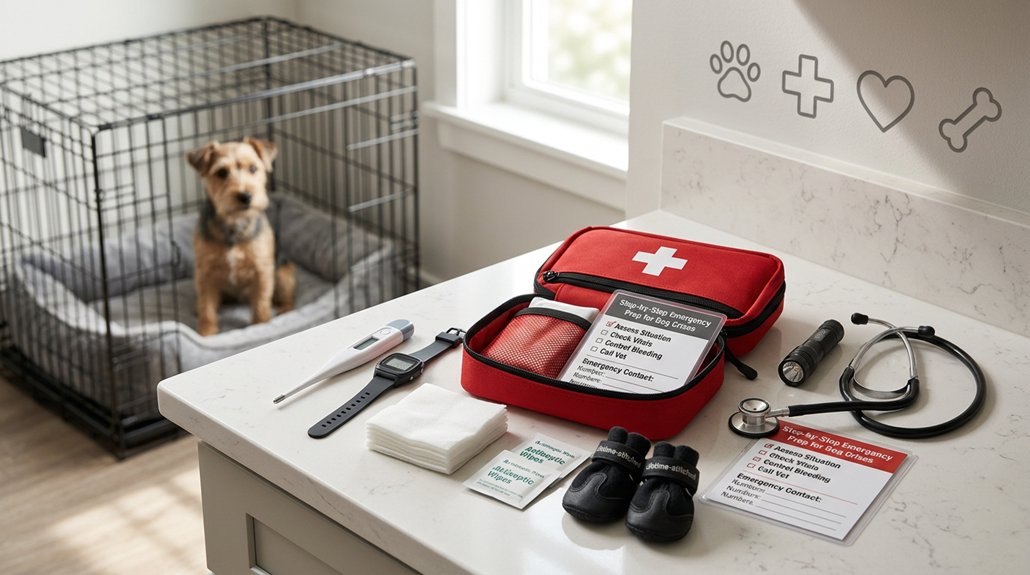
Although emergencies can occur without warning, being prepared for a dog health crisis can greatly improve outcomes for your furry friend. Make sure you’re ready with a thorough emergency prep strategy:
Being prepared for sudden dog health crises can significantly enhance recovery outcomes for your beloved pet.
- Detailed Kit: Assemble a pet emergency kit with medical records, two-week supplies of medications, food, and water. This is particularly vital when engaging in pet travel.
- Signs Familiarization: Learn to recognize emergency signs like difficulty breathing and excessive bleeding for quick decisions under stress.
- Emergency Plan: Develop a solid plan with local 24/7 veterinary clinics and pet poison control emergency contacts for immediate action.
- First Aid Practice: Regularly practice basic first aid techniques, including CPR and the Heimlich maneuver, for effective response during crises.
Regularly update your plan every six months to adapt to changing needs.
Quick Action Guide for Dog Health Issues
Aren’t you always on edge when your beloved pet doesn’t seem themselves? It’s vital to recognize emergency signals like difficulty breathing, excessive bleeding, or repeated vomiting. You’ll want to act swiftly and consult a vet. Behavior monitoring is essential—as changes in appetite or lethargy can signal serious issues. Make sure your pet emergency kit is well-stocked with first-aid supplies and pertinent documents. Master basic first aid techniques to handle crises effectively.
| Emergency Signal | First Aid Response | Critical Tool |
|---|---|---|
| Difficulty Breathing | Heimlich Maneuver | Emergency Contacts |
| Excessive Bleeding | Apply Pressure | First-Aid Kit |
| Vomiting/Diarrhea | Hydration | Vet’s Contact Info |
Plan ahead with a list of 24/7 veterinary services and designate a caregiver.
Financial Planning for Unexpected Vet Expenses

When facing unexpected veterinary expenses, it’s crucial to prepare financially for your pet’s health emergencies. Start by establishing a dedicated pet emergency fund. Save 1-3 months’ worth of average veterinary expenses for quick budget allocation. Consider pet insurance to offset costs, with average monthly premiums ranging from $30 to $70. Compare policies carefully to understand their coverage limits, exclusions, and reimbursement rates. Regular expense tracking through consistent veterinary visits helps anticipate future needs more accurately. Also, explore payment plans or financing options available at your vet’s clinic to better manage high expenses during emergencies.
- Pet Emergency Fund: Save 1-3 months of average expenses.
- Pet Insurance: Offers protection against unforeseen costs.
- Expense Tracking: Anticipate future financial needs.
- Payment Plans: Consider financing through clinics.
Frequently Asked Questions
How Do I Stop Worrying About My Dog’s Health?
You can stop worrying about your dog’s health by focusing on preventive care and stress management. Schedule regular vet visits, educate yourself on common issues, and maintain a routine for your dog to reduce anxiety and promote well-being.
What Do Dogs Do Right Before They Pass Away?
In their final moments, dogs may display the strength of a thousand mountains by finding quiet solitude. Common behaviors include seeking peace, decreased appetite, labored breathing, trembling, altered vocalizations, and significant changes in behavior and mobility.
What Breed of Dog Has the Most Health Issues?
You’re likely to find Bulldogs facing the most health issues. They’ve got genetic predispositions to common illnesses such as hip dysplasia and respiratory problems due to their physical conformation, needing attentive care and frequent vet visits.
What Are Signs of an Animal Being Unhealthy?
Imagine your pet as a ship’s compass; if it’s pointing strangely, pay attention. Unusual behavior, changes in appetite, or excessive thirst can signal rocky seas ahead, indicating your dog’s health may need immediate veterinary navigation.
Conclusion
Even if you hope you’ll never face a dog health emergency, it’s smart to prepare. Coincidentally, the peace of mind you gain is invaluable. By spotting symptoms early, taking preventive measures, gathering essential first-aid items, and planning financially, you’re ensuring your pet’s well-being. If a crisis arises, you’ll have a clear plan and won’t be scrambling. This preparation isn’t just a precaution—it’s a loving commitment to your furry family member’s health and safety.