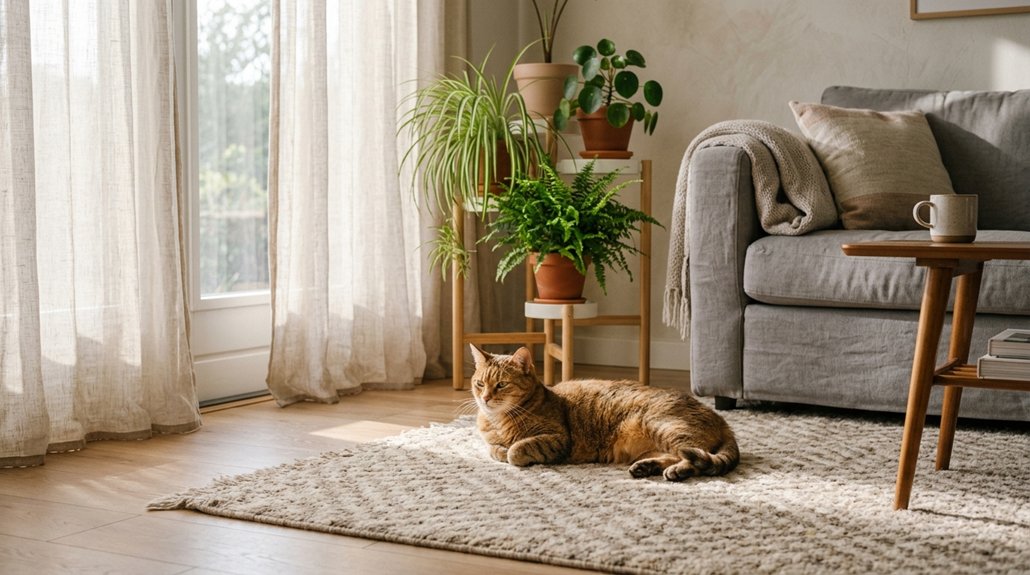
If you’re seeking tranquil companions for a low-energy household, consider breeds like Ragdolls, Persians, British Shorthairs, and Exotic Shorthairs. These cats thrive in peaceful settings, offering gentle companionship with minimal need for exercise. Their laid-back nature and adaptability make them perfect for quieter environments. Balanced meals and interactive toys keep them healthy and mentally stimulated. For more breeds and tips on maintaining their well-being, there’s additional information you might find interesting.
Key Takeaways
- Ragdolls and Persians offer affectionate companionship, thriving in serene, low-energy environments.
- British and Exotic Shorthairs provide gentle, cuddly interactions suitable for tranquil homes.
- Siberian Forest Cats adapt well to quiet living conditions, enhancing peaceful atmospheres.
- Low-energy cats engage in short play bursts, reducing exercise needs while maintaining health.
- Mixed breed cats offer genetic diversity and affordability in low-energy settings.
Choosing the Best Low-Energy Cat Breeds for Relaxed Homes
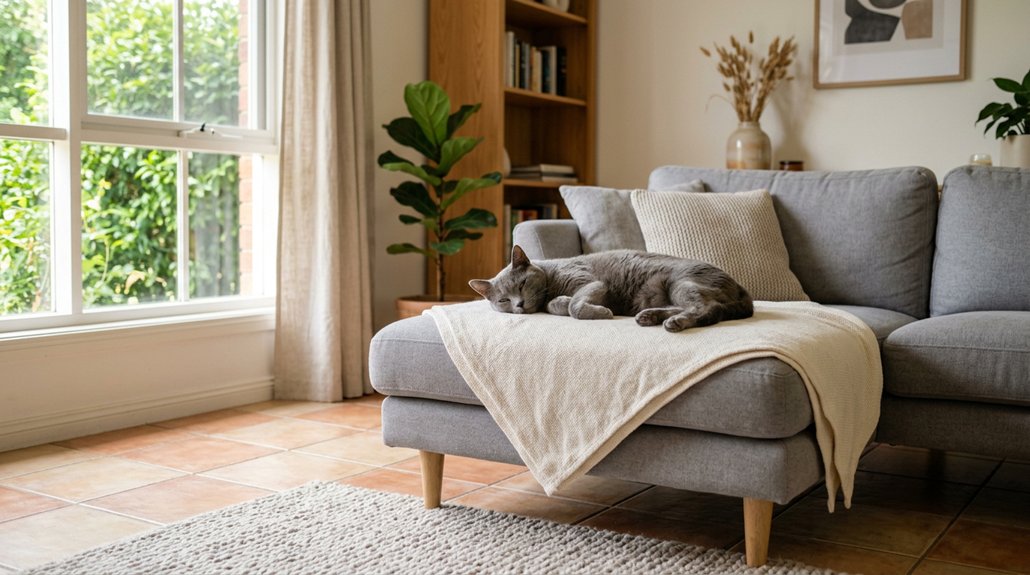
When selecting a low-energy cat breed for a relaxed home, consider each breed’s unique traits and temperament to guarantee compatibility with your lifestyle. Ragdolls are renowned for their docile nature and affectionate demeanor, often following you from room to room, seeking your presence without demanding attention. Their large size and striking blue eyes enhance their gentle appearance, making them a tranquil addition to any household. Persians boast a serene temperament, characterized by their calm and quiet disposition. Known for their luxurious coats and expressive eyes, they enjoy lounging rather than high-energy play, preferring to observe their surroundings in peace. Both Ragdoll and Persian breeds thrive in low-key environments, providing soothing companionship without overwhelming activity requirements, ideal for maintaining a restful home atmosphere.
Why Low-Energy Cats Make Perfect Companions
Identifying the right breed is essential, not just for compatibility but also for maintaining a peaceful household. Low-energy cats, like Ragdolls and Persians, thrive in relaxed environments, offering gentle companionship. They often engage in short play bursts, preferring lounging over active endeavors. For busy households, their laid-back nature means less need for exercise, which, alongside a balanced diet, prevents obesity.
| Breed | Key Traits |
|---|---|
| Ragdoll | Needs gentle companionship |
| Persian | Thrives in relaxed environments |
| British Shorthair | Enjoys cuddling, emotional support |
These breeds are content with predictable routines, self-entertaining in quieter living spaces. British and Exotic Shorthairs particularly relish close contact, providing emotional support without demanding constant attention, seamlessly fitting into low-energy lifestyles.
What to Look for in a Low-Energy Cat
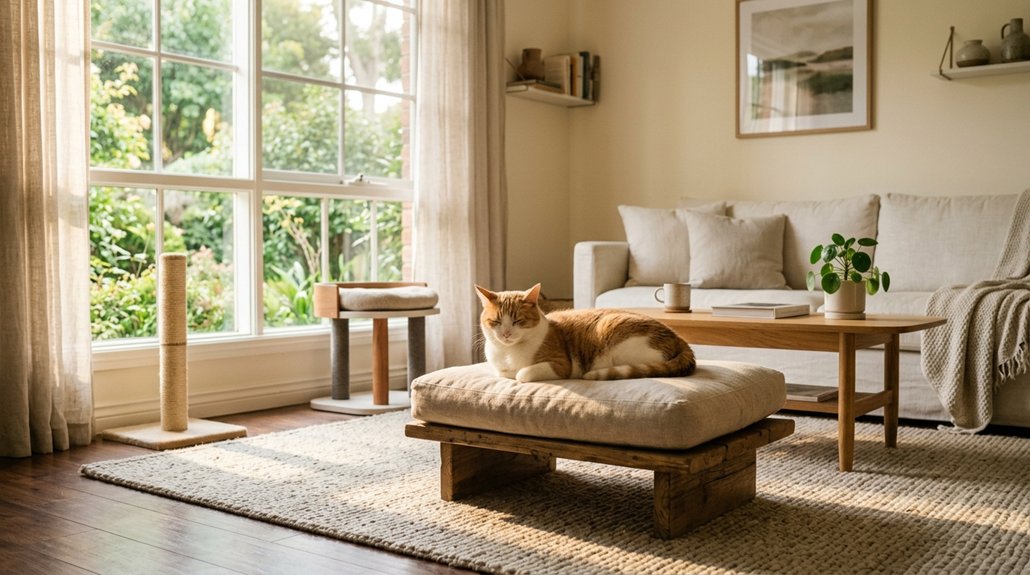
Selecting a low-energy cat requires an understanding of specific breed characteristics that align with tranquil household dynamics. Look for breeds like Persians, Ragdolls, and British Shorthairs, known for their calm, affectionate temperament traits. Such cats flourish in relaxed settings and adhere to predictable routines. Examine play preferences closely; ideal breeds will favor shorter play sessions and enjoy lounging rather than needing constant stimulation. The Exotic Shorthair and Siberian Forest Cat are prime examples, as they don’t require extensive exercise and can comfortably settle into quiet living conditions. Investigate sociability and gentleness in potential companions, ensuring they enjoy interactions without high demands. Opt for cats comfortable in familiar environments, as they contribute to maintaining a serene home atmosphere.
How to Keep Your Low-Energy Cat Healthy and Happy
Understanding the characteristics of low-energy cat breeds lays the groundwork for ensuring their health and happiness in your home. Dietary considerations are essential; provide balanced meals to prevent obesity and maintain a healthy weight. Schedule regular veterinary check-ups to monitor their weight and overall health. Engaging your cat’s mind is equally important. Use interactive toys that require minimal energy for mental stimulation, preventing boredom without overwhelming them. Create cozy resting areas to foster a low-stress environment, allowing your feline friend to lounge comfortably. Short bursts of gentle play maintain physical health while respecting their energy levels.
| Aspect | Recommendation | Benefits |
|---|---|---|
| Diet | Tailored meals | Weight management |
| Veterinary Care | Regular check-ups | Health monitoring |
| Toys | Interactive, low-energy | Mental stimulation |
| Environment | Cozy resting spots | Secure, stress-free space |
| Play Sessions | Gentle, short bursts | Physical activity support |
Explore Low-Energy Mixed Breeds for Tranquil Homes
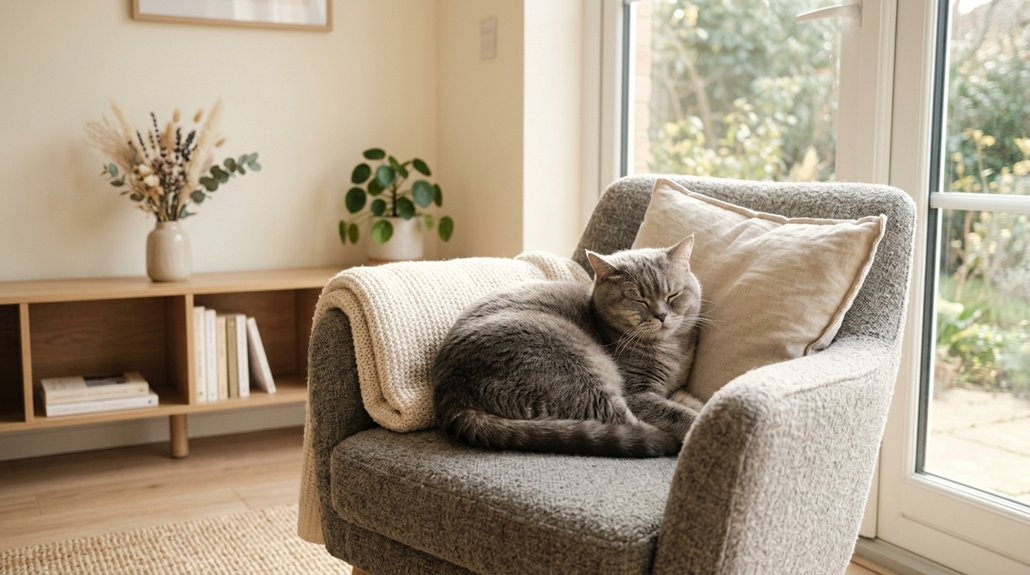
When seeking tranquility and companionship, low-energy mixed breed cats can be an ideal choice for your home. These cats present mixed breed benefits stemming from genetic diversity, often resulting in fewer hereditary health issues. This genetic variety supports their adaptable temperaments, allowing them to thrive in quiet or bustling environments alike. You’ll find their calm, gentle demeanor provides reassuring companionship without the constant demand for interaction, perfect for tranquil households.
Moreover, low-energy mixed breeds often require less grooming compared to their purebred counterparts, easing the burden on less experienced pet owners. Financially, adopting one is advantageous; initial costs typically include essential vaccinations and spaying/neutering, ensuring affordability and promoting animal welfare. This attractive combination makes them a smart option for peaceful homes.
Frequently Asked Questions
What Is the 3-3-3 Rule With Cats?
The 3-3-3 rule explains a cat’s adjustment period after adoption: three days to acclimate, three weeks to get comfortable, and three months to fully settle. With feline behavior tips, you can ease this adjustment gracefully.
What Is the Cuddliest and Calmest Cat Breed?
In the serene symphony of cat breeds, Ragdolls stand out as the epitome of cuddle preferences and quiet demeanor. Their gentle nature and tendency to go limp in your arms guarantee a peaceful, loving companionship.
What Annoys Cats the Most?
Cats are most annoyed by loud noises and changes in their environment. Disrupted routines, overstimulation, and invasive interactions heighten feline behavior issues and cat stress. Even strong odors can disturb your cat’s sensitive senses, causing discomfort and avoidance.
How Do Cats Say Goodbye?
Cats employ subtle euphemisms in their parting gestures. You’ll notice changes in their behavior: extra affection or solitude. Their feline communication can include soft meows or purrs, reflecting their attempts to convey an emotional farewell.
Conclusion
In choosing the best low-energy cat breeds for your tranquil home, you’ve considered every angle of feline companionship. These cats, akin to serene shadows, offer calmness and connection without demanding constant activity. Remember, what you’ve got in these creatures is more than a pet—it’s a gentle balm for the heart. Guarantee their environment supports their relaxed demeanor, and you’ll find your bond grows as naturally as sunlight fills a room, a perfect harmony of peace and friendship.