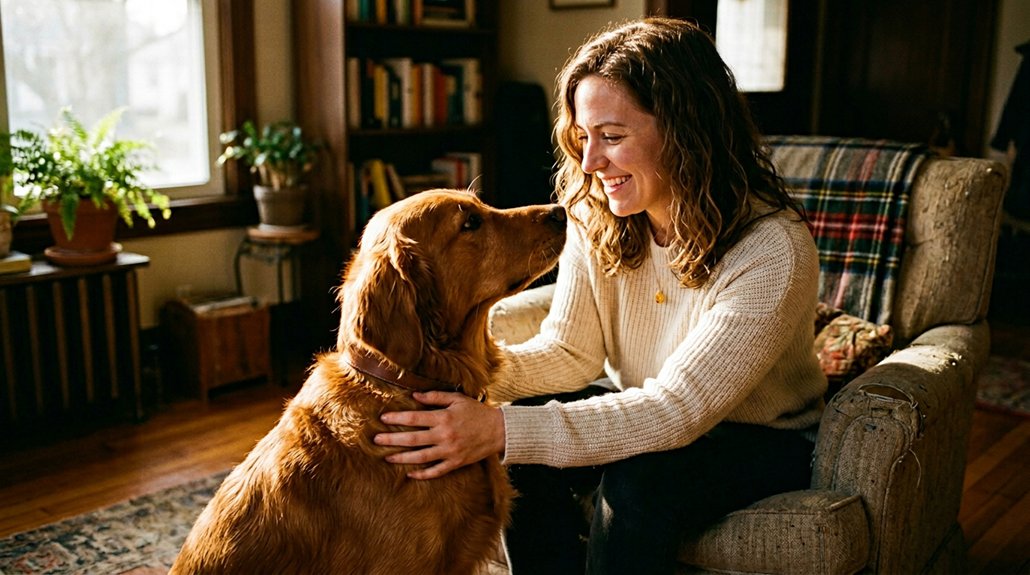
Strengthen your relationship with your dog by understanding their body language and using positive reinforcement. Tail movements and eye contact reveal emotions, helping you respond appropriately. Engaging in bond-building activities like playtime and structured exercises fosters trust and companionship. Establish a consistent routine for feeding and walking to reduce anxiety and improve behavior. Advocate for your dog’s comfort by recognizing stress triggers and offering a safe space. Explore expert strategies to deepen your connection further.
Key Takeaways
- Understand and respond to your dog’s body language to foster trust and reduce stress.
- Use positive reinforcement to encourage desired behaviors and build emotional wellbeing.
- Engage in daily bond-building activities, including playtime and one-on-one adventures.
- Establish a consistent routine to reduce anxiety and improve behavior through predictability.
- Advocate for your dog’s comfort by identifying stress triggers and providing a safe space.
Understand Your Dog’s Body Language
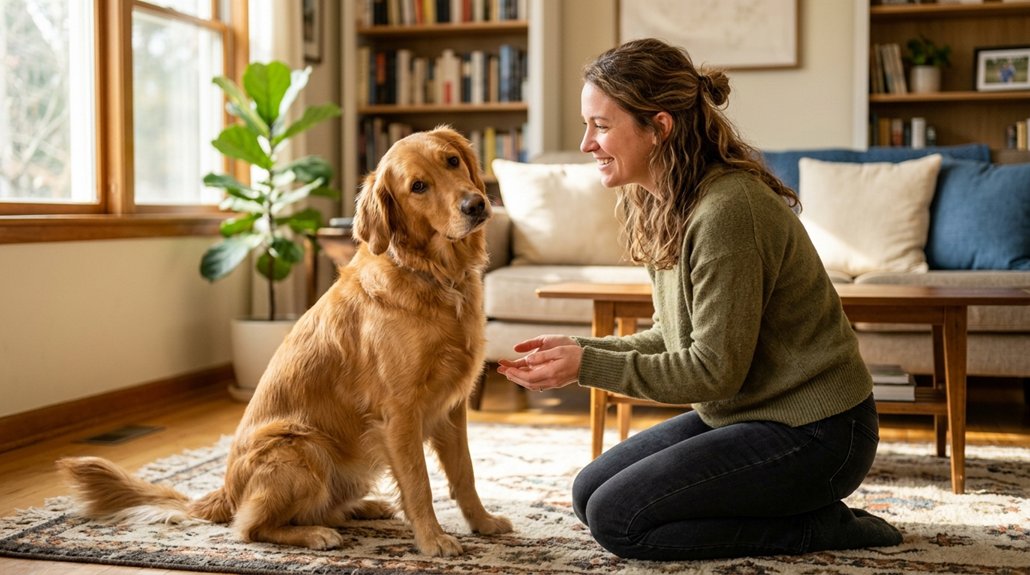
Understanding your dog’s body language is essential for developing a deep and trusting relationship. Dogs express themselves through tail communication and emotional signals, which can be decoded with keen observation. For instance, a relaxed, wagging tail usually indicates happiness, whereas a stiff, elevated tail can signify alertness or aggression. Recognizing these cues is vital for appropriately responding to your dog’s feelings. Stress signs such as yawning or lip licking suggest your dog may need comfort or a break. Eye contact also plays a significant role; soft eyes show comfort, while wide eyes may reveal anxiety. Familiarizing yourself with these subtleties allows you to effectively interpret your dog’s emotional signals, fostering a stronger bond and contributing to a harmonious coexistence.
Use Positive Reinforcement
After decoding your dog’s body language, it’s important to engage in communication that reinforces desired behaviors. Using positive reinforcement training, reward your dog with treats, praise, or playtime to effectively solidify these behaviors. This method not only encourages repetition but also builds trust, promoting emotional wellbeing through a safe learning environment. Ensuring training consistency by using the same commands and reward variety is essential. This approach clearly signals which behaviors are rewarded and aids in faster learning. By constructing a cooperative relationship, positive reinforcement greatly reduces canine stress and anxiety, moving away from a fear-based dynamic. Consider enrolling in positive reinforcement training classes for structured support, enhancing your bond and deepening mutual understanding with your dog.
Prioritize Bond-Building Activities
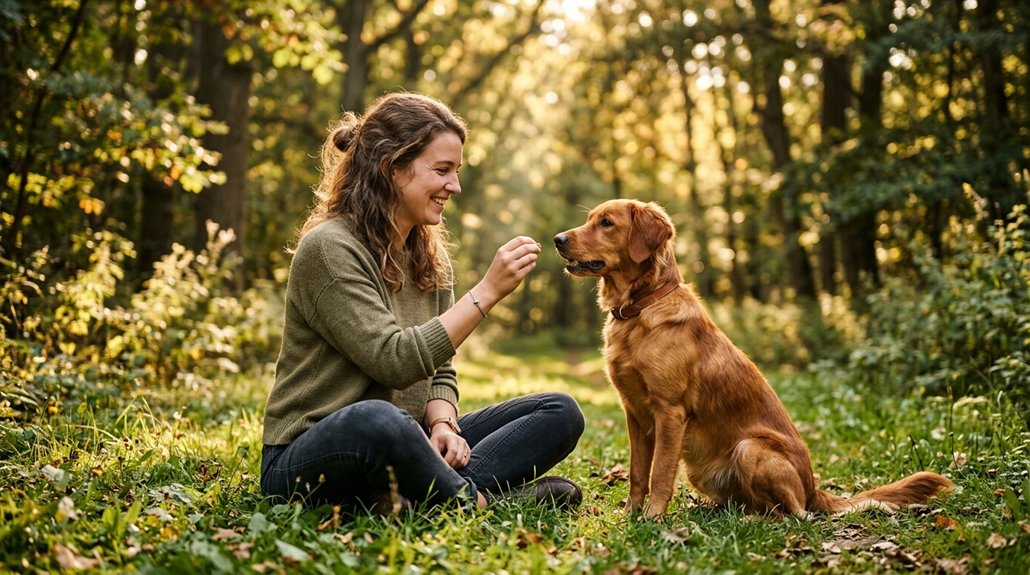
When you prioritize bond-building activities with your dog, you’re investing in the emotional and psychological welfare of both you and your pet. Engaging in daily playtime activities like fetch or tug-of-war addresses their physical exertion and mental stimulation, fostering a deeper emotional connection. Hand feeding can transform mealtime into a powerful communication session, establishing trust and clarity of leadership through direct interaction. Taking one-on-one adventures exposes your dog to new stimuli, boosting their confidence and reinforcing your mutual bond. Enrolling in structured classes or dog sports adds layers of teamwork and skill development, strengthening your relationship through shared goals. By aligning with your dog’s interests, you deepen the attachment, as they view you as both lead and companion.
Create a Consistent Routine
Incorporate a consistent routine into your dog’s daily life to boost their sense of security and well-being. By establishing a predictable feeding schedule and walking frequency, you’ll reduce their anxiety and improve behavior. Dogs naturally crave structure; regularity in activities allows them to anticipate their needs being met, fostering trust and building a more comfortable environment. This consistency helps simplify training, making commands and expectations clearer. As a result, your dog will exhibit improved learning outcomes and compliance.
For dogs adapting to new homes, a steady routine can greatly alleviate stress. It guarantees their exercise and socialization needs are met, providing lasting mental and physical stimulation. Remember, a well-structured schedule is the foundation of a thriving relationship with your canine companion.
Advocate for Your Dog’s Comfort
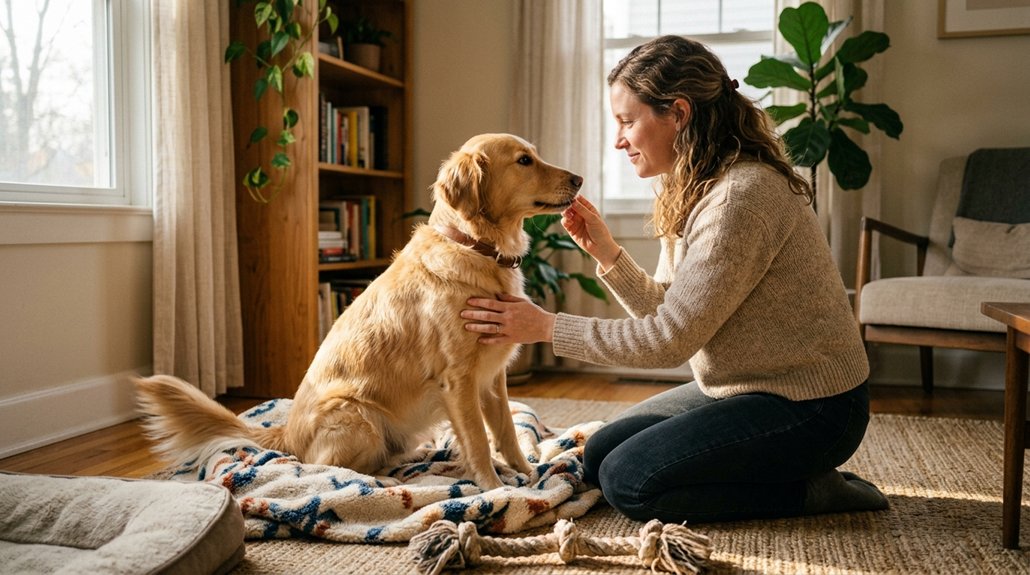
While consistency in routine lays the groundwork for a supportive environment, advocating for your dog’s comfort guarantees they feel understood and secure amidst life’s unpredictable moments. Recognizing stress triggers like loud noises or unfamiliar people is vital. Your ability to identify these can prevent distress, ensuring proactive avoidance of anxiety-inducing scenarios. Monitor your dog’s body language—subtle cues like turning away or lip licking are indicators of discomfort signaling the need for reassurance. Communicating boundaries with strangers will avert forced interactions, fostering a more secure atmosphere for your dog. Establishing a safe space at home is essential; it serves as a sanctuary where your dog can retreat, promoting emotional resilience and comfort during stressful situations. Prioritizing their comfort nurtures a stronger bond.
Frequently Asked Questions
What Is the 7 7 7 Rule for Dogs?
The 7 7 7 rule involves dogs taking seven days for environmental adjustment, seven weeks for learning routines, and seven months for bonding. Use canine communication and bonding activities during each phase to optimize adjustment and strengthen connections.
How Do I Build a Strong Relationship With My Dog?
Building a strong relationship with your dog relies on positive reinforcement and trust building. Use treats and praise to reward good behavior. Implement consistent training techniques, and respect your dog’s unique behavioral needs to foster lasting trust.
What Is the 3-3-3 Rule With Dogs?
The 3-3-3 Rule outlines your dog’s adaptation: three days of stress, three weeks of gaining trust, and three months of revealing true behavior. Use juxtaposition and training techniques to navigate each phase, fostering a deep bond.
What Not to Do With Dog Separation Anxiety?
Don’t punish or use negative reinforcement for separation anxiety—it worsens distress. Instead, create a safe space, fostering security and predictability. Avoid long crate times and abrupt departures; consistency calms your dog, strengthening their emotional resilience.
Conclusion
To truly strengthen your relationship with your dog, think of it like weaving a tapestry of trust and companionship. By understanding their body language and using positive reinforcement, you’re stitching in threads of communication and mutual respect. Prioritizing bond-building activities and creating a consistent routine forms the sturdy framework of your connection. Always advocate for your dog’s comfort, as it’s the glue holding your bond together. With dedication and patience, your relationship will flourish like a well-tended garden.