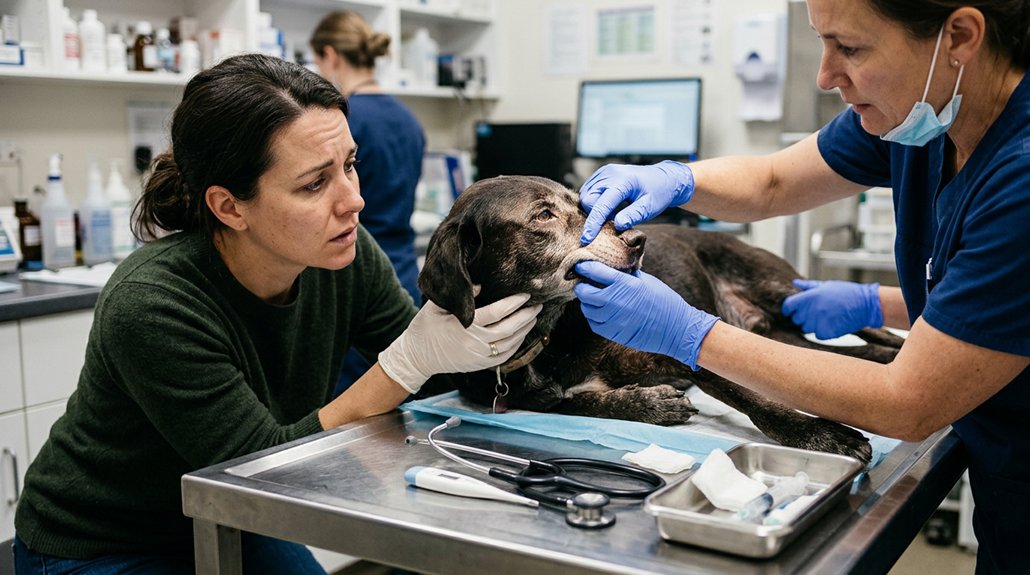
In a dog health emergency, quick action is essential. First, assess the environment for safety, then calmly comfort your dog to reduce stress. Contact your vet immediately, detailing symptoms and seeking guidance on first aid for issues like bleeding or choking. Stabilize your dog during transport, using carriers or support as needed. Keep an emergency kit handy at all times. By understanding these steps, you’ll be better prepared to handle any crisis your dog may face.
Key Takeaways
- Assess the immediate safety of the environment before approaching the distressed dog.
- Contact a veterinary hospital promptly for guidance and possible emergency care.
- Apply direct pressure to control severe bleeding and elevate the wound if needed.
- Look for signs of shock, such as pale gums, and keep the dog calm.
- Use carriers or stretchers to transport the dog safely without causing further injury.
Recognize Common Signs of Dog Health Emergencies
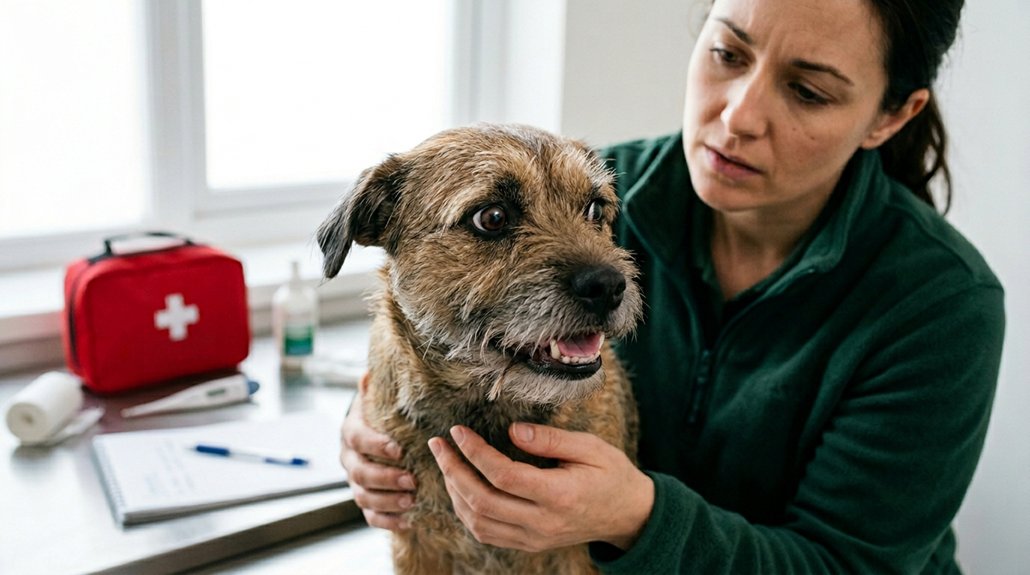
How can you tell when your dog’s health is in jeopardy? It’s essential to master symptom recognition and be ready for any emergency. For instance, if your dog experiences excessive vomiting or diarrhea, especially with blood, it could indicate a severe gastrointestinal issue requiring immediate veterinary attention. Recognizing rapid or labored breathing as a respiratory emergency is important for evaluating the need for urgent care. Pale or bluish gums might suggest shock or severe illness, demanding prompt evaluation. Seizures lasting over two minutes, or recurring quickly, call for immediate medical action. If your dog whimpers, refuses to move, or shows abnormal posture, these signs of severe pain indicate a potential crisis. Be prepared to act swiftly and seek professional help.
Keep Your Dog Calm in Emergencies
During an emergency, keeping your dog calm is essential to manage the situation effectively. Your calm presence sets the tone, as dogs often mirror your emotions. Implement these expert calm techniques to support your dog:
Your calm presence during emergencies helps manage your dog’s stress effectively.
- Stay Composed: Maintain your composure, as dogs can sense anxiety. Your calmness helps reduce their stress levels.
- Gentle Reassurance: Use a soothing voice alongside gentle touches to comfort them, reinforcing a sense of safety.
- Security Items: Offer a familiar item, like a favorite blanket or toy, to provide comfort and security in an unsettling environment.
- Distraction Methods: Utilize treats or simple commands to redirect your dog’s focus, easing distress while maintaining their attention.
Initial Steps for Dog Emergency Care
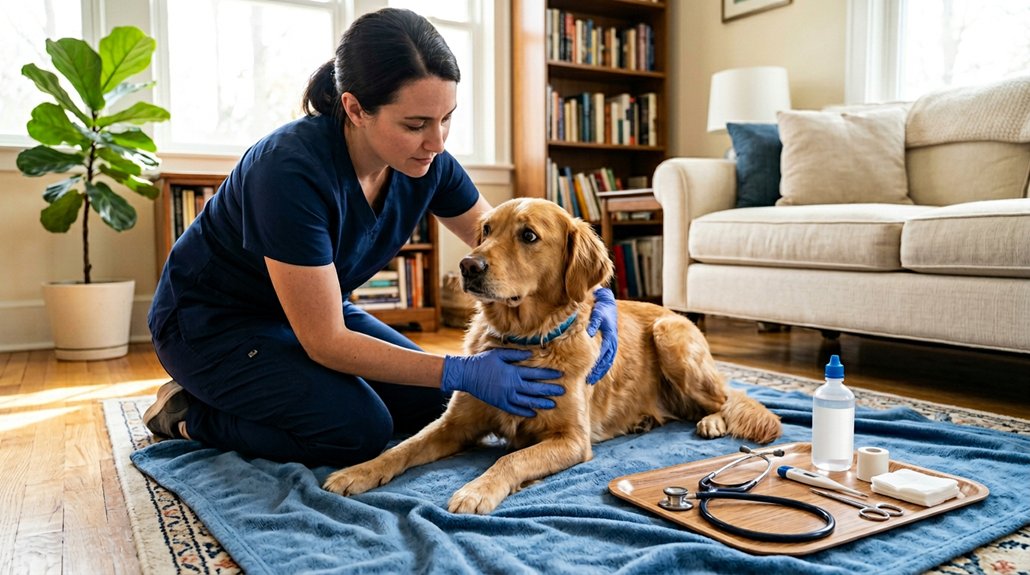
In an emergency involving your dog, your initial focus should be on evaluating the scene for safety to protect both you and your pet. If you determine the situation is safe and the dog is seriously injured or in distress, immediately contact a veterinary hospital for critical first aid guidance and transport instructions. Remember, your prompt actions and clear communication with professionals can greatly impact your dog’s chances of recovery.
Assess Scene Safety
Every dog emergency demands an initial assessment for scene safety to protect both you and the injured animal. Begin with a thorough scene assessment—check for hazards like traffic or aggressive animals. Maintain a safe distance at first, observing the dog’s behavior carefully. If the dog is near a road or similar danger, prioritize securing the area to prevent any further harm. Approach slowly with calmness, using a gentle voice to soothe the dog, ensuring your movements reflect awareness and precaution.
Here’s what to take into account:
- Hazards: Identify nearby dangers to both you and the dog.
- Distance: Observe the dog’s behavior from afar before approaching.
- Environment: Secure the scene if immediate threats are present.
- Approach: Move toward the dog slowly and reassuringly.
Contact Veterinary Hospital
When faced with a suspected dog health emergency, promptly contacting your veterinary hospital or a local emergency clinic is essential. Effective vet communication guarantees that you’re guided through the emergency protocol efficiently. Start by providing detailed information about your dog’s symptoms, any visible distress, and the incident’s context. These specifics help the vet assess the situation promptly.
If advised, gather your dog’s medical records, medications, and details about any harmful substances involved. Expect discussions about financial estimates, as emergency care often incurs higher costs. Upon arrival, check in efficiently and respect the established emergency protocol. The clinic will perform an initial assessment to gauge the severity. Your preparedness and communication can greatly enhance your dog’s emergency care experience.
First Aid for Bleeding, Choking, and Seizures
In emergency situations involving your dog, quick and precise action can mean the difference between recovery and tragedy. For severe bleeding, applying direct pressure to a wound immediately helps control blood loss and should be maintained until veterinary assistance is available. When faced with choking, checking for and removing any visible obstructions is vital, and for dogs of various sizes, knowing the appropriate technique for the Heimlich maneuver offers an essential lifeline.
Managing Severe Bleeding
If your dog’s bleeding is severe, immediate action is essential to prevent excessive blood loss. Employ effective bleeding control and wound care techniques to stabilize your pet before seeking veterinary assistance. Here’s what you should do:
- Apply Direct Pressure: Press a clean cloth or bandage firmly against the wound for at least three minutes. This helps control severe bleeding and reduces infection risk.
- Elevate the Wound: If the bleeding persists, gently elevate the affected area above the heart level. This step aids in slowing the blood flow.
- Monitor for Shock: Look for signs such as pale gums and rapid breathing. Keep your dog calm and warm.
- Seek Veterinary Help: Once initial bleeding control is achieved, get professional help promptly for further care.
Handling Choking Episodes
While managing severe bleeding, preparedness for any sudden complications is key, including knowing how to handle a choking episode. Recognize signs like difficulty breathing, pawing at the mouth, or blue-tinged lips, indicating choking. To guarantee choking prevention, always be vigilant during your dog’s feeding times. If choking occurs, calmly assess breathing ability. If the airway’s blocked, use emergency techniques: open the mouth carefully and attempt object removal if visible. Don’t reach blindly. Execute a modified Heimlich maneuver based on size—lift small dogs, for larger ones, thrust inward and upward around the abdomen. Afterward, monitor for distress and seek veterinary assistance. Prompt action can make a significant difference in these emergencies, assuring your dog’s safety and well-being.
Safe Transportation Methods for Injured Dogs
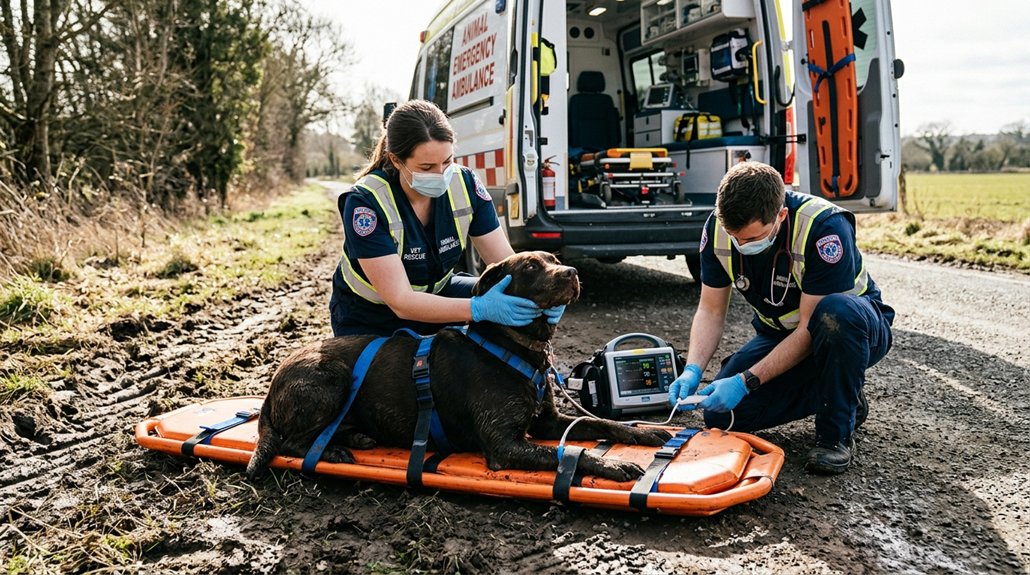
Transporting an injured dog safely requires attention to several vital steps to prevent further harm. It’s important to employ proper transportation techniques and consider using emergency carriers to stabilize your pet. Here’s how to do it effectively:
- Use Carriers/Stretcher: A carrier or makeshift stretcher minimizes movement, essential if spinal injuries are suspected.
- Support Head/Neck: Always support the dog’s head and neck during transport, especially if fractures or spinal damage are potential issues.
- Manage Aggression/Anxiety: Approach calmly and, if needed, use a makeshift muzzle from a belt or leash to guarantee everyone’s safety.
- Maintain Warmth/Comfort: Keep your dog warm with a blanket to help sustain body temperature and improve comfort during the trip.
Each step safeguards your dog’s wellbeing during transit.
How to Talk to Your Vet During Emergencies
In the midst of a pet health crisis, maintaining clear communication with your veterinarian is essential. Vet communication is pivotal in emergencies. Save your vet’s contact details in your phone and prominently on your refrigerator. When the emergency arises, convey the situation with precision.
| Always Provide | Key Information | Why It Matters |
|---|---|---|
| Symptoms | Duration | Assists in immediate assessment |
| Allergies | Medications | Guides treatment options |
| History | Recent Events | Aids in accurate diagnosis |
Dog Emergency Kit Essentials
Your dog’s well-being in emergencies can depend greatly on the contents of your dog emergency kit. To guarantee you have the right dog first aid and emergency tools, consider including the following essentials:
- Essential Phone Numbers: Keep a list of contacts such as your veterinarian, local emergency animal hospitals, and poison control hotlines for swift access during a crisis.
- Medical Records: Have a copy of your dog’s records, including vaccinations and medications, to assist with treatment decisions.
- Digital Thermometer: A pet-specific thermometer is vital to monitor temperature changes signaling health issues.
- Bandaging Supplies: Pack gauze, nonstick tape, and scissors to handle wounds efficiently.
Additionally, include a muzzle, leash, and collar for safe transport if your dog is in pain or frightened.
How to Prepare for Future Dog Emergencies
A crucial step in preparing for future dog emergencies involves creating a robust plan that assures quick and effective action. Start by gathering a well-stocked pet first aid kit with essentials like bandaging materials, a digital thermometer, and a muzzle. Confirm you have important contact numbers for your vet and poison control at the ready. Familiarize yourself with nearby emergency vet clinics, storing their contacts both at home and in your phone. Regular veterinary check-ups support pet wellness, catching issues early and reducing emergency risks. Consider dog insurance to help manage unexpected medical costs. Educate family and caregivers on recognizing distress signs and executing emergency steps. Practice a disaster plan, incorporating safe transport with carriers or leashes for ultimate preparedness.
Frequently Asked Questions
What Is Considered a Medical Emergency for a Dog?
If your dog shows symptoms like excessive vomiting, seizures, or difficulty breathing, it’s a medical emergency needing prompt veterinary care. Don’t attempt dog CPR or first aid unless instructed by a professional, emphasizing urgent attention.
What Is a Silent Killer in Dogs?
Around 25% of dogs will develop a silent killer like heart disease. Hidden ailments like heart issues often have common symptoms, such as fatigue or coughing, that are easily overlooked. It’s vital to recognize these subtle warning signs early.
What Are Signs Your Dog Is Going to Pass Away?
You’ll recognize end of life signs when your dog shows persistent lethargy, labored breathing, or drastic appetite changes. In their final moments, increased isolation and restlessness signal distress, indicating it’s time for compassionate veterinary assistance.
What Are 5 Examples of Emergency Situations?
Imagine your dog’s life is literally hanging by a thread! Emergency situations include suffocating dog choking, catastrophic bleeding, acute hemorrhagic diarrhea syndrome, anaphylaxis, and gastric dilatation-volvulus. Recognize these critical signs and don’t delay seeking professional veterinary help.
Conclusion
As you navigate the complexities of a dog health emergency, remember that preparation and calmness are your greatest allies. It’s no coincidence that your readiness can turn a chaotic moment into a manageable one. By recognizing the signs, administering basic first aid, and effectively communicating with your vet, you guarantee your furry friend’s safety. With a well-stocked emergency kit and a plan in place, you’re not just prepared—you’re empowered to protect and care for your beloved companion.