To determine if your lifestyle fits dog ownership, evaluate your daily routine for time available for training, exercise, and social interaction. Consider your living space, family dynamics, and financial readiness for pet care. Match your activity level with a suitable breed’s energy needs, keeping in mind grooming and potential health issues. Assess your long-term commitment and readiness for added responsibilities. By understanding these aspects, you’ll guarantee a harmonious fit for a fulfilling pet-owner relationship. Explore further for deeper insights.
Key Takeaways
- Evaluate your daily schedule to ensure time for dog training, exercise, and social interactions.
- Consider family dynamics and find suitable breeds for compatibility with children or elderly members.
- Assess your living space to determine if it accommodates the size and activity needs of a dog.
- Reflect on your personal activity level to choose a breed matching your lifestyle, whether active or relaxed.
- Ensure financial preparedness for all dog-related expenses, including nutrition, veterinary care, and emergencies.
Determine Your Lifestyle Compatibility
How exactly does one determine if their lifestyle is compatible with owning a dog? Begin with a thorough lifestyle assessment. Examine your daily routine—do you have the time for training, exercise, and social interactions essential for dog ownership? This is especially important for high-energy breeds demanding consistent activity. Consider family dynamics since certain breeds might not suit homes with young children or elderly members. Reflect on your financial readiness for expenses like nutrition, veterinary care, grooming, and emergency health issues. It’s essential to be candid about your personal activity levels. If you’re active, a high-energy dog could complement your routine. Conversely, if your lifestyle leans towards relaxation, a low-energy breed might be more fitting. Prioritize compatibility for a rewarding experience.
Assess Your Living Space for Dog Lifestyle Compatibility
While determining if your living space matches a dog’s needs, it’s important to recognize how it directly affects their well-being and behavior. Apartment size plays a significant role—smaller spaces are better for petite breeds, while larger homes suit active dogs needing ample exercise. Consider yard space; if you’ve got it, especially fenced, it can provide an ideal area for high-energy dogs to safely play and exercise. Make sure the environment accommodates accessible areas for dog relief and enrichment. Research local regulations for breed or size restrictions that might influence your choice. Additionally, factor in harmonious interactions within your home, especially with children or other pets, to guarantee a positive living situation for everyone involved. Prioritize your pet’s health and happiness in these assessments.
Balance Your Schedule for Dog Care
Balancing your schedule to accommodate a dog’s needs requires evaluating your daily commitments and allocating dedicated time for walks and interaction. Prioritize at least 1-2 hours daily for exercise and training, as these activities are essential for your dog’s physical and mental health. Additionally, plan for reliable pet-sitting arrangements for when you’re away, ensuring your dog receives necessary companionship and care.
Prioritize Daily Walks
Ever wondered why daily walks are a non-negotiable part of dog care? It’s because the exercise benefits are immense for your dog’s physical and mental health. Structured walking routines help channel their energy, reducing the risk of behavioral problems such as anxiety and destructiveness. Depending on your dog’s breed and energy level, aim for 30 minutes to 2 hours a day. Scheduling consistent walks strengthens their sense of security and aids in obedience training. However, balancing this with work, family, and personal time can be challenging. If you’re worried about meeting these exercise needs, consider opting for low-energy breeds that require less exertion. Remember, ensuring your dog’s well-being is an essential part of responsible dog ownership, benefiting both your pup and your home environment.
Plan for Pet Sitter
Do you often find your schedule competing with your dog’s care needs? If you’re frequently on the go, planning for pet sitting options is essential. Prioritize researching reliable services or kennels well in advance, particularly during busy holiday seasons. Scheduling flexibility is key, so explore local pet-sitting communities or use apps to find sitters who accommodate your lifestyle. Likewise, examine your daily routine to identify windows for bonding activities like walks and playtime.
Prepare for those just-in-case moments by setting up an emergency fund dedicated to unforeseen pet care expenses, such as last-minute sitters or veterinary costs. By strategically managing your time and resources, you’re ensuring your dog receives the attention and care they deserve, even amidst a bustling lifestyle.
Plan Your Pet Budget
Determining your pet budget is essential before welcoming a dog into your life. Whether adopting or purchasing, initial costs can range from $50 to several thousand dollars, affected by breed, age, and location specifics. Be mindful that maintaining your dog’s health will incur ongoing expenses averaging $1,000 to $2,000 annually. Don’t overlook the potential for unexpected expenses, particularly veterinary care, which can average between $500 and $2,000 each year. Here’s your emotional checklist:
- Initial excitement: acquiring a new companion may mean a significant upfront investment.
- Heartfelt commitment: ensuring finances for ongoing care.
- Preparedness: setting aside funds for those unpredictable vet bills.
- Financial foresight: incorporating pet insurance or boarding costs if travel’s in your future.
Assess financial commitment realistically—your dog’s quality of life depends on it.
Manage Grooming Needs and Address Allergies
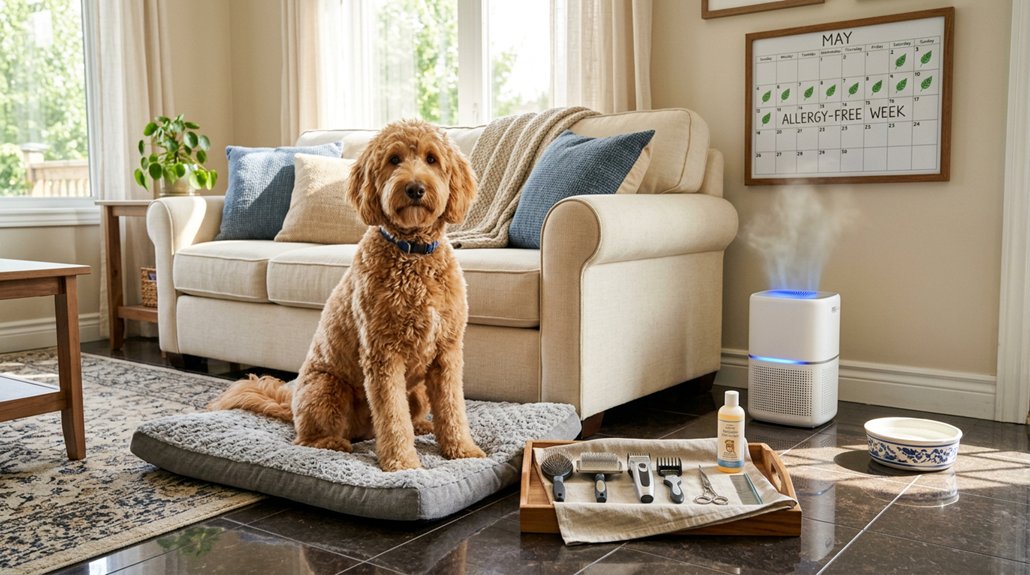
When considering a dog, it’s essential to assess your ability to manage grooming needs and address potential allergies. Opting for hypoallergenic breeds like poodles can mitigate allergic reactions due to their minimal shedding and allergen production. Understanding the grooming commitment required, whether frequent grooming sessions for long-haired breeds or regular baths for short-haired ones, guarantees your lifestyle will accommodate your pet’s health and hygiene.
Choose Hypoallergenic Dog Breeds
Wondering whether a hypoallergenic dog might be the answer to your allergy woes? Embracing breeds like Poodles, Bichon Frises, or Maltese can offer significant health benefits by minimizing allergens in your home. Prioritizing allergen management means looking for dogs that produce less dander and shed minimally. Here’s why choosing a hypoallergenic breed can be a smart move:
- Reduced Allergy Symptoms: These breeds often trigger fewer allergic reactions.
- Improved Air Quality: Less dander means cleaner air in your living space.
- Peace of Mind: Enjoy companionship without constant sneezing.
- Healthier Living Environment: Regular grooming and bathing help maintain both the dog’s coat and your home’s condition.
Research breed traits carefully to guarantee the perfect match for your lifestyle.
Assess Grooming Commitment
Have you ever considered how a dog’s grooming needs could impact your lifestyle and health? Understanding grooming frequency and shedding levels is essential. Long-haired breeds demand frequent grooming—sometimes multiple times a week—to avoid matting and keep their coats healthy. If time is tight, low-maintenance breeds with minimal grooming demands might fit better, but remember, short-haired dogs can still shed considerably, which may affect allergy sufferers. So, shedding levels matter. Opting for hypoallergenic breeds, such as Poodles or Bichon Frises, can be beneficial due to their reduced dander and shedding. Regular grooming not only enhances appearance but also prevents skin issues and promotes overall health. Evaluating grooming needs should be a key part of deciding on your new canine companion.
Consider How a Dog Fits Into Your Family
How well does a dog’s temperament fit your family’s unique dynamics? Family interactions can greatly benefit from a dog’s presence, but a temperament assessment is essential. Here’s what to reflect on:
- Compatibility: Guarantee the dog’s temperament matches your family, especially if you have young kids or elders who might need gentle interactions. Choose breeds known for their adaptability.
- Responsibilities: Discuss and agree on sharing dog care among all family members. This can bolster family bonds and collective accountability.
- Activity Match: Align your family’s energy levels with the dog’s exercise needs. Active families might thrive with high-energy dogs.
- Health Considerations: Be mindful of allergies. Some breeds are hypoallergenic and might be a better fit for those with sensitivities.
Reflect on these factors and make an informed decision.
Research Dog Breeds and Temperaments
Understanding your family’s dynamics can guide you towards selecting a dog that seamlessly integrates into your lifestyle. To match this integration, start with breed personality research. For example, a Golden Retriever’s sociability suits families with young children, while a Basenji’s reserved nature might better fit quieter homes. Consider exercise requirements: active breeds like Australian Shepherds need ample activity, whereas Bulldogs suit laid-back environments. Don’t overlook health considerations, such as hip dysplasia in larger breeds or respiratory issues in brachycephalic ones. Research mixed-breed dogs for blended traits that might align with diverse living situations. Also, assess social behaviors and training needs to guarantee compatibility with other pets or visitors. Tailoring these factors helps in responsibly welcoming a dog into your life.
Decide If You’re Ready for a Long-Term Commitment
While the joy of owning a dog is undeniable, the decision involves a commitment that spans a decade or more, demanding thorough consideration. To guarantee you’re ready for this long-term responsibility, evaluate several key areas:
- Financial Readiness: Owning a dog can cost $1,000 to $2,000 yearly, covering basic needs.
- Time Management: Dedicate daily moments to exercise, training techniques, crucial for a healthy relationship.
- Family Dynamics: Consider how a pet will fit into your household, especially if you have young children or elderly members.
- Life Changes: Plan ahead for potential moves or job shifts to maintain consistent care.
Assessing these factors guarantees a fulfilling experience for both you and your future furry companion.
Frequently Asked Questions
How Do You Know if You’re Fit to Own a Dog?
You’ll know you’re fit for dog ownership if you can responsibly manage time, finances, and living space. Evaluate your routine, consider family dynamics, and commit to long-term care, ensuring a healthy, harmonious life for both you and the pup.
What Is the 7 7 7 Rule for Dogs?
The 7-7-7 rule humorously suggests your dog becomes the perfect companion after juggling dog behaviors for seven days, weeks, and months. Although ironic in simplicity, it guides informed pet ownership, ensuring your dog’s healthy acclimation.
What Is the 3-3-3 Rule With Dogs?
The 3-3-3 rule outlines dog adjustment phases: three days of initial stress, three weeks for personality emergence, and three months for full integration. Understanding this helps set realistic ownership expectations and supports a healthy adjustment.
What Is the 3-3-3 Rule About?
Ever wonder how long a dog’s adjustment period takes? The 3-3-3 rule explains it all: 3 days of shock, 3 weeks of settling in, and 3 months to reveal true dog behavior. It’s essential for understanding their needs.
Conclusion
Reflecting on these factors, are you truly ready to welcome a four-legged friend into your life? Owning a dog is a rewarding journey, but it requires careful consideration of living space, schedule, budget, and family dynamics. By researching breeds and understanding temperaments, you guarantee a harmonious match. Prioritizing health and well-being, both yours and your future pet’s, will foster a thriving bond. With commitment and preparation, your lifestyle can embrace the joy and responsibility of dog ownership.