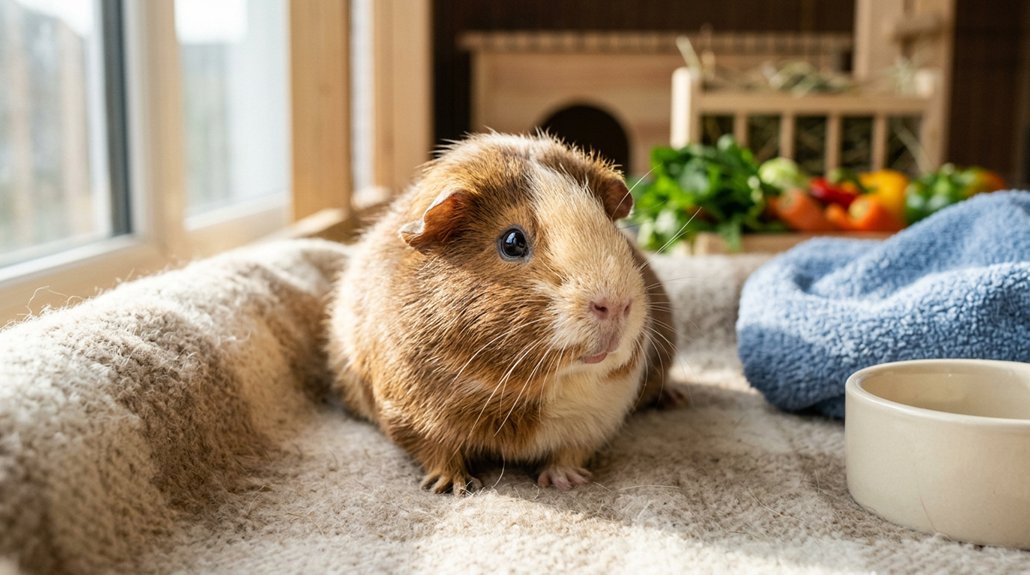
To care for a guinea pig, provide a spacious enclosure with solid flooring and clean bedding like paper or fleece. Guarantee a diet rich in high-quality grass hay, supplemented with vitamin C and fresh leafy greens. Facilitate social interaction by pairing compatible guinea pigs and engaging them in daily handling. Monitor health through regular weight checks and veterinary visits. Support cognitive development with toys and safe play areas. There’s much more to reflect on to guarantee your pet’s happiness and well-being.
Key Takeaways
- Provide a spacious cage (minimum 2×3 feet) with solid flooring and safe hiding spots for comfort and exploration.
- Feed a varied diet with unlimited grass hay, high-fiber pellets, and fresh leafy greens rich in vitamin C.
- Ensure social interaction through gentle handling, recognizing vocal cues, and appropriate pairing with other guinea pigs.
- Regularly monitor weight and health signs, and ensure continuous dental wear through fibrous materials like hay.
- Engage guinea pigs with toys and tunnels, encouraging natural foraging and play behaviors in a quiet, stress-free environment.
Making Your Guinea Pig’s Home Cozy and Safe
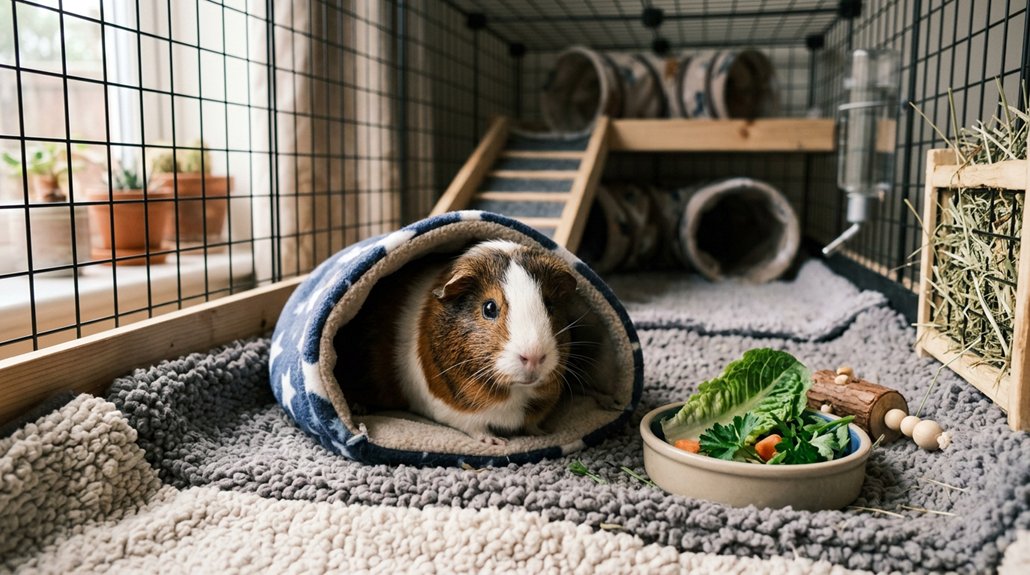
Guaranteeing a guinea pig’s enclosure is both cozy and secure involves understanding their basic needs and instinctual behaviors. Begin by planning a cage setup that’s at least 2 feet by 3 feet for one guinea pig, or larger for multiple companions, providing ample room for movement. Utilize solid flooring to mitigate risk of injury and enhance safety. In choosing bedding materials, opt for paper-based products or fleece liners, prioritizing cleanliness and regular replacement to maintain hygiene. Strategically place multiple hiding spots and tunnels to satisfy your guinea pig’s prey instincts, enabling natural exploration. Situate the habitat in a quiet environment, avoiding direct sunlight and drafts, while regulating the temperature at an ideal 65°F to 75°F to guarantee your guinea pig’s comfort and well-being.
Feeding Your Guinea Pig: Essential Nutrition Tips
While people often underestimate the significance of a balanced diet for guinea pigs, providing the correct nutrition is essential for their health and longevity. To guarantee ideal physiological function, a guinea pig’s diet should include variety and a precise feeding schedule. Offer unlimited high-quality grass hay, such as timothy or orchard grass, comprising 75-80% of their diet to support digestion and dental health. Supplement with specifically formulated high-fiber pellets, excluding seed mixes that foster selective feeding. Provide fresh leafy greens daily, focusing on vitamin C-rich options like romaine lettuce and bell peppers. Limit fruits to once or twice a week due to high sugar content. Always supply fresh water, and administer 30 mg of vitamin C supplement each day to prevent deficiencies.
Ensuring Your Guinea Pig Is Socially Happy
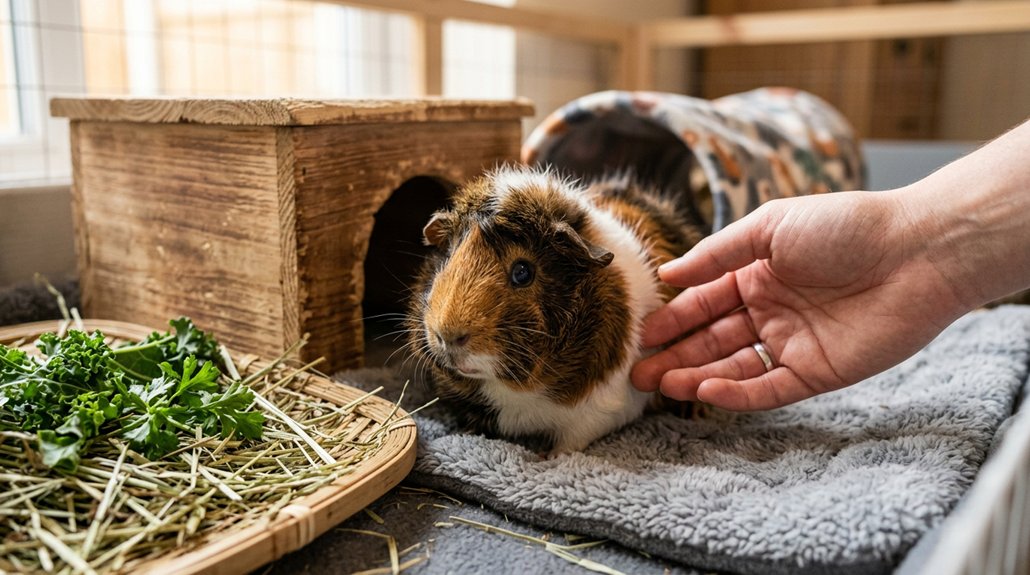
With the nutritional foundation set, attention must now turn toward meeting the social needs that are intrinsic to a guinea pig’s well-being. Understanding pairing strategies is essential. Ideal groupings include two males, two females, or one neutered male with a female herd. For the best social enrichment, consider the following:
Meeting guinea pigs’ social needs with ideal pairings ensures their well-being and enhances social enrichment.
- Frequent Interaction: Engage in daily handling to foster trust. Approach them gently, allowing them to sniff before engaging in tactile interactions.
- Enclosure Configuration: Implement safe hiding spots and multi-level structures. These enhance security and promote natural exploratory behaviors.
- Vocalization Cues: Pay attention to sounds like “wheeking.” Responding to these vocalization cues strengthens bonds and acknowledges their emotional states.
Providing these social opportunities fosters a socially fulfilling environment, imperative for guinea pig happiness and longevity.
Monitor Your Guinea Pig’s Health and Grooming
One critical component of responsible guinea pig care is diligent health and grooming monitoring. Regular weight monitoring is essential, as unexpected weight loss might be indicative of underlying health issues necessitating prompt veterinary intervention. Observe for a clinical presentation including bright eyes, a clean oral cavity, and a dry nasal passage. Behavioral abnormalities, such as reclusive behavior or a hunched stance, may signify distress or illness. Dental care is paramount; guinea pigs possess continuously erupting teeth, requiring continuous access to fibrous materials like hay to prevent malocclusion and overgrowth. Grooming regimens should encompass periodic nail trimming and brushing, particularly for long-haired breeds prone to mat formation. Confirm annual visits to a veterinarian specializing in guinea pig care to address potential pathologies preemptively.
Play and Handle Your Guinea Pig: Tips for Fun Interaction
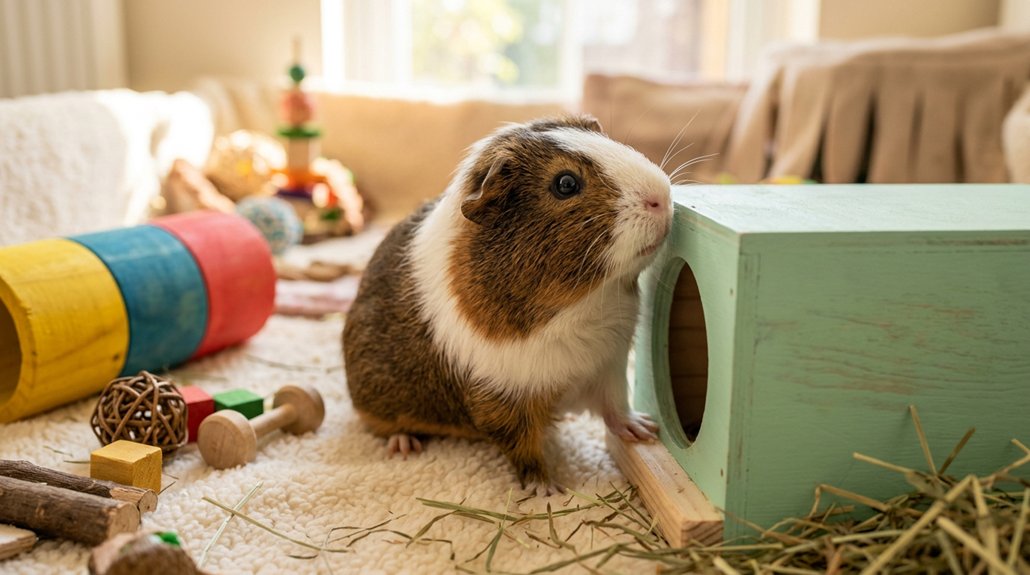
Ensuring a positive interaction experience for your guinea pig requires attention to its natural behaviors and comfort needs. Establish effective playtime routines and safe handling techniques to optimize your pet’s well-being.
Attentively cater to your guinea pig’s natural behaviors for a positive interaction experience.
- Proper Handling: Always support your guinea pig with both hands. This structural support diminishes stress-induced behavioral responses and enhances trust.
- Playtime Environment: Provide a quiet space away from loud noises. This tranquility simulates a predator-free habitat, essential due to their prey status.
- Stimulation through Toys: Encourage exploration with guinea pig toys and tunnels. These tools facilitate cognitive stimulation and engage their inherent foraging instincts.
Frequently Asked Questions
How Often Should Guinea Pig Nails Be Trimmed?
You’ll need to perform nail trimming every 2-4 weeks for ideal health. Consider incorporating grooming techniques during this time. Regular monitoring guarantees you avoid overgrowth, which can lead to discomfort or infections. Adopt a systematic approach for precision.
Can Guinea Pigs Live Alone or Do They Need Companions?
Guinea pigs are like social butterflies; they thrive on interaction. Their social animal behavior means they shouldn’t live alone. They’ll benefit from guinea pig companionship to prevent stress and depression, fostering a healthier, happier environment through interpersonal connections.
What Types of Bedding Are Safe for Guinea Pigs?
For safe bedding materials, you’ll want to use paper-based, aspen, or fleece options due to their high absorbency and minimal dust production. The bedding benefits include better respiratory health and reduced risk of bumblefoot in guinea pigs.
Are There Common Plants Poisonous to Guinea Pigs?
Imagine a jungle of deadly flora ready to pounce on your unsuspecting guinea pig. Yes, common toxic plants like lilies and daffodils are harmful. Instead, choose safe herbs like basil and parsley to guarantee your pet’s safety.
How Do I Introduce New Guinea Pigs to Each Other?
To introduce new guinea pigs, use bonding techniques like gradual scent introduction and controlled encounters. Initiate with a neutral territory to minimize territorial behavior. Monitor interactions closely for stress indicators, ensuring a harmonious adjustment reflecting ethological principles.
Conclusion
Following these guidelines guarantees your guinea pig leads a life more tranquil than a Zen master’s. A cozy, safe habitat, paired with proper nutrition, sets the foundation for vibrant health. Social engagement is paramount, akin to an essential life elixir, keeping spirits high. Regular health monitoring and grooming prevent minor issues from snowballing into catastrophic events. Finally, playful interaction solidifies your bond, guaranteeing an enduring companionship that’s beneficial to both pet and guardian. Your guinea pig’s happiness is in your capable hands.