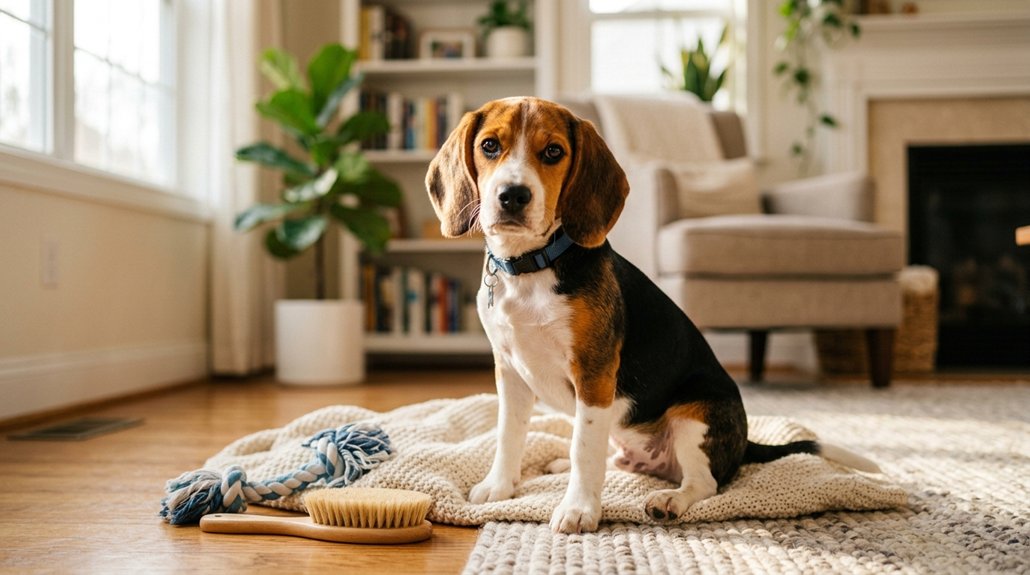
Beagles are cheerful, energetic dogs known for loyalty and strong scent instincts. Socializing puppies early, ideally between 8-16 weeks, is vital for confidence. Start training at 12 weeks with consistent commands and positive reinforcement. They need at least an hour of daily exercise and a balanced diet to thrive, with regular vet check-ups for common health issues. Creating a safe home environment is essential to prevent escapes and destructive behavior. There’s much more to explore about raising a happy Beagle.
Key Takeaways
- Beagles are cheerful, loyal, and require regular exercise for their high energy levels.
- Early socialization is crucial for Beagle puppies to build confidence and prevent behavioral issues.
- Consistent training with positive reinforcement helps teach commands and maintain good behavior.
- Beagles need at least 60 minutes of daily exercise to ensure both physical and mental health.
- A safe home environment with regular veterinary check-ups is essential for Beagle health management.
Key Temperamental Traits and Natural Behaviors of Beagles
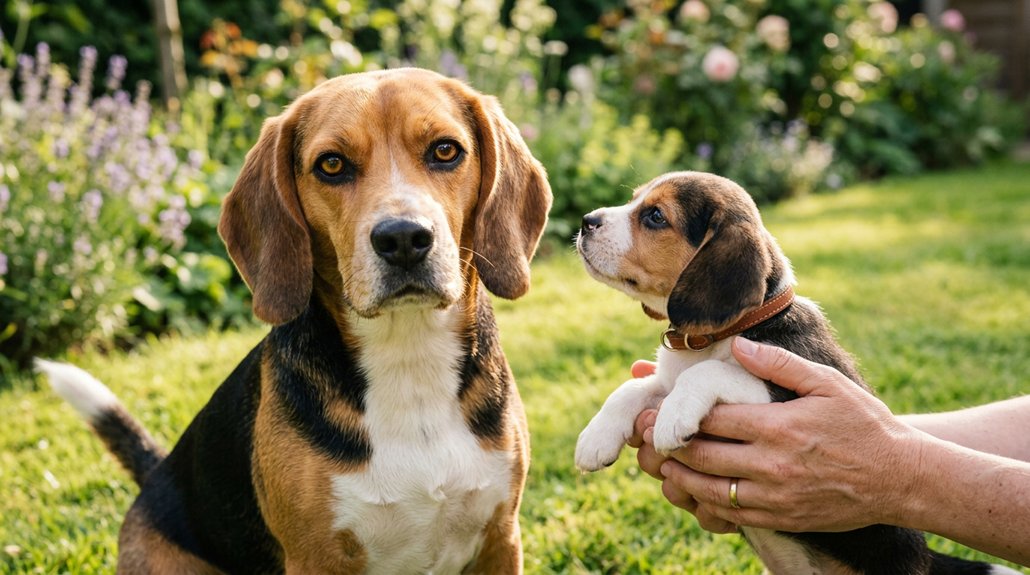
Beagles are renowned for their cheerful and even-tempered personalities, making them excellent matches for active families seeking a loyal companion. Their playful nature and exceptional loyalty traits guarantee they’re ideal for households with children and other dogs. Known for their energetic personality, Beagles require regular exercise to meet their companionship needs, keeping them happy and engaged. Their scent instincts are incredibly strong, driven by an impressive 220 million scent receptors, causing them to partake in frequent sniffing. It’s crucial to understand this behavior aligns with their natural hunting instincts and isn’t disobedience. Vocal behaviors, including howling or barking, are prominent, typically resulting from excitement or boredom. Understanding these traits helps you provide an environment where a Beagle thrives.
Socialize Your Beagle Puppies
Start socializing your Beagle puppy during the critical 8 to 16-week window to help them build confidence and form positive interactions with both dogs and people. Enrolling in structured puppy socialization classes and introducing varied environments can greatly enhance your Beagle’s adaptability and emotional intelligence. This early exposure lays the foundation for a balanced demeanor, reducing the risk of behavioral issues as your Beagle matures.
Critical Socialization Window
Though often overlooked, the vital socialization window between 8 to 16 weeks is pivotal for Beagle puppies, allowing them to become confident and well-adjusted adult dogs. During this period, effective socialization strategies are essential. Early exposure to a variety of dogs, people, and situations prevents behavioral issues. Implement structured activities like enrolling in the AKC S.T.A.R. Puppy program or arranging puppy playdates. These create opportunities for your Beagle to enhance curiosity and improve social skills.
| Recommended Activity | Benefits | Key Focus |
|---|---|---|
| Puppy Playdates | Builds social skills | Interaction with peers |
| AKC S.T.A.R. Puppy Program | Structured exposure to stimuli | Manners and obedience |
| Group Walks | Exposure to environments | Curiosity development |
These experiences enrich your Beagle’s world, contributing to lifelong positive behaviors.
Building Beagle Confidence
Confidence is the cornerstone of a well-adjusted Beagle, emerging from thorough socialization during the essential 8 to 16-week window. During this time, your Beagle’s exposure to varying environments, dogs, and people is vital for confidence building. You’ll want to use positive reinforcement—like treats and praise—to turn potential fears into enjoyable experiences. This approach not only fosters fear reduction but also aids in developing robust problem-solving skills and adaptability. By engaging them in diverse, controlled situations, you lay the groundwork for a confident adult Beagle. Consistent socialization guarantees they view challenges as exciting rather than intimidating, preventing fear-related behavioral issues. Your efforts during these weeks can steer them towards a more balanced and self-assured adulthood.
Build Confidence in Your Beagle
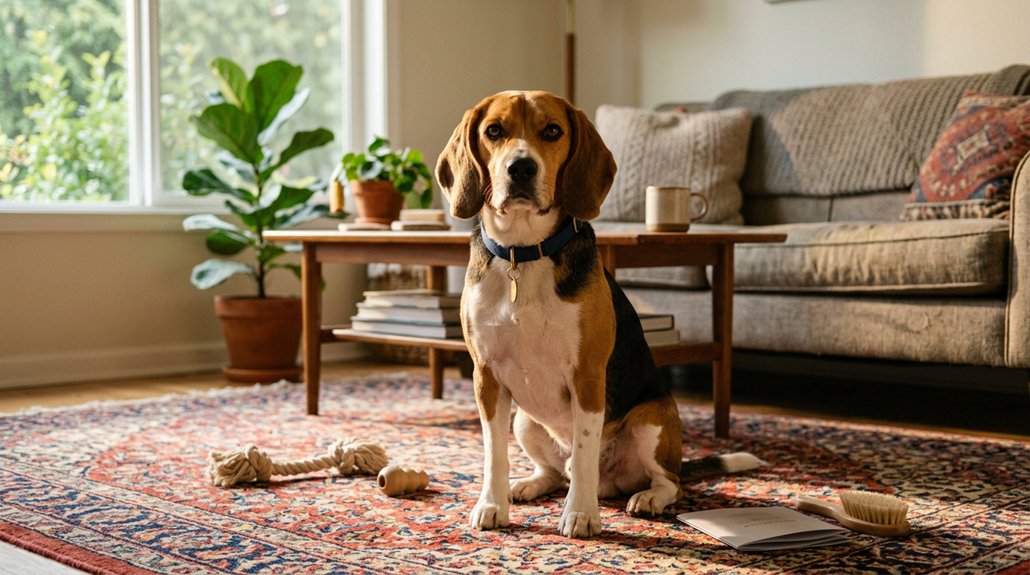
To build your Beagle’s confidence, start encouraging positive exploration around 12 weeks of age with activities that transform learning opportunities into exciting challenges. Embrace their curiosity by gradually introducing them to new situations while providing encouragement, which helps them develop resilience and self-assurance. Consistent practice with positive reinforcement, such as treats or praise, is essential for reinforcing desired behaviors and making training a rewarding experience for your Beagle.
Encourage Positive Exploration
When you encourage positive exploration in your Beagle, particularly during their essential socialization window of 8 to 16 weeks, you set the stage for a lifetime of confidence and reduced anxiety. Engage in exploration activities by providing varied experiences that introduce your Beagle to different sounds, smells, and textures. These structured activities help them adapt to new environments seamlessly. Reinforce positive behavior with rewards; positive reinforcement is vital in linking exploration with enjoyable outcomes. Interactive games that use their keen sense of smell can engage their natural instincts, promoting confidence and minimizing destructive behaviors. Gradually expose your Beagle to new places and social interactions with other animals, allowing them to associate these encounters with positive experiences, thereby enhancing their self-assurance.
Embrace Learning Opportunities
Building a confident Beagle starts with embracing every learning opportunity. As early as 12 weeks, Beagle puppies connect experiences and grow through structured learning games and enjoyable challenges. This process not only boosts their cognitive skills but also fosters a positive temperament that will accompany them into adulthood. Positive reinforcement is key—use high-value treats and praise to encourage desired behaviors during these games, transforming training into positive experiences.
Consistency is essential, so incorporate training sessions into predictable routines. Your puppy will feel secure, knowing when to expect these activities in their daily environment. Early exposure to diverse environments and sounds by 16 weeks further builds resilience, preparing them for various situations they’ll encounter. Embrace each chance to cultivate your Beagle’s confidence.
Reinforce Through Repetition
Repetition is a cornerstone of effective Beagle training, as it reinforces commands and behaviors, fostering confidence in your puppy. Utilizing repetition techniques, especially when your Beagle is around 12 weeks old, can greatly enhance learning. Focus on positive reinforcement methods to make training sessions engaging and beneficial. Consistent practice of foundational commands like “Sit” and “Stay” can be integrated into a structured routine, ensuring your puppy understands which behaviors receive approval. Over time, this approach not only solidifies learned behaviors but also builds a trusting relationship with your Beagle. Through regular, well-structured sessions, your Beagle will keenly face new challenges, growing more confident and assured in its actions, thereby making the entire training process enjoyable and effective.
Training Your Beagle: Commands and Obedience
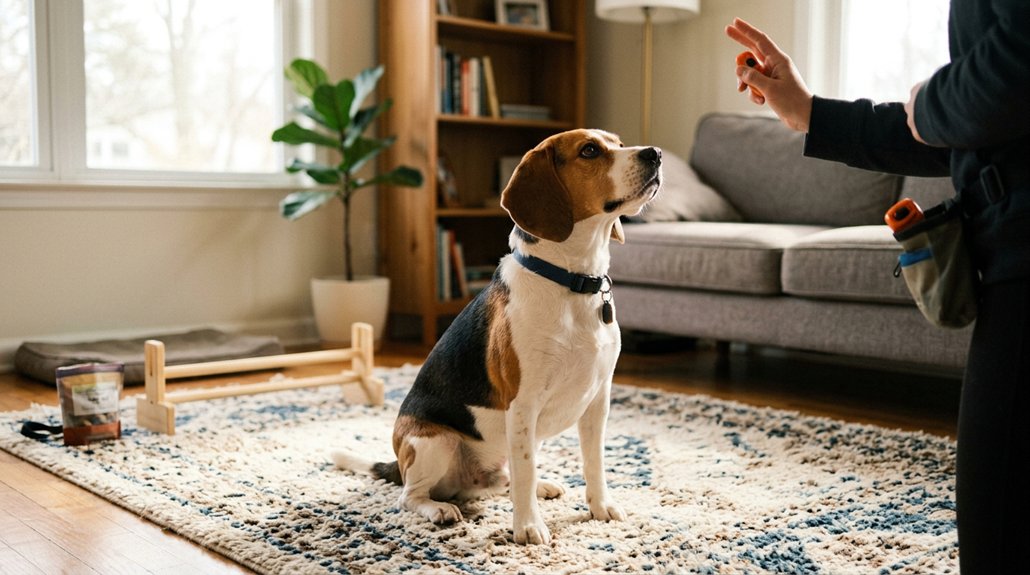
Training your Beagle in commands and obedience should ideally commence when your puppy reaches about 12 weeks of age, laying down essential groundwork for a well-adjusted pet. Start with foundational commands like “Sit,” “Come,” and “Stay.” Emphasize consistency and set clear boundaries to prevent problem behaviors from developing. As your Beagle becomes proficient, you can progress to more advanced training to further solidify their discipline. Use positive reinforcement techniques—treats, praise, or playtime—to reward desired behaviors. Integrate scent-based games to leverage their keen sense of smell, making sessions both engaging and effective. Keep training sessions short and fun to maintain interest, always ending on a positive note. This fosters an enduring love for learning and responsiveness in your Beagle.
The Right Nutrition for Your Beagle Puppy
Ensuring the right nutrition for your Beagle puppy involves understanding their specific dietary needs to support healthy growth and energy levels. Focus on high protein sources (22-32%) and healthy fats (8-18%), emphasizing named meat as the primary ingredient in their diet. Establish regular meal schedules, altering from three daily meals until six months to two thereafter, with precise meal portioning to prevent obesity. Monitor daily water intake, keeping it within 1/2 to 1 ounce per pound of body weight. Limit treats to 10% of daily intake. Consider dietary supplements tailored for growth needs. Regular veterinary visits are recommended for health monitoring and advice.
| Factor | Recommendation |
|---|---|
| Protein | 22-32% |
| Fats | 8-18% |
| Water Intake | 1/2 to 1 ounce per lb |
| Treats | Max 10% of daily intake |
Common Beagle Health Issues and Preventive Care
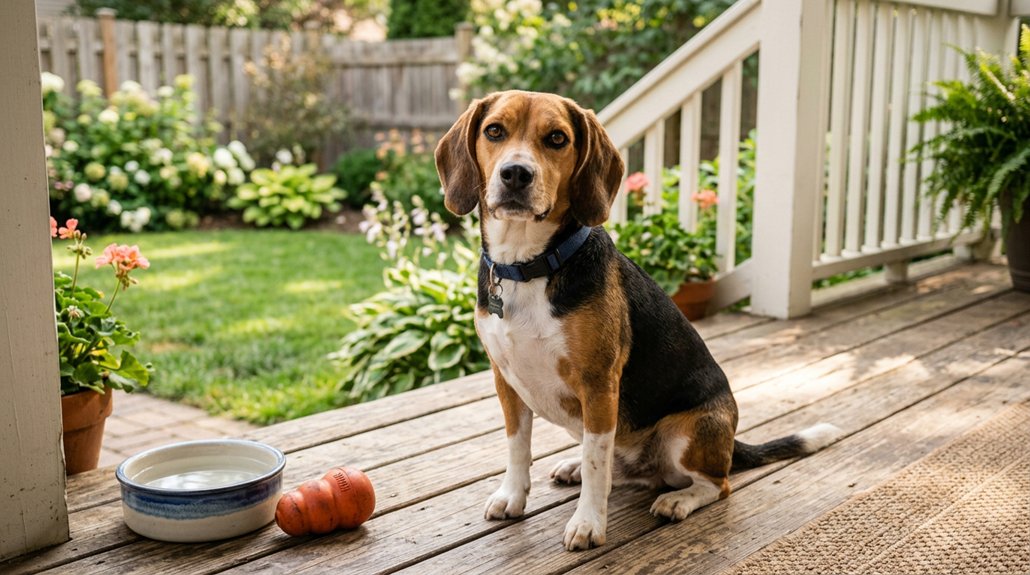
After ensuring your Beagle puppy receives the right nutrition for healthy growth, addressing their health issues and preventive care should also be a priority. Regular veterinary visits are essential, as Beagles can be prone to health concerns like hypothyroidism, epilepsy, cherry eye, and heart conditions. Weight management plays a significant role in preventing obesity—portion control is necessary from a young age to maintain their health. Be mindful of their daily water intake, ensuring it’s adequate to prevent dehydration. Ear care is also important due to their floppy ears; frequent cleaning and checks can prevent infections. Additionally, keep a detailed record of vaccinations and health discussions during your initial vet visits to stay on top of breed-specific issues.
Exercise and Mental Stimulation for Your Beagle
Beagles are energetic dogs that require a minimum of 60 minutes of daily exercise to maintain their physical health and prevent obesity. Incorporating outdoor activities into their routine not only helps them stay fit but also satisfies their instinct to sniff and explore. To keep your Beagle mentally stimulated, consider engaging them with interactive toys and scent games. This approach can alleviate behavioral issues and keep them entertained.
Beagles need at least 60 minutes of exercise daily to stay healthy and entertained.
Here’s how you can meet their exercise and mental needs:
- Daily Walks: Guarantee consistent outdoor walks for physical and mental enrichment.
- Scent Games: Implement nose work activities using scented treats.
- Interactive Toys: Use puzzle toys to challenge their intelligence.
- Structured Play: Engage in interactive training sessions to maintain focus.
Consistency in these routines is essential.
Safeguard Your Home for a Curious Beagle
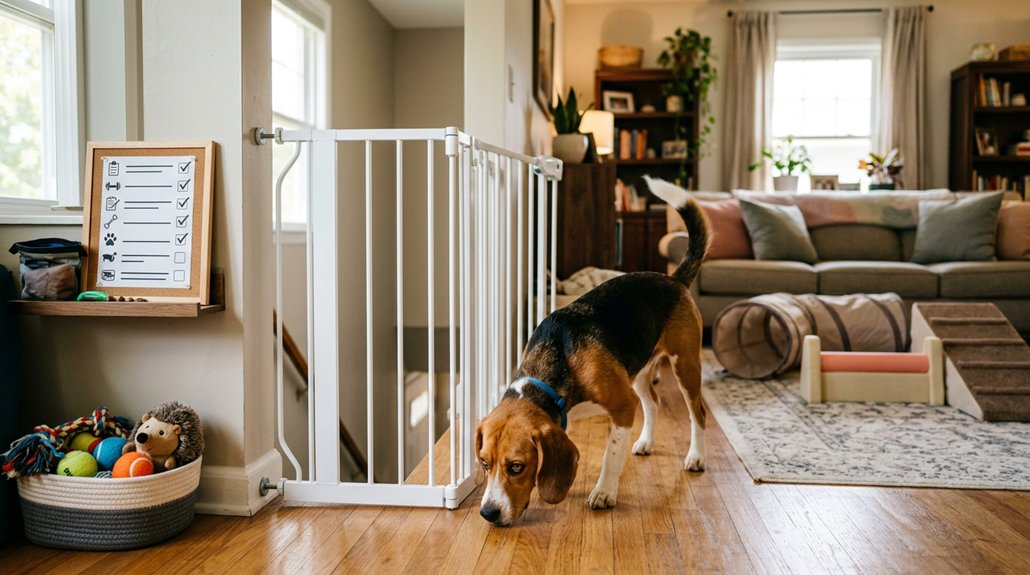
While keeping your Beagle physically and mentally engaged is important, it’s equally important to safeguard your home from their inquisitive nature. Begin by removing hazardous items like electrical cords, toxic substances, and small objects that might be swallowed. Establish safe spaces equipped with suitable toys and chew options, thereby positively channeling their energy and preventing household damage. Focus on critical areas like the kitchen and hide cords in the living room. Inspect yards and garages for escape routes or harmful plants.
| Area | Hazardous Items | Safe Spaces |
|---|---|---|
| Kitchen | Toxic foods | Chew toys |
| Living Room | Electrical cords | Interactive toys |
| Bedroom | Personal items | Cozy bed |
| Yard | Harmful plants, low fences | Secure perimeter, playtime |
Ensure fences are at least five feet tall and gates are latched securely.
Frequently Asked Questions
Can Beagles Adapt to Apartment Living Environments?
Beagles can adapt to apartment living if you manage their exercise needs. Guarantee beagle space for play and consider noise levels, as they can be vocal. Consistent training helps them thrive even in smaller environments.
At What Age Should Beagles Start Potty Training?
You’ll want to start the little one’s business training around eight weeks. It’s important you incorporate potty training into their puppy schedule early, establishing habits that prevent any messy surprises and guarantee smooth future living arrangements.
How Often Should Beagle Puppies Visit the Vet for Check-Ups?
You should schedule beagle puppy vet visits every 3-4 weeks initially. These appointments will guarantee they follow the vaccine schedule and undergo necessary health screenings. Regular check-ups catch potential issues early, promoting overall wellness.
What Are the Signs of Separation Anxiety in Beagles?
Imagine a ship adrift without its anchor; that’s your beagle without you. Signs include excessive barking, destructive behavior, and depression. Identify anxiety triggers like changes in routine or long absences to manage their separation behavior effectively.
How Do Beagles Typically React to Other Pets in the Household?
Beagles usually exhibit friendly social behavior and playfulness around other pets. You’ll notice them attempting playful interactions and often getting along well, though supervision is essential to guarantee all animals are comfortable and build positive relationships.
Conclusion
Caring for a beagle is like discovering the universe’s most adorable mystery. By understanding their lively temperament and providing proper training, you’ll have a loyal companion by your side. Socialization and confidence-building are essential, while excellent nutrition and preventive care guarantee a healthy pup. Remember, these energetic detectives need plenty of exercise and mental stimulation. Finally, make sure your home is beagle-proofed to prevent any curious escapades. Your well-cared-for beagle will certainly bring joy beyond measure.