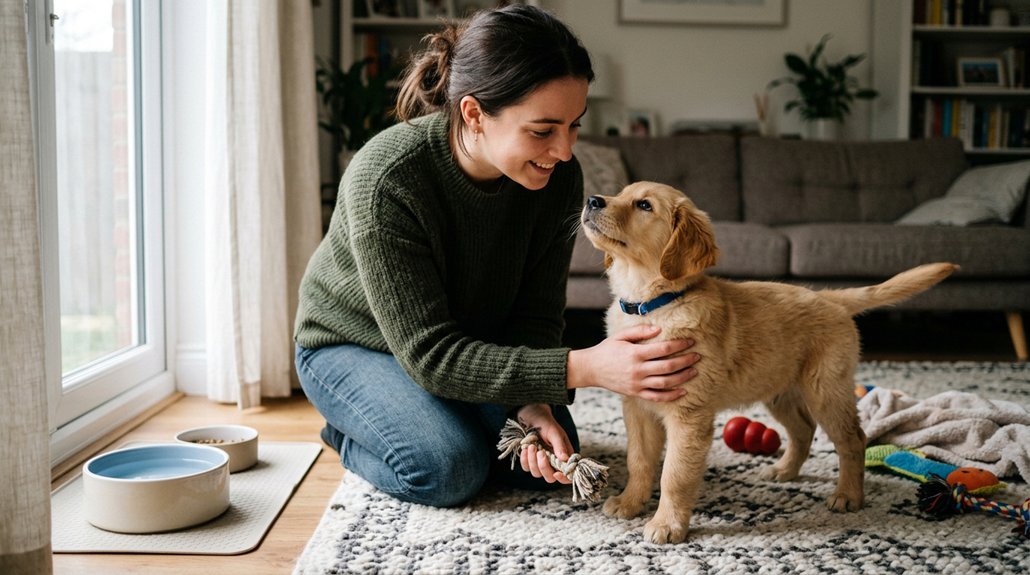
As a first-time dog owner, assess your time and financial readiness first since caring for a dog involves daily walks, training, and potential expenses ranging from $1,000 to $9,900 annually. Evaluate your living space for safety and suitability for specific breeds. Pick a breed matching your lifestyle—active breeds need more exercise, while gentle breeds suit families. Creating a safe home and starting training early is essential for smooth integration. Discover additional key tips for success below.
Key Takeaways
- Assess your ability to meet a dog’s time and financial needs.
- Match your living environment with the size and activity level of the breed.
- Ensure all family members agree on dog care responsibilities.
- Dog-proof your home to eliminate potential hazards and create a safe space.
- Focus on training and early socialization to ensure a well-behaved pet.
Assessing Your Readiness for Dog Ownership

Before adopting a dog, it’s essential to evaluate whether you’re prepared for the responsibilities that come with pet ownership. Effective preparation involves examining your time commitment—can you dedicate enough time for essential routines like walks, training, and interactive play? Understand the lifestyle changes required, considering how integrating a dog into your daily life may impact your routines and obligations. Conduct a thorough evaluation of your living environment, making sure it supports a dog’s spatial, safety, and noise needs. Financial readiness is paramount; calculate if you can afford annual expenses ranging from $1,500 to $9,900. Make certain all household members agree on shared responsibilities. Acknowledge that owning a dog is a significant 10-15 year commitment, necessitating future-planning acumen.
Find the Perfect Dog Breed for You
How do you determine the ideal dog breed that matches not only your living situation but also your energy levels and lifestyle? Start by evaluating your daily activities and environment. High-energy breeds like Border Collies suit active individuals, whereas busy households might prefer low-maintenance breeds.
| Consideration | Breed Suitability |
|---|---|
| Living Space | Small breeds for apartments |
| Family Dynamics | Gentle breeds for kids |
| Grooming Needs | Short-haired for low upkeep |
Breed compatibility extends to size; larger breeds typically need outdoor space for sufficient exercise, while smaller dogs adapt well to confined spaces. Family-friendly choices, such as Golden Retrievers, offer gentle temperaments. Review grooming requirements too—some breeds necessitate regular maintenance, impacting your time and financial investment. Engage with shelter staff to comprehend temperament and history.
How Much Will Your New Dog Cost?
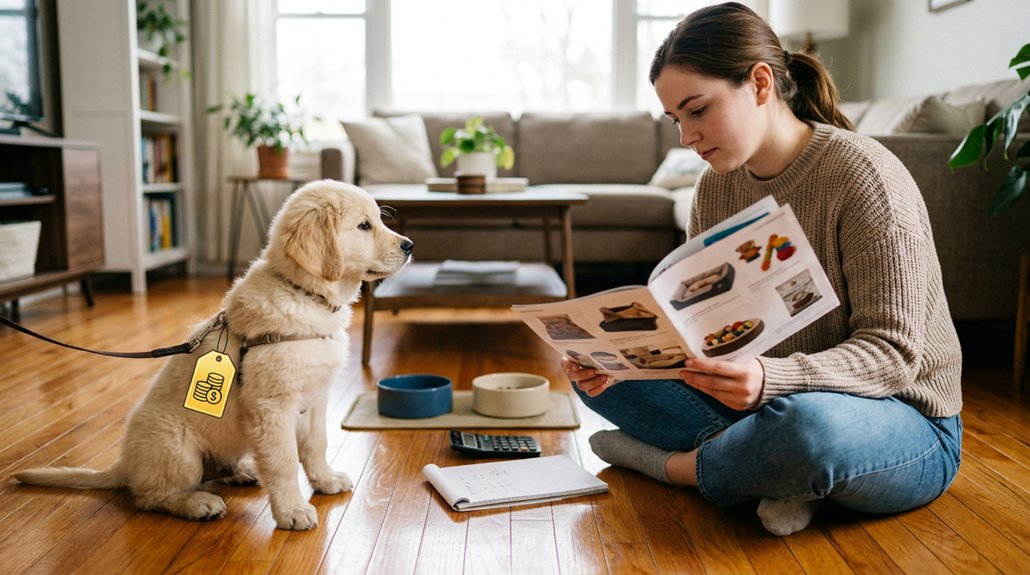
When considering the financial commitment of dog ownership, it is vital to account for both initial and ongoing costs. Initial costs can range from $1,500 to $9,900, varying based on breed, age, and vaccination status. Ongoing expenses such as nutrition, grooming, and supplies may accumulate to approximately $1,000 to $2,000 annually. Don’t overlook potential unexpected veterinary bills; these medical exigencies can greatly inflate your budget. Additionally, training is important for behavioral well-being, with costs ranging from $100 to $500 or more annually for professional guidance.
- Initial costs: $1,500 to $9,900
- Ongoing expenses: $1,000 to $2,000 annually
- Veterinary emergencies: Account for potential high costs
- Training and socialization: $100 to $500 annually
Invest intelligently in your dog’s health and happiness.
Creating a Safe Home for Your Dog
Establishing a safe environment is paramount to ensuring your dog’s well-being and comfort. Begin by dog-proofing your home—remove poisonous houseplants, small objects, and cords to prevent ingestion hazards. Toxic substances should always be securely stored away. Creating secure zones is essential; designate a specific area with comfortable bedding and a plethora of toys to aid your dog’s adaptation. Utilize baby gates or close doors to restrict access to areas posing potential risks while allowing safe exploration. Remember, the external environment is dynamic. Regularly assess your home for new threats, particularly during holidays when decorations or additional chemicals are introduced. These dog-proofing tips cultivate a nurturing and secure habitat for your new companion’s best health and safety.
Training Tips and Socializing Your Puppy
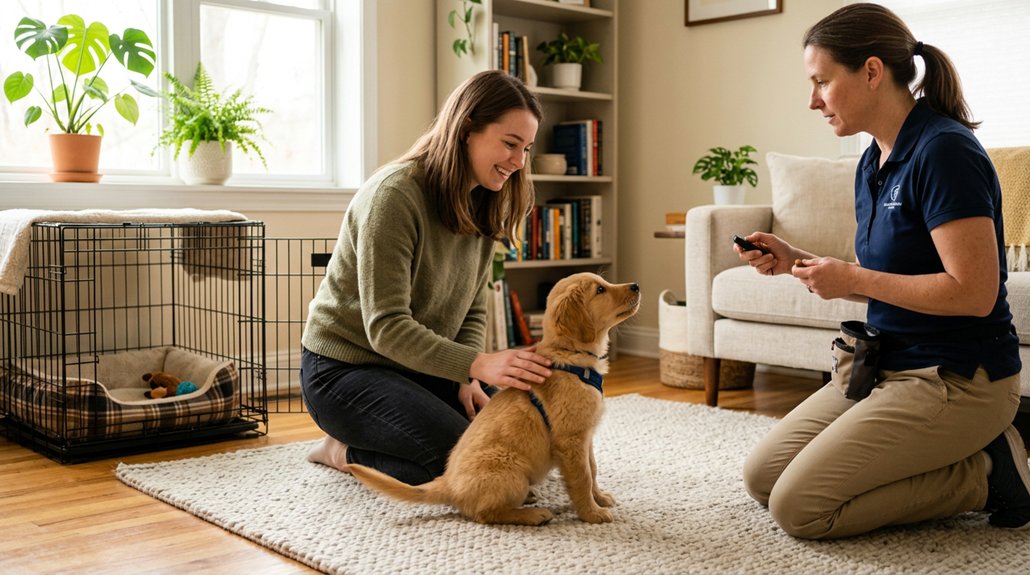
Training your new puppy can seem overwhelming at first, but early efforts pay dividends in behavior and understanding. Start puppy training immediately upon bringing your furry friend home. Focus on basic commands like “sit,” “stay,” and “come.” Establishing consistent routines and employing crate training are essential for successful housebreaking, guiding your puppy to appropriate elimination sites. Early socialization techniques, ideally begun between 3 to 12 weeks, expose your puppy to diverse stimuli necessary for healthy behavioral development. Use positive reinforcement—treats and praise—to promote desired behaviors, fostering a strong bond.
- Basic commands: “sit,” “stay,” “come”
- Consistent routines: house and crate training
- Early socialization techniques: 3 to 12 weeks
- Positive reinforcement: treats and praise
Integrate regular playtime to guarantee physical and mental stimulation.
Frequently Asked Questions
What Is the 3-3-3 Rule With Dogs?
The 3-3-3 rule explains dog adjustment and owner expectations, highlighting three phases: initial stress in the first three days, gradual settling over three weeks, and full adaptation by three months, requiring patience for healthful integration.
What Should a First-Time Dog Owner Know?
Start by prioritizing proper dog breed selection; it’s pivotal for matching physical activity and behavioral tendencies to your lifestyle. Embrace essential training basics: consistent commands, rewarding reinforcement, and routine exercises to nurture neurological and muscular development.
Do Dogs Lower Your Cortisol?
Yes, dogs facilitate cortisol reduction primarily through stress relief. Interacting with them increases oxytocin production and promotes physical activity, directly lowering stress and cortisol. Their presence also offers emotional support, reducing loneliness and enhancing overall mental well-being.
How Do You Say “I Love You” in Dog Speak?
Studies show 84% of pet owners feel closer to their dogs through nonverbal communication. You’ll notice a tail wag or soft whine. Understanding dog body language and canine vocalizations helps convey “I love you” effectively.
Conclusion
Beginning the journey of dog ownership is both exciting and demanding. Are you truly ready? Your commitment involves more than affection; it demands financial, emotional, and environmental preparedness. Choosing the right breed guarantees compatibility with your lifestyle, while understanding the costs helps you plan wisely. A safe home fosters a thriving environment, and training nurtures a well-adjusted companion. Consider these as pillars supporting a rewarding relationship. Are you prepared to transform theory into practice and embrace the unparalleled joys of pet ownership?