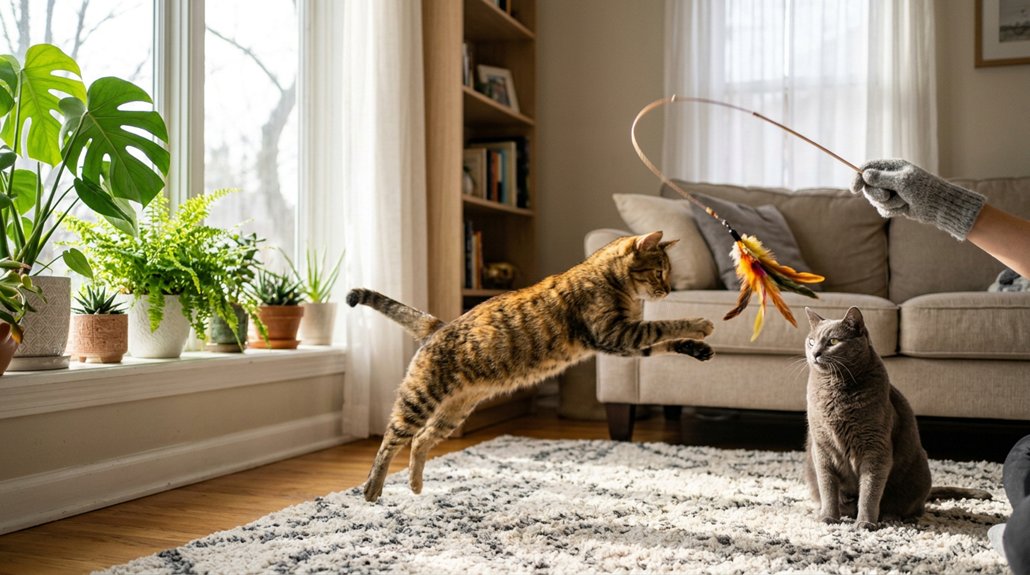
Playing with your cat daily is essential for their health and well-being. Use short, engaging play sessions at dawn and dusk to align with their natural rhythms. Choose safe toys like wand or interactive puzzles to spark their hunting instincts, while steering clear of your hands. Conclude each session with satisfying catches and a tasty treat to reinforce positive behavior. This routine not only strengthens your bond but also keeps your feline friend mentally and physically stimulated. Discover more for an enriched relationship.
Key Takeaways
- Schedule short play sessions around dawn and dusk to align with your cat’s natural active periods.
- Use cat-specific toys like wand toys or puzzle feeders, rotating them regularly to sustain interest.
- Ensure safety by supervising play with string toys and avoiding hands as play objects.
- Reward your cat immediately after play with small protein treats to reinforce positive behavior.
- End play sessions with a successful “catch” to satisfy hunting instincts and encourage engagement.
Why Daily Play Is Essential for Your Cat’s Health
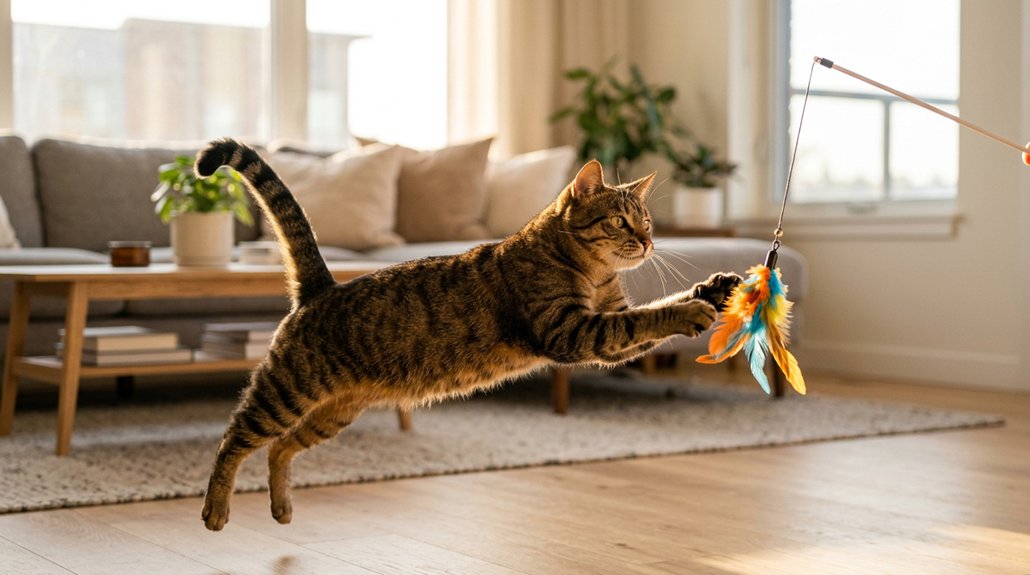
When it comes to ensuring your cat’s overall well-being, daily play isn’t just a pastime—it’s essential. Play benefits extend beyond mere fun, mirroring cat behavior through simulated hunting actions. Spending 10–15 minutes each day on play boosts their health by encouraging physical exercise, preventing obesity, and keeping lethargy at bay. Noticeably, regular play reduces unwanted behaviors like scratching or knocking items off surfaces, as it fulfills their natural urge to hunt. This structured engagement strengthens the bond between you and your furry friend, cultivating trust and companionship. More than just exercise, it’s a pathway to an enriched, joyful environment. By promoting mental stimulation, you alleviate boredom and stress, leading to a happier, well-balanced feline companion.
Timing Play to Match Your Cat’s Natural Instincts
Despite their reputation for being independent, cats’ play habits are deeply rooted in their crepuscular nature, meaning they thrive on activity during dawn and dusk. Aligning play sessions with your cat’s crepuscular rhythms allows you to engage their natural instincts when they’re most alert and energetic. Consider incorporating mealtime play to stimulate your cat’s interest just before feeding time. This combination effectively mimics their instinctual hunting behaviors, keeping them mentally and physically engaged.
Here’s how to make the most of your play sessions:
- Observe signals: Forward-facing ears or an arched back indicate they’re ready.
- Match energy: Younger cats may play longer, while older ones need less.
- Keep it short: Limit sessions to 10-15 minutes to maintain interest.
Understanding your cat’s rhythms guarantees enriching interactions.
Craft Strategic Short and Frequent Play Sessions
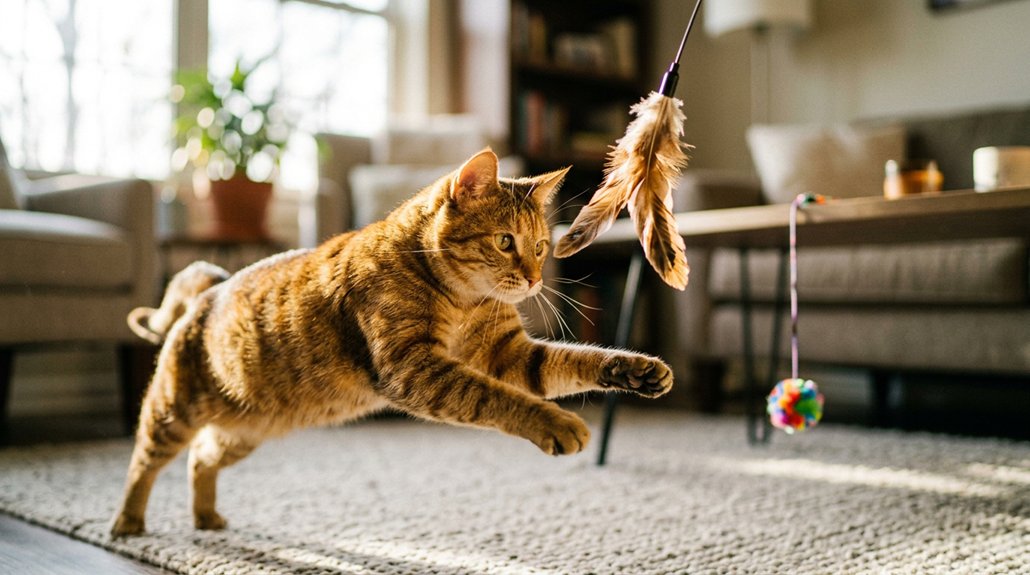
Understanding your cat’s natural rhythms sets the stage for strategic and enjoyable play sessions. By scheduling multiple short bursts of activity, you can harness your cat’s energy levels effectively. Aim for 10–15 minute play sessions to keep your cat engaged and entertained. Younger cats typically require up to 10 sessions daily, while older cats benefit from around 2-3 sessions. Incorporate these playtimes around meals to maximize excitement, as anticipation of food heightens their enthusiasm.
Observing your cat’s cues, such as disinterest or walking away, helps maintain the play session’s quality. Sticking to these well-timed play session strategies not only caters to their hunting instincts but also provides essential mental stimulation and energy management, ensuring your feline companion stays fit and happy.
Select Safe Toys That Prevent Play Aggression
Selecting the right toys for your cat is vital in preventing play aggression and guaranteeing their safety. Choosing toys specifically designed for cats, like wand toys and stuffed mice, promotes safe play without putting your hands at risk. Avoid using your hands or fingers as toys—it’s essential for play safety and maintaining a positive bond with your cat. Keep in mind these guidelines:
Selecting cat-safe toys is key to preventing play aggression and ensuring both fun and safety.
- Safety First: Verify toys are made from safe materials and have no small parts that could be swallowed.
- Supervision Required: Always supervise play sessions with string-based or wand toys to prevent choking or ingestion.
- Toy Rotation: Regularly rotate toys to keep your cat engaged and ward off boredom.
Add Fun Using Interactive and Puzzle Toys
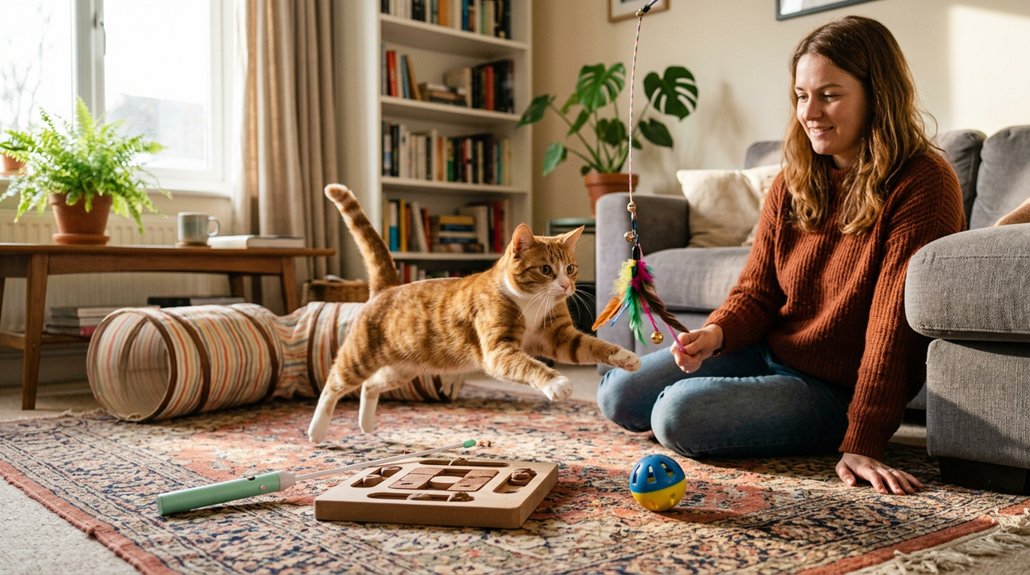
Interactive and puzzle toys aren’t just fun; they’re essential for tapping into your cat’s natural hunting instincts. By giving your cat the opportunity to solve challenges or find hidden treats, you’ll promote mental stimulation and enhance playtime engagement. Rotating these toys regularly will keep their curiosity piqued and guarantee they’re both physically and mentally active.
Promote Mental Stimulation
While it’s easy to feed your cat in a traditional dish, integrating puzzle feeders into mealtime can transform the experience into a stimulating mental workout. These tools offer cognitive enrichment and problem-solving activities, slowing down their eating while engaging their minds. To further enrich your cat’s daily life, consider diversifying their interactive play options.
- Rotating Toys: Swap out puzzle toys and snuffle mats every few days to sustain interest and combat boredom.
- DIY Challenges: Use household items like toilet paper rolls filled with treats for cost-effective cognitive challenges.
- Hide-and-Seek Games: Encourage natural hunting instincts by concealing treats or toys throughout your home.
These strategies keep your cat engaged, mentally active, and curious, ensuring their playful moments remain fresh and exciting.
Enhance Playtime Engagement
When you introduce interactive and puzzle toys to your cat’s routine, you’re not just adding variety—you’re enhancing their playtime experience by tapping into their innate curiosity and hunting instincts. Interactive play options like automatic laser pointers and battery-operated feather toys can keep your feline friend on their toes, invigorating their natural prowess. Spice up their engagement with puzzle toys that dispense treats, which encourage problem-solving and make playtime both stimulating and rewarding. Rotate these creative toy alternatives often to keep activities fresh and exciting—cats love the novelty. Even simple DIY options, like toilet paper rolls filled with treats, can captivate your cat’s attention. Incorporating both electronic and hands-on toys guarantees a well-rounded and enriching play routine.
Encourage Natural Hunting
Incorporating interactive and puzzle toys into your cat’s play routine can make a world of difference in lighting up their natural hunting instincts. These toys simulate hunting behaviors, offering an ideal outlet for your feline’s interactive challenges and problem-solving skills. Consider creating enticing scenarios by hiding treats or kibble in these toys, effectively engaging their senses and promoting healthy foraging behavior. By spending just 10-15 minutes in each session, you can keep your cat engaged and excited without causing fatigue. Varying toy types guarantees your pet doesn’t get bored.
- Try snuffle mats for tactile play and scent-based enrichment.
- Use treat-dispensing puzzles to slow eating and heighten your cat’s interest.
- Implement regular, brief sessions to stimulate both mental and physical activity.
Explore Specific Toy Recommendations for Cats
If you’re looking to keep your cat entertained and well-exercised, it’s vital to contemplate toys that offer varied stimuli. Toy variety is essential in engaging your feline’s senses and preventing boredom. Consider options like play materials in the Ultimate Toy Joy Cat Bundle for $79.99, which includes a mix for endless entertainment. For mental challenges, the Snuffle Mat at $39.99 encourages treat foraging, while the $5.49 Cat Dancer mimics prey movements, sparking innate hunting instincts. The Cat Charmer Rainbow’s $8.99 vibrant ribbon entices vigorous pouncing pursuits, and the Catch Me If You Can Cat Wand Bundle, at $27.99, offers excitement through interactive rotations. Here’s a quick comparison:
| Toy Name | Price | Purpose |
|---|---|---|
| Ultimate Bundle | $79.99 | Variety and engagement |
| Snuffle Mat | $39.99 | Mental stimulation |
| Cat Dancer | $5.49 | Prey mimicry |
Conclude Play Sessions With Satisfying “Catches”
To wrap up playtime effectively, guarantee your cat’s session concludes with satisfying “catches” that mimic real hunts. Incorporate catch toys and maybe even offer a tasty reward to simulate successful captures, reinforcing their natural instincts. This mindful approach can elevate their play experience and strengthen the bond you share.
Incorporate Catch Toys
When you introduce catch toys into your cat’s play sessions, you’re giving them the opportunity to engage their natural hunting instincts, turning playtime into a truly satisfying venture. By providing a tangible “catch,” like a ball or feathered wand, you prevent frustration from unsuccessful chases, creating a rewarding experience. To keep excitement alive, utilize catch toy options with thoughtful toy rotation strategies. Cats are more motivated with new “prey,” prompting them to pounce and swipe enthusiastically.
- Rotate toys regularly to maintain interest.
- Select from a variety of catch toys to cater to different hunting styles.
- Confirm play sessions end with a successful catch to reinforce positive behavior.
Offer Tasty Rewards
Adding tasty rewards to your cat’s playtime repertoire can transform a fun session into an exhilarating hunting expedition. By concluding play sessions with a small protein treat, you’re simulating the satisfaction and triumph of a successful hunt. Offering a treat variety not only enhances your cat’s enjoyment but also nurtures their natural hunting instincts. The reward timing is essential; offering treats right after play reinforces positive associations, increasing motivation and engagement for future sessions.
Regularly rewarding your cat at the end of play reinforces the bond between you both, promoting trust and anticipation for playtime. This simple act can lead to a more fulfilling and balanced routine, ensuring your furry friend is eager and thrilled for each new adventure shared together.
Simulate Successful Hunts
Creating a complete hunting experience for your cat during playtime is crucial for their satisfaction and well-being. Observing their hunting behavior, you’ll notice they thrive when capturing simulated prey—a critical part of the play session. Make sure your cat concludes these sessions with a physical toy to “catch,” fulfilling their instinctual success. Laser pointers are effective for enticing a chase, but your cat needs to capture a tangible toy like a string or wand to complete this experience.
- Use toys like dangling strings or wands that mimic erratic prey movements.
- Keep play sessions between 10–15 minutes to prevent fatigue while enabling hunting behavior.
- Frequent short sessions foster bonding and satisfy natural instincts.
Frequently Asked Questions
What Is the 3-3-3 Rule With Cats?
The 3-3-3 rule for cats is about understanding their behavior: three days to adjust, three weeks to explore play types, and three months to bond deeply. It’s essential for ensuring your cat feels secure and happy.
Is It Good to Play With Your Cat Every Day?
Absolutely, you should engage in cat play daily. It offers numerous benefits, like enhancing their mental health and combating obesity. Establishing a daily routine strengthens your bond, nurturing a happier, healthier pet through consistent interaction.
What Is “I Love You” in Cat Language?
When your cat Marbles slow-blinks at you, that’s feline communication for “I love you.” This behavior, alongside purring and gentle head bumps, are cat behaviors expressing deep affection and trust towards their human companions.
What Color Cat Is Least Desired?
Black cats are often the least desired due to misguided superstitions. You’re observing how cat color preferences affect feline adoption challenges. Understanding their affectionate nature can help increase adoptions and change perceptions through compassionate education and awareness.
Conclusion
Incorporating playful moments into your daily routine not only nurtures your cat’s physical health but also strengthens the bond you share. Imagine this: your cat, eyes wide with excitement, playfully swatting a toy mouse, epitomizing joy with every leap. It’s in these fleeting moments that you connect, understanding their instincts and satisfying their need to “catch.” Remember, through strategic, engaging play, you’re not just entertaining; you’re enriching their life, one paw at a time.