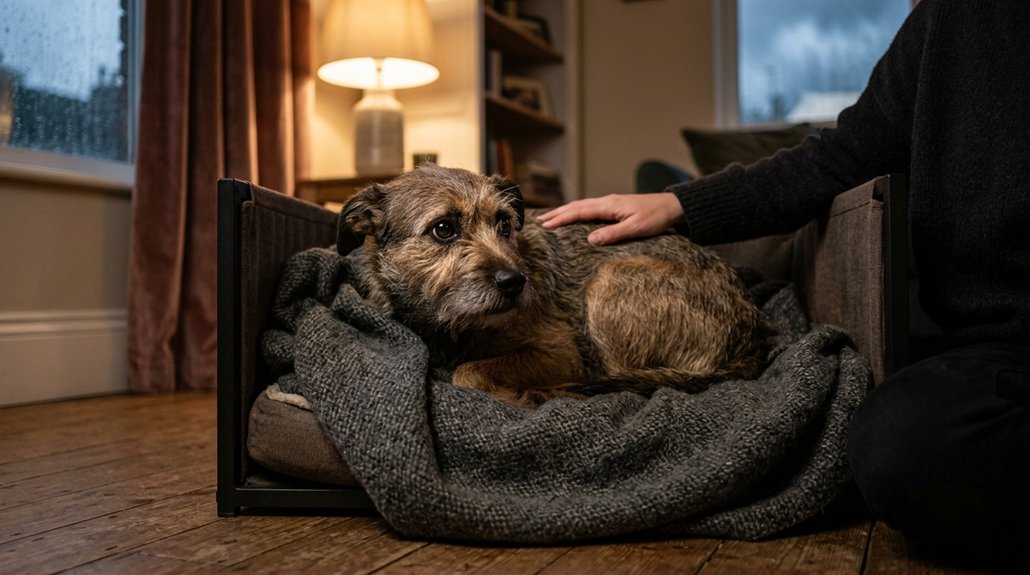
To help your dog cope with fear of thunder or fireworks, create a comforting environment using familiar toys and calming scents. Gradually introduce noise through desensitization sound training and reinforce positive behaviors with treats. Utilize calming products like supplements or prescribed medications for extra support. Make sure to monitor stress signs like trembling or panting, and consider consulting a vet for tailored strategies. There’s much more to learn about keeping your dog calm during noisy events.
Key Takeaways
- Set up a calming environment with familiar toys and soothing music to reduce anxiety during thunder or fireworks.
- Use gradual desensitization sound training to build the dog’s tolerance to thunder and fireworks noises.
- Administer veterinarian-prescribed anxiety medications like Sileo before expected loud events for effective relief.
- Employ positive reinforcement with engaging distractions, such as food-stuffed toys, to redirect focus away from noise.
- Consult a veterinarian for professional guidance and tailored long-term management strategies to address persistent noise phobia.
Immediate Steps to Calm Your Dog
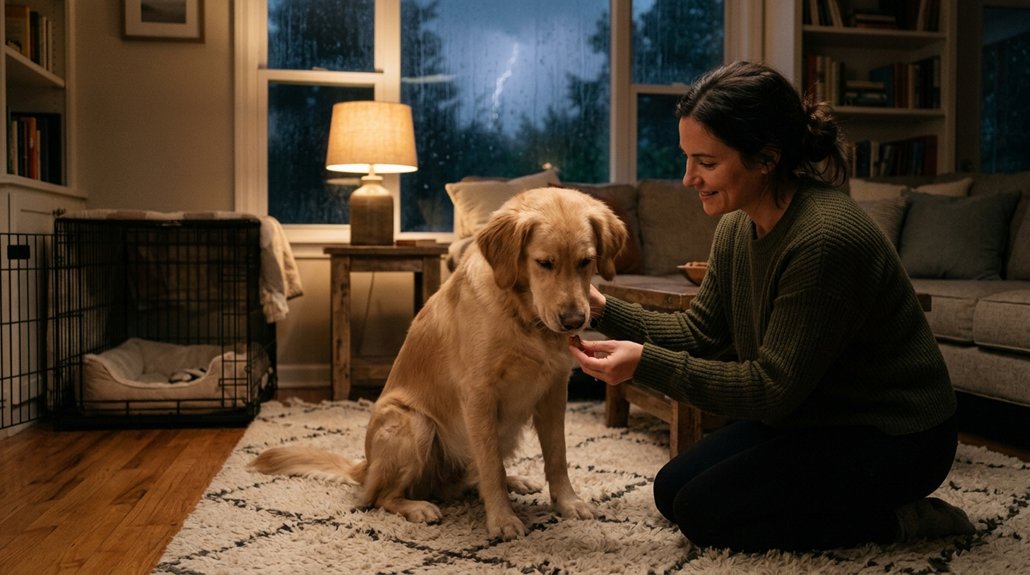
When helping your dog cope with fear of thunder or fireworks, it’s important to establish a safe and comforting environment. Create a designated retreat using familiar toys and cozy bedding to provide a sense of security. Soothing techniques, like turning on calming music or white noise, can muffle anxiety-inducing sounds. Use positive reinforcement to encourage your dog to remain calm—offering long-lasting distractions like stuffed KONG toys or chew bones can provide a rewarding focus. Your demeanor matters, so stay calm and offer gentle reassurance, setting the tone for your dog’s emotional response. Administer prescribed anxiety medications, such as Sileo, before loud events to enhance their effectiveness. By implementing these steps, you’ll better support your dog’s emotional well-being during stressful times.
Identify Canine Anxiety Triggers
Creating a comforting environment is important, but understanding the root causes of your dog’s anxiety is just as essential. Often, fear causes stem from loud noises like thunder and fireworks, sparking anxiety symptoms such as trembling and hiding. Dogs might develop these fear responses due to negative experiences associated with such sounds. If your furry friend wasn’t exposed to varied noises in early puppyhood, this lack of socialization can increase their sensitivity to loud environments later in life.
As dogs age, changes in brain chemistry can intensify existing anxieties, making older dogs particularly vulnerable to panic during storms or fireworks. Additionally, underlying health issues might contribute to heightened anxiety responses. Consulting your veterinarian can help determine if health factors are influencing your dog’s reactions.
Recognize Stress Signs in Dogs
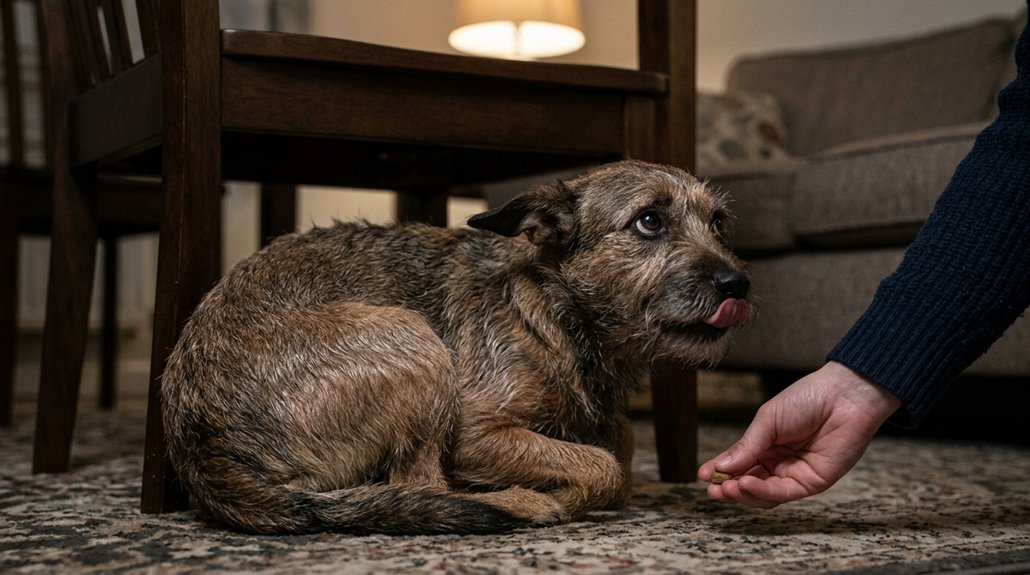
Although thunderstorms or fireworks may seem harmless to us, they can be profoundly distressing for dogs. Recognizing their distress through body language and behavioral cues is essential for easing their anxiety. Look out for trembling, vocalization, and excessive panting. These indicators reveal heightened anxiety levels. You might notice your dog hiding in corners or trying frantically to escape. Such attempts are significant markers of their fear. Digging at doors and excessive drooling are additional signs signaling severe stress. Understanding these indicators helps you assess your dog’s anxiety intensity, which can range from mild restlessness to extreme reactions. Early detection of these stress signals allows you to implement appropriate interventions, pivotal for alleviating your dog’s fear and improving their well-being.
Set Up a Comforting Space
Establishing a comforting space is essential for helping your dog cope with anxiety caused by thunderstorms or fireworks. Start by creating a designated safe space in a quiet room or a cozy crate, which can serve as a reliable retreat. Use thick blankets or cushions to soundproof this area, effectively muffling unsettling noises. To enhance the calming environment, include familiar toys and engage your dog with favorite games, instilling a positive association with the space during stressful events. Calming scents such as lavender or dog-appeasing pheromones can also promote relaxation. Make certain that this space is easily accessible so your dog can decide when to enter or exit, which provides them with a comforting sense of control over their surroundings.
Use Desensitization Sound Training
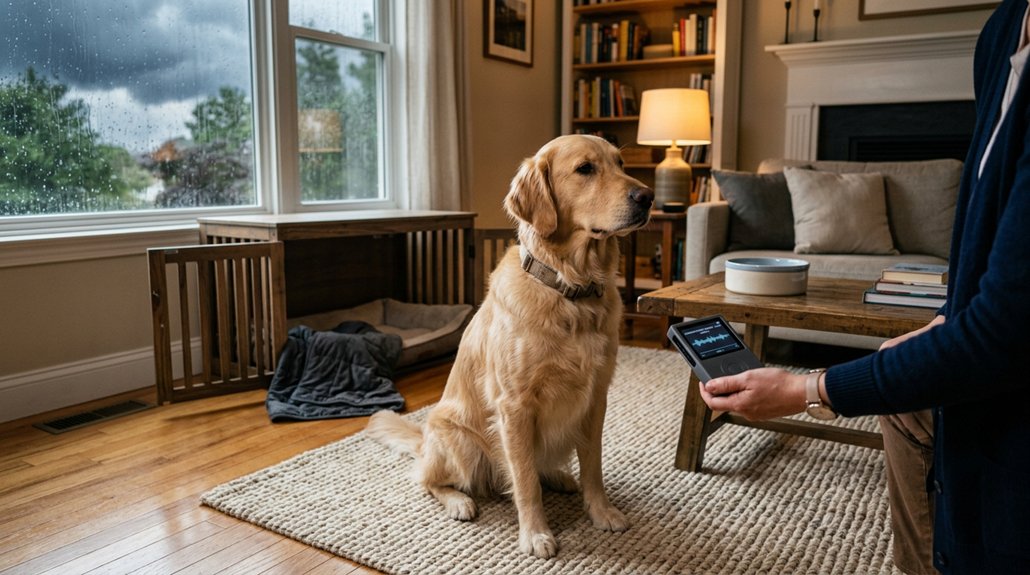
Desensitization sound training involves gradual exposure techniques, starting with playing recordings of thunder or fireworks at low volumes while offering treats and praise. It’s important to monitor your dog’s comfort during these sessions and adjust the volume as needed to prevent stress. Consistent, positive reinforcement will help your dog become more resilient to real-life thunder or fireworks over time.
Gradual Exposure Techniques
Here’s a structured approach:
- Start with Low Volume: Introduce the recordings softly, rewarding your dog to help them associate these sounds with positive experiences.
- Gradually Increase Intensity: Over multiple sessions, slowly raise the volume. Make certain your dog remains calm, stepping back if they’re stressed.
- Diverse Noise Patterns: Use various recordings, simulating different thunder and fireworks to broaden your dog’s adaptability.
Through these steps, you’re helping your dog build resilience while reinforcing relaxation techniques.
Monitor Dog Comfort
A crucial element in easing a dog’s fear of thunder or fireworks is carefully monitoring their comfort level during desensitization sound training. Start by playing recorded thunder or fireworks at a low volume. Offer treats to establish positive associations. Slowly increase the volume over several sessions, ensuring your dog stays comfortable and relaxed. Pay close attention to your dog’s body language for signs of stress, such as pacing or panting. If these occur, lower the volume. Use various sound recordings to simulate different types of stimuli in a controlled environment. Consistent sessions, weeks in advance of any stressful events, can greatly help your dog adapt and reduce fear. Remember, patience is key to maintaining dog comfort throughout the process.
Engage in Physical and Mental Activities
Engaging your dog in physical and mental activities is essential when trying to alleviate their fear of thunderstorms or fireworks. Exercise techniques such as long walks or a game of fetch can help expend excess energy and reduce anxiety levels. Puzzle games, like treat-dispensing toys or scent work, provide mental stimulation and can keep your dog focused during distressing noise events. Consider scheduling interactive play sessions with your dog’s favorite toys to encourage engagement and create positive associations, making them feel less fearful. Here are some effective strategies:
- Use puzzle toys: Introduce challenge-based toys to occupy your dog’s mind.
- Interactive play: Schedule play with beloved toys to ease anxiety.
- Treat-dispensing toys: Stuff KONGs with tasty treats for distraction.
Prepare for Noisy Events Ahead of Time
When anticipating noisy events like thunderstorms or fireworks, preparing ahead of time is essential to managing your dog’s anxiety. Start by addressing their sound sensitivity through structured routines. Long daytime exercise sessions can physically and mentally exhaust your pet, reducing anxiety when the storm hits. Create a safe, cozy retreat equipped with familiar blankets and toys to limit noise exposure.
Prepare calming distractions and have them ready:
| Distraction Type | Purpose |
|---|---|
| Long-lasting chews | Occupy and distract your dog |
| Puzzle toys | Engage their mind |
| Heavy curtains | Muffle external noise |
| Preemptive medications | Managed by consultation |
Keep your dog indoors with windows and doors sealed. Speak to your vet about anxiety management tools, ensuring these are used effectively before noise events begin.
Explore Calming Products and Supplements
Exploration of calming products and supplements can greatly aid in reducing your dog’s anxiety during thunderstorms or fireworks. You’re encouraged to evaluate the variety of options available tailored to your pet’s needs.
- Calming Vests: Products like ThunderShirt offer gentle, reassuring pressure to alleviate stress, promoting a sense of security during frightening noise events.
- Pheromone Diffusers: Tools like ThunderEase create a calming environment with soothing scents, reducing anxiety through natural pheromones.
- Relaxation Supplements and Prescription Medication: Chews from VetriScience and Nutramax Solliquin are supportive, while Sileo gel provides quick relief from acute noise phobia. Additionally, CBD oil may serve as an effective, natural approach to decrease anxiety, preparing your dog for anticipated loud disturbances.
Offer Comfort Appropriately
During thunderstorms or fireworks, prioritizing your dog’s comfort can be essential in managing anxiety effectively. Your empathetic presence is significant; gentle petting and your physical closeness help reinforce a secure environment, offering reassurance amidst fear. Allow your dog to decide where they feel safest, respecting their autonomy to create a comforting space. Engaging distractions, such as food-stuffed toys or long-lasting chews, can redirect your dog’s focus from the unsettling noises outside, fostering calm and diminishing anxiety. Balance is key—provide reassurance while maintaining a composed demeanor to avoid inadvertently reinforcing fear. Respecting boundaries, let your dog seek out desired hiding spots, which can be vital for self-management during stressful events. Your steadfast support makes navigating through these times progressively manageable.
Seek Professional Help if Needed
If your dog experiences extreme fear during thunderstorms or fireworks, seeking professional help can be vital to effectively manage their anxiety. A veterinary consultation is important to assess the severity and consider potential medical interventions. Here’s a supportive approach:
- Veterinary Consultation: Your vet can evaluate anxiety levels and suggest medical options like fast-acting gels for quick relief. Regular updates will guarantee personalized treatment.
- Behavioral Therapy: Tailored techniques, including gradual desensitization, can be recommended. Behavioral modification is essential in alleviating fear responses.
- Board-Certified Support: For dogs with persistent issues, a veterinary behaviorist can provide structured training and therapeutic strategies.
Professional guidance guarantees that fear management is thorough and customized, greatly improving your dog’s well-being.
Frequently Asked Questions
How to Calm a Dog Scared of Thunder and Lightning?
To calm your dog during thunder, create a secure environment to minimize thunder anxiety. Use fear conditioning techniques like gradual sound exposure with positive reinforcement. Consider calming aids like white noise machines or pressure wraps for additional support.
What Is the 3-3-3 Rule for Dog Anxiety?
Imagine anxiety rolling in like a storm cloud; the 3-3-3 rule helps your dog through it. Identify triggers early to develop coping strategies: three days to adjust, three weeks to settle, three months to secure.
Why Is My Dog so Scared of Thunder and Fireworks?
Your dog’s fear of thunder and fireworks stems from anxiety triggers, often due to their loud, unpredictable nature. Coping strategies like desensitization, comforting environments, or calming aids can help reduce their stress and manage reactions effectively.
How to Calm Down a Dog That Is Afraid of Fireworks?
Think of fireworks as a storm brewing. Help your dog by gradually using desensitization techniques, pairing fireworks sounds with rewards. Calming music can be your umbrella, shielding them from anxiety, creating a soothing environment for relaxation.
Conclusion
Imagine your dog’s fear as a storm cloud hovering overhead; with patience and preparation, you can guide them toward a sunny horizon. By understanding their anxiety triggers, crafting a safe environment, and exploring calming tactics, you’re giving your dog the tools to brave the storm. Always be prepared for loud events, offer comfort wisely, and remember that seeking professional help is a strong, loving choice. Your proactive care transforms fear into resilience, ensuring brighter days ahead.