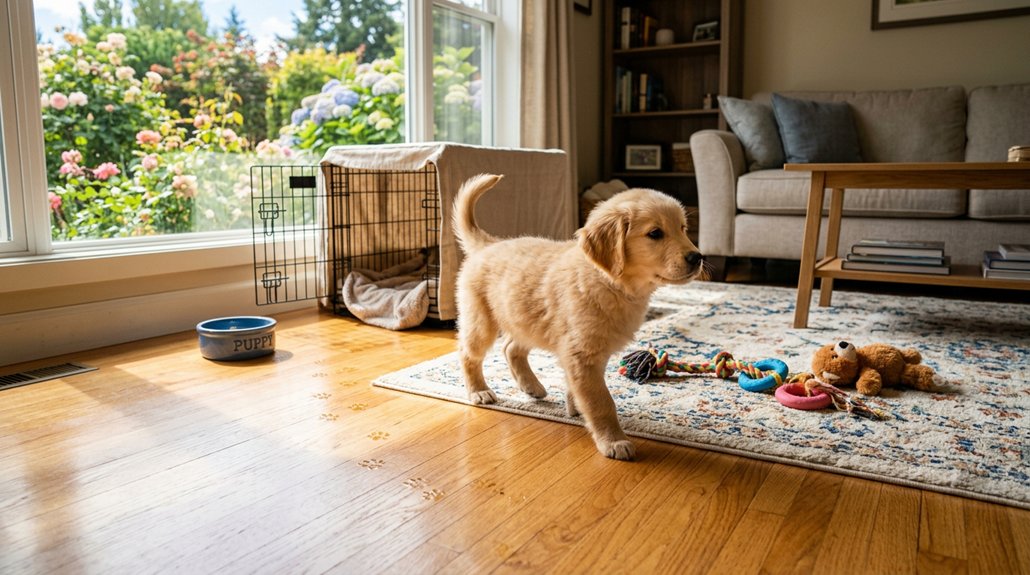
A typical day with a puppy involves structured routines to nurture its growth and your bond. You’ll start with a consistent morning routine, including potty breaks, breakfast, and playful training to energize your puppy. Mid-morning walks and short training sessions enhance learning. Social interactions and play after lunch keep them engaged and active. Evening routines focus on relaxation, with crate training ensuring a peaceful bedtime. By following these steps, you’re setting the stage for a harmonious relationship.
Key Takeaways
- Begin the day with a consistent morning routine, including a potty break and nutritious breakfast.
- Engage in mid-morning training and socialization to reinforce skills and boost confidence.
- Maintain structured meal times with post-meal potty breaks to prevent accidents.
- Spend afternoons with interactive games and social interactions to burn energy and enhance learning.
- Establish a wind-down evening routine with relaxation cues to ensure peaceful sleep.
Morning Routine: Setting the Tone for an Energetic Day
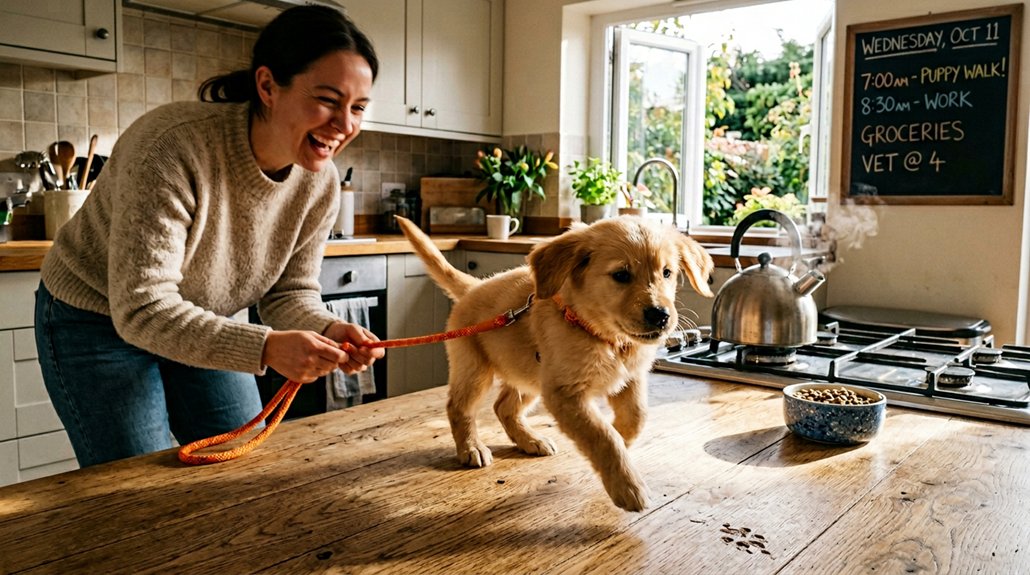
To start your day with a puppy on the right paw, embrace a consistent morning routine. Begin with your pup’s first potty break immediately after waking. This is essential for establishing good puppy habits and minimizing accidents. Afterward, provide a nutritious breakfast followed by another potty outing. This will reinforce effective potty training. Next, engage in a short, playful training session filled with games; it mentally and physically invigorates your puppy, setting a lively tone for the day. After playtime, introduce a structured nap period, essential since puppies can sleep up to 20 hours daily. Finally, encourage socialization with calm interactions. This morning bonding boosts both confidence and the special relationship between you and your pup, creating a harmonious start.
Mid-Morning Engagement: Active Learning and Exploration
During the mid-morning, you’ll find that a brief training session does wonders for reinforcing your puppy’s foundational skills through consistent practice. Taking them on a field walk afterward not only lets them burn off some energy but also exposes them to new environments, essential for their socialization and confidence-building. By incorporating basic commands like “sit” and “stay,” you’re promoting effective communication and positive behavior, setting your puppy up for success.
Short Training Session Insights
When focusing on building your puppy’s skills, mid-morning is the perfect time to engage in short, lively training sessions that maintain their attention and enthusiasm for learning. These 5 to 10-minute bursts tap into your puppy’s attention span, using positive reinforcement through treats or praise. Start with command consistency using simple cues like “sit” or “come.” Integrating engaging games keeps their minds stimulated and prevents boredom.
| Activity | Duration | Benefit |
|---|---|---|
| Basic Commands | 5 minutes | Reinforces obedience |
| Engaging Games | 5 minutes | Stimulates the mind |
| Positive Reinforcement | As needed | Encourages good behavior |
Rotate these activities seamlessly into your routine, maybe while prepping meals or enjoying outside time, turning everyday moments into a fun learning adventure!
Field Walk Exploration Benefits
After a successful training session with your puppy, mid-morning is an ideal time to initiate a field walk that’s bursting with opportunities for active learning and exploration. This time allows your puppy to engage in sensory exploration, promoting overall development and confidence. Field walk benefits abound, such as enhancing socialization and easing anxiety in new situations. It’s a unique chance for both bonding and learning. Here’s what you might notice:
- Discovering various textures like grass, gravel, or mud boosts adaptability.
- Different sounds and smells spark essential sensory development.
- Physical exercise helps expend energy, preventing behavioral issues.
- Shared experiences strengthen the bond with your puppy.
- Positive reinforcement during these walks enriches training encounters.
Explore and enjoy this enriching routine together!
Lunchtime Routine: Balancing Potty Breaks and Socialization
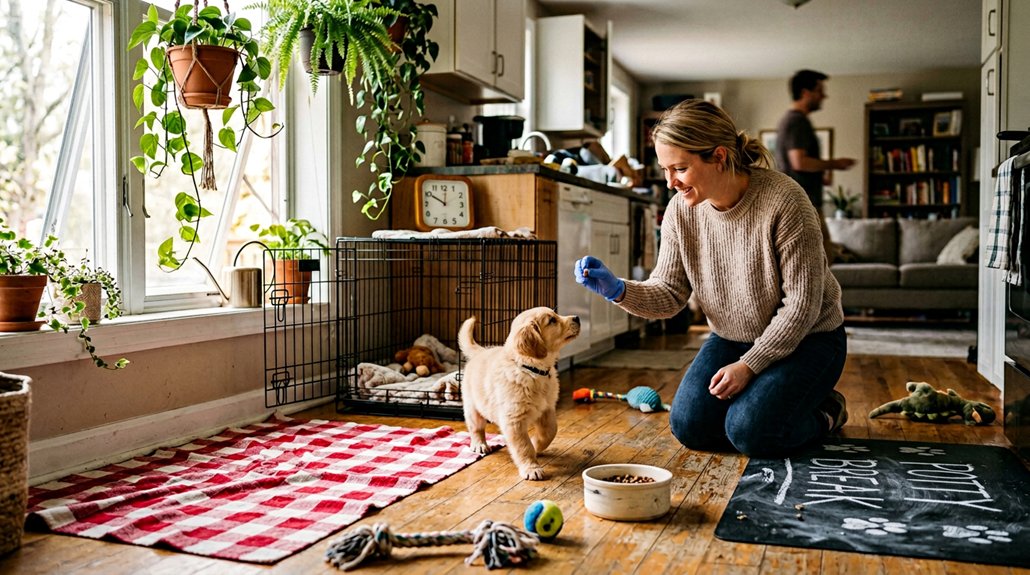
Lunchtime with a puppy is all about balancing essential activities like a potty break right after feeding, which reinforces training and prevents accidents. Follow it with energetic playtime to burn off some energy and strengthen your bond. Don’t forget a quick, focused training session to instill good habits and enrich your puppy’s day with some mental stimulation.
Midday Potty Routine
As the midday approaches, incorporating a well-rounded potty routine becomes vital for both house training success and your puppy’s overall well-being. Recognizing your puppy’s potty cues and outdoor signals is key to avoid accidents and reinforce good habits. Shortly after a lunchtime meal, they often need to relieve themselves. Take them outside every two to four hours, and make the most of this time by mingling socialization and training activities.
- Monitor for potty cues: sniffling, circling, or scratching.
- Use a consistent spot for outdoor potty breaks.
- Integrate brief training or play sessions for mental engagement.
- Allow supervised social interactions to enhance learning.
- Encourage calm interaction with a family member or older dog.
Sticking to these practices guarantees a successful midday potty routine!
Energetic Social Playtime
Engaging in energetic social playtime is an essential component of your puppy’s lunchtime routine. Balancing potty breaks with playful interactions after meals helps cement their potty training while allowing them to expend energy. After eating, consider taking your puppy outside for a potty break, setting them up for some social dynamics with older dogs or trusted canine pals. Supervised sessions enhance their social skills and keep your puppy safe as they learn appropriate dog behaviors. Incorporate interactive games like fetch or tug-of-war to further bond with your furry friend and provide them with physical exercise. Remember, maintaining a consistent schedule with potty breaks every 2-4 hours, especially after meals and play, will prevent accidents and support effective house training.
Training Session Benefits
Incorporating training sessions into your puppy’s lunchtime routine is a strategic way to reinforce essential commands and bolster their overall development. With a focus on effective training techniques, you can nurture positive behavior patterns that last a lifetime. Brief, focused sessions guarantee training remains engaging and worthwhile.
Here’s how you can enrich your pup’s midday schedule:
- Use clear commands like “sit,” “down,” and “stay” for consistent behavior reinforcement.
- Align potty breaks before or after training to enhance house training efficiency.
- Encourage socialization by letting your puppy interact with older dogs or family in a safe setting.
- Balance training with play to stimulate their mind and body.
- Limit sessions to 5 minutes to maintain focus and enthusiasm.
Afternoon Activities: Reinforcing Training and Development
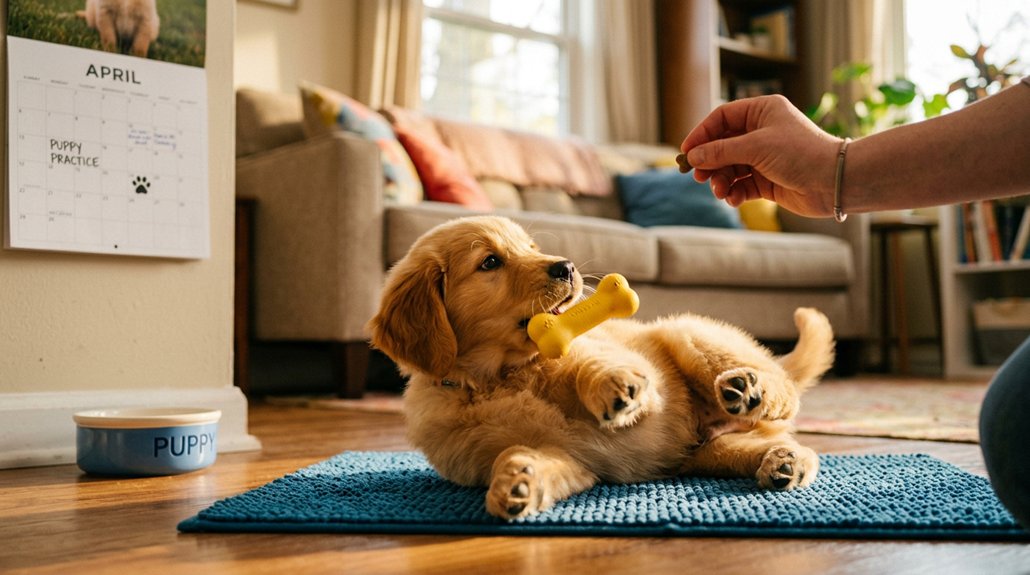
When it comes to raising a happy and well-behaved puppy, afternoon activities play a significant role in reinforcing training and supporting their development. Start with energy-expending play strategies that combine fun with learning. Engaging in games like tug of war, you not only aid in physical exercise but also promote cognitive exercise, enhancing your puppy’s problem-solving skills. After fun, a mid-day meal keeps their structured feeding schedule intact. Post-meal, an essential potty break continues successful potty training. Following this, brief training sessions can target important commands like ‘sit’ or ‘stay’, using high-reward treats for focus. Finally, allowing supervised exploration around the house helps reinforce boundaries and guarantees your puppy feels secure and mentally stimulated.
Wind Down Wisely: Evening Routines for Relaxation
To guarantee your puppy winds down wisely, establish a consistent evening routine that gradually shifts them from active play to relaxation. Embracing puppy relaxation techniques will signal bedtime and enhance their well-being. Start with calming evening activities to ease this progression and help them feel secure. Remember:
- Final potty break: Post-dinner relief minimizes nighttime accidents.
- Low-energy bonding: Cuddling or gentle petting strengthens your bond while calming them.
- Quiet environment: Reduce distractions, fostering a peaceful atmosphere.
- Gradual play phase-out: Slowly decrease activity levels to distinguish between play and rest.
- Consistent cues: Regular signals like dimming lights guide your puppy toward relaxation.
These thoughtful steps will help ease them into a restful night, setting the stage for healthier sleep routines.
Ensure a Peaceful Puppy Bedtime: Crate Strategies and Comfort
Creating a peaceful bedtime for your puppy involves thoughtful crate strategies and fostering comfort. Establish bedtime consistency with a predictable routine, including a final potty break, to give your puppy a sense of security. Prepare the crate with cozy bedding and a favorite toy to enhance crate comfort. For newly weaned pups, simulate a mother’s warmth using a hot water bottle and a ticking clock to ease their overnight adjustment. Gradually introduce the crate during the day for naps, reinforcing it as a safe space. Once settled at night, step back, allowing your puppy to relax in the crate without too much attention. This practice encourages them to self-soothe, making their adjustment to nighttime alone time smoother.
Frequently Asked Questions
What Does a Typical Day With a Puppy Look Like?
You’ll structure puppy routines around feeding schedules, incorporating training sessions and playtime activities. Monitor behavior, making certain nap times after exercises. Don’t forget socialization skills and occasional vet visits to guarantee a happy and healthy puppy lifestyle.
What Is the 3-3-3 Rule With Puppies?
The 3-3-3 rule guides you through a puppy’s adjustment: three days for basic comfort, three weeks for routine acceptance, and three months for full settlement. Socialization tips and understanding puppy behavior promote smoother adjustments.
What Is the Hardest Month of a Puppy?
The hardest month for a puppy is between 8 to 12 weeks. You’ll navigate puppy training, manage energy levels, tackle socialization challenges, deal with teething issues, establish nighttime routines, handle health concerns, and introduce bonding playtime activities.
What Is “I Love You” in Dog Language?
In canine communication, puppies say “I love you” through actions like leaning on you, with 82% of owners recognizing this as a sign of affection. Their emotions manifest in tail wags and gentle vocalizations expressing love and attachment.
Conclusion
Steering a day with a puppy is like orchestrating a lively symphony, where each note—morning routines, adventurous exploration, and quiet wind-downs—blends seamlessly into a harmonious experience. You’ll find joy in their wagging tails and curious sniffles, and patience when teaching boundaries. With each moment, you’re not just raising a dog; you’re nurturing a lifelong companion. So, enjoy these vibrant days, knowing you’re building a foundation for an enduring bond together.