Your dog may suffer from separation anxiety due to factors like routine changes, lack of socialization, or a history of abandonment. Symptoms include excessive barking, destructive behavior, and stress indicators like pacing. To help, gradually acclimate your pet to being alone using desensitization techniques and enrich their environment with engaging activities. Consultation with a veterinarian or certified animal behaviorist can guide effective treatments. Uncover more strategies to support your dog’s mental health in subsequent sections.
Key Takeaways
- Dogs experience separation anxiety due to a history of abandonment or frequent rehoming, increasing their distress when left alone.
- Lack of socialization or past trauma can contribute to a dog’s anxiety during times of separation from their owner.
- Breed predispositions, seen in Labradors and Chihuahuas, make certain dogs more prone to separation anxiety symptoms.
- Gradual desensitization and behavioral therapies like counterconditioning help dogs adapt to being alone.
- Consult a veterinarian to explore medication options and rule out other health issues that may exacerbate anxiety.
How Separation Anxiety Affects Dogs and Quick Relief Steps
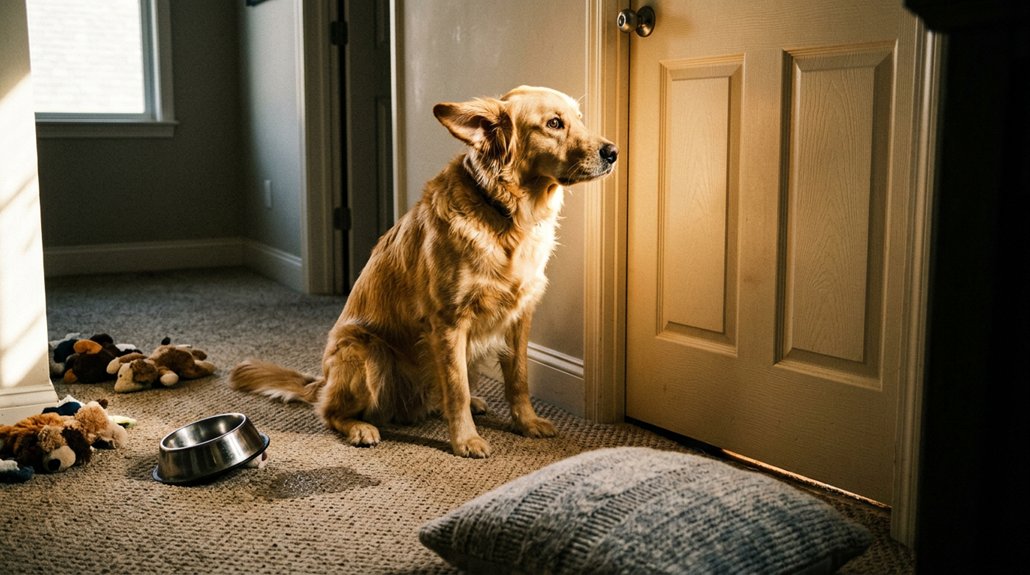
Separation anxiety in dogs is characterized by a range of distressing behaviors that can considerably affect their well-being. These can include barking, destructive actions, and inappropriate elimination. Clinically, you may notice signs such as pacing, trembling, drooling, and vocalizations shortly after leaving. To mitigate these stress responses, it’s essential to establish safe spaces filled with engaging toys. These environments provide comfort and distraction. Implement calming techniques through a consistent pre-departure routine. Gradually expose your dog to being alone to build tolerance. Positive reinforcement is important; reward calm behavior with treats or puzzle toys to create a positive association with your absence. In severe cases, consult with a professional behaviorist for a more tailored approach.
Triggers and Causes of Anxiety Episodes
While separation anxiety episodes can be troubling, understanding their triggers and causes is essential for effectively managing them. Dogs often experience heightened stress levels due to significant environmental changes, such as moving to a new home or adjustments in family dynamics. Additionally, traumatic experiences, including instances of abandonment or being rehomed, can predispose them to anxiety.
Here are key factors contributing to separation anxiety:
- Routine shifts: Sudden increases in the duration of your absences can exacerbate anxiety in sensitive dogs, leading to problematic behaviors.
- Innate temperament: Dogs with naturally anxious dispositions are more likely to struggle with isolation.
- Underlying health issues: Before jumping to conclusions, consider health conditions like cognitive dysfunction that might mimic or worsen stress symptoms. Understanding these elements can provide a foundation for appropriate interventions.
Identifying the Symptoms of Separation Anxiety
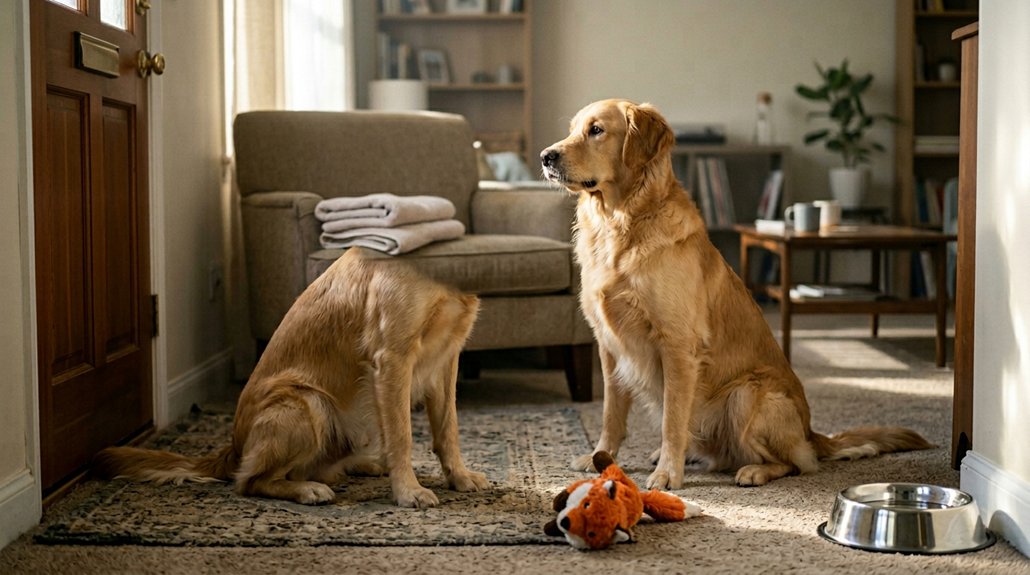
Recognizing separation anxiety symptoms in dogs involves observing a range of behaviors that signal distress. Common anxiety signs include excessive vocalizations such as barking and howling, and destructive actions like chewing furniture or attempting to escape. Body language is vital—watch for pacing, panting, drooling, or trembling. Some dogs may demonstrate inappropriate elimination, urinating, or defecating indoors despite being house-trained, indicative of heightened stress levels. Upon your return, dogs might showcase excessively enthusiastic greetings, with jumping, whining, or nipping. Subtle signals, such as dilated pupils, loss of appetite, or reluctance to settle, can often be overlooked but are equally telling. Observing these behaviors attentively will help you identify the onset of separation anxiety, allowing for timely intervention.
Distinguishing Medical From Behavioral Problems With Vet Help
When dealing with dog behaviors that resemble separation anxiety, collaborating with a veterinarian can be essential in distinguishing medical issues from behavioral ones. Veterinary examinations help rule out conditions like urinary tract infections, diabetes, and kidney diseases which may mimic separation anxiety. Furthermore, behavioral assessments allow you to identify specific issues such as submissive urination or incomplete house training. A sudden change in your dog’s behavior warrants a thorough examination to pinpoint possible health-related causes. Here’s how you can guarantee a thorough overview:
- Schedule regular veterinary consultations to monitor health changes.
- Utilize camera observations to capture your dog’s behavior when alone.
- Consider both veterinary insights and behavioral assessments to differentiate between medical and separation anxiety-related symptoms.
This multifaceted approach clarifies the path forward.
Proven Treatment Plans for Separation Anxiety
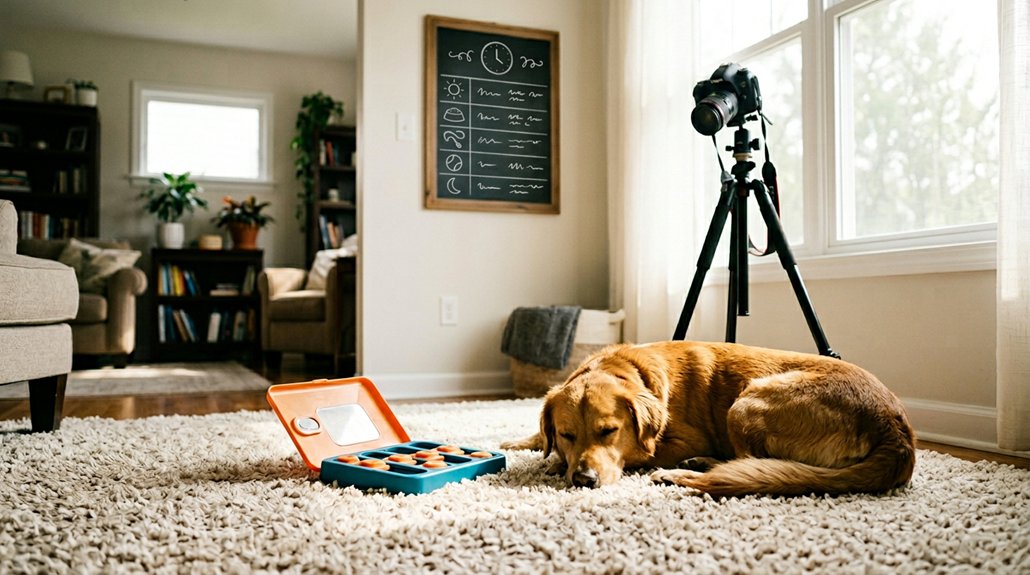
For effective management of separation anxiety in dogs, implementing proven treatment plans is essential. Begin with structured desensitization: gradually extend separations, allowing your dog to adjust comfortably. Behavioral therapies such as counterconditioning are crucial—pairing alone time with enjoyable stimuli like puzzle toys fosters positive associations and reduces anxiety. Before initiating any plan, consult a veterinarian to exclude medical conditions influencing symptoms. For severe cases, professional guidance from a certified animal behaviorist guarantees that strategies are precisely tailored to your dog’s needs. Environmental enrichment plays a significant role in alleviating stress; enriching your dog’s surroundings with engaging activities can diminish anxiety. Continuous monitoring is imperative, allowing you to refine the approach based on observable progress and enhanced well-being.
How to Prevent Future Episodes
To effectively prevent future episodes of separation anxiety in dogs, acclimating your pet to brief separations is essential. When introducing your dog to your home, gradually increase these separations’ duration to familiarize them with being alone. Implement structured dog routines that incorporate stimulating activities and encourage gradual independence. Here are key separation strategies:
- Routine Establishment: Confirm your dog’s daily routine includes physical and mental exercises to build their confidence and minimize dependency.
- Positive Reinforcement: Gradually increase alone time, rewarding your dog’s calmness upon return to associate your departures with positive experiences.
- Interactive Solutions: Use puzzle feeders or interactive toys to occupy their mind during your absence, reducing isolation effects.
Additionally, maintain low-key entries and exits and consider relaxation techniques to soothe your pet.
Managing Anxiety With Professional Training
Building on preventive strategies for separation anxiety, engaging a professional trainer or behaviorist can further refine your approach. By leveraging expert guidance, you can access tailored training techniques essential for effective anxiety management. A seasoned trainer designs a personalized behavior modification program, incorporating systematic desensitization to gradually increase your dog’s tolerance for being alone. Positive reinforcement is key, rewarding calm behavior and minimizing departure-related anxiety triggers.
Monitoring your dog’s progress allows for real-time adjustments, ensuring the training adapts to their comfort level and efficacy remains high. This process not only supports your dog but also equips you with strategies to manage your expectations and interactions, creating a stable, supportive environment imperative for alleviating separation anxiety.
Veterinary Checks to Help Assess Anxiety
Understanding the root of your dog’s separation anxiety requires thorough veterinary checks. These checks help rule out medical conditions masquerading as anxiety and develop effective solutions. Health assessments are essential, starting with veterinary diagnostics to exclude issues like urinary tract infections or diabetes. Here’s how a detailed evaluation can aid your dog:
Thorough veterinary checks can uncover medical issues posing as anxiety, crucial for effective solutions.
- Behavioral Assessments: Vets often use these to scrutinize anxious behaviors in detail, facilitating a precise diagnosis.
- Observational Tools: Monitoring through cameras can provide insight into your dog’s behavior when alone, identifying anxiety patterns.
- Behavioral History: Discuss any recent changes in routine or environment with your vet to pinpoint anxiety triggers.
Collaborate with a vet to create a thorough strategy, potentially combining behavior modification and medication.
Frequently Asked Questions
How Do You Help a Dog With Separation Anxiety?
To help a dog with separation anxiety, use behavior modification and crate training. Gradually increase alone time, rewarding calm behavior. Maintain low-key arrivals/departures. Consult professionals for severe cases, possibly incorporating anti-anxiety medications for effective results.
How to Calm Dog Anxiety Naturally?
Imagine stress as a storm; herbal remedies, calming treats, and anxiety wraps become your dog’s umbrella. Structured routines, soothing music, and regular exercise routines diminish the turbulence, anchoring their anxiety naturally and effectively into tranquility.
What Is the 3-3-3 Rule for Dog Anxiety?
The 3-3-3 rule describes a dog’s adjustment timeline: three days fearing new environments, three weeks building routine, three months stabilizing behavior. Watch for separation behaviors and anxiety triggers during these phases to guide their adaptation.
How to Tell if a Dog Is Stressed?
You’ll know a dog is stressed if Lassie starts pacing like a frantic telegram. Watch for dog body language: panting, drooling, and trembling. Vocalizations and destructive behaviors are other key stress signs in your furry companion.
Conclusion
Imagine coming home to a calm, content dog after implementing an extensive plan to tackle separation anxiety. You’ve identified triggers, collaborated with a vet, and employed professional training—transforming your dog’s anxious whimpers into relaxed wagging. Like Max, a once-panicked Labrador who now naps happily when his owner leaves, your pet can also achieve tranquility. Consistent care and understanding are essential. Tailoring strategies to your dog’s needs will promote long-term well-being, preventing future episodes of distress.