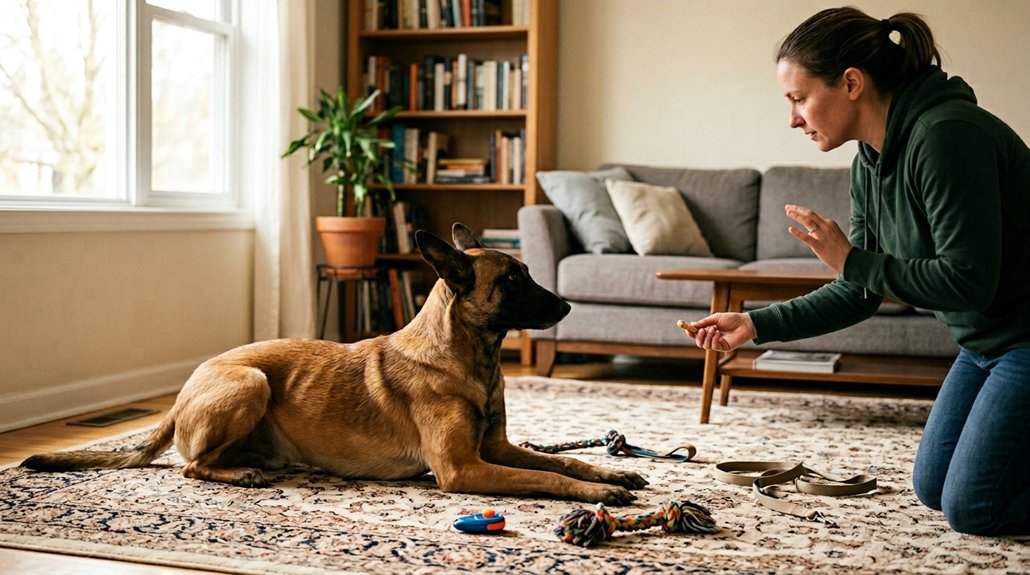
When your dog ignores commands, first verify clarity and consistency in your instructions. Begin training in calm environments and gradually introduce distractions. Understand that your pet’s personality and possible negative associations with commands play a role. Use positive reinforcement and adjust techniques to suit your dog’s energy and learning style. If challenges persist, consider consulting a professional trainer. With dedication, you can improve your communication and deepen your bond, opening doors to further insights.
Key Takeaways
- Ensure commands are clear and consistent to avoid confusion and mixed signals.
- Begin training in calm, distraction-free environments and gradually introduce more stimuli.
- Establish specific reinforcement practices using high-value rewards for desired behaviors.
- Adapt training methods to suit your dog’s unique personality traits and energy levels.
- Consult a professional trainer for tailored strategies and real-life scenario training.
Establish Clear and Consistent Commands
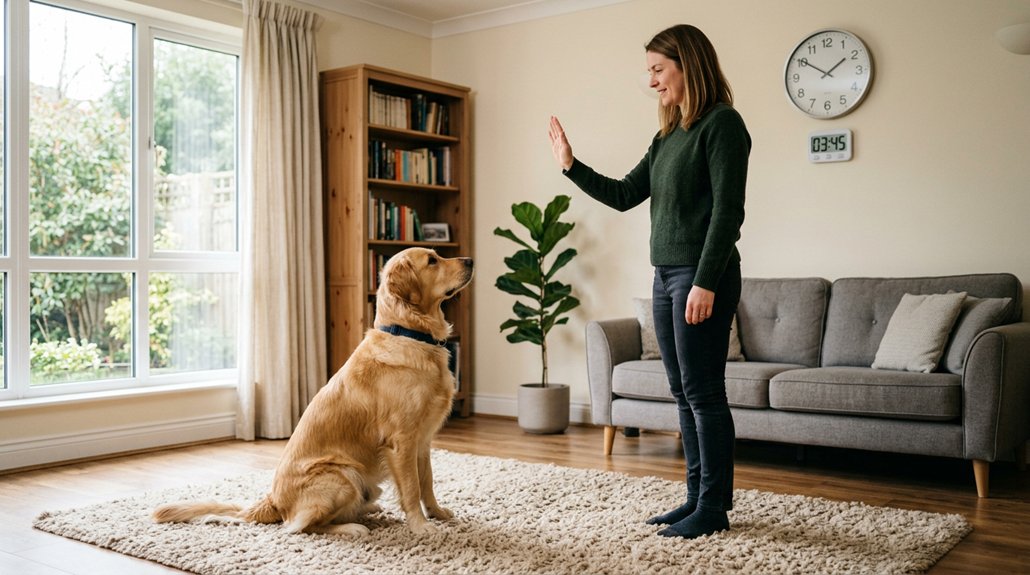
When training your dog, clarity is key. Begin by clearly defining each command with specific words to avoid confusion and mixed signals. It’s essential that your dog understands exactly what you expect, enhancing their responsiveness. Practice the commands consistently, using consistent reinforcement to cement your dog’s grasp of expected behaviors. Start with distraction-free environments, gradually introducing varied settings that demand attention while tying commands to positive reinforcement, such as immediate treats or praise. This strengthens the association between obedience and reward. Observe how your dog responds and adjust your approaches accordingly to improve command clarity. It’s important to balance patience and persistence as both you and your dog learn. With time, you’ll communicate effectively, ensuring a rewarding training experience for your furry friend.
Understand Why Commands Are Ignored
Ever ponder why your dog ignores commands despite your best efforts? Understanding this behavior involves recognizing common training challenges and behavioral triggers. Oftentimes, unclear or inconsistent training leads to confusion, leaving dogs unsure of expectations. Be mindful of environmental overstimulation—noises or other animals can hamper focus. Additionally, consider if commands have negative associations. If previous unpleasant experiences occurred, your dog might be avoiding those commands to steer clear of perceived threats. Notice your dog’s energy levels and instincts; high-energy breeds often struggle with attentiveness amid distractions. Also, inconsistent reinforcement muddles motivation, making it unclear what behaviors are rewarded. By pinpointing these issues, you can better tailor your approach and effectively address why commands are being ignored.
Create Positive Training Environments
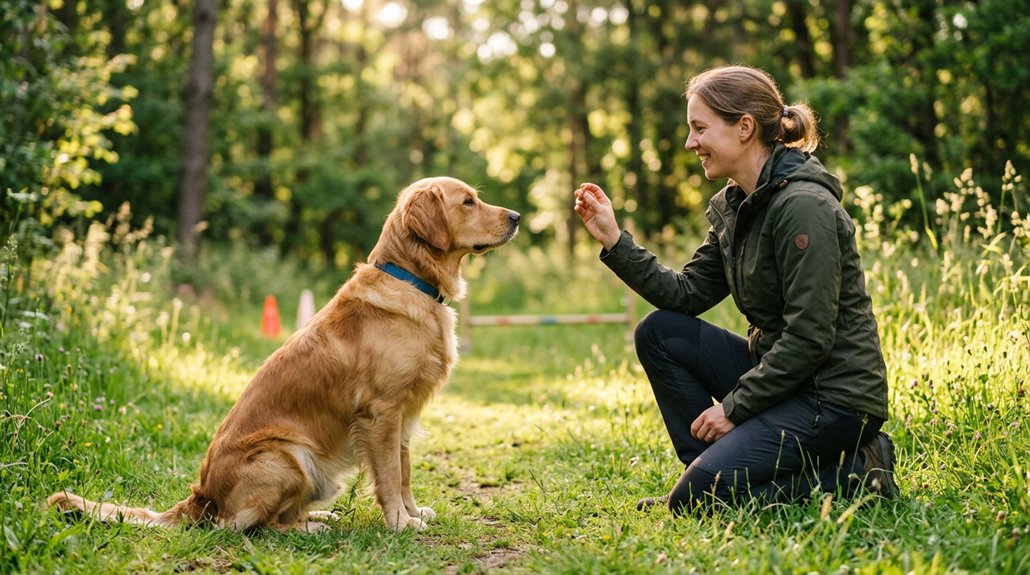
To successfully create positive training environments for your dog, start by guaranteeing sessions take place in controlled, distraction-free settings, which reinforce initial learning. In these environments, your dog can focus solely on you, enhancing command understanding. Gradually incorporate distraction training, like varying locations or introducing new people, to help your dog learn commands even amidst chaos. As you progress, always maintain a consistent reward system using high-value treats. This creates a positive association with obeying commands and boosts your dog’s motivation.
Incorporate real-life scenarios to bring context to commands, practicing during walks or when visitors arrive. Stay calm and use positive reinforcement to keep an encouraging atmosphere. This approach guarantees your dog listens, rather than tuning you out.
Tailor Training Methods to Your Dog’s Personality
Having established a positive training environment, it’s important to recognize that each dog’s personality is unique and tailoring methods to their individual traits can considerably enhance training success. In dog training, understanding your dog’s personality types—be it energetic, shy, or independent—is essential. Adapt your methods to match their energy levels and learning styles. Use interactive techniques that harness their natural instincts and keep sessions engaging.
Identify and minimize distractions that disrupt focus. Utilize positive reinforcement, like favorite treats or toys tailored to your dog’s preferences, to motivate responses. Consistent cues paired with specific body language clarify commands. Varying environments per your dog’s personality promotes generalization. Introduce distractions gradually, adjusting difficulty to guarantee solid command following in diverse situations.
Seek Professional Help When Needed
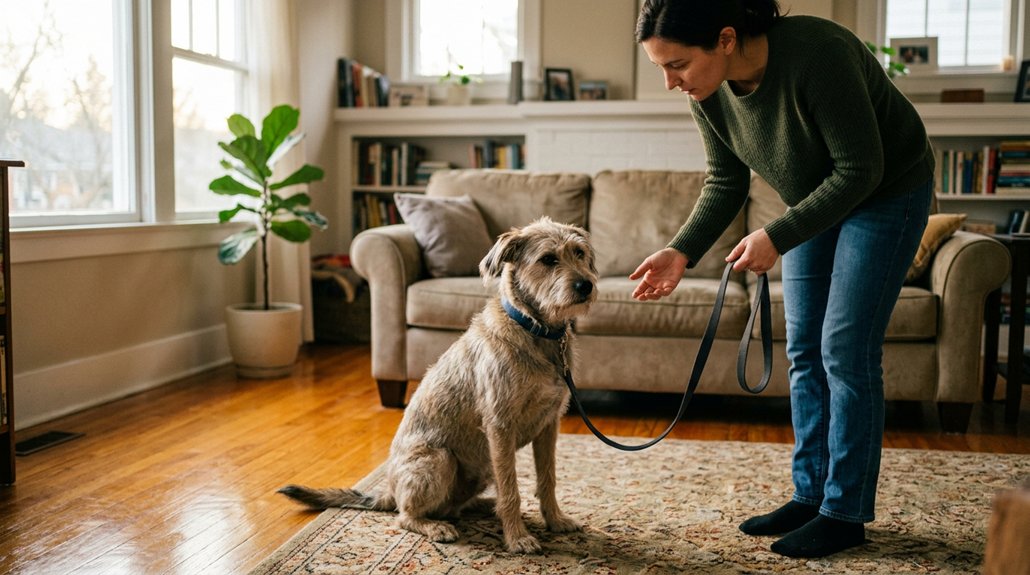
When faced with persistent training challenges, don’t hesitate to seek professional help to address your dog’s unique behavior patterns effectively. Engaging a professional trainer offers tailored strategies and techniques for behavior modification, ensuring your dog learns in a structured setting. Here’s why professional help can make a difference:
- Tailored Strategies: Trainers provide personalized plans utilizing training resources that cater specifically to your dog’s needs.
- Experience with Distractions: A professional can effectively replicate real-life situations, minimizing distractions during training and promoting consistent responses.
- Improved Communication: Clear and consistent methods strengthen the dog-owner dynamic, facilitating better training outcomes.
Many services offer classes for behavior problems, giving you confidence and empowering you to address your dog’s training needs positively. Don’t wait until frustration sets in—get the guidance you need now.
Frequently Asked Questions
How Can I Improve My Dog’s Focus During Training Sessions?
To improve your dog’s focus, eliminate distractions using targeted techniques. Select a training environment that’s quiet and controlled. Consistency, patience, and high-value treats can keep your dog engaged and responsive. Stay calm; your energy impacts their attention.
What Are the Best Non-Verbal Commands to Teach My Dog?
Ironically, dogs understand hand signals better than your speech. Teaching them “sit,” “stay,” or “come” through body language is essential. Your gestures carry weight, and your dog will appreciate that communication without spoken commands. Stay consistent!
How Do I Handle Training Setbacks With My Dog?
When facing training setbacks, stay calm and patient. Minimize training distractions and focus on consistent behavioral reinforcement. Adjust your approach if needed, and remember, progress isn’t always linear. Your persistence will lead to understanding and successful training over time.
Can Diet Affect My Dog’s Responsiveness to Commands?
Imagine your dog is a car running on low fuel; yes, diet absolutely affects command responsiveness. Nutrient deficiencies twist responsiveness into a tangled mess. Balancing dietary influences can be the key to releasing their true potential again.
How Often Should Training Sessions Be for Effective Results?
You’ll want to keep training sessions frequent yet short. Aim for daily training frequency with sessions around 10-15 minutes. Consistency and brevity in session duration help your dog learn effectively without overwhelming them, fostering better responsiveness.
Conclusion
Imagine your dog’s mind as a garden, where each command is a seed. Sometimes, the soil isn’t right or a storm’s blown through, and those seeds just won’t take. Your role is the steadfast gardener, nurturing each seed with understanding and consistent care. Be patient and adapt to the plants’ needs, knowing when to call in expert hands. By doing this, you’ll cultivate a flourishing bond, rooted in trust and cooperation. You’ve got this.