
You’ll find that common health issues in puppies include viral infections like parvovirus and distemper, which are preventable through timely vaccinations. Parasites such as fleas, ticks, and worms also pose threats, so monthly preventatives are essential. Nutrition plays a vital role in staving off problems like malnutrition and stunted growth. Regular vet visits are key for early detection of issues like dehydration or unusual behaviors. Explore further to better protect and care for your puppy’s health.
Key Takeaways
- Viral Infections: Puppies can suffer from viral infections like parvovirus, distemper, or kennel cough, requiring vaccinations for prevention and early treatment.
- Parasites: Common parasites include fleas, ticks, and worms; monthly prevention and regular deworming are vital to control infestations.
- Nutrition-related Issues: Poor nutrition can lead to malnutrition, impacting growth and immune function; monitoring diet and weight is essential.
- Respiratory Problems: Kennel cough and pneumonia affect respiratory health, presenting symptoms like coughing and nasal discharge; timely vet intervention is important.
- Serious Health Concerns: Seizures, persistent vomiting, and diarrhea can be life-threatening; immediate veterinary care is crucial for severe symptoms.
Preventative Measures to Keep Your Puppy Healthy

Taking preventative measures is essential in keeping your puppy healthy. Regular vet check-ups are key for early detection of health issues and adherence to vaccination schedules. Start vaccinations as early as 6-8 weeks old to guard against diseases like parvovirus and distemper. Incorporate consistent puppy exercise into your routine to promote physical and mental well-being. Monthly flea, tick, and heartworm prevention should be prioritized, along with consistent deworming to keep parasites at bay. Dental care shouldn’t be overlooked, as good oral hygiene supports overall health. Track your puppy’s growth, behavior, and appetite changes in a health journal. This attentive monitoring will guarantee prompt veterinary consultation should any concerns arise, securing your puppy’s health and longevity.
Why Nutrition Matters
Proper nutrition is essential for your puppy’s health, as it fortifies their fragile immune system, allowing them to combat infections and diseases more effectively. Puppy nutrition is not merely about filling hungry bellies; it’s about constructing a solid foundation for healthy growth. A balanced diet rich in proteins, fats, vitamins, and minerals is vital to sustain energy, encourage muscle development, and enhance overall wellbeing. Be mindful that a puppy’s dietary needs aren’t the same as those of an adult dog. Any dietary changes should be carefully considered and monitored. Malnutrition or an imbalanced diet can lead to serious issues such as stunted growth and increased susceptibility to illnesses. Regularly check their weight and growth, consulting a vet if concerns arise.
Understanding Common Viral Infections in Puppies

While nutrient-rich meals play a crucial role in fortifying a puppy’s defenses, understanding the threat of viral infections is equally important in safeguarding your furry friend’s health. Parvovirus, a notorious viral transmission, primarily strikes puppies 6 weeks to 6 months old, triggering alarming infection symptoms like vomiting and bloody diarrhea. Hospitalization can greatly improve survival. Canine distemper emerges with respiratory issues, advancing to neurological problems; since there’s no cure, vaccines are essential. Kennel cough also involves viral transmission, leading to a dry cough and nasal discharge, typically resolving in about 10 days. Infectious canine hepatitis and canine influenza illustrate more challenges, with symptoms such as fever and coughing, emphasizing that vaccinations are your puppy’s best defense against these infections.
Recognizing Sick Puppies: Signs to Watch For
When it comes to ensuring your puppy’s well-being, recognizing the signs of illness early can make a world of difference. Puppy lethargy signs, such as constant tiredness and lack of enthusiasm, might point to infections or chronic issues. Sudden appetite loss, where your furry friend refuses meals, could be a red flag for infections or digestive troubles. Persistent vomiting indicators, along with diarrhea lasting over 24 hours, require immediate attention, as they may signal parvovirus or other serious conditions. Respiratory infection symptoms, like coughing, sneezing, or nasal discharge, suggest ailments like kennel cough. Pay close attention to abnormal behavior alerts, including excessive whining or odd postures, as these can help you quickly seek necessary veterinary care, safeguarding your puppy’s health.
Managing Puppy Parasites: Prevention and Control
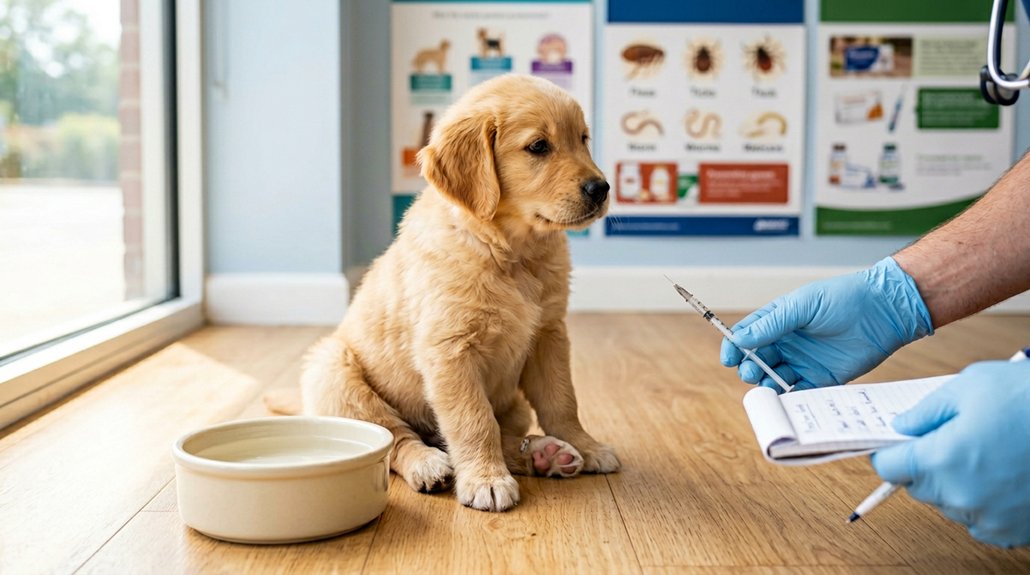
You’ll find that a proactive approach to managing puppy parasites involves a combination of effective prevention strategies, keen identification of symptoms, and regular deworming. Recognizing signs like diarrhea, vomiting, and skin irritation can help you address issues before they become severe. By maintaining a regimen of deworming and using flea and tick preventatives, you’ll safeguard your puppy’s health and avoid costly treatments down the line.
Effective Parasite Prevention Strategies
As your puppy starts their new life with you, employing effective parasite prevention strategies is essential to safeguarding their health. Begin with monthly chewable tablets for fleas treatment, tick control, and heartworm prevention. These combat the parasite lifecycle and avert serious health issues. Regular pet grooming helps detect flea allergies early, while proper sanitation practices and outdoor precautions minimize exposure to contaminated surfaces. Pay attention to environmental factors and maintain a clean area free from feces and debris. Holistic remedies may complement these strategies, but always consult your vet for personalized advice. Though initial preventive costs may seem high, they’re far less than the expenses associated with treating advanced parasitic diseases, ensuring your puppy stays healthy and happy.
Identifying Puppy Parasite Symptoms
How can you tell if your adorable puppy is dealing with parasites? Watch for symptoms like diarrhea, vomiting, weight loss, and a dull coat. These signs are essential for parasite identification and act as alerts that your puppy’s health might be compromised. Fleas and ticks often cause skin irritation and can spread diseases. Due to their underdeveloped immune systems, puppies are more vulnerable to these parasitic invaders, making regular check-ups necessary. Intestinal parasites can be detected through fecal testing, while heartworm, spread by mosquitoes, leads to respiratory challenges if untreated. Observing and identifying these symptoms guarantees timely interventions, maintaining your puppy’s vibrant health. Always stay proactive to protect your furry friend from these common yet serious health threats.
Importance of Regular Deworming
While identifying symptoms is the first step in tackling puppy parasites, managing them involves a thorough strategy focused on prevention and control. Regular deworming is essential for protecting your puppy from intestinal parasites like roundworms and hookworms. Here are fundamental steps:
- Start Early: Begin deworming when your puppy is two weeks old, continuing every two weeks until 12 weeks to break parasite life cycles.
- Regular Testing: Conduct yearly fecal tests to spot infestations and verify treatments are effective.
- Use Preventatives: Monthly deworming tablets not only control parasites but also support your puppy’s overall health.
- Be Aware of Risks: Understand that parasites can be passed from the mother or through environments, emphasizing the puppy deworming benefits.
With vigilance, your puppy stays happy and healthy.
Why Regular Vet Visits Keep Puppies Healthy
Ensuring your puppy receives regular vet visits is essential for their overall health and well-being because these check-ups are more than just routine; they’re crucial for monitoring their growth and catching potential health issues early on. Veterinarians can observe changes in puppy behavior and communicate effectively about any concerning signs. During these visits, your puppy will receive important vaccinations to prevent dangerous diseases like parvovirus and distemper. Personalized care plans crafted by your vet will accommodate your puppy’s unique health needs, allowing timely interventions or adjustments to treatments. Routine consultations also enable discussions about preventive measures like parasite control and nutrition. Plus, regular vet visits build a trusting relationship between you and your vet, ensuring better adherence to recommended health protocols.
Recognizing Urgent Health Issues in Puppies
- Breathing Difficulties: If your puppy struggles to breathe, it’s a medical emergency demanding evaluation. It might indicate kennel cough or pneumonia.
- Persistent Vomiting/Diarrhea: Bloody occurrences can quickly lead to dehydration, requiring urgent care.
- Seizures: These indicate potential life-threatening conditions; prompt veterinary consultation is crucial.
- Unusual Behaviors: Sudden disorientation or aggression can point to neurological issues or poisoning; act swiftly to seek professional help.
Your attentive care can considerably impact your puppy’s health and well-being.
Creating a Puppy Health Schedule: Vaccinations, Deworming, and More
Establishing a thorough health schedule for your puppy is vital to guarantee their best development and lifelong wellness. Begin the puppy vaccination timeline at 6-8 weeks with core vaccines like parvovirus, distemper, and adenovirus. Follow up with booster shots every 3-4 weeks until they’re 16-20 weeks old. Deworming frequency should start at 2 weeks and continue at 4, 6, and 8 weeks, adjusting based on fecal tests. Regular use of monthly flea and tick preventatives from 8 weeks onwards is essential. After completing initial vaccinations, begin annual vet check-ups to monitor growth and assess further vaccination needs. Keeping a health journal helps track all treatments and observations, ensuring informed discussions with your vet and superior care for your puppy.
Frequently Asked Questions
What Is the 7 7 7 Rule for Puppies?
The 7-7-7 Rule involves exposing puppies to new experiences weekly to foster effective puppy training and socialization techniques. This consistent exposure helps build confidence, reduce fear, and encourages well-balanced behavior in adulthood by gradually introducing them to diverse environments.
What Is the Most Common Disease for Puppies?
Parvovirus is the most common disease for puppies. Make certain you’re up to date with puppy vaccinations to prevent common infections. Focus on proper puppy nutrition and watch for behavioral issues that might signal underlying health problems.
Do Puppies Miss Their Mom?
Just like Odysseus missed Ithaca, a puppy can indeed miss their mom due to strong attachment and maternal instincts. You might notice signs such as whining, which reflect their longing for maternal comfort and security.
Are Puppies Scared When You First Get Them?
Yes, puppies can be scared in a new home due to puppy anxiety. They might show signs like trembling or hiding. It’s essential you’re patient, providing reassurance and a safe space, allowing them to gradually acclimate.
Conclusion
In the end, nurturing a puppy’s health is like maintaining a well-oiled machine; it requires regular check-ups, balanced nutrition, and vigilance to fend off sneaky viruses and pesky parasites. Pay attention to those quirky cues that might signal your furry friend’s discomfort, and don’t overlook the importance of routine vet visits. Staying in tune with their needs guarantees your puppy grows into a healthy companion. Keep your finger on the pulse to help your pup thrive in the long run.