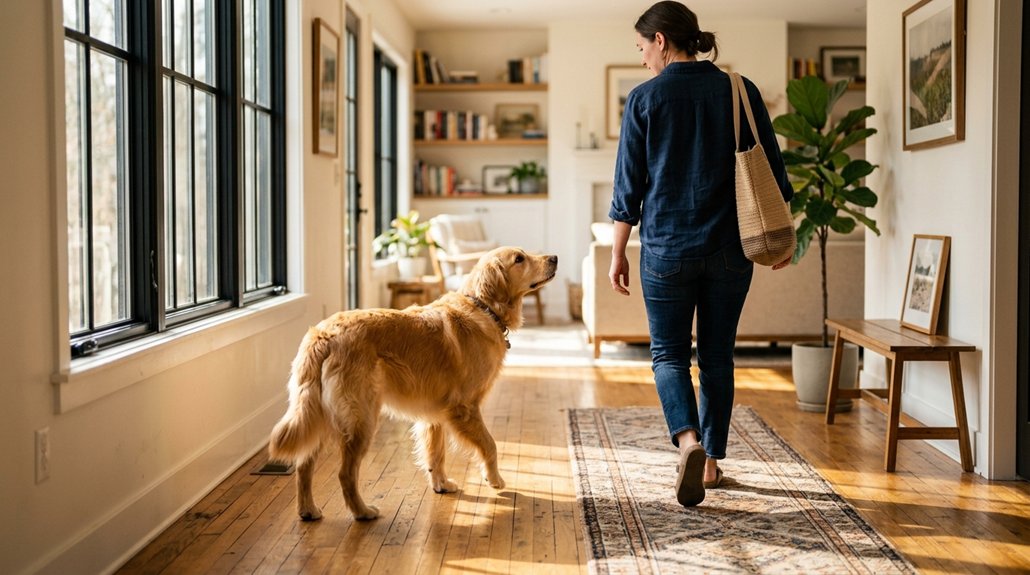
Your dog follows you everywhere due to their natural pack instincts and emotional needs. They seek safety, affection, and companionship, often indicating loyalty and love. Curiosity and guarding instincts also drive this behavior, especially in certain breeds. Dogs may feel anxious or stressed, and shadowing you provides comfort. Recognizing their emotional cues helps you guarantee their well-being. By exploring further, you’ll understand how to balance companionship and independence to enhance your dog’s happiness.
Key Takeaways
- Dogs follow owners due to natural pack instincts and desire for social bonding.
- Certain breeds, known as “Velcro dogs,” inherently crave closeness and companionship.
- Following may indicate emotional needs like stress, anxiety, or deep attachment.
- Protective instincts drive dogs to closely shadow owners, especially in perceived threats.
- Proper training and routines can encourage independence while maintaining the emotional bond.
Why Your Dog Follows You Everywhere
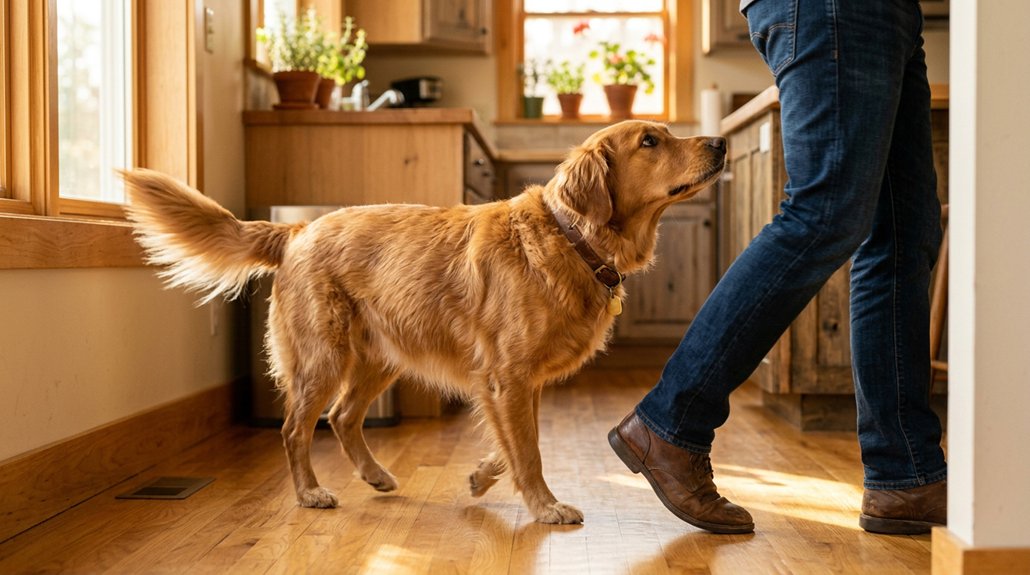
Dogs have a number of reasons for following their owners everywhere, and many are tied to their natural pack instincts. It’s their inherent pack behavior that drives them to seek social bonding with you, considering you as a pivotal member of their social group. This genetic inclination is reinforced by the understanding that staying close often means shared enjoyment, whether it’s playtime, getting fed, or receiving loving attention. Some breeds, termed “Velcro dogs,” inherently crave this proximity due to their nature. Puppies follow closely as they imprint on you to learn about their world, while older dogs might adhere out of habit or because they face age-related challenges. Additionally, your everyday activities intrigue them, fulfilling a curiosity-driven need to explore collectively.
How to Tell If Your Dog Loves You
Expressions of love from your dog may be more apparent than you realize. Canine affection often manifests as constant companionship, evident when your dog follows you everywhere. This isn’t just a sign of clingy behavior but a loyalty signal reflecting a deep emotional bond between you and your pet. Dogs, known for their pack mentality, naturally seek proximity to their loved ones to feel safe. If your dog nudges or leans against you, it’s a tactile demonstration of their affection and closeness. These actions are more than just routine; they’re expressions of their devotion and need for companionship. Understanding these signals guarantees you recognize the depth of your dog’s emotional attachment. It’s clear: your dog’s presence is a heartfelt declaration of love.
What Your Dog Needs When They Follow You
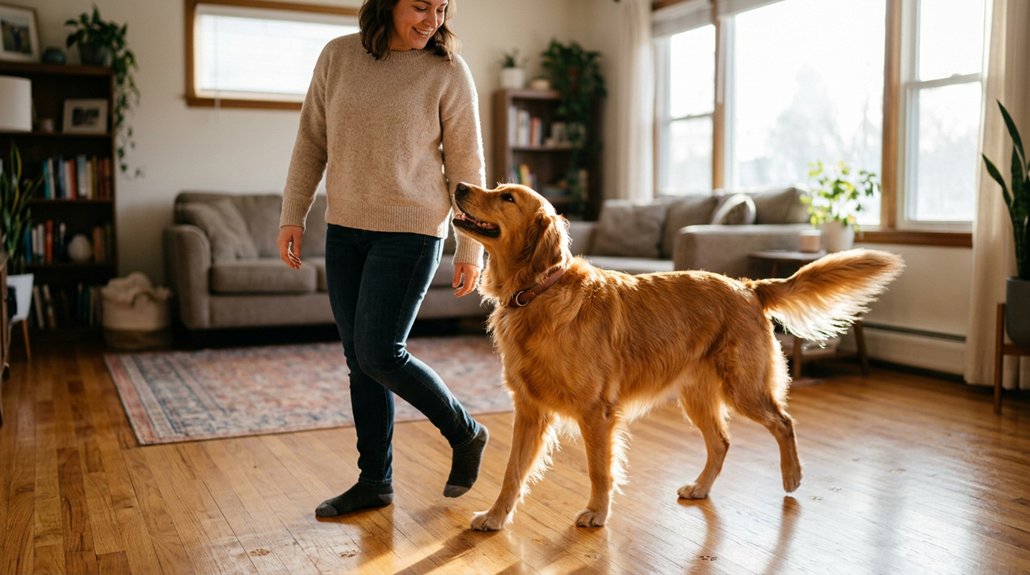
When your dog constantly follows you, it’s crucial to recognize that they might be signaling basic needs like hunger or their desire to go outside. Observing and interpreting their behavior can also help you understand emotional signals; they may be seeking comfort or reassurance in stressful situations. By tuning into these cues, you can provide the appropriate support, ensuring your dog feels secure and content in your presence.
Addressing Basic Needs
If your dog closely shadows your every move, it’s not just a sign of affection; often, it’s their way of addressing basic needs. For instance, they might be signaling for bathroom breaks, associating your presence with outdoor relief. Hunger cues can also prompt their pursuit, as dogs know that following you may lead to a meal or a tasty treat. When your pup feels bored, they might be seeking stimulation needs, looking to you for engagement and play. Comfort seeking is another reason; during stressful situations, they often require your presence for reassurance signals. By paying attention to these forms of attention seeking, you’re better equipped to meet their needs, ensuring they feel both secure and cherished.
Understanding Emotional Signals
Though it might seem adorable, your dog’s persistent following behavior is more than just cute; it’s a reflection of their emotional needs seeking fulfillment. This tendency often arises from their deep emotional attachment, illustrating the inherent need for companionship and bond reinforcement. Through keen canine communication, your dog expresses various needs. If you notice increased clinginess, it might signal stress or anxiety, especially in new environments or situations involving separation anxiety. It’s essential to be attuned to these signals. Some breeds have protective instincts that amplify their following behavior, particularly those bred for guarding. By monitoring your dog’s emotional state while they shadow you, you can decipher whether they crave affection, face anxiety, or simply seek interaction, ensuring their emotional well-being.
Spotting Anxiety Signs in Your Dog
Understanding your dog’s anxiety signs is essential to their well-being, especially since their behaviors might be a plea for help. When dogs exhibit excessive barking, chewing, or pacing, it might signal anxiety, particularly separation anxiety. Observing your dog’s reaction to your departures can help identify anxiety triggers. You might notice increased clinginess or reluctance to explore, indicating generalized anxiety.
Signs of Anxiety in Dogs
| Behavior | Possible Cause | Management Techniques |
|---|---|---|
| Excessive barking | Separation anxiety | Training techniques |
| Chewing | Stress or boredom | Puzzle toys |
| Pacing | Separation anxiety | Behavioral therapy |
| Increased clinginess | Generalized anxiety | Early intervention |
| Destructive behavior | Owner absent distress | Structured routine |
Early intervention and understanding these signs can foster a better, calmer environment for your furry friend.
Understanding Velcro Dog Breeds
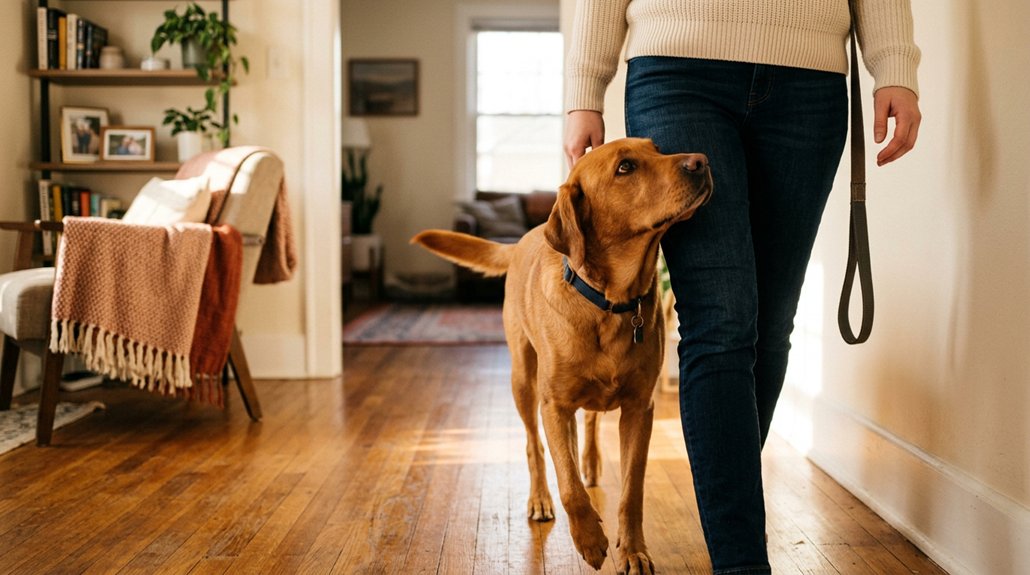
When it comes to Velcro dog breeds like Golden Retrievers and Dachshunds, you’ll notice their affectionate nature and a tendency to stay close, rooted in their pack instincts. These traits can be managed by establishing boundaries and gradually encouraging their independence through structured play and positive reinforcement. By understanding their inherent need for companionship, you can guarantee a harmonious relationship that balances their desire for proximity with the ability to be content on their own.
Traits of Velcro Dogs
If you’ve ever had a dog that seems to stick to you like glue, you’re likely familiar with the concept of a Velcro dog. Velcro tendencies emerge from breeds like Labrador Retrievers, Poodles, and Cavalier King Charles Spaniels, known for their notable attachment behaviors. These dogs naturally exhibit strong pack instincts, leading them to thrive on companionship and display anxiety when left alone. Early socialization plays an essential role, as dogs raised in close contact with humans often develop heightened attachment. Essentially, Velcro dogs display a profound need for consistency and reassurance. As an owner, understanding this bond provides insight into their behaviors, emphasizing the importance of nurturing their inclination for proximity through positive interactions and attentive training.
Managing Velcro Dog Behavior
Although your dog’s unwavering loyalty is endearing, managing Velcro dog behavior is essential to ensuring their overall well-being and independence. Certain breeds with genetic predispositions, like Labrador Retrievers and Poodles, naturally seek companionship. These behaviors often require structured guidance through training techniques and behavior modification. By understanding the clinginess level inherent in these breeds, you can address potential anxiety and nurture a healthy independence.
Consider these strategies:
- Structured routines: Implement consistent patterns to provide comfort and predictability.
- Mental stimulation: Engage their minds with puzzle toys and interactive activities to prevent boredom.
- Training sessions: Use positive reinforcement to teach them commands that encourage confident alone time.
With these approaches, you’ll foster emotional comfort while respecting your canine’s natural instincts.
Encouraging Independence in Dogs
Velcro dogs, known for their deep attachment to their owners, can benefit greatly from guided strategies to enhance their independence. Start by engaging your dog in independent activities, like puzzle toys or structured play, which provide mental stimulation and help curb clingy behavior. It’s essential to establish secure spaces within your home, such as a cozy bed or designated area filled with toys, where your dog feels safe and confident enough to spend time alone.
Consistent training and setting boundaries through commands like “stay” and “place” can reinforce a sense of security when they’re apart from you. Understanding the pack mentality of Velcro breeds like Golden Retrievers and Border Collies and fostering balanced companionship helps transform persistent following into a harmonious, independent relationship.
Guarding Instincts Explained
Understanding why your dog constantly follows you may lie in their natural guarding instincts. Their behavior often traces back to guarding origins, where protective instincts drive them to shadow your every move. Certain breeds with strong guarding traits are more inclined to follow you closely, acting as vigilant protectors. Your dog perceives you as a crucial part of their pack, compelling them to stay nearby during perceived threats. This behavior is rooted in a desire to forge a secure, protective bond.
- Dogs’ guarding instincts are magnified in unfamiliar or risky environments, leading to heightened vigilance.
- Clinginess isn’t stubbornness; it’s a sign of their protective bond with you.
- Acknowledging a dog’s guarding behavior helps balance appreciation and management, preventing anxiety escalation.
Understanding these instincts reveals the depth of your dog’s devotion.
Effective Strategies to Manage Dog Following Behavior
When your dog follows you everywhere, it may stem from a need for companionship, but it can sometimes become overwhelming. To manage this, start by encouraging independent playtime. Introduce puzzle toys or engaging activities to stimulate their mind and reduce dependency. Training commands like “stay” and “place” can build trust and help your dog feel secure when you’re not in sight. Consistent rules and routines shared among family members also enhance security, reducing excessive following. Gradually desensitize your dog to short separations, boosting their confidence. Finally, provide a designated space with comfy bedding and toys, encouraging your dog to settle independently. This blend of strategies should gently foster greater independence, supporting both your dog’s and your own well-being.
Frequently Asked Questions
What Does It Mean if Your Dog Follows You Everywhere You Go?
Your dog follows you everywhere due to their pack mentality and possibly separation anxiety. They see you as their pack leader, seeking comfort and companionship, or may express stress if left alone too often.
Which Breed of Dog Is the Most Clingy?
The Cavalier King Charles Spaniel is often considered the most clingy breed. They’re renowned for their affectionate nature and desire for canine companionship, never wanting to leave your side. It’s a trait many find endearing in these devoted dogs.
How Do You Say “I Love You” in Dog Language?
Whisper sweet woofs by engaging in dog communication through gentle touch or attentive play. Recognize their canine affection with belly rubs and soothing tones. This expression of love nurtures your bond, reinforcing trust and emotional closeness scientifically.
What Are the 4 Signs Your Dog Thinks of You as Their Parent?
Your dog shows attachment behavior by seeking constant closeness, displaying distress when you’re absent, mirroring your emotions, and exhibiting canine loyalty by following you everywhere. These signs indicate they view you as a parental figure.
Conclusion
In the end, understanding why your dog follows you like a shadow can deepen your bond. Whether it’s love, a need for comfort, or them channeling their inner “Superdog,” recognizing their behavior is key. Keep an eye out for anxiety signs and embrace their companionship by offering guidance and security. Use strategies to manage their clinginess, respecting their instincts and needs. With this knowledge, you’ll be better equipped to nurture a happy, balanced relationship with your four-legged BFF.