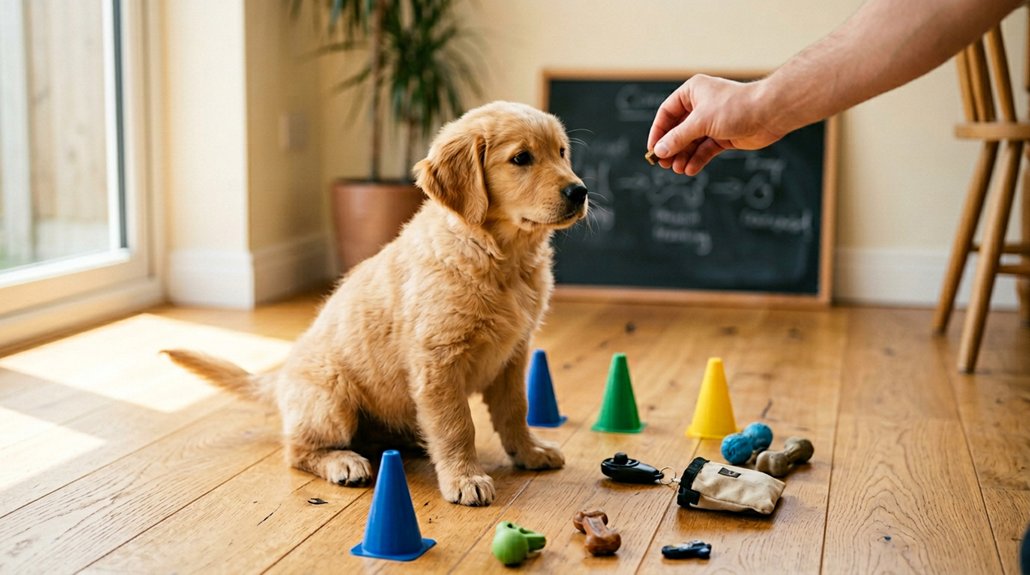
Start training your puppy early with essential commands like ‘sit’ and ‘come’ to build a foundation of discipline and communication. Begin with name recognition using positive reinforcement to capture their attention. Teaching ‘sit’ first helps with command basics, while ‘come’ guarantees safety and recall. Commands like ‘leave it’, ‘lie down’, and ‘stay’ promote better behavior management. Mastering these will set you up for success, and there’s more to explore to enhance their skills further.
Key Takeaways
- Start with name recognition using positive reinforcement to capture attention and establish communication.
- Teach the ‘Sit’ command using treats and consistent cues to promote impulse control.
- Use the ‘Come’ command to enhance recall and ensure safety across various environments.
- Introduce ‘Leave It’ to prevent unwanted behaviors and enhance discipline.
- Master the ‘Stay’ command to develop patience and focus after learning ‘Sit’.
Why Early Training Commands Are Vital
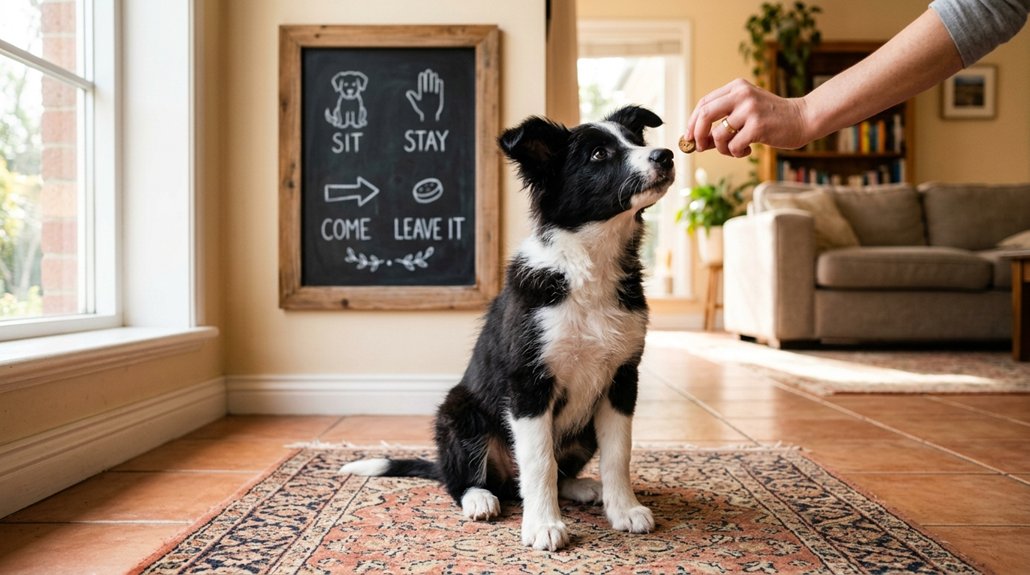
When you start teaching your puppy commands as early as eight weeks old, you’re not just laying the foundation for good behavior—you’re building a framework for all future learning. Early training has numerous benefits, like establishing routines that foster consistency in your home. This consistency helps reinforce discipline and create a safe, happy environment. Training at a young age also promotes impulse control and better social behaviors, preventing problem behaviors down the line. By introducing basic commands early, you’re providing essential mental stimulation, keeping your puppy engaged and enhancing their development. In addition, this early interaction strengthens the bond between you and your puppy, as it encourages positive communication and understanding from the start. Embrace these early training moments to enhance your puppy’s future.
How to Teach Your Puppy Its Name
To effectively teach your puppy its name, focus on positive reinforcement techniques and maintain consistency in your training approach. Use a cheerful tone when calling their name and promptly reward the puppy with treats or affection when they respond, reinforcing the behavior. Practice regularly in a variety of settings, ensuring each session is brief and free from distractions to build a strong foundation.
Positive Reinforcement Techniques
Training your puppy using positive reinforcement is essential for teaching them their name effectively. Start with using a cheerful tone to build a positive association whenever you say their name. Here’s how you can encourage name recognition with effective reward timing:
- Capture Attention: Call out their name in a quiet place where distractions are minimal. This helps in focusing their attention solely on you.
- Reward Timing: Immediately reward them with a treat or praise when they respond. This prompt reward is key in helping them connect the dots between their name and positive outcomes.
- Short Sessions: Keep training sessions brief and enjoyable. It helps maintain their interest and reinforces learning without overwhelming them.
- Patience in Learning: Remember, each puppy learns at its own pace. Be patient and encouraging.
Consistency in Name Training
Building on the importance of positive reinforcement, establishing consistency in name training holds the key to effective communication with your puppy. Begin training by using a happy tone alongside treats or praise right after your puppy responds to its name. This sets up name association with positive outcomes. Start this process as early as eight weeks and keep sessions short and daily, ensuring your puppy doesn’t feel overwhelmed. Practice in a quiet environment to strengthen focus and enhance learning. Utilize training consistency by regularly using your puppy’s name across various contexts, reinforcing that recognizing and responding to their name is rewarding. Remember, consistent practice and positive reinforcement build the foundation for future command training and improve responsiveness.
Mastering Basics: Teach ‘Sit’ First
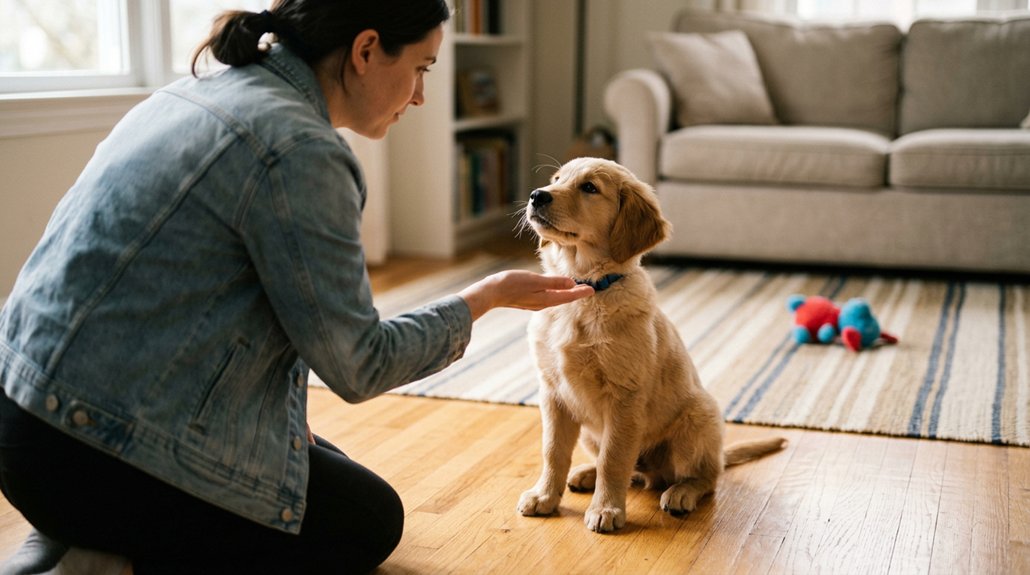
To teach your puppy the “Sit” command, start by using positive reinforcement techniques like treats and praise, rewarding your puppy immediately after they successfully sit. This approach not only makes learning fun but also builds confidence in your puppy as they associate the command with a positive outcome. Remember to be consistent with your command word and hand signal, gradually increasing the wait time for rewards to foster patience and self-control.
Positive Reinforcement Techniques
When teaching your puppy the “sit” command, positive reinforcement techniques offer an effective and rewarding method to instill this basic obedience skill. Begin by identifying triggers, like holding a treat near your puppy’s nose, and then gently lift it above their head until they naturally sit. This positions you to master reward timing: give the treat immediately once they sit. Use these techniques:
- Consistent rewards: Always give a treat right after your puppy sits; timing is essential.
- Verbal cues: Incorporate the word “sit” consistently once they understand the action.
- Short sessions: Keep training brief, around 5-10 minutes, to sustain focus.
- Positive endings: Conclude sessions with successful command executions or playtime to keep training enjoyable.
Building Puppy Confidence
Instill confidence in your puppy by focusing first on mastering the “Sit” command. It’s straightforward and lays the groundwork for patience, self-control, and subsequent training. Confidence building starts here by reinforcing your puppy’s understanding and responsiveness. Use a positive training atmosphere, rewarding them with treats and praises immediately after they sit. This encourages them to see “Sit” as a command linked to rewarding outcomes. Regular practice in varied environments guarantees they generalize this skill, making them more adaptable and boosting confidence in responding under different circumstances. As “Sit” becomes second nature, your puppy shifts smoothly to more complex commands like “Stay” and “Come”, enhancing their training journey and strengthening your bond exponentially.
Ensure Safety: Teach ‘Come’
Ensuring your puppy’s safety means mastering the “Come” command early in their training. This essential safety training prevents potential dangers by ensuring your pup reliably returns when called. Here’s how you can achieve solid recall reinforcement:
- Start Early: Begin teaching “Come” around eight weeks. Puppies are like sponges at this age, keen to learn.
- Happy Tone: Use a cheerful voice combined with their name and “come.” Puppies respond better to positivity.
- Reward Immediately: When they come to you, give treats or praise to reinforce good behavior, making them more likely to repeat it.
- Practice Anywhere: Train in various environments, helping your puppy generalize the command and feel confident in different situations.
Following these steps builds a strong habit, enhancing safety and trust.
How to Master ‘Leave It’ for Mischief Control
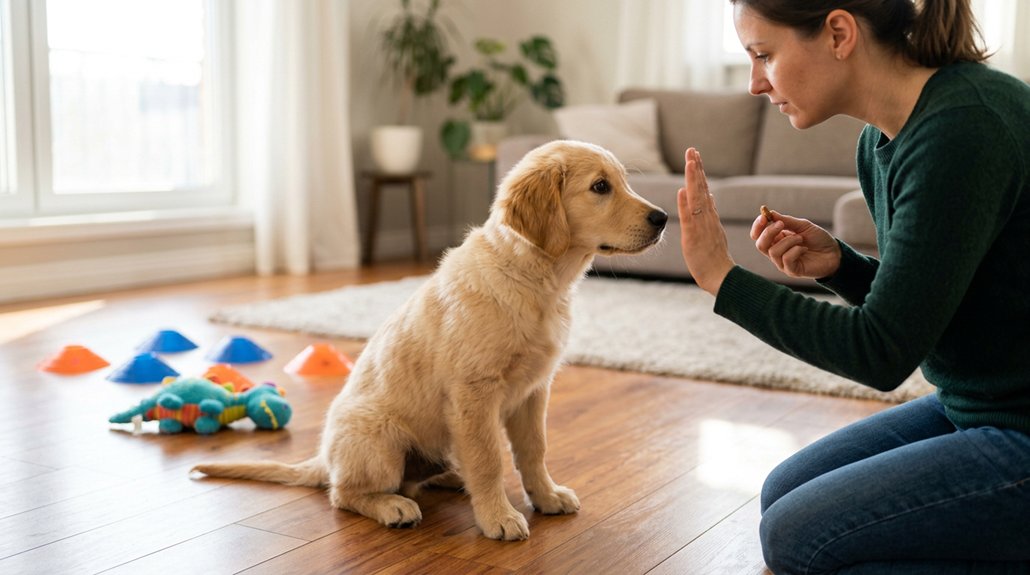
Learning the “Leave It” command is invaluable for ensuring your puppy’s safety and managing their curiosity. Start with simple leave it exercises using two treats. Present a low-value treat to your puppy, but reward them with a high-value treat when they ignore the initial temptation. This method reinforces the desired behavior. Initially practice in distraction-free environments to focus on the basics. Gradually introduce distractions management by adding more tempting objects around them. Consistent practice not only prevents mischief but also builds impulse control, making your puppy a reliable companion. Promptly and positively reinforce successes to solidify the command. By doing so, your puppy will associate “Leave It” with positive outcomes, helping them avoid dangerous substances or situations.
Calmness Through ‘Lie Down’
While mastering the “Leave It” command curbs mischief, teaching your puppy to “lie down” encourages calmness and helps them handle excitement and stress. This essential command is a key calm technique, crucial for excitement management. Start by guiding your puppy from a seated position with a treat, ensuring they’re attentive and enthusiastic to learn. Here’s how to effectively teach “lie down”:
- Use a Treat: Hold the treat close to their nose and slowly move it to the ground, compelling them to follow and lie down.
- Consistent Command: Say “down” clearly as they lie down, reinforcing the word.
- Immediate Reward: Reward them instantly after they succeed to encourage positive behavior.
- Practice Varied Settings: Train in different environments for adaptability and calmness.
Building Patience With ‘Stay’
As you begin teaching your puppy the ‘Stay’ command, remember that this essential skill develops both patience and impulse control. Start by confirming they’ve mastered the ‘Sit’ command, then use positive reinforcement when they maintain their position. The key is to gradually introduce a delay response; extend the duration and distance of the ‘Stay’ command, challenging them to hold on despite distractions. Incorporate different environments to enhance adaptability, ensuring they remain reliable and obedient. Consistent practice is vital—rewarding successful attempts fosters long-term obedience and strengthens your bond. Remember, patience is a two-way street; your calm reinforcement helps them learn impulse control swiftly. With dedication, your puppy will excel in maintaining ‘Stay’ amidst any distraction.
Set Boundaries: Teach ‘Off’
To guarantee your puppy understands household rules and expectations, teaching the “Off” command is essential for establishing boundaries. It’s an important tool for jumping prevention and reinforcing calm behavior. Follow these steps for effective training:
- Observation: Watch for moments when your puppy exhibits unwanted jumping behavior. Initiate the “Off” command with a firm tone immediately.
- Reinforcement: Once your puppy’s paws are back on the ground, immediately offer rewards like treats or praise. This reinforces the desired behavior.
- Consistency: Practice the “Off” command regularly in various situations to reduce future jumping incidents.
- Routine Integration: Incorporate the “Off” command into daily routines. This fosters a well-mannered puppy, improving their socialization skills across different settings.
Make Walks Enjoyable: Teach ‘Heel’
After you’ve set boundaries with commands like “Off,” it’s time to focus on making walks enjoyable by teaching your puppy the “Heel” command. This guarantees your puppy walks calmly beside you, boosting control and enjoyment. Begin in a familiar environment, guiding your puppy with treats to reinforce walking alongside you. Keep sessions short—around five to ten minutes—to maintain your puppy’s focus and improve retention. As your puppy progresses, gradually increase walk duration, rewarding progress to make the “Heel” command a positive experience. Consistency is key. Repeated practice helps your puppy associate walking beside you with a structured routine. Over time, this will make outings safer and more pleasant, reducing pullbacks and enhancing the overall walking experience.
Frequently Asked Questions
What Are the First 5 Commands to Teach a Puppy?
You should start with “Sit,” “Down,” “Come,” “Heel,” and “Stay.” These commands are essential for basic obedience and safety. Incorporate leash training and potty training as you go, using positive reinforcement to encourage good behavior.
What Is the 7 7 7 Rule for Puppies?
The 7-7-7 Rule involves socializing your puppy by 7 weeks with 7 types of people, dogs, and environments. It’s essential for developing adaptable puppy behavior and guarantees effective training methods by preventing future fear and behavioral issues.
What Is the 3-3-3 Rule for Puppies?
The 3-3-3 rule for puppies outlines their adjustment period: first three days are stressful, next three weeks involve adaptation, and by three months, they’re more confident. Emphasize socialization importance for a well-adjusted, happy puppy.
What Is the 10 10 10 Rule for Puppies?
The 10 10 10 Rule balances brevity and repetition in puppy training. You’d keep sessions at a focused 10 minutes, with 10 consistent repetitions, ensuring both reinforcement and engagement. This builds effective behavioral reinforcement, enhancing your pup’s learning experience.
Conclusion
Training your puppy with basic commands is essential for fostering a well-behaved companion. According to a study by the American Kennel Club, dogs trained early are 90% more likely to retain commands as adults. By instilling ‘Sit,’ ‘Come,’ and other foundational cues, you’re setting the stage for a safe and enjoyable relationship. Remember, consistency and patience are key. Keep training sessions short and positive, and you’ll have a responsive partner in no time.