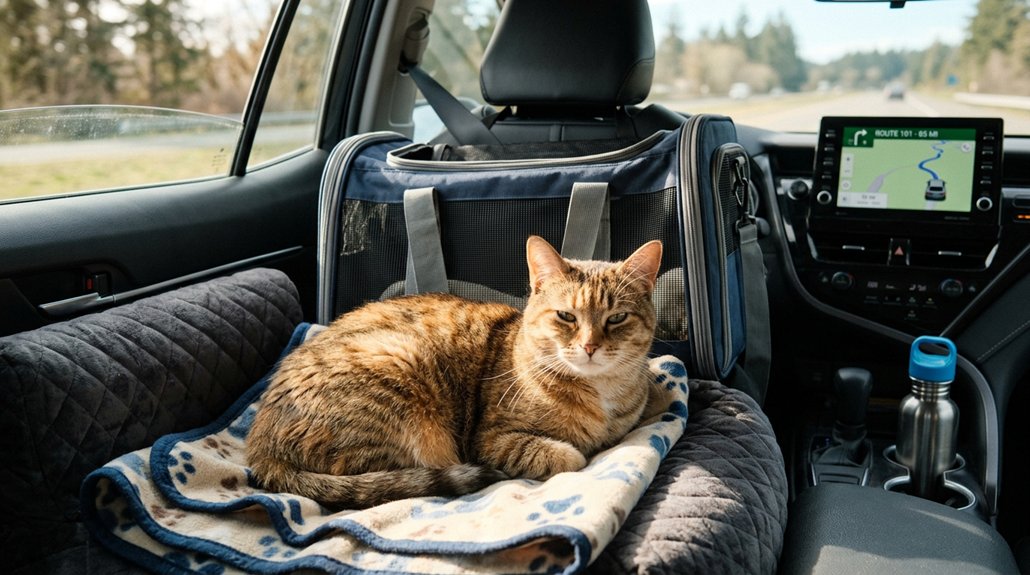
Traveling with your cat by car requires planning to guarantee safety and comfort. Choose a crash-tested, hard-sided carrier with secure latches and ventilation, and line it with familiar blankets. Acclimate your cat to travel gradually, and keep ID tags current. Manage bathroom needs with scheduled breaks and a portable litter box. Consult your vet about calming aids or medications for anxiety. Maintain a calm driving environment with soft music. Discover more ways to reduce travel stress and enhance your cat’s comfort.
Key Takeaways
- Choose a crash-tested carrier that offers stability, secure latches, adequate ventilation, and comfort.
- Gradually acclimate your cat to car travel with short practice trips and positive reinforcement.
- Ensure ID tags are current and carry necessary health documents for travel compliance.
- Schedule regular breaks for bathroom needs and provide a portable litter box during long trips.
- Consult a veterinarian for calming medications and techniques to manage your cat’s travel anxiety.
How to Choose the Right Cat Carrier for a Safe Journey
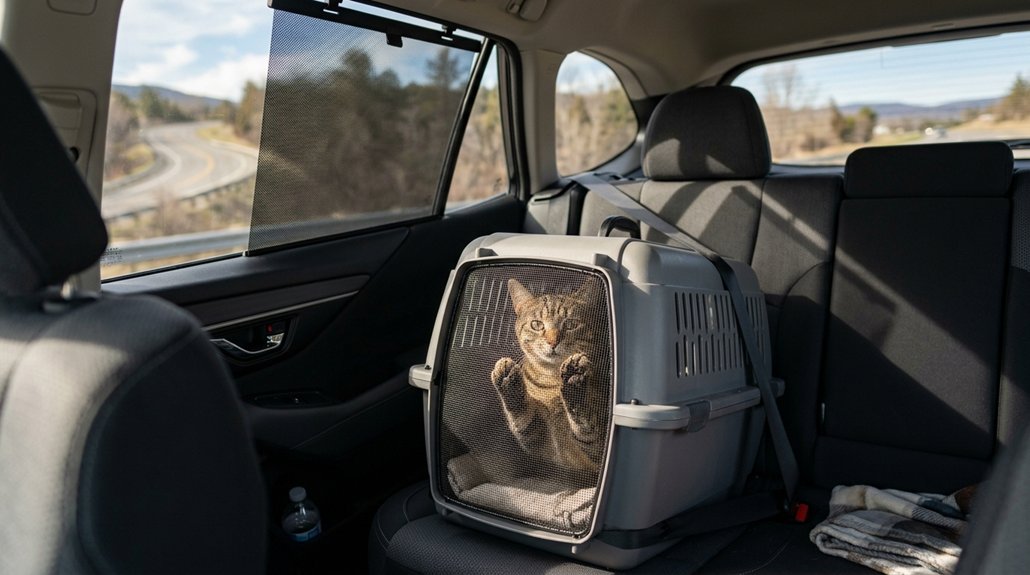
Selecting the right cat carrier is vital for guaranteeing your feline friend has a safe and comfortable journey. Opt for a crash-tested carrier, specifically designed with carrier safety features, to minimize travel risks. A model like the Sleepypod Mobile Pet Bed provides ample space, allowing your cat to stand, turn, and lie down, enhancing cat travel comfort. For long journeys, hard-sided carriers offer superior stability compared to soft-sided ones, which may falter mid-drive. Verify secure latches to prevent accidental openings and choose a model with a removable fluffy liner for extra comfort. Adequate ventilation and visibility in the carrier are important, as seeing their surroundings helps your cat feel secure. These elements collectively create a comfortable travel environment.
Tips for Acclimating Your Cat to Car Travel
When acclimating your cat to car travel, start with gradual exposure to guarantee a smooth shift to this new experience. Begin feline acclimation with short practice trips around your neighborhood, slowly extending the distance to build their comfort level. Prior to travel preparation, keep their carrier accessible in the home. This allows your cat to explore it freely, forming a positive association with this safe space. Equip the carrier with familiar items, like a beloved blanket, to ease anxiety.
Acclimate your cat to car travel gradually with short trips and a familiarized carrier to ease anxiety.
- Incorporate positive reinforcement using treats and praise when your cat enters the carrier calmly.
- Use calming aids like Feliway pheromone sprays if anxiety signs appear.
- Continually monitor their stress levels, adapting strategies as needed to assure a stress-free travel experience.
Keep Your Cat’s ID Updated for Travel Safety
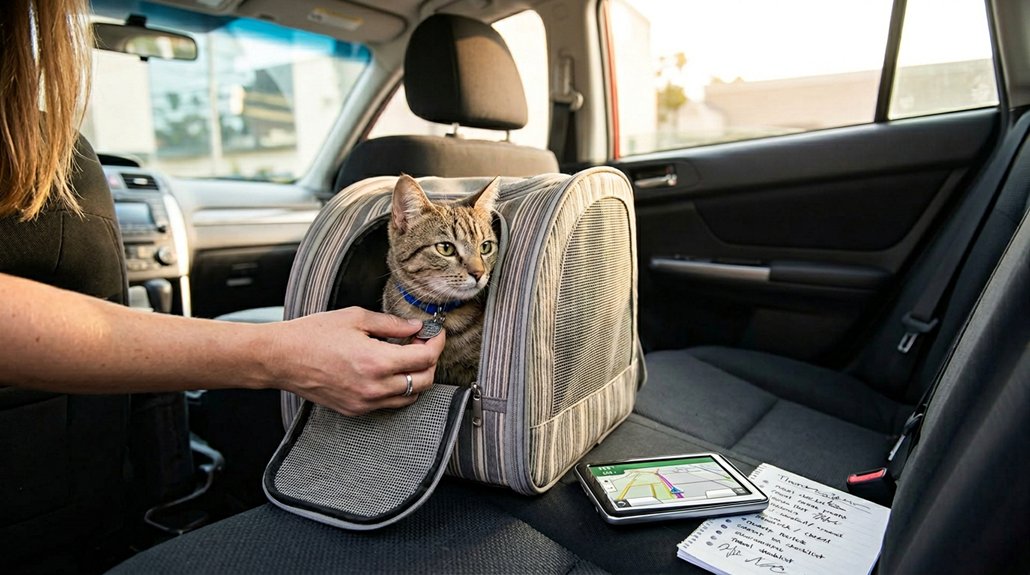
As you prepare for travel with your feline friend, it’s vital to guarantee their identification is up-to-date to maximize safety. An effective cat ID strategy involves maintaining current ID tags with your contact information, important for ensuring your pet’s safe return if an escape occurs. Consider microchipping as a permanent form of identification, particularly beneficial if they manage to slip from their carrier during travel. Update tags promptly to reflect any changes in phone numbers or addresses before commencing your journey. Additionally, crafting a temporary ID tag with the destination address and your contact details offers an extra layer of travel safety. For trips crossing state lines or internationally, make sure to carry all necessary health documents to meet various pet policies.
Booking Cat-Friendly Accommodations: Essential Steps
Finding accommodations that truly cater to feline guests requires thorough research. Many “pet-friendly” locations prioritize dogs, neglecting the needs of your cat. When seeking cat friendly locations, follow these expert booking tips to guarantee a smooth stay:
Seeking cat-friendly accommodations? Ensure feline needs aren’t overlooked by doing thorough research and verifying pet policies.
- Confirm Details: Always verify that properties genuinely accommodate cats. Check firsthand by calling the venue.
- Early Reservations: Book in advance and confirm any extra fees for housing cats. This reduces last-minute worries.
- Communicate Needs: Inform accommodations of your cat’s special requirements, such as diet or litter preferences.
Additionally, reading reviews from cat owners offers insight into a property’s suitability. Consider accommodation proximity to veterinary services as a safety net. Protect your pet’s welfare by staying informed and proactive in your choices.
Managing Bathroom Needs During Car Travel With a Cat
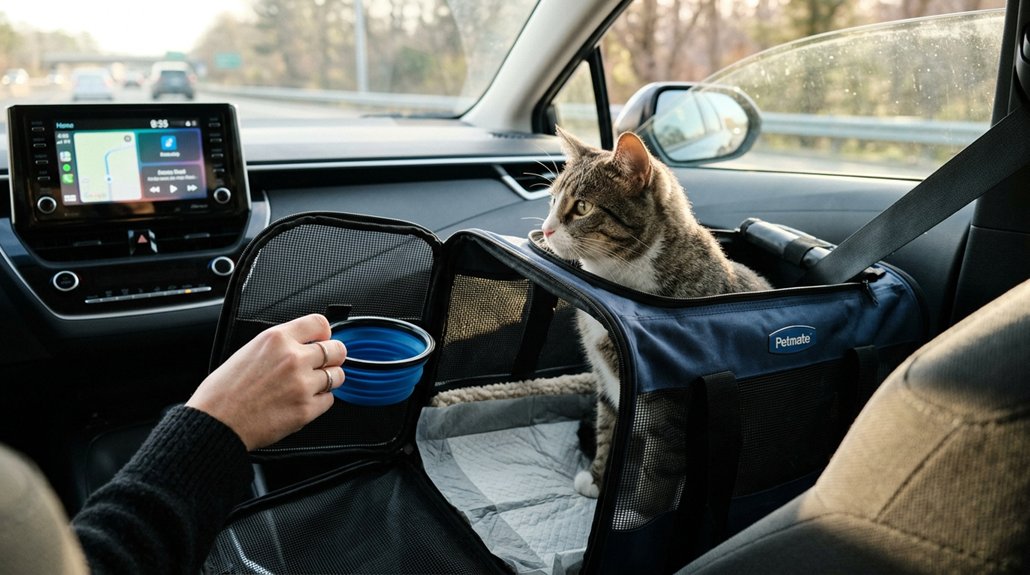
Managing your cat’s bathroom needs during car travel can greatly enhance their comfort and reduce stress. A well-planned litter box setup is essential for long trips. Bring a portable litter box lined with a garbage bag for easy cleanup during rest stops. Schedule breaks every 2-3 hours, allowing your cat to stretch and use the litter box. Keep the carrier lined with absorbent potty pads to manage any accidents, maintaining a clean environment for your cat. Some cats may hesitate to use a litter box in a moving vehicle, so offer an outdoor bathroom option at safe, secure rest areas. Always monitor hydration levels, as proper water intake can greatly influence your cat’s bathroom habits during the journey.
What to Pack for Car Travel With Your Cat
When preparing for a road trip with your feline companion, it’s essential to pack both important cat travel gear and stress-reducing supplies. Ensuring you have your cat’s food, water, and familiar items like a blanket or toy is key to their comfort and psychological well-being during travel. Don’t overlook practical necessities such as a travel litter box, any required medications, and a basic first aid kit to handle both routine and unforeseen health needs.
Essential Cat Travel Gear
Although traveling with your feline companion can be a delightful experience, guaranteeing their comfort and safety requires careful preparation and specific gear. To make travel seamless, you’ll need essential cat travel accessories. A secure, crash-tested cat carrier is a must-have item—one that lets your cat stand, turn, and lie comfortably. Don’t forget food and water bowls, a portable litter box, litter, and pee pads to maintain hygiene and comfort during the trip.
Additionally, pack familiar items to help reduce anxiety:
- A favorite blanket or toy for comfort.
- Your cat’s regular food portioned in individual containers.
- A basic first aid kit with medications, a digital thermometer, and contact details for veterinary services en route.
Proper planning guarantees a safe, enjoyable journey for both you and your cat.
Stress-Reducing Travel Supplies
As you prepare for a road trip with your cat, it’s important to pack stress-reducing supplies that promote their comfort and well-being. A sturdy, crash-tested carrier guarantees their safety, allowing them space to stand, turn, and relax. Carry familiar items like a favorite blanket or toy to evoke a sense of security. Additionally, pack calming aids such as pheromone collars or Thundershirts, which can greatly reduce anxiety levels.
Consider incorporating calming music during the journey, providing an auditory backdrop that soothes your cat’s nerves. Herbal remedies, like catnip or chamomile-infused toys, may further ease travel-related stress. Don’t forget vital items: food, water with portable bowls, a small litter box with pee pads, and a first aid kit complete with regular medications and emergency contacts.
Adjust Feeding to Minimize Your Cat’s Motion Sickness
To reduce the risk of motion sickness in your cat during car travel, it’s important to adjust their feeding schedule strategically. Consider withholding food for 3-4 hours before the journey to minimize vomiting. Offering a light meal the night prior guarantees your cat maintains energy without overwhelming their digestive system. Shift your cat to a timed feeding schedule well before the trip, promoting predictability and comfort. Introducing pre-travel snacks can be beneficial, but use them cautiously to avoid nausea.
- Withhold food 3-4 hours before travel: Helps prevent motion sickness and vomiting.
- Light meal the night before: Provides energy without upsetting stomach.
- Gradual shift to timed feeding: Supports adjustment and reduces stress.
Monitor your cat for hunger and accommodate their needs once you’ve reached your destination.
Ask Your Vet About Reducing Travel Anxiety in Cats
Consult your veterinarian to explore tailored medication options like anti-nausea drugs or mild sedatives, which can considerably ease travel anxiety in your cat. Additionally, ask about calming techniques and tools such as pheromone sprays or collars, which can create a more soothing travel environment. Don’t forget to take into account behavioral training strategies to gradually acclimate your cat to car travel, helping to guarantee a stress-free journey.
Medication Options for Cats
Cats can exhibit significant travel anxiety, but there are several effective medication options available that can make the journey more comfortable for your feline companion. It’s essential to consult your veterinarian about suitable anti-anxiety medications like gabapentin or trazodone, which can alleviate stress during travel. Additionally, consider natural remedies such as pheromone products like Feliway or calming collars to soothe anxiety without medication.
Before starting your trip, address the travel timing by testing prescribed medications at home to monitor any side effects and confirm your cat’s comfort. If motion sickness is a concern, discuss anti-nausea options with your vet.
- Gabapentin or trazodone for stress
- Pheromone products as natural remedies
- Test medications for travel timing compliance
Always follow your vet’s instructions closely.
Calming Techniques and Tools
Navigating the complexities of travel with a cat requires a thoughtful approach to calming techniques and tools. To ease travel anxiety, consult your vet about safe anti-anxiety options like feline pheromones. Products such as Feliway pheromone sprays or collars release scents that can soothe your cat, mitigating stress during car journeys. Additionally, using a Thundershirt can provide a snug sense of security, similar to a comforting embrace. Calming music is another effective tool; maintaining a serene environment with soft tunes can greatly reduce nervousness. It’s crucial to acclimate your cat with brief, positive car trips, reinforcing the experience with treats. Creating a stress-free atmosphere will enhance your cat’s well-being, ensuring a smoother travel experience for both of you.
Behavioral Training Strategies
When preparing to travel with your cat, it’s essential to incorporate structured behavioral training strategies to help reduce travel anxiety effectively. Start by employing crating techniques; gradually acclimate your cat to the carrier by keeping it open at home, offering treats inside, and fostering positive associations. Regularly engage in crate training, integrating short car acclimatization trips that combine positive reinforcement with treats, easing your pet into the travel environment. Consult with your veterinarian on potential treatments for stress reduction, considering options like calming medications or natural aids such as pheromone sprays. Monitor signs of travel anxiety, such as excessive vocalization or hiding, to adapt your strategies.
- Leave the carrier open with treats to build positive associations.
- Use pheromone sprays or collars to soothe car anxiety.
- Consult a vet about calming medications for severe anxiety.
Techniques to Maintain Your Cat’s Comfort on the Road
Although traveling with your feline companion by car can be challenging, adopting specific techniques can greatly enhance their comfort. First, invest in cat travel gadgets like a well-ventilated carrier, ensuring it’s spacious enough for your cat to stand, turn, and lie down. Line it with familiar blankets. Hydration is essential, so integrate feline hydration solutions during regular pit stops every few hours. Use these breaks not only for hydration but also to allow stretching and the use of a portable litter box. Engage your cat with familiar toys or treats within the carrier to soothe anxiety. Maintain a calm driving environment by playing soft music and avoiding sudden movements or loud noises. These strategies will promote a smoother journey for both of you.
Frequently Asked Questions
How Long Can Cats Ride in a Car?
Cats can typically ride comfortably for up to 6 hours. Prioritize cat safety by taking breaks every 2–3 hours for hydration and stress relief. These travel tips help monitor your cat’s behavior, ensuring their comfort and well-being.
What Is the 3-3-3 Rule With Cats?
The 3-3-3 rule suggests patience is a virtue. It guides you through acclimating your feline friend safely during travel: prioritize their comfort, recognize stress signals, and gradually introduce new stimuli, ensuring secure, stress-free travel adventures.
Is It Okay to Leave a Cat Alone for 4 Days?
No, it’s not okay to leave a cat alone for four days. For cat safety and welfare, consider travel tips like arranging a pet sitter. Automations can’t replace human interaction, essential for your cat’s mental and emotional health.
How to Transport a Cat in a Car for 12 Hours?
Make certain your cat’s car preparation by starting with short trips. Pack feline travel essentials like a secure carrier and portable litter box. Offer regular hydration, monitor stress, and minimize motion sickness risks by withholding food before travel.
Conclusion
In your journey to guarantee a smooth ride with your feline companion, choose wisely, prepare thoroughly, plan diligently, and consult professionally. Select a cat carrier with care, acclimate your cat to the car with patience, and keep IDs updated with precision. Book cat-friendly accommodations, manage bathroom needs, and pack thoughtfully. Adjust feeding schedules and address motion sickness. Consult your vet about anxiety—prioritize your cat’s comfort. Travel thoughtfully, travel safely, travel compassionately for your cherished pet.