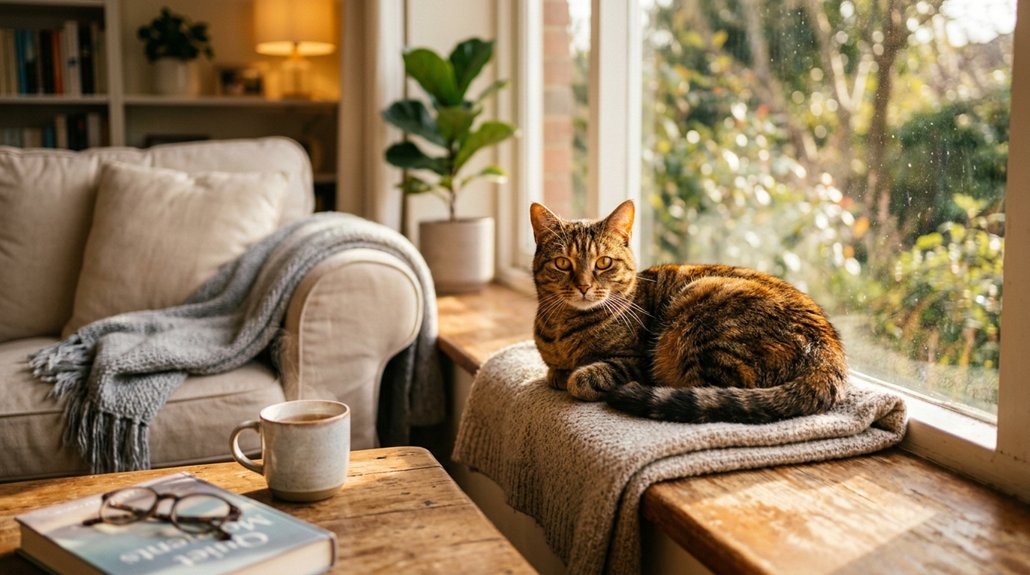
Spending a minimum of 20-30 minutes each day in dedicated interaction with your cat is essential for its emotional well-being. Break time into 10-15 minute play sessions to align with your cat’s natural behavior. This prevents behavioral issues and boosts emotional security. Look for signs like increased vocalization or clinginess to gauge when more attention is needed. Consistent interaction fosters a strong bond, ensuring a happy, well-adjusted pet. Discover more effective strategies on how to enhance your cat’s life.
Key Takeaways
- Spend a minimum of 20 minutes daily on bonding activities to meet your cat’s social needs.
- Dedicate 20-30 minutes daily for focused attention to prevent behavioral issues and enhance emotional security.
- Engage in two hours of total interaction, including play, feeding, and cuddling, for a balanced routine.
- Split playtime into 10-15 minute sessions tailored to your cat’s energy levels and natural behavior.
- Recognize signs of attention needs like increased vocalization, clinginess, or destructive behavior, indicating more interaction is required.
Ensuring Quality Time With Your Cat

How can you guarantee your cat receives the quality interaction they need every day? Spend at least 20 minutes engaging in bonding activities that strengthen your connection. Regularly providing attention rewards through feeding, cuddling, or play effectively meets their social needs and boosts emotional security. Intentional play, lasting anywhere from 10 to 60 minutes, is not just a necessary outlet for their hunting instincts; it is essential for nurturing your bond and preventing behavioral issues.
Daily Interaction Tips for Cat Well-being
To guarantee your cat’s well-being, engage in 20-30 minutes of dedicated attention daily, aiming for two hours of interaction in total. Balance quality playtime by incorporating two to three 10-15 minute sessions using interactive toys like wand toys and crinkle balls to keep them stimulated both physically and mentally. Observe your cat’s behavior for signs they want more engagement, and include moments of casual bonding to strengthen your connection.
Optimal Playtime Strategies
Why is it important to tailor playtime strategies to your cat’s individual needs? Because each cat has unique energy levels and preferences, customizing interactive playtime guarantees they’re mentally and physically stimulated. Aim for a minimum of 20 minutes daily, ideally split into multiple short sessions of 10 to 15 minutes. Cats naturally engage in burst activity, making these shorter sessions more effective than one long playtime. Observing your cat’s behavior lets you adjust the play duration and frequency to suit their needs. Mix up toy variety, using options like wand toys and crinkle balls to stimulate hunting instincts and keep interest alive. Allow your cat to dictate the pace, guaranteeing playtime remains enjoyable and strengthens your bond.
Balancing Quality and Quantity
Aiming for both quality and quantity in your interactions is key to your cat’s well-being. Your time investment directly influences your feline friend’s emotional health. Experts suggest at least 20-30 minutes of focused engagement daily. However, work towards an interaction balance by ensuring daily activities amount to two hours, integrating feeding, grooming, and play. Here are tips for achieving this balance:
- Engage in regular play sessions: 10-20 minutes keeps your cat mentally stimulated.
- Tailor activities: Cats differ; observe their behavior to adapt interactions.
- Allocate more time for kittens: Younger cats thrive on energetic play.
- Incorporate essential chores: Feeding and grooming should be quality time.
- Recognize individual needs: Some cats prefer short, frequent engagements.
These efforts will strengthen your bond effectively.
Tailoring Time to Your Cat’s Personality
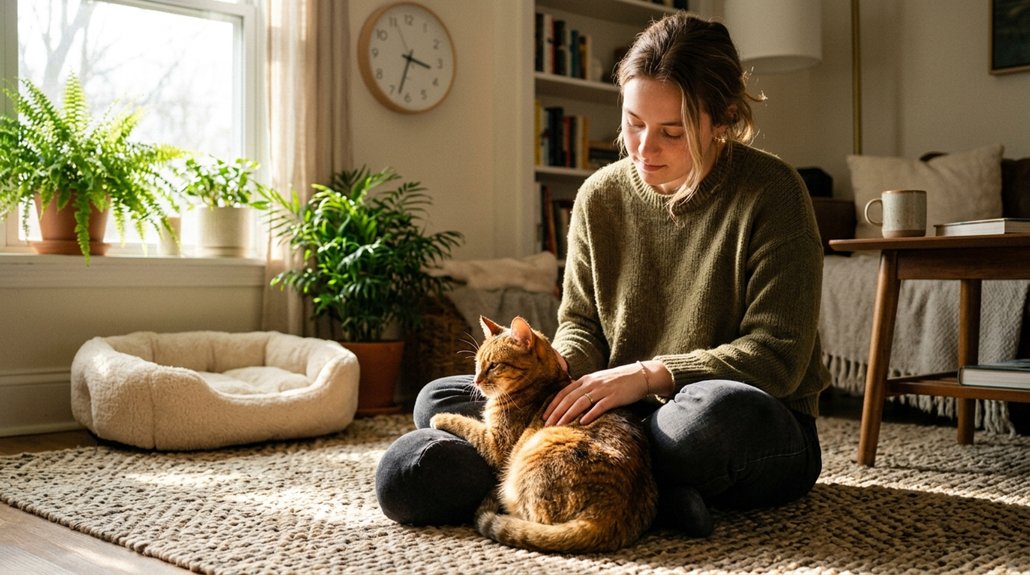
Understanding your cat’s personality is key to providing the right amount of attention and interaction. Each feline has distinctive interaction preferences that might require adaptation on your part. Some cats thrive on physical affection, while others prefer solitary play. Observing your cat’s behavior is essential; a cat who frequently seeks engagement probably needs more dedicated attention. Typically, dedicating a minimum of 20-30 minutes daily of one-on-one time can bolster your cat’s emotional well-being. Tailor play styles and interaction frequency based on behavior—high-energy kittens often need more play, whereas senior cats benefit from mental rather than physical stimulation. By customizing your approach to suit these preferences, you’ll foster contentment and strengthen your bond, ensuring a happier, more harmonious relationship with your feline friend.
Recognizing When Your Cat Needs Attention
To guarantee your cat feels truly cherished, it’s crucial to recognize signs of attention-seeking, such as increased vocalization or jumping onto forbidden surfaces. Behavioral changes, like newfound clinginess or bursts of energy, often indicate they’re craving more interaction and stimulation. By regularly observing their actions and body language, you can tailor the time you spend with your cat to better meet their emotional and physical needs.
Signs of Attention-Seeking
Ever wonder why your cat’s suddenly lounging on your laptop or pawing at you incessantly? These actions are their attention cues and interaction signals, often a plea for companionship or playtime. By recognizing these signs, you can guarantee your feline feels connected and content. Here are key behaviors indicating your cat’s need for attention:
- Lounging on your laptop: Cats crave your focus and warmth.
- Incessant pawing: They’re signaling a need for interaction.
- Vocalizations like meowing: An invitation to engage.
- Following you everywhere: A sign of their desire for closeness.
- Destructive acts like knocking objects: Indicating boredom or craving stimulation.
Understanding these signals not only strengthens your bond but prevents potential behavioral issues from arising.
Behavior Changes Indicating Needs
Every now and then, a cat’s behavior shifts in mysterious ways, suggesting an unmet need for attention. Recognizing these attention signals can strengthen the bond between you and your feline friend. Behavioral cues such as jumping on counters or lying on laptops indicate a desire for interaction. Increased meowing or yowling often signifies boredom or loneliness. Destructive behaviors, like scratching furniture, suggest insufficient engagement. Observe if your cat is excessively grooming or exhibiting clinginess; these are signs of stress. Activity levels provide further insight: sudden bursts of energy or lethargy indicate a need for playtime.
Here’s a quick reference table:
| Attention Signal | Possible Need |
|---|---|
| Jumping on counters | Interaction |
| Meowing/Yowling | Companionship |
| Scratching furniture | Engagement |
| Excessive grooming | Security |
| Sudden energy burst | Playtime |
Engaging Playtime Tactics for Happy Cats
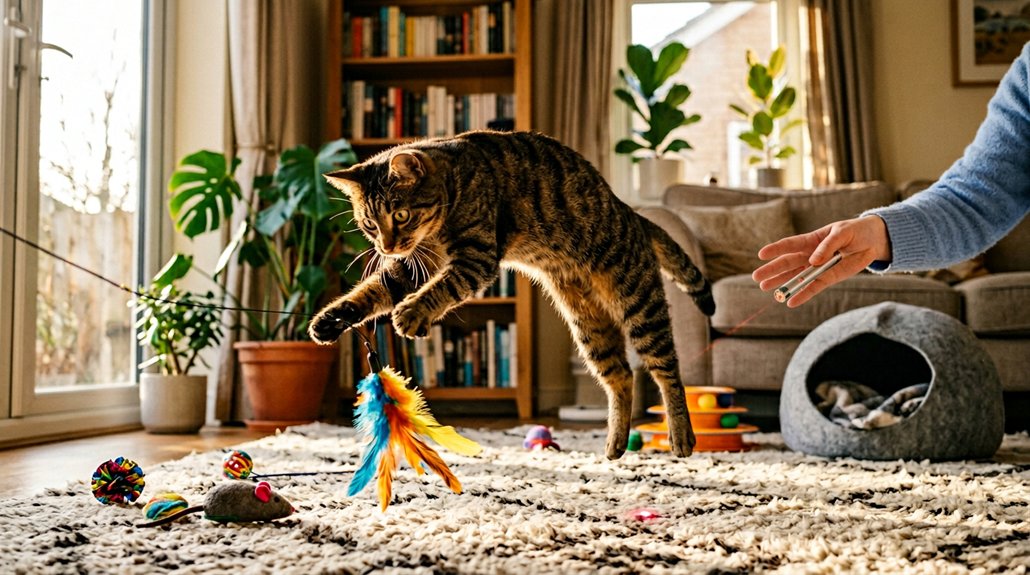
- Choose toys based on feline instincts.
- Provide varied play routines.
- Monitor and adapt play strategies.
- Encourage mental stimulation through puzzles.
- Customize activities for individualized enjoyment.
How to Handle Being Away From Home
When you’re away from home, a few key strategies can help assure your cat feels secure and content in your absence. Encouraging cat communication through animal bonding can soothe your feline. Have a friend drop by for social connection, bolstering your cat’s routine. Use enrichment tools like puzzle feeders to engage their intellect, offsetting isolation.
| Strategy | Purpose | Benefit |
|---|---|---|
| Regular check-ins | Social interaction | Reduces loneliness |
| Enrichment activities | Mental stimulation | Alleviates boredom |
| Automatic feeders | Guarantees consistent nutrition | Maintains routine |
| Gradual desensitization | Adjusts to absence | Reduces anxiety |
| Vet consultation | Address stress concerns | Optimizes well-being |
These methods foster stability, turning alone time into a period for curiosity and enrichment.
Addressing and Managing Separation Anxiety
Facing the challenge of separation anxiety in cats requires a blend of expert knowledge and empathy. Understanding cat anxiety and separation cues is key to making your feline friend feel secure. Here’s how:
Expert insight and empathy are vital in soothing separation anxiety in cats for a secure, happy companion.
- Observe signs: Watch for behaviors like inappropriate urination, excessive vocalization, or clinginess when you’re absent.
- Maintain calm exits: Keep arrivals and departures low-key to reduce stress.
- Desensitization: Gradually introduce your cat to leaving cues, starting with small actions like suitcase packing.
- Regular check-ins: Arrange for a friend or family member to visit, offering comfort during your absence.
- Consult professionals: If distress is severe, talk to a veterinarian about potential anti-anxiety treatments.
This compassionate approach not only addresses your cat’s needs but also strengthens your bond.
How Cat Sitters Can Help When You’re Away
Having a trusted cat sitter can be invaluable when you’re away for extended periods. They provide essential cat care and companionship benefits that help keep your pet content. Professional sitters don’t just feed and clean— they engage in playtime and perform daily health checks, ensuring your cat’s routine stays intact and they remain mentally stimulated. This consistent interaction greatly reduces anxiety and loneliness, offering comfort through familiar care.
Moreover, knowing your cat’s well-being is in capable hands allows you to travel or focus on your commitments without constant worry. The sitter’s presence acts as a reassuring constant in your cat’s environment, helping to alleviate stress. Ultimately, the peace of mind a cat sitter provides can’t be overstated, ensuring your companion remains happy and healthy.
Frequently Asked Questions
What Is the 3-3-3 Rule for Cats?
The 3-3-3 rule for cats guides you through their adjustment: three days of cautious behavior, three weeks of initial bonding, and three months for full adaptation. Recognize these stages for understanding cat behavior and fostering strong feline bonding.
How Many Hours a Day Should I Be With My Cat?
You should aim for two hours daily, incorporating cat companionship through feline activities. Engage in feeding, grooming, or play for their happiness and health. Every moment spent together strengthens bonds, supporting their emotional and physical well-being.
What Is the #1 Cause of Death in Cats?
The leading cause of death in cats, particularly older ones, is chronic kidney disease. Maintaining your cat’s health through proper feline nutrition and regular vet visits can help mitigate risks and guarantee early detection and treatment.
What Is “I Love You” in Cat Language?
In cat communication, “I love you” is shown through feline affection behaviors—like slow blinking, purring, and grooming. Pay attention to tail positions and kneading too. These gestures express their trust and love towards you.
Conclusion
Spending time with your cat is like nurturing a delicate plant; it thrives with consistent care and attention. Prioritize daily interactions to boost your feline’s well-being, and remember, play is just as essential as food. Tailor your approach to your cat’s unique personality, and recognize signs they need more affection. When you’re away, strategies like hiring a cat sitter can mitigate separation anxiety, ensuring your pet feels secure and loved, even in your absence.