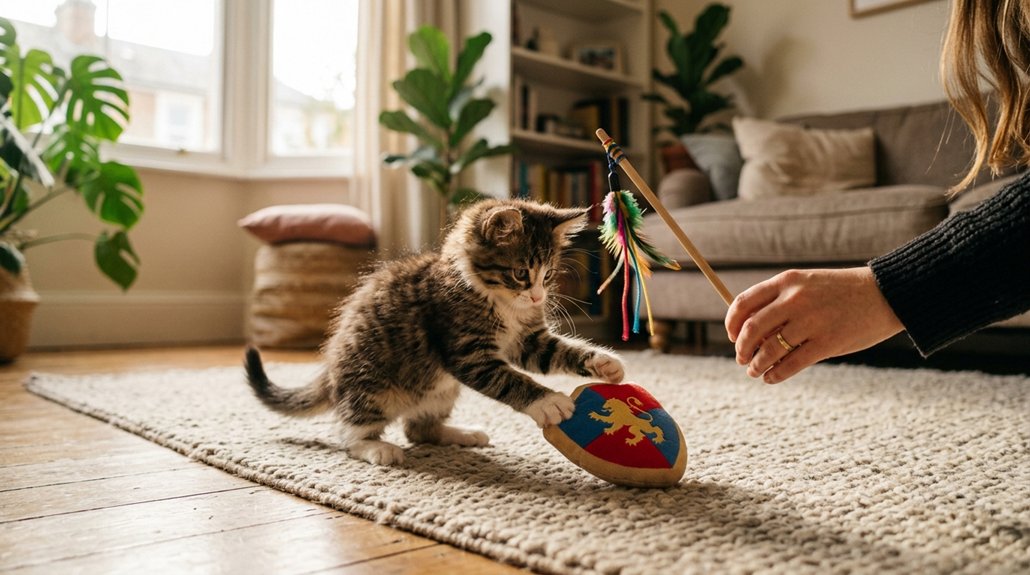
To redirect kitten play aggression, watch for signs like dilated pupils or pinned ears and cease interaction immediately when aggression is detected. Redirect their focus using interactive toys, such as wand toys, to channel energy. Establish a play routine aligned with their peak activity times and implement time-outs to communicate boundaries. Consistency is key—rotate toys to keep engagements fresh and rewarding. Stick with these techniques and uncover more ways to address and manage this behavior effectively.
Key Takeaways
- Observe body language such as dilated pupils and pinned ears to identify early signs of play aggression.
- Stop engaging with the kitten immediately once aggression is detected to prevent escalation.
- Use interactive toys like wand toys to redirect the kitten’s aggressive energy into play.
- Reward positive behavior with treats and praise when the kitten interacts with toys.
- Schedule regular, short play sessions to align with the kitten’s natural activity peaks.
Immediate Steps for Redirecting Play Aggression in Kittens
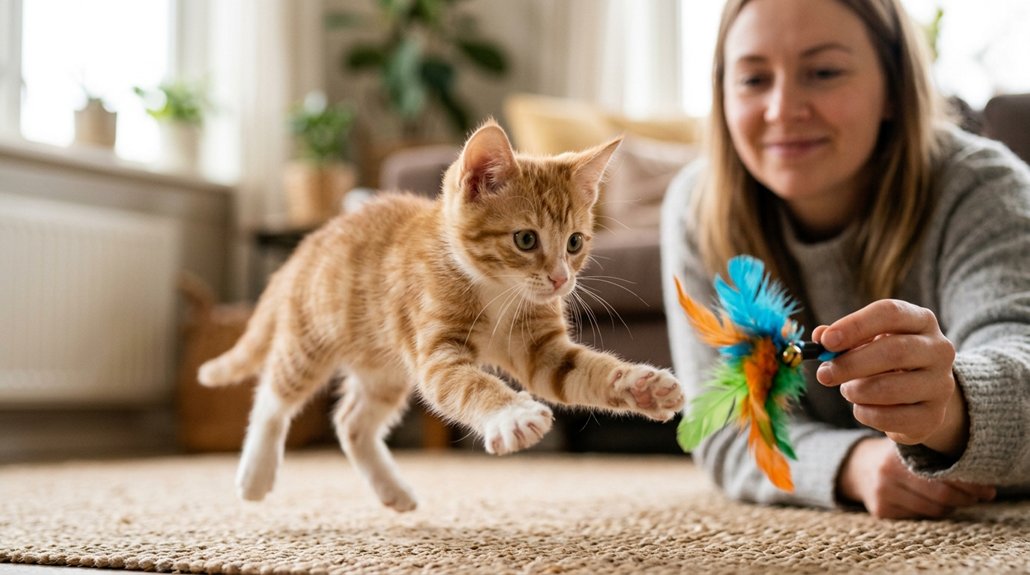
Recognizing the early signs of play aggression in kittens is essential for prompt intervention and successful redirection. Observing your kitten’s body language—such as thrashing tails and pinned ears—allows you to act swiftly before play becomes too rough. Upon detecting aggression, cease interaction immediately. This teaches your kitten that aggressive behavior ends play. Redirect their focus using interactive toys like wand toys, which simulate prey and provide a more appropriate outlet for their energy. Positive reinforcement, such as treats or praise when engaging with toys instead of hands or feet, reinforces desirable behavior. Consistent use of diverse toys, regularly rotated to sustain interest, can prevent boredom, thereby reducing the likelihood of aggressive incidents during playtime.
Structuring Effective Play Routines
Establishing an effective play routine for your kitten builds on early intervention efforts by structuring daily activities in ways that channel natural instincts. Implement a playtime schedule with two to four short “hunt sessions” each day. Morning and evening are prime periods, synchronizing with the kitten’s natural peak activity times. Use wand or string toys to simulate predatory behavior, promoting engagement. Incorporate toy rotation every few days to prevent monotony, maintaining high stimulation levels and interest. Observational data shows that unresolved boredom can lead to play aggression. Avoid using hands or feet during play to avert confusion and reinforce appropriate toy use. By analyzing play rhythms and rotating toys, you guarantee both physical and mental enrichment, reducing the likelihood of aggression.
Using Interactive Toys to Redirect Aggression
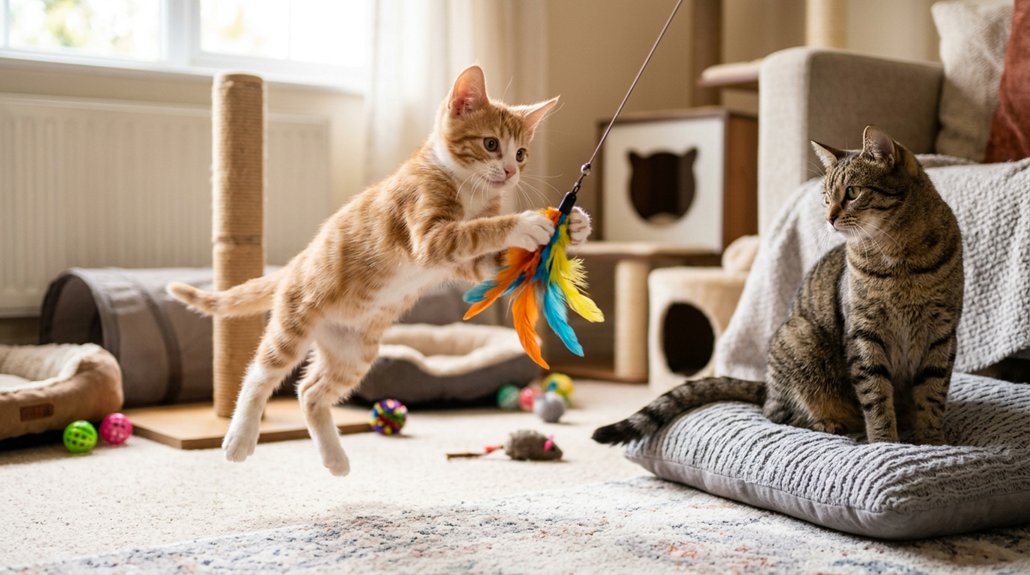
While it can be tempting to engage kittens with your hands during play, research indicates that using interactive toys is more effective at redirecting play aggression. Observational studies show that interactive toys like wand toys or flirt poles replicate prey behavior, facilitating instinctual activities such as stalking and pouncing. To effectively manage a kitten’s energy and play aggression, consider the following engagement strategies:
- Toy Variety: Rotate toys regularly to maintain interest and reduce boredom.
- Playtime Frequency: Implement at least two daily sessions to channel excess energy.
- Interactive Options: Choose toys allowing for dynamic interactions that mimic hunting.
- Controlled Duration: Keep sessions short, around 10-15 minutes, to prevent overstimulation.
These strategies create a fulfilling play environment and minimize aggressive tendencies.
Implementing Time-Outs as Gentle Boundaries
When dealing with kitten play aggression, adopting time-outs can serve as a gentle yet effective boundary-setting method. Immediately withdrawing attention signals to your kitten that aggressive behavior ends playtime. Scientific observations highlight time-out effectiveness by consistently applying this method to enforce behavioral change. It’s essential to maintain no eye contact or communication during the time-out, ensuring aggression isn’t inadvertently rewarded with negative attention. Behavioral consistency strengthens the learning process, reinforcing what actions are undesirable. Brief periods of withdrawal allow your kitten to calm down and understand aggression halts interaction. Analytical patience is key, as kittens require time to grasp the gentle boundary time-outs establish. Over time, repeated reinforcement helps them recognize aggressive play won’t lead to ongoing interaction.
How to Enrich Your Kitten’s Environment
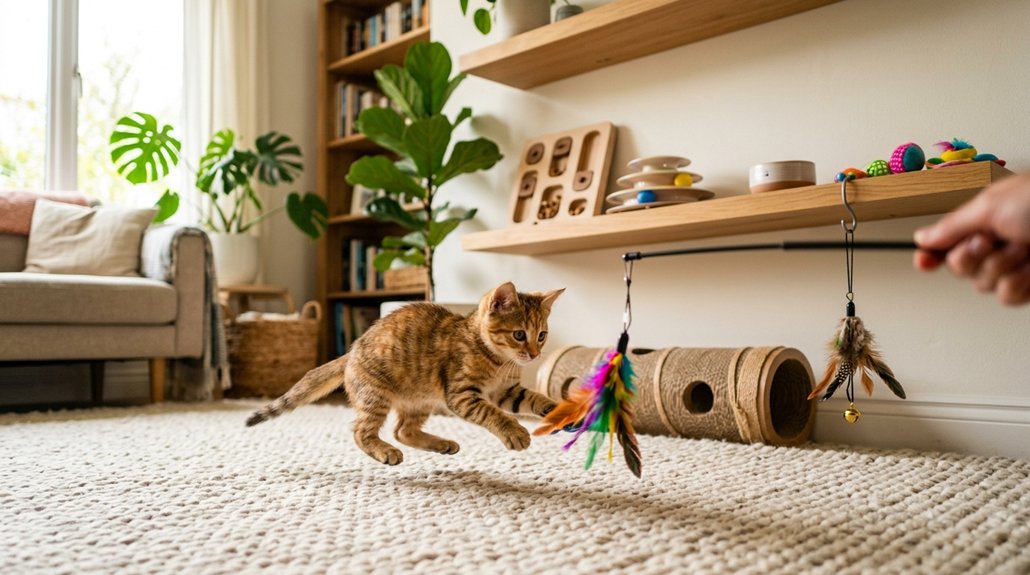
Many kittens benefit from a richly stimulating environment that can effectively curb play aggression. Environmental enrichment and sensory stimulation satisfy their innate needs, reducing aggressive behaviors. To enhance your kitten’s environment, consider these methods:
A stimulating environment curbs play aggression by satisfying kittens’ needs through enrichment and sensory stimulation.
- Stimulating Toys: Provide a variety of interactive wand toys, catnip toys, and balls to encourage independent play and redirect energy.
- Vertical Climbing Structures: Cat trees or shelves cater to natural climbing instincts, reducing boredom and play aggression through elevated activity.
- Food Puzzles: Incorporate these to promote mental stimulation and satisfy hunting instincts, effectively diverting attention from aggression.
- Hunt Circuits: Use tunnels, boxes, and climbing surfaces to create structured play opportunities, mimicking a natural setting and mitigating aggressive behavior.
Implement these strategies to foster a balanced, engaging environment for your kitten.
Getting Everyone on Board With Consistent Training
You’ll need the cooperation of everyone in the household to effectively redirect kitten play aggression through consistent training. Establishing uniform play boundaries by agreeing on appropriate toys and avoiding the use of hands as playthings prevents confusion and reinforces desired behaviors. By recognizing early signs of aggression, such as dilated pupils, and consistently redirecting attention during play, you’ll facilitate an environment conducive to lasting behavioral enhancement.
Unified Training Techniques
In order to effectively reduce play aggression in kittens, it is essential that everyone in the household participates in a unified training approach. This involves ensuring that consistent messages are sent to the kitten regarding expected behavior. A collective commitment to playtime and behavioral consistency is vital for successful intervention. Analyze the following strategies:
- Establish Clear Rules: Formulate guidelines that everyone follows, promoting consistency in interactions.
- Regular Play Sessions: Schedule interactive play at ideal times, like mornings and evenings, to direct energy appropriately.
- Use Designated Toys: Avoid using hands or feet during play. Designated toys are more effective in teaching proper play targets.
- Reinforce Positive Behavior: Reward non-aggression with treats and praise, creating a positive association with desired actions.
Household Collaboration Importance
Unified training techniques lay the foundation for mitigating play aggression in kittens, but their efficacy hinges on household collaboration. Consistent communication strategies guarantee all family members use similar approaches to reinforce positive behaviors. Structured play sessions inform each family role, building a cohesive environment where mixed messages are minimized. Regular discussions about recognizing early aggression signs support timely interventions, promoting safety.
| Family Roles | Communication Strategies | Training Tools |
|---|---|---|
| Unified play roles | Constant role reinforcement | Consistent toy use |
| Daily schedule | Regular safety discussions | Interactive play toys |
| Shared observations | Clear behavior expectations | No hand/foot play |
| Intervention cues | Early aggression recognition | Structured playtimes |
| Rotation system | Unified intervention approaches | Safe play environment |
Engaging the whole household through a consistent play schedule maintains energy outlets and prevents aggressive outbursts.
Establishing Play Boundaries
Although establishing play boundaries might seem straightforward, it requires strategic consistency from all household members to guarantee efficacy. Coordinated efforts send clear playtime signals to your kitten, reducing play aggression and fostering safer interactions. Here’s a concise plan:
- Avoid Hands and Feet as Toys: Consistently using toys prevents body parts from being mistaken as play targets.
- Immediate Feedback: Stop play immediately when aggression occurs, teaching kittens through withdrawn attention that such behavior won’t be tolerated.
- Two Daily Interactive Sessions: Engage your kitten’s energy in structured activities, promoting healthy behavior in safe zones.
- Use Distraction Techniques: Before an anticipated attack, toss toys to redirect focus from inappropriate targets to suitable ones.
Consistency among pet caregivers is essential—mixed signals confuse the kitten, stalling behavioral improvements.
Immediate Steps for Recognizing and Redirecting Play Aggression
When dealing with play aggression in kittens, recognizing the initial signs is vital for effective intervention. Look for indicators like dilated pupils, pinned ears, and frenzied tail movements. These body language cues signal impending play aggression, enabling timely intervention strategies.
| Sign | Description | Intervention Strategy |
|---|---|---|
| Dilated Pupils | Eyes widen, watchful | Redirect with a toy |
| Pinned Ears | Ears flat, alert | Cease play calmly |
| Frenzied Tail | Rapid movement, tense | Use non-contact aversive methods |
Stop play immediately when aggression starts; withdraw attention to show rough play ends fun. Anticipate attacks by tossing toys, focusing their energy positively. Structured sessions, like two interactive playtimes daily, are essential to maintaining behavior and minimizing boredom. Timing intervention precisely guarantees effectiveness.
Frequently Asked Questions
How to Stop Playful Aggression in Kittens?
To stop playful aggression, engage the kitten with interactive play toys to channel kitten energy safely. Schedule consistent sessions using wand or string toys, pause if rough play occurs, then redirect focus to prevent further aggression.
What Is the 3-3-3 Rule for Kittens?
The kitten adjustment 3-3-3 rule indicates gradual adaptation over three days, weeks, and months. During this period, employing socialization tips to nurture their quirky personalities and promote harmonious play behaviors is scientifically advised for conscientious owners.
How to Correct Redirected Aggression in Cats?
To correct redirected aggression in cats, identify and mitigate feline triggers by using environmental modifications like closing curtains. Observational analysis of redirected behaviors can aid in providing targeted mental and physical enrichment, reducing stress-induced aggression effectively.
How to Tell if a Kitten Is Being Playful or Aggressive?
So, you’re trying to decipher your kitten’s cryptic messages? Observe body language. Playful kittens flaunt relaxed signals, while aggressive ones offer you the delightful sight of flattened ears. Note playtime signals: pouncing equals play, hissing shouts aggression.
Conclusion
Imagine your playful kitten, eyes bright with curiosity and tail twitching with excitement, gradually shifting from wild whirls to gentle pounces onto a plush mouse-shaped toy. This harmonious scene is possible through consistent strategies—structured play, interactive toys, and a balanced environment—that redirect aggression into healthy interaction. Observing their evolution, you’ll feel the satisfaction of nurturing a balanced bond, turning what once were chaotic moments into a calming rhythm of mutual understanding and joy.