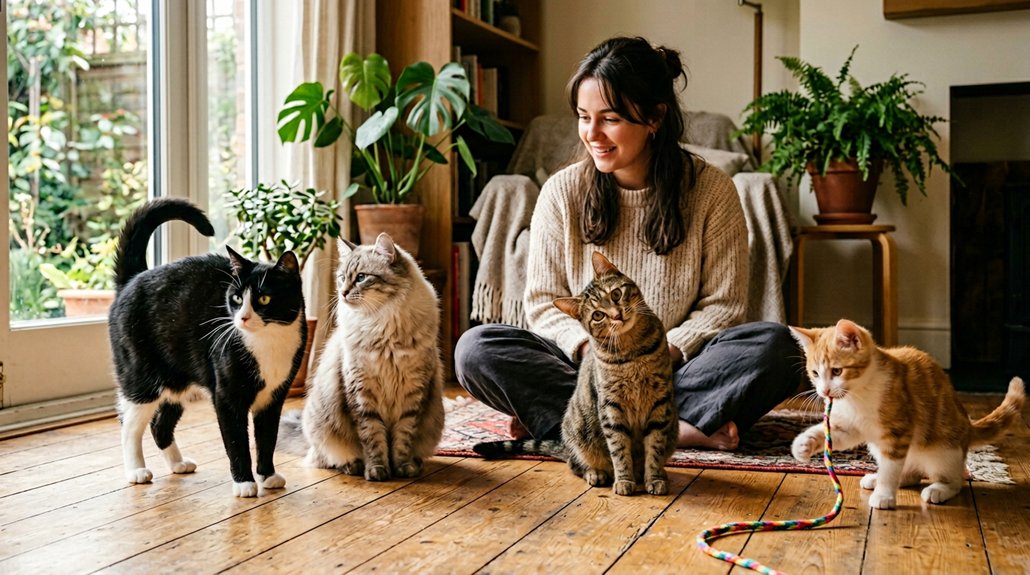
To choose a cat matching your personality, consider energy levels that fit your lifestyle, like high-energy breeds for active households or calm cats for serene homes. Evaluate sociability; sociable breeds need interaction, while independent ones are more self-sufficient. Age matters too—kittens demand time, adults settle quickly, and seniors bring tranquility. Male vs. female stereotypes often mislead; focus on personality instead. Understanding these elements will lead you toward a compatible feline companion. Discover more insights ahead.
Key Takeaways
- Evaluate your lifestyle and energy level to match with a cat’s activity needs for seamless integration.
- Use ASPCA’s “Meet Your Match” survey to align cat personality traits with yours.
- Consider sociability and independence traits to ensure compatibility with your daily interaction availability.
- Prioritize personal observation over gender stereotypes to better understand individual cat personalities.
- Factor in living space size to accommodate breed-specific activity and exploration needs.
Quick Guide: How to Find Your Ideal Cat Match

How do you guarantee you select the perfect feline companion for your unique lifestyle and personality? Start by evaluating your experience level with cats, as breed characteristics can be more suited to a novice or a seasoned owner. Understanding this distinction is fundamental. Consider your household dynamics and your capability for offering time and affection—crucial elements when narrowing down the adoption process. Examine the grooming needs you’re willing to manage, as this influences breed choice substantially. Utilize resources like the ASPCA’s “Meet Your Match” survey, which expertly aligns cat personalities with your lifestyle. This tool offers an efficient and personal touch to the adoption process, ensuring your ideal cat match is both a compatible and enriching addition to your home.
Matching Cat Temperaments to Your Lifestyle
Understanding the energy levels of different cat breeds is essential in aligning their temperament with your lifestyle preferences. If you lead an active lifestyle, a high-energy cat that thrives on regular play and interaction might be ideal, whereas a calm breed would suit a more relaxed household. Additionally, evaluating your household dynamics, including noise levels and family composition, guarantees you choose a cat that harmonizes seamlessly with your living environment, enhancing your overall living experience.
Assessing Cat Energy Levels
Why is it essential to align a cat’s energy level with your lifestyle? Accurate energy level assessments are crucial to creating a harmonious home. High-energy cats, like kittens and young breeds, engage in high-energy activities, requiring frequent play and mental stimulation. If you’ve got a busy life and crave fewer demands, a moderate-energy cat might seamlessly fit, offering playfulness without overwhelming needs.
Low-energy cats thrive in relaxed settings, perfect if you prefer a quieter environment. Misaligning a cat’s energy level with your daily routine can result in mutual frustration. High-energy cats might become destructive without adequate engagement, while low-energy cats need a calm, supportive space. Stick to these assessments for a compatible, joyful companionship with your feline friend.
Evaluating Household Dynamics
Once you’ve evaluated the energy levels of potential feline companions, it’s time to examine how these traits align with your household dynamics. Start by considering your family’s activities and lifestyle preferences. If your home buzzes with lively activity and outdoor adventures, high-energy breeds are a match. For quieter spaces, select a laid-back, low-energy cat. If you have children, look for tolerant cats that play well with kids, ensuring both safety and companionship. Consider your absence levels—independent cats suit busy professionals or frequent travelers who can’t provide constant companionship. Equally important is checking existing pets’ temperaments to prevent clashes. Evaluating household noise levels helps too; some cats thrive in quiet spaces, others need an animated atmosphere. Choose wisely.
Evaluating Energy Levels: Active vs. Calm Cats
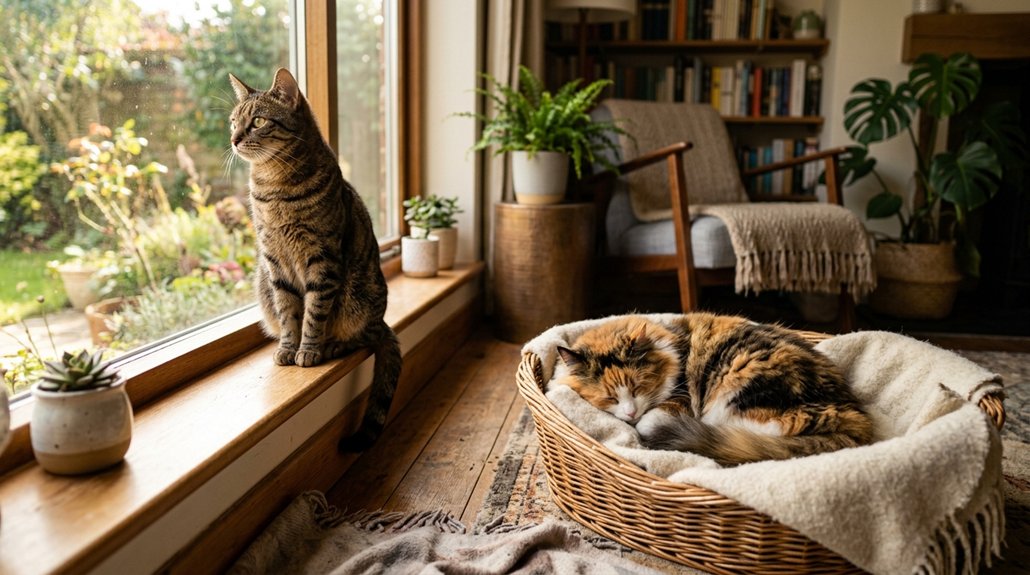
Choosing the right cat for your home often depends on understanding energy levels. High-energy cats, known for their playful and curious high-energy traits, thrive in environments that provide regular interaction and mental stimulation. They’re perfect for active households ready to engage in daily playtime to prevent boredom. Conversely, low-energy cats come with the benefits of being relaxed and less demanding, ideal for quieter homes where they can lounge comfortably without needing constant attention. Companionable yet calm, these cats suit families or individuals seeking a gentle presence. Evaluating the energy level of a cat guarantees alignment with your lifestyle, as a mismatch may lead to frustration. Analyzing these dynamics is essential for fostering a harmonious and fulfilling relationship.
Choosing Sociable vs. Independent Cats
When selecting a feline companion, understanding the balance between sociability and independence is key to fostering a satisfied relationship. Sociable characteristics include thriving on companionship and seeking human interaction. Breeds like Ragdolls and Siamese perfectly exemplify these traits, making them ideal if you prefer an engaging, playful pet. In contrast, independent traits are marked by self-sufficiency and comfort with solitude, common in breeds such as British Shorthairs and Scottish Folds. These are well-suited for busy owners. Evaluating your lifestyle helps in deciding between sociable and independent breeds. Consider the time available for interaction; it’s essential for making a tailored choice. Remember, individual cat personalities may vary, so beyond breed, examining unique traits guarantees a harmonious match.
Best Cat Age for Your Household Dynamics
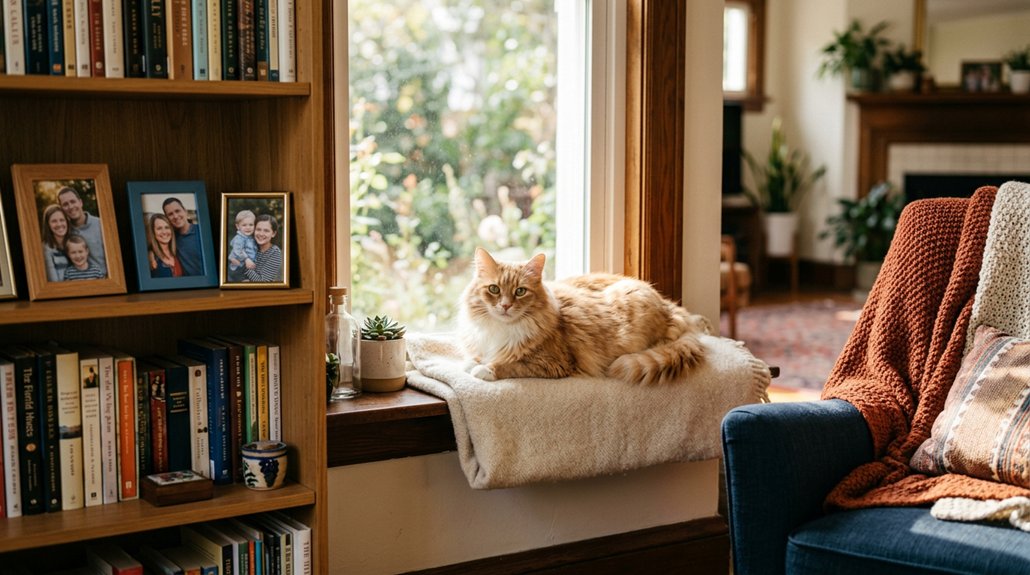
After understanding the sociability or independence of different cat breeds, another pivotal aspect of choosing the right feline companion is considering the age group that best fits your household dynamics. Kittens, for instance, are bundles of energy, requiring substantial time and effort in kitten training to guarantee they develop proper behaviors. They’re ideal if you’re ready for an active, playful addition. Adult cats offer a smoother shift with established personalities and are typically litter-trained, catering well to families seeking less intensive interaction. Conversely, senior companionship provides tranquility, perfect for quieter homes, though often necessitating more attentive care due to health considerations. Families with hectic schedules might prefer self-sufficient older cats, highlighting the importance of evaluating lifestyle compatibility when selecting a cat’s age.
Living Space Requirements: Selecting Cats for Your Home
One key consideration in selecting a cat for your home is understanding how your living space aligns with different feline needs. For apartment living, small breed considerations are crucial, as these cats often prefer low-energy environments and minimal roaming spaces. A calm setting complements their demeanor, reducing stress and promoting well-being. In contrast, larger homes accommodate active cats, offering room for exploration and engagement. Regardless of space, creating safe zones for rest, climbing, and exploration is essential for your cat’s mental health. Incorporate vertical spaces like cat trees or shelves to enhance the environment. Flexibility in your home’s layout can accommodate various cat personalities, fostering harmony between you and your feline companion. Aim for balance to guarantee contentment for both of you.
Essential Care Needs: Health and Grooming
Caring for your cat is essential for ensuring their health and grooming needs are met, which forms the backbone of their overall well-being. Regular grooming routines vary by breed; long-haired cats require daily attention, while short-haired may need just weekly grooming. Health vigilance is crucial. Regular veterinary check-ups can uncover issues early, maintaining your cat’s health.
| Grooming | Diet | Health Check-ups |
|---|---|---|
| Long-haired: Daily | High-quality, age-appropriate food | Regular vet visits |
| Short-haired: Weekly | Tailored diets for special needs | Extra care for aging cats |
| Matting prevention | Breed-specific dietary considerations | Higher frequency for cats with conditions |
Aging cats or those with special needs demand heightened attention. Tailor diets to support specific health issues like arthritis or dental problems, ensuring long-term vitality.
Male vs. Female Cats: Dispelling Common Myths
When choosing a cat, don’t fall into the trap of gender stereotypes dictating personality traits. Male and female cats can differ in behavior, but research shows that environment and individual experiences play a more significant role in shaping their unique personalities. Prioritize finding a cat whose temperament aligns with your lifestyle, rather than focusing solely on their gender.
Personality Versus Gender Stereotypes
While gender stereotypes might lead you to believe that male cats are inherently outgoing and female cats are naturally aloof, these generalizations often miss the mark in the nuanced world of feline behavior. Through careful behavior observation and personality assessment, you’ll find that individual experiences often outweigh gender in shaping a cat’s demeanor. Female cats might take longer for trust building but can forge strong emotional bonds, showing that independence doesn’t preclude affection. Male cats, especially when neutered, might display more adaptability in multi-pet situations, illustrating the environmental impact on feline interactions. By looking past gender stereotypes, focusing on unique personalities, and considering cat adaptability, you’ll foster better connection and compatibility, finding a feline companion that truly complements your lifestyle.
Individual Cat Traits Matter
Moving beyond gender stereotypes, it’s important to focus on each cat’s unique traits, as these are often more telling of a cat’s demeanor than their gender. Identifying cat behavior can clarify different personality types, regardless of whether a cat is male or female.
Consider these insights:
- Male cats often exhibit boldness, curiosity, and may adapt quickly to new surroundings.
- Neutered males generally display easier temperaments, being more sociable with other cats.
- Female cats might take longer to trust humans, but once they do, develop profound, affectionate bonds.
- Environment and personal experiences substantially influence their behavior, making it essential to evaluate individual traits.
Therefore, the best approach is to assess each cat personally, ensuring a harmonious match with your own personality.
Frequently Asked Questions
What Is the 3-3-3 Rule With Cats?
The 3-3-3 rule involves three acclimation stages: three days of initial stress, three weeks of emerging feline personalities, and three months for full comfort. Understanding this helps you support their adjustment, ensuring a smoother adjustment journey.
What Annoys a Cat the Most?
Isn’t it frustrating when routine changes or loud noises disturb your peace? That’s exactly what annoys a cat. Their feline preferences lean towards consistency, quiet, and personal space, reflecting typical cat behavior in seeking stress-free environments.
What Is “I Love You” in Cat Language?
“I love you” in cat language can be seen through their body language and vocalizations. Slow blinks, purring, kneading, head bunting, and grooming are all signs of affection, showing your cat trusts you deeply and is content.
How Do I Pick the Right Cat for Me?
To pick the right cat, explore diverse cat breeds. Analyze your desired personality traits, activity levels, grooming needs, social tendencies, and health considerations. Make certain the cat’s temperament matches your lifestyle for a harmonious, fulfilling companionship.
Conclusion
Choosing a cat that complements your personality isn’t just about preference; it’s about creating a harmonious home dynamic. Did you know that 70% of cat owners report improved emotional wellbeing after selecting a feline friend that matches their lifestyle? By evaluating factors like temperament, energy levels, and social needs, you’re more likely to find the perfect feline companion. Remember, understanding the nuances of cat care and personality guarantees a long-lasting, rewarding relationship with your new pet.