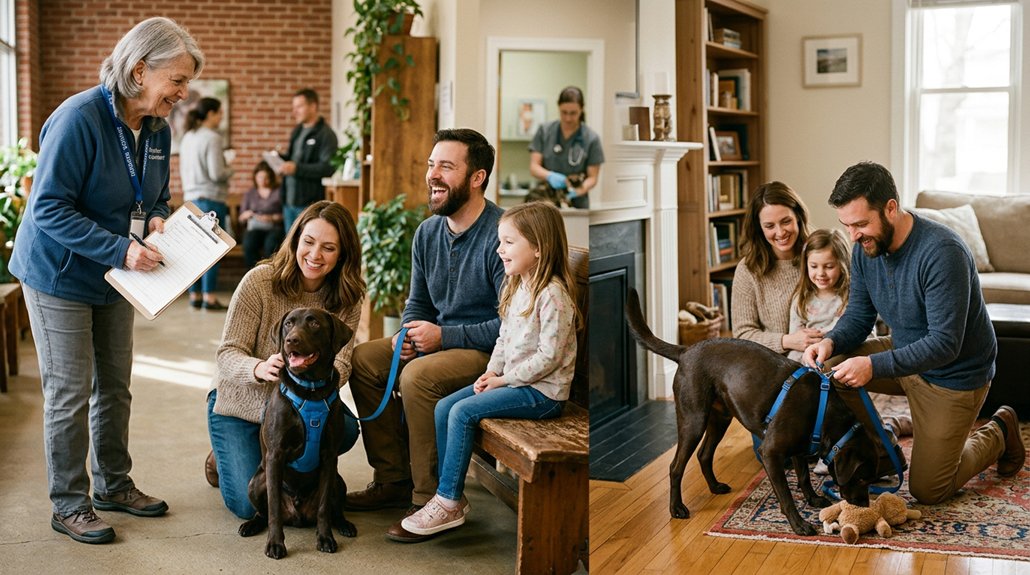
Adopting a dog is a rewarding journey that begins by researching local shelters to find one that aligns with your values. Visit multiple locations to assess care standards and discuss dog behaviors with staff. Prepare your home for your new friend, and guarantee compatibility through meet-and-greet sessions. Once adopted, help your dog settle with consistent routines and quality bonding time. Embrace these steps to build a lasting companionship and discover even more beyond this initial advice.
Key Takeaways
- Research local shelters and evaluate their care standards and adoption programs before selecting one.
- Match your lifestyle with the right dog by consulting with shelter staff about dog personalities.
- Prepare your home environment with necessary supplies and a dedicated space for the new dog.
- Complete the adoption application and participate in meet-and-greet sessions to ensure compatibility.
- Establish a consistent routine post-adoption for feeding, exercise, and bonding to help your dog settle in.
Why Adopt a Dog? Real Benefits
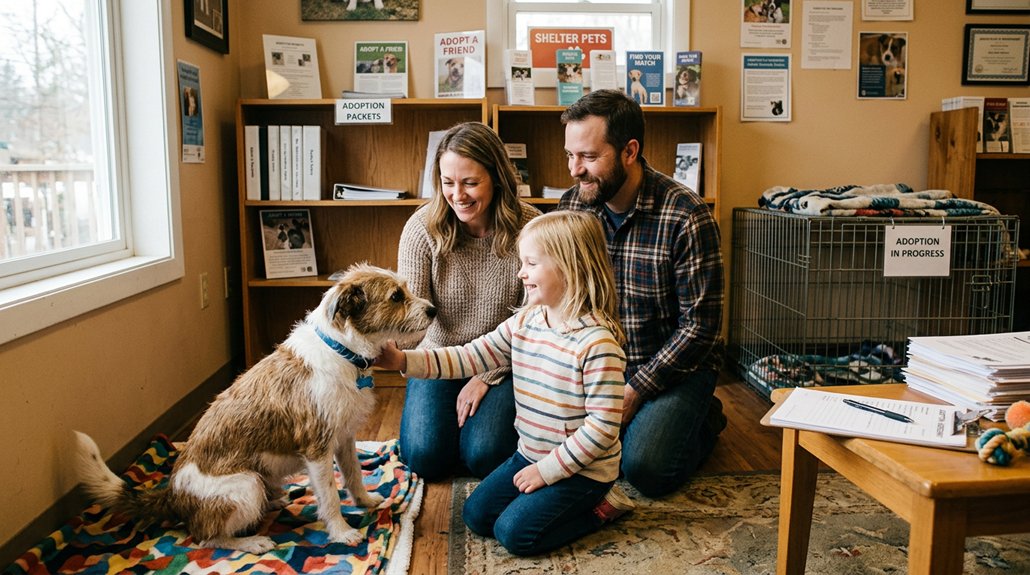
Adopting a dog comes with a host of real benefits that go beyond the joy of companionship. First, you’ll gain significant health benefits as studies show that pet ownership can lower blood pressure and reduce stress. Dogs offer emotional support and can boost your mood, bringing happiness into your life. By choosing pet adoption, you impact your community positively; you save a life and help reduce shelter overcrowding, allowing rescue organizations to support more animals in need. Adoption fees, often lower than purchasing, contribute to these shelters and enable their continued work. Additionally, rescue dogs often arrive fully vetted, providing a healthy start. Plus, they’re often enthusiastic to learn and bond, presenting wonderful training opportunities for you both.
How to Choose the Best Shelter for Adoption
When choosing the best shelter for adopting a dog, it’s helpful to research local shelters and rescues that prioritize animal welfare and have strong adoption programs, like the ASPCA. Visiting multiple shelters lets you evaluate their care standards and see what kind of environment and support they provide for both the animals and adopters. Also, consider how easily you can access the shelters and their ongoing support services, as this will play an essential role in bringing a new pet into your life seamlessly.
Research Local Shelters
While beginning the journey to adopt a dog, it’s important to start by researching local shelters to make an informed choice. Look into reputable organizations like the ASPCA and use databases like Petfinder to explore shelters based on location and available animals. Check each shelter’s mission and values; choosing one that prioritizes animal welfare is essential. Consider no-kill shelters, as they often have strong community partnerships and encourage shelter volunteering. Reading reviews and testimonials gives insight into others’ experiences with the adoption process. Visiting a shelter lets you observe the environment and meet staff, ensuring it’s clean and organized. Engaging with shelters that offer thorough animal care and support is critical for a successful adoption journey.
Evaluate Shelter Care Standards
After you’ve done your homework on local shelters, it’s time to evaluate the care standards at each one to verify you’re choosing the best place for adoption. Start by checking online reviews and ratings to get a sense of their reputation and practices. A clean, well-maintained shelter is vital, as shelter cleanliness helps prevent the spread of illness among animals. Observe interactions between staff and animals; compassionate, knowledgeable staff often signal quality care. Look into the shelter’s veterinary protocols, confirming they provide essential services like vaccinations, spaying/neutering, and microchipping before adoption. Ask about their adoption procedures and follow-up support, as responsible shelters offer guidance for new pet owners. By evaluating these factors, you’ll guarantee a healthy and happy start for your new furry friend.
Consider Shelter Location
Choosing the right shelter for adoption involves more than just picking the closest one, as the location plays a significant role in the adoption process. Proximity to your home enhances shelter accessibility, making visits easier and building relationships with animals and staff. It’s important to research local shelters and rescue organizations to confirm they’re affiliated with reputable entities that practice ethical adoption. Additionally, consider what community resources are nearby, such as veterinary care or training facilities, to support your new furry friend. Explore different shelter types, like municipal shelters or breed-specific rescues, to match your lifestyle and preferences. Finally, inquire about their adoption fees, policies, and the care standards they maintain to guarantee an environment that prioritizes animal well-being.
Matching Your Preferences With the Perfect Pup
When you’re choosing a dog, think about how much time you can dedicate to activities like training and exercise, as these are essential for a happy and healthy companion. Speak with shelter staff to understand each dog’s unique personality and behavior, ensuring your new furry friend fits seamlessly into your lifestyle and household dynamics. If you have a specific breed in mind, consider reaching out to breed-specific rescue groups for detailed insights, as this can help in prioritizing the adoption of a dog that truly matches your preferences.
Selecting Desired Dog Traits
What makes a dog the perfect match for you? It starts with understanding dog personality traits and how they fit your lifestyle. If you’re living in a bustling city or a cozy apartment, a smaller breed might align better with your space constraints. For those leading active lifestyles, a dog with high energy and a larger size might suit your long walks or runs. Don’t overlook grooming requirements, either. Some breeds require regular grooming, which is essential for their health and happiness. Consider any additional needs, like potential health issues common to the breed, ensuring you’re prepared for long-term care. Talk to shelter staff; they can help match a dog’s personality to yours, ensuring a fulfilling companionship.
Prioritizing Adoption Considerations
Finding the right dog is all about aligning their needs with yours, creating a happy partnership. Start by evaluating your lifestyle, ensuring dog breed compatibility with your energy levels and training commitment. A high-energy breed needs frequent exercise, while others thrive in a quieter setting. Consider these steps to enhance your adoption journey:
- Lifestyle Assessment: Reflect on your daily schedule. A calmer breed suits a busy lifestyle, while an active one thrives with time for play and training.
- Age and Temperament: Puppies demand more attention and training; adult dogs might fit seamlessly into your routine.
- Resources & Tools: Utilize shelter assessments and match tools to discover a dog’s personality and behaviors.
Embrace openness to breed variety, as mixed breeds often adapt beautifully.
Preparing for Your First Meeting and Compatibility Check
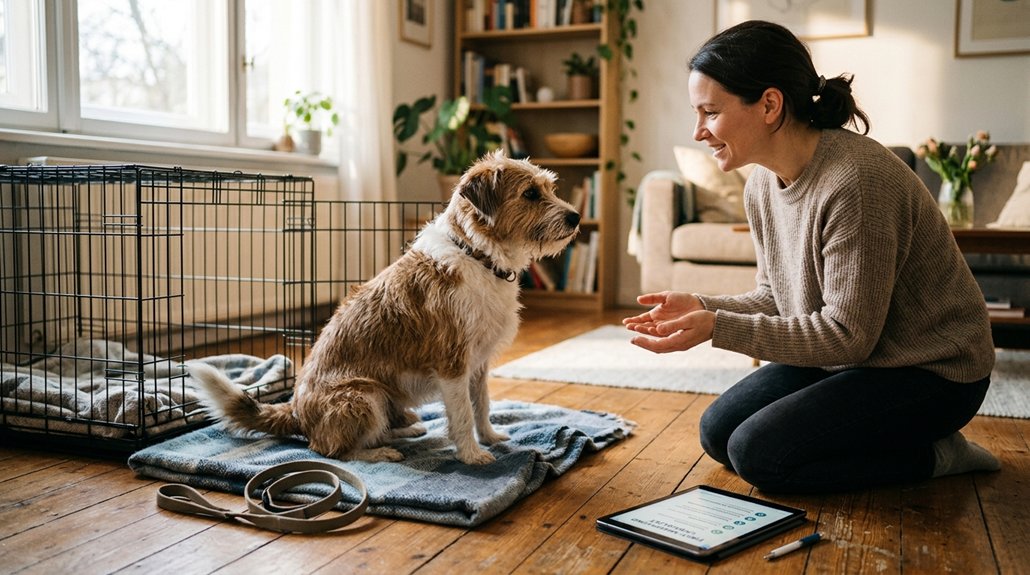
How thoughtfully are you preparing for your first encounter with a potential furry family member? The adoption process can feel intimidating, but paying attention to meeting etiquette guarantees a smooth start. Before the meeting, complete your adoption application and confirm approval. This helps streamline interactions and keeps you focused on evaluating compatibility. Include all household members during this important step to foster inclusivity and gauge the dog’s compatibility with everyone.
Don’t rush—consider the shelter staff’s behavioral evaluations of the dog. They’re crucial in determining if the dog’s personality aligns with your family’s lifestyle. If you have other dogs, a neutral location meet-and-greet can ease initial stress. Come prepared with questions about the dog’s history, temperament, and needs to guarantee a perfect match.
Organizing Your Home for a New Dog
Creating a safe haven for your new dog is essential to a smooth change. Start with home adjustments using these adjustment strategies to guarantee safety and comfort. Begin with hazard elimination by removing dangerous items like chemicals, toxic plants, and small objects they might swallow. Here are some pet proofing tips:
- Safety measures: Secure electrical cables, windows, and balconies to prevent accidents and escapes.
- Space creation: Designate a comfort zone, providing your pup with a cozy bed and stress-free environment.
- Resource organization: Prepare by gathering necessities like food and water bowls, treats, and toys.
These settling routines and environmental enrichment efforts will help your dog adapt to their new home, making the change smoother for both of you.
Must-Have Supplies for Your Dog’s Arrival
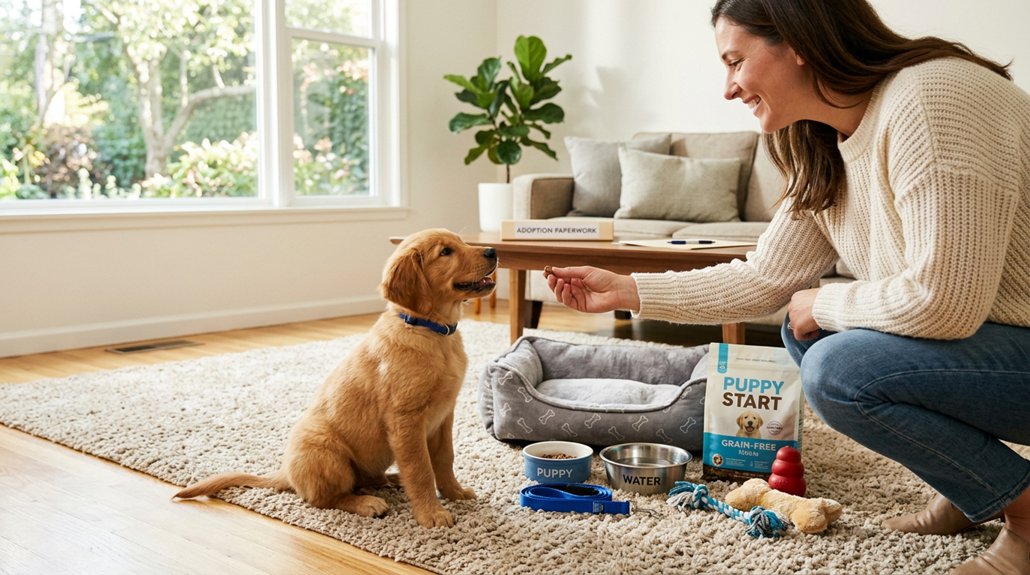
Bringing a new dog home is an exciting journey, and having the right supplies can make the shift smoother for both you and your furry friend. You’ll need essentials like a collar and leash for safe walks, a comfy bed for resting, and appropriately sized food and water bowls to promote healthy eating habits. Don’t forget treats for bonding and training, and consider a crate for secure transportation and house training, ensuring that your new companion feels safe and welcomed.
Essential Dog Items
When welcoming your new furry friend home, having the right dog supplies on hand is crucial to guarantee a smooth changeover for both you and your pet. Prioritizing dog safety and fundamental nutrition will set a strong foundation for their well-being. Here’s a quick list of must-have items:
- Collar and Leash: These are critical for outdoor dog safety and keeping your pet identified during walks.
- Food and Water Bowls: Choose ones that suit your dog’s breed size, and stock up on high-quality dog food to provide vital nutrition.
- Comfortable Dog Bed: Confirm your dog’s new home feels cozy with a comfy spot for them to rest.
Safety and Comfort Essentials
Aside from the essential dog items already outlined, ensuring your new pet’s safety and comfort should be your next priority. Begin by selecting a collar and leash, integral safety features for daily walks. Don’t forget a comfy, appropriately-sized dog bed, a core comfort item so your doggy feels right at home.
Here’s a quick look at essential supplies:
| Safety Features | Comfort Items | Daily Needs |
|---|---|---|
| Collar & Leash | Dog Bed | Food & Water Bowls |
| Crate | Chew Toys | Interactive Toys |
| Grooming Supplies |
Stainless steel or ceramic bowls are a wise choice to prevent bacteria buildup. A crate is invaluable for training and safety. Plus, grooming supplies like brushes and dog shampoo keep your furry friend healthy and happy!
What Happens After You Complete the Paperwork?
After you’ve completed the adoption paperwork, the excitement truly begins as you edge closer to welcoming your new furry friend into your life. Here are the next steps to prepare for your upcoming adventure:
- Application Approval: Wait for your application approval. This includes details about any required meetings or evaluations.
- Meet-and-Greet: Schedule a meet-and-greet with your chosen dog. This helps you both assess compatibility and lets you finalize the adoption details.
- Final Preparations: Once the session is successful, prepare for the last steps. This might involve a home visit or additional assessments to guarantee a secure environment. Remember to bring a government-issued ID and, if needed, a secure crate to transport your new pet.
Helping Your New Dog Settle Into Their New Home
Bringing your new dog home is an incredibly rewarding step, but it also comes with some understandable challenges. Adjustment strategies are key to helping your furry friend settle in. Start by establishing a routine for feeding, walks, and playtime, which will make them feel secure and help acclimate to their new environment. Creating comfort is essential; designate a quiet and cozy space for your dog to retreat to and relax. Allow your dog to explore different areas of your home at their own pace to minimize stress. Be patient, as your new companion might show signs of nervousness. Monitor their behavior and use positive reinforcement, like treats and praise, to encourage good behaviors and build a trusting, loving relationship.
Long-Term Care Tips for Your Adopted Dog
When you welcome an adopted dog into your life, thoughtful, long-term care is essential to guaranteeing their happiness and health. Start by focusing on these key areas:
- Health Monitoring and Veterinary Care: Schedule regular vet check-ups to keep vaccinations, parasite control, and dental care up-to-date. This promotes overall well-being and helps catch potential issues early.
- Nutrition and Exercise Routines: Plan a balanced diet based on your dog’s unique needs. Combined with regular walks and playtime, this supports physical health and prevents obesity.
- Grooming and Behavior Training: Regular grooming practices, like brushing and nail trimming, help maintain a healthy coat and allow you to check for skin issues. Consistent behavior training and socialization techniques build confidence and guarantee a well-adjusted companion.
Building a Strong Bond With Your New Canine Companion
Though it might take some time, building a strong bond with your new canine companion is both rewarding and essential for your dog’s emotional well-being. Start by spending quality time to establish trust and understanding. Engage in bonding activities like interactive play and regular training sessions to enhance communication cues. Here’s a helpful table:
| Activity | Purpose | Outcome |
|---|---|---|
| Walks | Routine building | Comfort and stability |
| Training sessions | Basic command reinforcement | Enhanced communication |
| Playtime | Stress relief, trust building | Stronger connection |
| Feeding routine | Security and trust | Confidence in environment |
| Relaxation time | Calmness and observation | Understanding body language |
Be patient and consistent with positive reinforcement like treats and praise to encourage desired behaviors. Listen to your dog’s body language, allowing your bond to grow naturally.
Frequently Asked Questions
What Is the 3-3-3 Rule for Dog Adoptions?
The 3-3-3 rule helps you understand your rescue dog’s shift. Initially, they’ll need time to feel secure, so patience is essential. With your shelter considerations and adoption tips, they’ll gradually adjust in weeks and months.
What Age Is the Hardest to Get Adopted?
Dogs aged 6 months to 2 years often face the hardest adoption challenges. They’re not seen as puppies, yet require training. While senior dogs might also struggle, these dogs find themselves caught between puppy adoption challenges and senior dog difficulties.
How Do Dogs Say “I Love You”?
Your dog practically explodes with love through dog body language and canine vocalizations. Tail wagging, leaning into you like you’re their favorite person, and soft whines express it all. They’ve mastered the art of unconditional adoration.
Can You Adopt if You Have Diabetes?
Yes, you can adopt a dog if you have diabetes. It’s key to manage your diabetes while planning for pet care. Shelters will support you as long as you guarantee a loving, capable environment for your furry friend.
Conclusion
You’re about to commence an incredible journey that could change your life in ways you haven’t yet imagined. The joy and companionship of a new furry friend await, but that’s just the beginning. As you open your heart and home to your new canine companion, you’ll discover unexpected challenges and heartwarming triumphs. Are you ready to nurture this bond and witness the transformation? Because together, you and your new best friend can create a beautiful future.