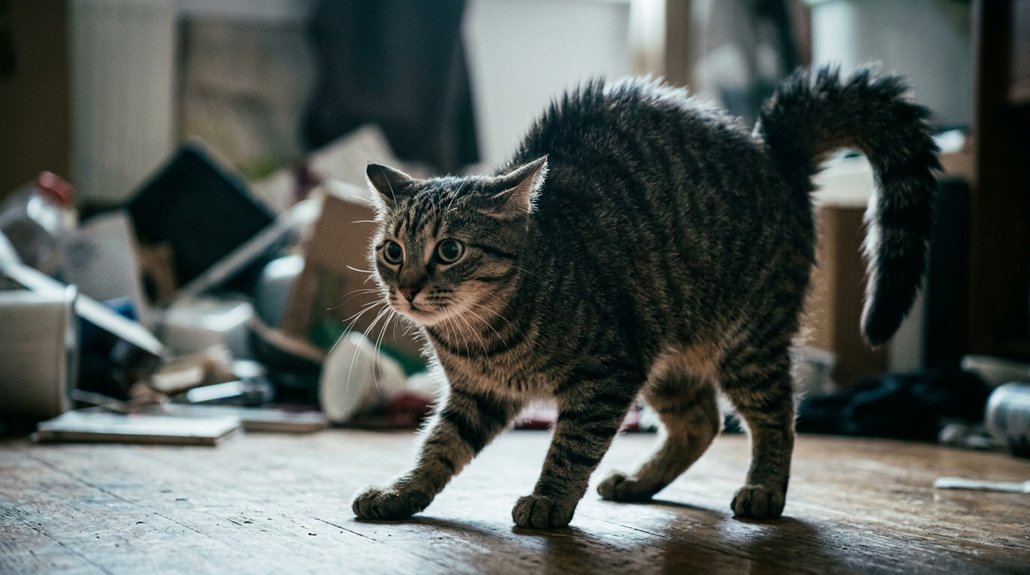
Recognizing a cat emergency involves observing specific signs. Look for urinary blockage symptoms like frequent litter box visits with little success. Bleeding wounds require immediate pressure; a large blood loss is serious. Respiratory distress shows as open-mouth breathing and blue gums. Seizures need a safe environment and prompt duration documentation. Pain is indicated by behavioral changes and mobility issues. Persistent vomiting and toxicity signs such as vomiting and lethargy demand urgent care. There’s much more to uncover about ensuring your cat’s safety.
Key Takeaways
- Frequent straining to urinate without success indicates a possible urinary blockage needing immediate veterinary care.
- Open-mouth breathing or blue-tinged gums suggest severe respiratory distress requiring urgent medical attention.
- Persistent vomiting with signs of dehydration or lethargy signals a gastrointestinal emergency.
- Seizures lasting over five minutes or frequent seizures need prompt veterinary intervention.
- Recognize poisoning by symptoms like vomiting, seizures, or excessive salivation and seek immediate veterinary help.
When Your Cat Can’t Pee: What You Need to Know
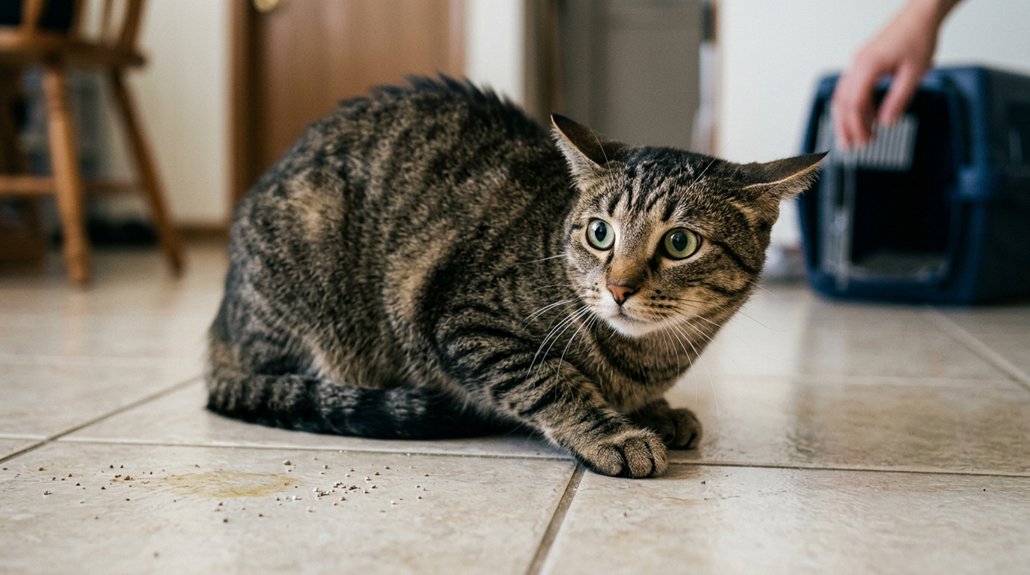
Why might your cat be straining to urinate with little or no success? This can indicate a urinary blockage, particularly in males, where the urethra becomes obstructed. It’s a vital condition, and you’d notice urinary symptoms like frequent litter box visits, vocalization, and lethargy—emergency signs that shouldn’t be ignored. A blocked urethra demands immediate veterinary intervention to prevent severe complications such as bladder rupture or acute kidney failure. You might also observe behavioral changes like hiding or excessive grooming of the genital area. Monitoring your cat’s litter habits is essential for early detection. Regular veterinary check-ups can help identify issues early, enhancing treatment success. Immediate attention is vital when faced with these distress signals, safeguarding your cat’s health.
Bleeding Wounds: Act Fast
When confronted with a cat’s bleeding wound, swift action is vital to prevent serious consequences. Start with an initial assessment, estimating blood loss. If it resembles a coffee cup’s worth, immediate veterinary attention is critical. For wound management, apply gentle pressure using a clean cloth or bandage. If the neck or face is injured, make sure you don’t obstruct airflow. Uncontrolled bleeding may require a temporary tourniquet placed 2-4 inches above the wound. Always consult a vet because internal injuries might not be apparent.
| Step | Action | Note |
|---|---|---|
| Initial Assessment | Estimate blood loss | Compare to a cup’s worth for severity |
| Wound Management | Apply pressure | Use clean cloth/bandage, maintain airflow |
| Uncontrolled Bleed | Apply tourniquet | Temporary, above wound, seek vet help |
| Professional Help | Consult veterinarian | Hidden internal injuries possible |
Difficulty Breathing: Immediate Steps for Help

If your cat is displaying signs of respiratory distress, such as open-mouth breathing or a blue tint to the gums, it’s critical to act quickly. Keep your cat calm, minimize handling, and immediately contact a veterinarian, describing the symptoms in detail. Rapid veterinary evaluation is essential to address potential heart or lung issues and to prevent life-threatening complications.
Signs of Respiratory Distress
Understanding and promptly recognizing the signs of respiratory distress in cats can be lifesaving. If you notice open-mouth breathing, an elongated neck posture, splayed elbows, or increased chest movement, these are red flags of difficulty breathing. Hypoxia symptoms, such as blue-tinged gums, suggest severe issues with oxygenation, requiring urgent veterinary attention. Additionally, your cat might show anxiety indicators like hiding or excessive vocalization. Rapid or shallow breathing is an essential sign that shouldn’t be overlooked. Conditions like asthma, heart disease, or lung infections can quickly worsen, making immediate assessment critical. Providing a calm environment minimizes stress, which is crucial if your cat is struggling to breathe. Always prioritize swift veterinary evaluation for effective intervention.
Emergency Response Actions
Recognizing that your cat is having difficulty breathing is a critical moment requiring immediate response. Watch for signs like an elongated neck, open-mouth breathing, or blue-tinged gums, which signal severe distress. To limit cat anxiety, keep them calm and minimize movement while preparing for transport. Stress exacerbates breathing difficulties.
Use a cat carrier to guarantee transport safety, securing your cat without constricting its airway. Contact your veterinary clinic from the road, notifying them of the emergency so they can prepare promptly. During transit, keep a close eye on your cat for any behavioral changes or worsening symptoms. Be ready to inform the veterinarian of how long your cat has struggled with breathing, aiding in swift diagnosis and intervention.
Veterinary Care Necessities
When your cat is struggling to breathe, despite the alarm it generates, precise and immediate action is imperative. Being prepared can make a significant difference. Here are steps for emergency preparedness that you should prioritize:
- Identify Symptoms: Look for indicators of respiratory distress, such as open-mouth breathing, elongated neck posture, or blue-tinged gums. These signs necessitate urgent attention.
- Minimize Stress: Keep your cat calm in a quiet area. This is essential to prevent escalation of symptoms.
- Contact a Vet: Call your veterinarian or an emergency clinic immediately. They can guide you on appropriate actions based on preventive care protocols.
- Secure Transportation: Use a suitable carrier to transport your cat securely, ensuring their airway remains unobstructed. Monitor for additional symptoms like lethargy or coughing.
Seizures in Cats: What You Should Do

When your cat experiences a seizure, guarantee their safety by removing hazards and avoid placing your hands near their mouth. After the seizure, closely observe your cat for any disorientation or lethargy, as these symptoms may indicate complications needing veterinary evaluation. It’s essential to document the seizure’s duration and frequency, as this information aids in determining the appropriate veterinary care and treatment plan.
Handling Seizure Safety
During a seizure in a cat, your primary goal is to guarantee its safety by clearing away any nearby objects that might cause injury and providing a calm, quiet environment. Identifying seizure triggers and utilizing calming techniques can help manage the situation effectively. Timing the seizure is vital; if it lasts longer than five minutes or multiple seizures occur in succession, seek immediate veterinary assistance. Remain composed, as heightened stress can exacerbate the condition.
Here are essential steps to handle seizure safety:
- Clear Obstructions: Remove any potentially harmful objects.
- Time the Episode: Document the duration accurately.
- Avoid Restraint: Don’t restrain the cat or place anything in its mouth.
- Stay Calm: Manage your stress to influence the cat’s behavior positively.
Post-Seizure Monitoring Tips
Although witnessing a seizure in your cat can be alarming, it’s crucial to focus on post-seizure monitoring to guarantee their recovery. Allow your cat to rest undisturbed in a quiet, comfortable area. For effective post-seizure observations, monitor for behavioral changes like disorientation, confusion, or unusual vocalizations for at least 30 minutes. Verify they can’t access stairs or hazardous spaces. Document the seizure duration and any atypical behaviors to assist your veterinarian in the diagnostic process.
| Observation Task | Duration |
|---|---|
| Disorientation Check | Up to 30 minutes |
| Vocalization Monitoring | Continuous |
| Rest Environment Setup | Immediate |
| Record Keeping | Post-seizure |
If multiple seizures occur in a short timeframe, it’s advisable to seek veterinary attention immediately as it may indicate a more severe issue.
Veterinary Care Recommendations
If your cat experiences a seizure, especially one lasting more than five minutes or multiple in quick succession, it’s imperative to seek immediate veterinary care. Prompt action is vital to prevent possible brain damage or other serious conditions. Here’s what you should do:
- Ensure Safety: Remove harmful objects from the vicinity to protect your cat during the episode, but don’t attempt to restrain it physically.
- Observe Closely: Monitor your cat’s behavior throughout the seizure for clues on potential seizure causes.
- Post seizure care: Provide a calm and quiet environment for your cat post-seizure, observing for signs of confusion or disorientation.
- Seek Consultation: If you notice new seizures or changes in frequency, consult a veterinarian promptly for a thorough assessment.
Signs Your Cat Is in Pain
Identifying signs that your cat is in pain is crucial for ensuring their well-being. Cat behavior changes, such as increased aggression, withdrawal, or excessive vocalization, often signal discomfort. Pay attention to any alterations in mobility, like limping or favoring a leg, which might suggest an injury or fracture. Observe physical signs: a tense body, tucked tail, flattened ears, and dilated pupils are all indicators of pain. Changes in grooming habits are also telling—watch for neglected grooming or over-grooming, particularly in a specific area. Additionally, a sudden loss of appetite or reluctance to eat, especially if your cat struggles to chew, can signify pain. Consider consulting your veterinarian for appropriate pain relief options to address your cat’s needs promptly.
Vomiting Risks: What to Watch For
Vomiting in cats, while sometimes a benign reaction to hairballs or dietary indiscretions, poses significant risks when severe or frequent. Significant concerns include dehydration symptoms and underlying conditions necessitating urgent care. If your cat is vomiting, you should:
- Monitor Frequency: Frequent or persistent vomiting, particularly multiple times per hour, is alarming and often indicates serious vomiting causes.
- Check for Dehydration: Symptoms like sunken eyes, lethargy, and dry gums are critical warning signs requiring immediate attention.
- Assess Accompanying Symptoms: Lethargy, pain, or behavioral changes alongside vomiting often suggest emergencies beyond typical gastrointestinal distress.
- Prioritize Veterinary Evaluation: Straining to vomit or failure to keep food/water down mandates quick action to prevent worsening of potential gastrointestinal obstructions.
Prompt veterinarian consultation is essential when these risks are evident.
Poison Alert: Responding to Cat Toxicity
While it’s not uncommon for cats to explore their environments, curiosity can turn dangerous when they encounter toxic substances. Antifreeze, certain cleaning products, and toxic plants like lilies are common household hazards that can be fatal if ingested. Be vigilant: symptoms like vomiting, diarrhea, excessive salivation, seizures, and lethargy indicate a potential poisoning and a medical emergency.
Immediate veterinary attention is vital—bring any packaging or substance samples to aid diagnosis. Avoid inducing vomiting unless explicitly directed by a veterinarian, as certain poisons can inflict greater harm if regurgitated. By familiarizing yourself with potential poisons and creating a toxin-free environment, you can notably minimize the risk of accidental ingestion, safeguarding your cat’s health and well-being.
Frequently Asked Questions
What Is the 3-3-3 Rule for Cats?
The 3-3-3 rule for cats describes their adjustment timeline: three days hiding, stressed; three weeks learning routines, starting trust; three months establishing territory, bonding. Recognize shifts in cat behavior as potential emergency signals during this period.
What Is the 3:2:1 Rule in Cats?
Imagine the 3:2:1 rule like a cat’s SOS signal. If you notice your feline’s emergency signs like labored breathing, they’re unable to stand, or express severe pain, which persists over three minutes, seek rapid veterinary care.
How Do I Know if My Cat Is Having an Emergency?
You’re wondering if your cat’s experiencing an emergency? Look for striking changes in cat behavior: difficulty breathing, sudden collapse, severe vomiting, disorientation, or urinary issues. These emergency signs need immediate veterinary attention to prevent serious complications.
What Is “I Love You” in Cat Language?
Cats say “I love you” through a variety of feline behaviors. Imagine a telegram of affection: purring, slow blinking, face-rubbing, kneading, and gift-bringing—all ways cat communication indicates deep trust and attachment to you.
Conclusion
In the world of feline care, your swift action could mean the difference between life and catastrophe. Recognizing emergencies—such as urinary blockages, bleeding wounds, breathing difficulties, seizures, pain signals, excessive vomiting, or poisoning—allows you to act decisively. Being attuned to these symptoms is like possessing a superpower for your cat’s wellbeing. Prioritize timely veterinary care for any alarming signs, as it’s your cat’s best chance. Remember, your vigilance is a lifeline for your furry companion.