
If your pet shows signs like difficulty breathing, uncontrolled bleeding, or persistent vomiting, it’s crucial to get emergency veterinary care immediately. These symptoms may lead to serious health risks or life-threatening conditions. Prepare by organizing health records and contacting an emergency vet quickly, keeping your pet calm during transport. Ensuring prompt action increases the chances of a positive outcome, and there’s more to discover about handling these situations effectively.
Key Takeaways
- Difficulty breathing or labored gasping in pets indicates a need for immediate veterinary care.
- Multiple instances of vomiting or diarrhea within 24 hours warrant urgent veterinary intervention.
- Uncontrolled bleeding or severe, visible injuries require prompt attention from an emergency vet.
- Loss of consciousness or prolonged seizures in pets are life-threatening and need urgent help.
- Male cats showing signs of urinary distress or inability to urinate must receive immediate veterinary attention.
Spotting Emergency Symptoms in Pets

Have you ever wondered how to tell if your pet’s symptoms require immediate medical intervention? Understanding common pet emergencies is vital. You should be alert for signs like difficulty breathing, such as gasping or labored breaths, which indicate a critical need for veterinary care. Recognizing symptoms like persistent vomiting or diarrhea multiple times in 24 hours, especially when paired with other issues, signals serious health risks. Severe injuries, including uncontrolled bleeding or major wounds, demand prompt attention to prevent shock or infection. Loss of consciousness or prolonged seizures require urgent intervention for potential life-threatening conditions. Finally, if your pet shows signs of urinary distress, particularly male cats unable to urinate, seek immediate care to prevent severe complications. Being vigilant saves lives.
Getting Ready for the Vet
When emergencies strike, having essential documents like your pet’s medical records ready can expedite their treatment and guarantee their specific needs are addressed efficiently. To alleviate stress during transport, secure your pet with a crate or seatbelt to minimize movement and prevent further injury. It’s vital to inform the emergency vet of your arrival in advance, so they can prepare for your pet’s condition and provide immediate care upon arrival.
Preparing Essential Documents
How prepared are you for a pet emergency? When time is of the essence, having your essential documents in order can make all the difference. Compile thorough records of your pet’s medical history, including vaccination details, allergies, and current medications. This information is vital for the emergency vet to evaluate your pet’s needs swiftly. Keep an updated list of emergency veterinarian contacts, complete with addresses and phone numbers, for immediate reference. Familiarizing yourself with your pet’s recent symptoms and health history guarantees effective communication during stressful situations. If your pet ingests something toxic, having the packaging ready aids in quick diagnosis and treatment. An organized pet emergency kit should also include identification and insurance information to promote care.
Ensuring Safe Transport
Even in distressing situations, it’s crucial to guarantee your pet’s safe transport to the emergency vet. Implementing key safety measures can minimize additional harm. First, verify your pet is stable. Use a sturdy crate or secure a seatbelt to keep them restrained.
| Safety Measure | Details |
|---|---|
| Stabilize Pet | Minimize movement to prevent further injury |
| Secure Transport | Use a crate or seatbelt for restraint |
| Comfort and Calm | Cover with a blanket to reduce stress |
| Handling Poisons | Bring packaging of ingested substances |
Drive cautiously, maintaining a smooth ride by avoiding sharp turns and sudden stops. This careful approach in pet transport not only protects your pet physically but also aids mental well-being during such critical times.
What Happens at an Emergency Vet Clinic?
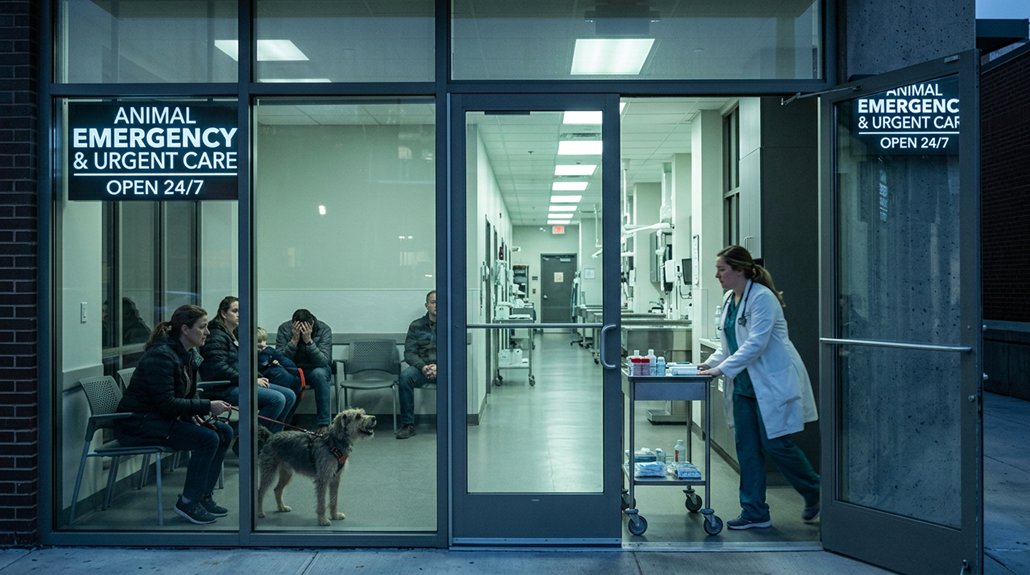
When you first arrive at an emergency vet clinic, your pet will undergo a triage process to guarantee that the most critical cases are addressed promptly. The emergency vet team will assess key signs and perform a physical examination while obtaining essential medical history from you. Based on these findings, they might proceed with diagnostic tests such as bloodwork and X-rays to develop an effective treatment plan, ranging from medication and fluids to more intensive interventions.
Initial Triage Process
As you step into an emergency vet clinic, your pet’s journey begins with a vital triage process designed to evaluate the urgency of their condition. Here, the triage significance can’t be overstated, as it guarantees those in dire need receive priority care. The process includes:
- Symptom Assessment: Veterinary staff quickly assess visible symptoms—severity guides urgency.
- Vital Signs Check: They measure temperature, heart rate, and respiratory rate to understand your pet’s overall health.
- Brief Examination: A swift physical check and your input regarding medical history and recent symptoms aid in diagnosis.
- Priority Assignment: Pets with life-threatening conditions, like severe bleeding, are treated immediately.
Clear, concise communication with the staff is essential in uncovering underlying issues.
Diagnostic and Treatment Steps
Upon the completion of triage, your pet’s journey through the emergency vet clinic shifts to diagnostic and treatment steps tailored to their needs. The veterinary team will begin by gathering detailed medical history and recent symptoms to inform their approach. They may perform diagnostic procedures such as bloodwork, urinalysis, and x-rays to pinpoint any underlying issues. Once a clear picture of your pet’s health emerges, the vet explores various treatment options. These options might include administering IV fluids for hydration, managing pain, providing oxygen therapy, or even surgery if necessary. Every step is designed with your pet’s welfare in mind. Follow-up care often involves monitoring in a critical care unit or scheduling appointments with specialists or your regular veterinarian.
Treatments Your Pet Might Receive
In a veterinary emergency, your pet might receive various treatments to quickly restore their health and comfort. Emergency vets often use:
- IV fluids: These rehydrate pets, particularly after severe vomiting or diarrhea, helping to stabilize their condition.
- Pain management: Through analgesics or sedatives, vets aim to alleviate your pet’s discomfort during treatment.
- Diagnostic tools: Bloodwork and X-rays are vital for identifying underlying issues like internal injuries or organ dysfunction.
- Surgical procedures: Necessary for repairing injuries, removing foreign objects, or addressing serious conditions like gastric torsion.
Post-treatment, follow-up care is significant. You might receive medications, referrals to specialists, and detailed recovery recommendations focusing on hydration strategies and overall health to guarantee a complete recovery. Your pet’s well-being always matters most.
Tips for Safely Transporting Your Pet

Transporting your pet safely during an emergency is essential for minimizing their stress and discomfort. Employ effective transport techniques by using a sturdy crate or carrier to limit movement and protect them from further harm. If a crate is unavailable, carefully use a blanket to lift and carry small or medium-sized pets, making sure they remain stable. Keep your pet on a firm surface during the journey to avoid additional injuries. As part of calming methods, maintaining your composure is imperative—your pet will sense your anxiety, which can increase their stress. Don’t forget to include any packaging of potential poisons or a list of current medications, providing critical information for the veterinary team to guarantee informed and prompt treatment.
Next Steps After an Emergency Vet Visit
While an emergency vet visit can be overwhelming, adhering to the discharge instructions is essential for your pet’s recovery. Immediately after your visit, pay close attention to these important steps:
- Monitoring Recovery: Keep a vigilant eye on your pet, watching for any behavior changes or symptoms signaling complications.
- Follow Up Care: Schedule appointments with your primary vet to guarantee ongoing health evaluation and address any concerns.
- Documentation: Maintain a detailed record of treatments, medications, and diagnostics performed during the emergency visit to facilitate further care.
- Adjustments: Be open to potential lifestyle changes or therapies that may be recommended to support your pet’s long-term health post-emergency.
These steps are essential not only for recovery but also for minimizing future risks.
Staying Prepared for Pet Emergencies
As pet owners, you’re often the first responders in any emergency situation, and being well-prepared can make all the difference. Develop your emergency training by keeping an updated list of emergency vet contacts, including those open after-hours, to guarantee quick access during a crisis. A pet first aid kit stocked with essential supplies, such as medical records and medications, can be lifesaving. Educate family members on recognizing signs of distress, like breathing difficulties or severe bleeding, to respond promptly. Familiarize yourself with local emergency vet clinics and their services, as they provide advanced care. Practice transporting your pet efficiently using secure methods like a crate or seatbelt. These steps guarantee you’re equipped to handle emergencies with confidence and care.
Emergency Veterinary Care Tips
Recognizing when a pet requires emergency veterinary care is essential for their well-being, as life-threatening symptoms can escalate rapidly. An effective emergency response begins with knowing the symptoms:
Recognizing life-threatening symptoms promptly ensures rapid and effective emergency care for your pet’s well-being.
- Difficulty breathing or uncontrolled bleeding mustn’t be ignored.
- Seizures or sudden collapse indicate immediate medical attention.
- Other significant situations include major injuries like fractures or the inability to urinate.
- Persistent issues, such as vomiting or severe diarrhea, also warrant urgent care.
Act swiftly by contacting your emergency veterinary facility. Provide your pet’s medical history, noting current medications and any exposure to toxins. When transporting, guarantee your pet’s safety with blankets or a carrier for firm support. Quick action and pet first aid can prevent further complications and safeguard your pet’s health.
Frequently Asked Questions
What Qualifies as an Emergency Vet Visit?
You’ll need an emergency vet if your pet shows severe signs of distress, like difficulty breathing or signs of poisoning. Weakness, signs of gastrointestinal issues, or trauma require immediate attention. Don’t neglect preventive care to avoid emergencies.
How Much Does a UTI Cost at the Vet?
Facing UTI symptoms? Diagnosing costs range from $150 to $300. Treatment options add $20 to $100. Totaling these may seem overwhelming, but prioritizing your pet’s health is priceless. You’re not alone in this journey.
Is a Hematoma in a Dog an Emergency?
Yes, a dog’s hematoma can be an emergency if symptoms like rapid growth, pain, or infection appear. You should monitor symptoms closely and seek hematoma treatment promptly to avoid complications like chronic pain or tissue damage.
Should I Take My Dog to the Vet After a Seizure?
Yes, you should. Post-seizure symptoms like confusion or lethargy warrant a vet visit to evaluate your dog’s recovery. A professional examination’s essential for evaluating neurological health and addressing potential underlying issues effectively and empathetically.
Conclusion
In the whirlwind of a pet emergency, it may feel like the world’s collapsing around you. You’re their superhero, the beacon they’re counting on. Recognizing those distress signals can save a life, transform chaos into calm, and wrap your pet in the care they desperately need. Remember, each detail matters, from swift transportation to post-visit plans. You’re now equipped with the ultimate toolkit for pet emergencies, turning you into a vigilant guardian of your pet’s health.