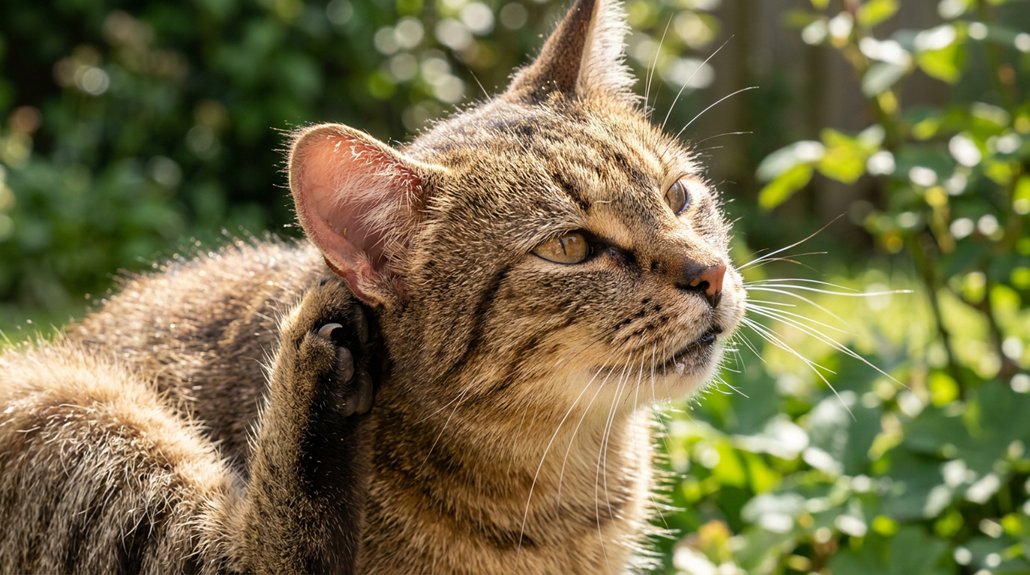
Your cat’s persistent ear scratching might be due to ear mites, allergies, infections, or foreign objects. Ear mites cause severe itchiness and dark discharge, while allergies—either environmental or dietary—can lead to significant irritation. Infections require antimicrobial treatment, and trapped foreign objects need professional removal. Notice excessive scratching, head shaking, foul odors, or unusual discharge? These are signs your cat’s ear health is compromised. Stay tuned to uncover effective solutions and preventive strategies.
Key Takeaways
- Ear mites could be causing severe itching and require professional treatment.
- Food or environmental allergies might lead to your cat’s ear irritation.
- Bacterial or yeast infections can result in itching and require antimicrobial treatments.
- The presence of foreign objects might be causing discomfort and needs veterinary removal.
- Household irritants and parasites like fleas can exacerbate ear scratching in cats.
Why Your Cat Is Scratching: Potential Causes and Quick Fixes
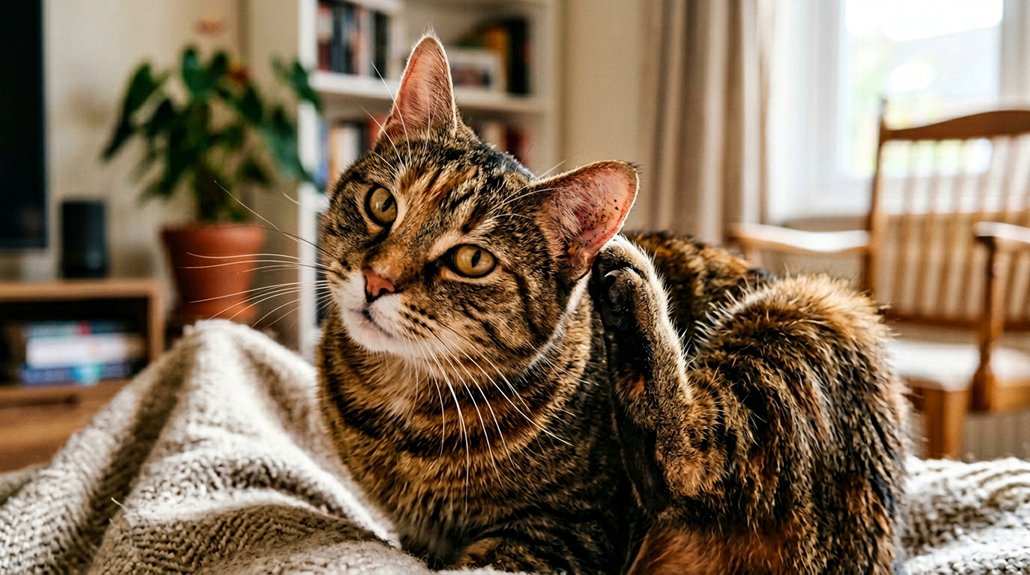
If your cat is persistently scratching its ears, consider potential causes such as ear mites, allergies, infections, foreign objects, or injuries. Behavioral triggers often manifest through changes in grooming habits, rapidly escalating to persistent scratching. Diagnostic expertise is essential—examine the ear canal for signs of redness, odor, or debris signaling mites or infections. Allergies might cause systemic itch, necessitating dietary adjustments or antihistamines. Ear infections, commonly bacterial or yeast-driven, require targeted antimicrobial treatments. Foreign objects need careful extraction by a professional, preventing further trauma. Injuries, once identified, should be managed with topical antiseptics. Quick remedies, tailored through precise identification, can provide significant relief, reducing the scratching behavior and restoring normal grooming habits in your feline friend.
What’s Making Your Cat Scratch: Common Causes
To understand why your cat is itching, it’s important to contemplate possible allergens, which can be food-related or environmental, as they often lead to skin irritation and chronic ear scratching. Diagnosing an ear mite infestation also requires attention, as these parasites can cause severe itching and dark discharge, necessitating prompt veterinary intervention. Addressing these issues not only alleviates discomfort but also prevents secondary infections, thereby improving your cat’s overall well-being.
Potential Allergens Impacting Itchiness
Although your cat’s ear scratching can be perplexing, understanding potential allergens offers a clear path to alleviating discomfort. Environmental triggers like pollen and dust mites can prompt hypersensitivity reactions, causing itchiness and skin irritation. Similarly, dietary sensitivities, particularly to proteins such as chicken or fish, may lead to inflammation and recurrent ear discomfort.
“`markdown
| Allergen Type | Examples | Effects on Ears |
|---|---|---|
| Environmental Triggers | Pollen, Dust Mites | Itchy ears, Skin irritation |
| Dietary Sensitivities | Chicken, Beef, Fish | Inflammation, Recurrent itch |
| External Parasites | Fleas | Intense itching |
| Household Irritants | Chemicals, Fragrances | Exacerbated scratching |
“`
Treat sensitivities by eliminating allergens from their environment and diet. Consult a veterinarian for a tailored management plan, ensuring your cat’s ear health improves and discomfort is minimized effectively.
Identifying Ear Mite Infestations
When your cat begins incessantly scratching its ears, ear mites might be to blame. Otodectes cynotis, these tiny parasites thrive in your cat’s ear canal, feeding on wax and oils, causing significant discomfort. Recognizing an infestation involves observing excessive scratching, frequent head shaking, and dark, odorous discharge. Understanding the mite lifecycle is essential: their rapid reproduction sees eggs hatching in four days, developing into adults in just three weeks. Diagnostic methods require a veterinary examination, where the vet may visually spot these mites or confirm via microscopic analysis. Treatment usually involves spot-on solutions applied at the neck’s base, combined with ear drops to manage pain and inflammation. Prompt intervention is important to curbing this rapid mite population growth.
Recognize Symptoms of Ear Issues in Your Cat
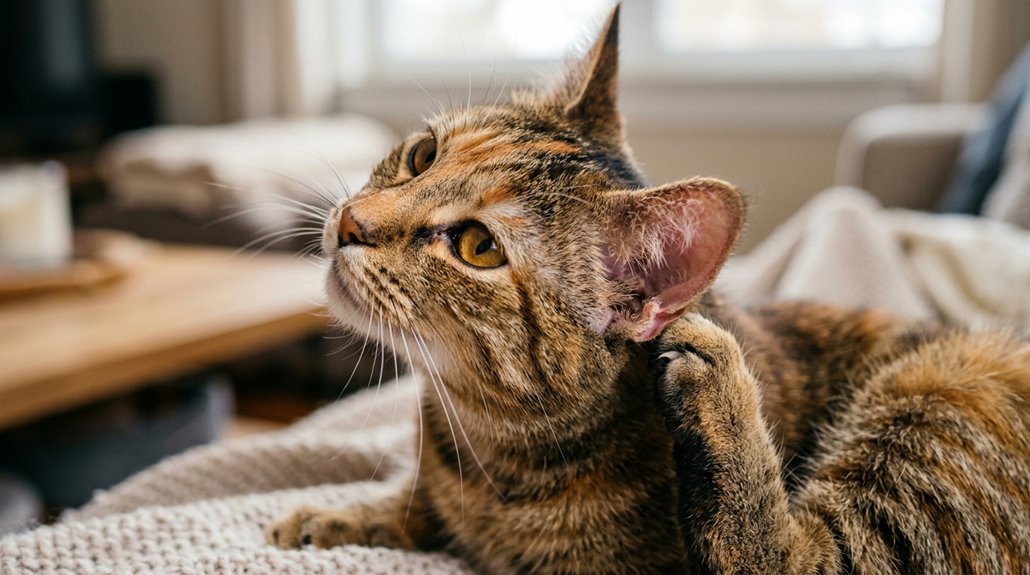
Recognizing the symptoms of ear issues in your cat is essential for prompt intervention and treatment. Prioritize ear hygiene through regular inspections, ensuring your cat’s ears are clean and pale pink. Be vigilant for signs of discomfort—excessive scratching, head shaking, or tilting may indicate irritation. Increased sensitivity to touch around the ears, unusual odors, or discharge signal possible underlying conditions like allergies, infections, or ear mites. Examine for redness, swelling, excessive wax, or scabs, which warrant further evaluation. Behavioral changes such as decreased appetite or increased irritability can also herald ear problems. Familiarize yourself with your cat’s normal ear appearance and behavior to detect early symptoms efficiently, setting the stage for timely and effective therapeutic intervention.
When to Get Professional Help for Ear Concerns
How can you discern whether your cat’s ear scratching requires professional intervention? Watch for key veterinary signs: chronic scratching, abnormal odors, and inflammation. Behavioral shifts, like decreased appetite or irritability, signal a need for expert evaluation. Occasional grooming scratches are normal, but persistent head shaking implies potential complications requiring a vet’s diagnosis.
| Sign | Description | Action |
| Chronic Scratching | Persistent and intense | Veterinary consult recommended |
| Foul Odor | Unpleasant smell from ears | Immediate veterinary evaluation |
| Redness/Swelling | Inflamed ear tissue | Seek professional diagnosis |
Familiarizing yourself with your cat’s typical ear health assists in recognizing abnormalities. If symptoms such as foul discharge or significant inflammation appear, a prompt veterinary examination prevents escalating issues.
DIY Remedies for Itchy Ears in Cats
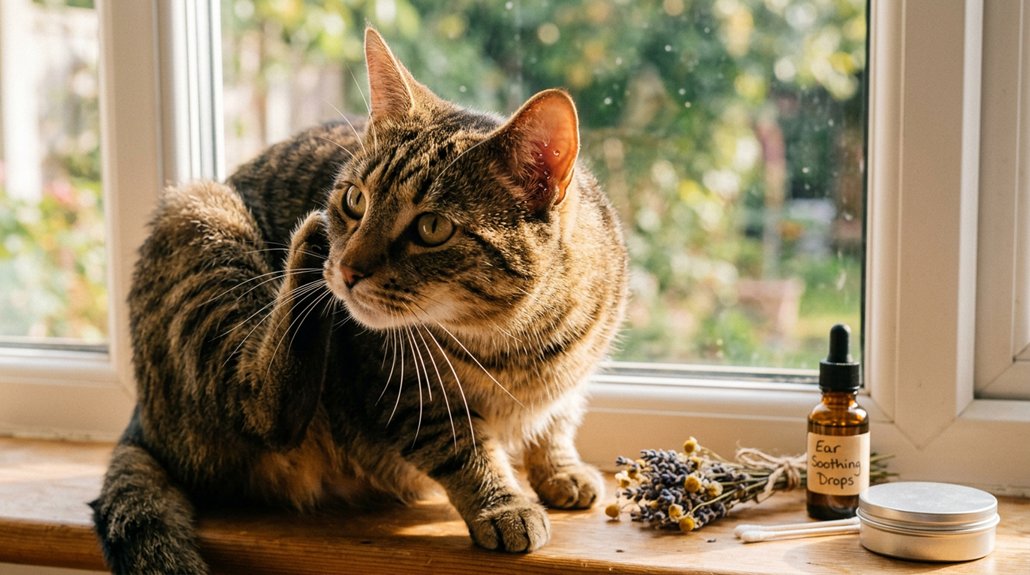
Professional attention might be needed for certain symptoms; however, if they’re ruled out, several DIY remedies can be useful for managing mild ear irritation in cats. Begin with natural ear cleaners designed specifically for pets, as they offer a balanced approach that won’t exacerbate existing issues. Use mineral oil sparingly to loosen debris—avoid deep insertion to prevent damage. Soothing herbal remedies like chamomile or calendula provide topical relief for inflamed skin around the ears; consulting a vet guarantees their safety for feline use. For a homemade rinse, combine diluted apple cider vinegar with water to aid in pH balance and deter yeast growth. Keep in mind that persistent scratching requires veterinary evaluation to rule out more complex underlying concerns.
Prevent Future Ear Issues
Although vigilance is essential in maintaining your cat’s ear health, adopting targeted preventive measures can greatly reduce the risk of ear issues. Regular ear hygiene practices, using veterinarian-recommended cleaners, are critical prevention strategies against wax buildup, debris, and subsequent infections. Confirm your cat’s vaccinations are current; a strong immune system diminishes the possibility of infection-related ear complications. Parasite control, including flea and tick treatments, shields against ear mite infestations. Facilitating a balanced diet, potentially including hypoallergenic options, can address food-related allergies contributing to ear irritation. Finally, routine veterinary check-ups allow early detection and management of emerging ear health problems. These combined tactics form an integrated approach to safeguarding your cat’s auditory health, confirming both immediate relief and long-term prevention.
Frequently Asked Questions
What to Do if My Cat Keeps Itching His Ears?
Inspect for allergy symptoms or signs of infection. Perform regular ear cleaning with vet-recommended products. If scratching persists, consult a vet for diagnostic expertise to determine the cause and receive treatment, like prescription medications or allergy control.
How Do You Tell if Your Cat Has Ear Mites or Just Dirty Ears?
To distinguish ear mites from dirty ears, analyze for black discharge and inflamed skin indicating parasite infestation. Use a microscope examination for confirmation. Ear cleaning tips include gentle removal of brown wax build-up to alleviate discomfort.
Do Cats Scratch Their Ears Without Fleas?
Yes, your cat can scratch its ears without fleas. Ear scratching often indicates conditions like allergy symptoms, infections, or ear mites. Consult a vet for diagnostic expertise and tailored treatment to alleviate your cat’s discomfort efficiently.
How Do You Treat a Cat’s Ear Infection Without Going to the Vet?
When shadows dance behind the ears, home remedies like a warm chamomile tea bag compress might help. Consider natural treatments such as coconut oil for soothing inflammation, but always monitor the cat’s response and seek expert veterinary advice.
Conclusion
In charting your cat’s ear-scratching saga, you’ve played both detective and medic. Like Sherlock deciphering Holmes-worthy mysteries, you’ve pinpointed possible culprits: mites, infections, allergies. With symptoms recognized and quick fixes deployed, your feline companion stands a better chance against disruptors of peace. Remember, though, sometimes even Watson requires a Holmes—so never hesitate to call the vet when the mystery deepens. With preventive measures, you’re crafting a story of well-being for your whiskered friend.