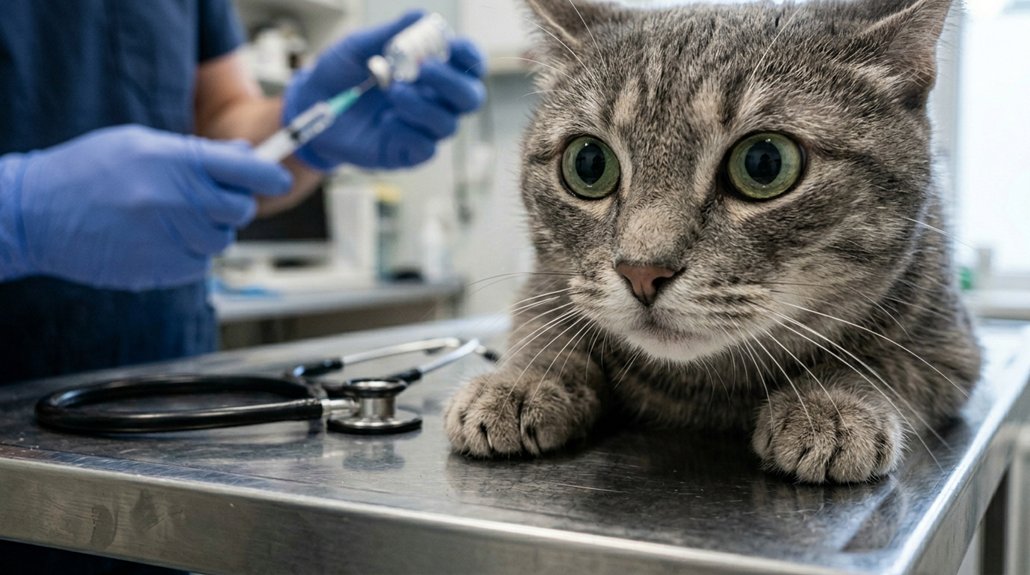
In a cat health emergency, stay calm and immediately assess your cat’s condition. Recognize signs like panting, behavioral changes, or bleeding. Contact your vet and prepare your cat for transport in a secure carrier. Apply first aid, such as pressure on wounds, and keep your cat warm but not overheated. Make certain you have an emergency kit with essentials like gauze and saline. Discover how to manage emergencies effectively and keep your cat safe by exploring further.
Key Takeaways
- Remain calm and immediately assess the cat’s condition for signs of distress or injury.
- Contact your veterinarian promptly to discuss symptoms and obtain guidance on necessary next steps.
- Use a secure carrier for safe transportation, minimizing the cat’s stress and movement.
- Provide basic first aid by applying pressure to wounds and keeping the cat calm and still.
- Prepare an emergency kit with essential supplies and have emergency contacts readily accessible.
Immediate Actions for Cat Emergencies
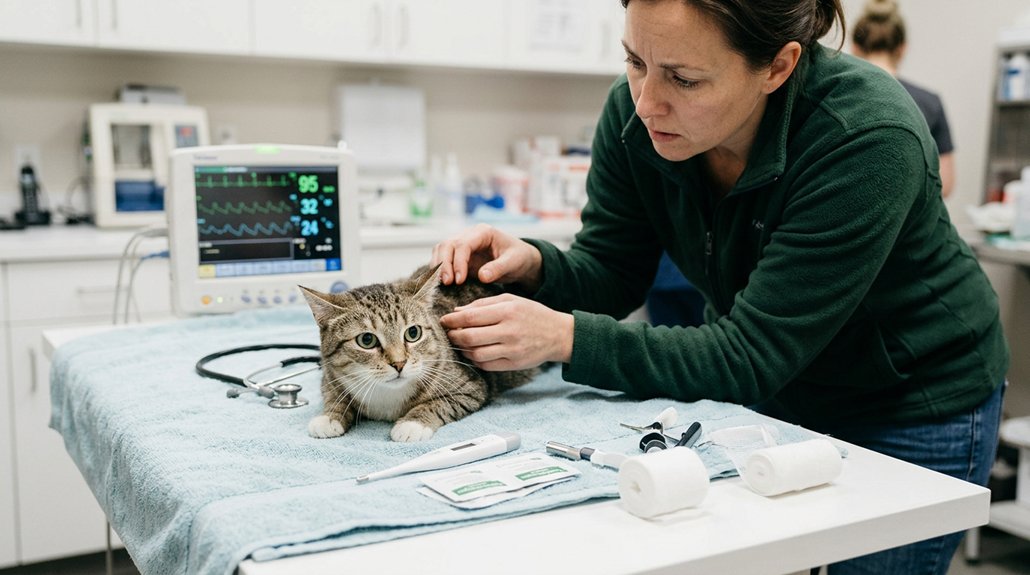
In moments of cat emergencies, taking immediate and precise actions can make a significant difference. Start by ensuring you’re calm and able to assess the cat’s situation for any visible distress or danger. Emergency preparedness involves contacting your veterinarian right away to discuss symptoms and prep for rapid arrival. Proper cat first aid includes using a secure carrier to minimize stress during transport. If there’s bleeding, apply pressure with a clean cloth or gauze for at least 10 minutes. On your way to the vet, keep the cat warm and quiet, unless you suspect heatstroke—then begin cooling measures immediately. These steps are essential for stabilizing your cat’s condition and ensuring they receive expert care as soon as possible.
Recognizing Signs of a Cat Health Emergency
Recognizing the signs of a cat health emergency is critical for timely intervention. Observe your cat’s breathing: open-mouth breathing or panting could indicate respiratory distress. Behavioral changes like cat aggression or unusual hiding suggest pain or illness requiring immediate attention. Also, monitor for rapid and shallow breathing, as it may signal shock or serious medical issues. If you notice pale mucous membranes, act swiftly to get veterinary care. Gastrointestinal distress signs, such as repeated vomiting or diarrhea, especially if bloody, necessitate urgent evaluation. Similarly, excessive salivation or foul-smelling breath might point to dental issues or poisoning. Be vigilant; prompt action can make all the difference in these critical situations. Always consult a veterinarian if any concerning symptoms arise.
Quick First Aid Tips for Cat Emergencies
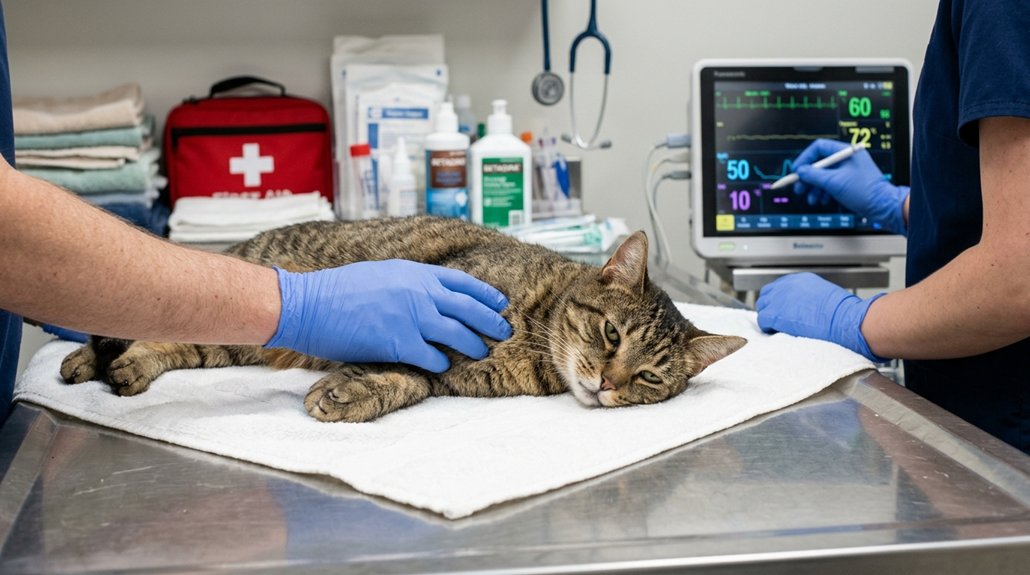
When faced with a cat health emergency, your immediate response can be essential. Immediately contact your veterinarian to detail the emergency and obtain next steps. For common cat injuries, keeping your pet calm and minimizing movement is critical. If it’s bleeding, apply direct pressure with a clean cloth or gauze for at least 10 minutes without lifting it to reduce blood loss. Should burns occur, cool the burn with running water and seek prompt veterinary care, avoiding ointments. In choking situations, don’t tilt their head back; instead, support their body, carefully inspect for obstructions, and call your emergency contact. Always prioritize getting professional guidance to avoid exacerbating the injury. Every minute counts for your cat’s health and safety.
Safely Transporting Your Cat to the Veterinarian
Effective transportation to the veterinarian during emergencies can greatly impact your cat’s well-being. Use a sturdy cat carrier or cardboard box with adequate ventilation. Make certain it’s secure to prevent escape. To facilitate stress reduction, gently wrap your cat in a blanket, leaving its airway unobstructed, before placing it inside the carrier. This helps minimize movement and anxiety. Handle any injured cat with care, supporting its chest and hind legs to prevent further injury. Cover the carrier with a towel or blanket to create a calm, darkened environment, easing your cat’s stress during the journey. Contact the veterinarian ahead, informing them of your estimated arrival and the situation, so they can prepare for your cat’s specific needs upon arrival.
Seek Professional Veterinary Care Immediately
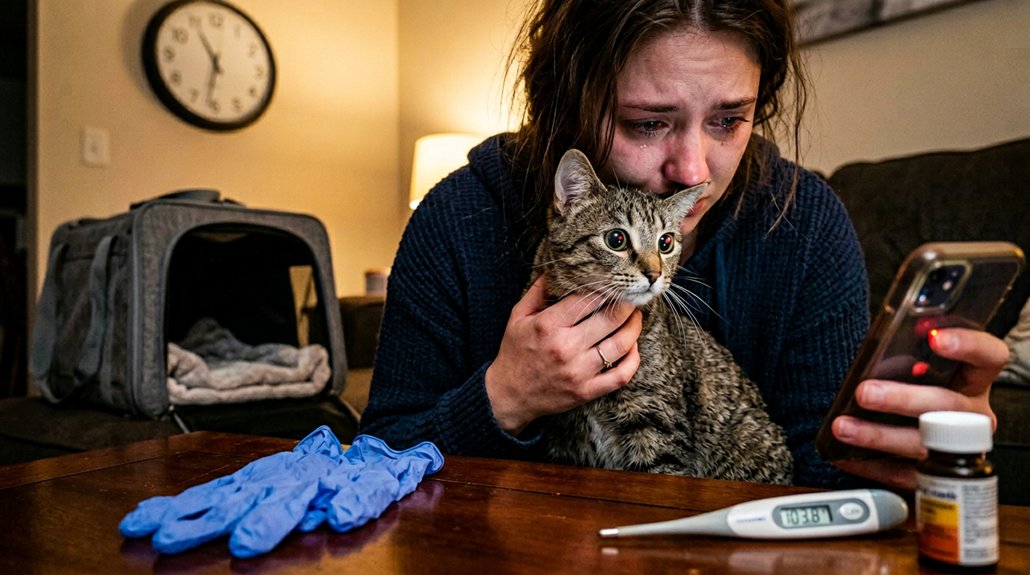
When faced with potential emergency symptoms such as difficulty breathing or sudden lethargy in your cat, it’s crucial to contact a veterinarian right away to guarantee timely and effective intervention. Prompt professional evaluation not only aids in accurate diagnosis but also greatly improves the prognosis by allowing rapid initiation of appropriate treatments. Remember, accurate symptom reporting to your vet can expedite effective care and should always supersede attempts at self-diagnosis or treatment.
Recognizing Emergency Symptoms
Recognizing a potential health emergency in your cat is essential, as prompt action can be the difference between life and death. Being aware of emergency symptoms linked to common illnesses guarantees you’re prepared to follow emergency protocols. If your cat is excessively drooling, struggling to breathe, or displaying obvious pain, these signs demand immediate veterinary care. Persistent vomiting, diarrhea, and seizures are crucial symptoms indicating serious underlying issues. Changes in behavior, like hiding or aggression, often suggest distress or illness. Bleeding, especially from unknown sources, calls for urgent intervention. Furthermore, if your cat is breathing with an open mouth or having difficulty, treat it as a medical emergency. Act swiftly to safeguard your cat’s health.
Importance of Timely Action
In the domain of feline health emergencies, acting swiftly to seek professional veterinary care can greatly influence your cat’s survival and recovery prospects. Timely action is vital; some conditions like urinary blockages or severe trauma deteriorate rapidly, turning into life-threatening situations. Early intervention not only prevents complications but also aids in effective stress management and emergency preparedness. Recognizing important symptoms such as persistent vomiting, difficulty breathing, or severe bleeding, and seeking immediate care can prevent long-term damage.
| Emergency Scenario | Important Action |
|---|---|
| Urinary Blockage | Immediate veterinary intervention required |
| Severe Trauma | Prompt professional evaluation necessary |
| Persistent Vomiting | Seek emergency care at once |
| Difficulty Breathing | Urgent veterinary assistance is essential |
| Severe Bleeding | Immediate examination needed |
Prompt care appreciably boosts survival and recovery rates, minimizing future health issues.
Benefits of Professional Diagnosis
While it may seem tempting to delay a vet visit in hopes symptoms will pass, doing so can jeopardize your cat’s health. Relying on veterinary expertise guarantees accurate diagnosis through vital diagnostic tests. Early intervention can prevent minor issues from becoming severe or chronic. Here’s why professional care is essential:
- Advanced Diagnostic Tests: Blood work and imaging reveal hidden problems.
- Prevention of Escalation: Swift action improves long-term health outcomes.
- Specialized Knowledge: Vets possess equipment and skills for effective treatments.
- Differential Diagnosis: Conditions mimicking others, like urinary blockages or poisoning, require expert evaluation.
- Avoidance of Self-Diagnosis Risks: Trusting professionals reduces delayed or improper treatment.
Trust qualified veterinarians to safeguard your cat’s health effectively and promptly.
Prevent Cat Emergencies at Home
How can you guarantee your feline friend is safe from unexpected hazards at home? Start by removing toxic plants like lilies and securing cleaning supplies and antifreeze. Regular inspections of your cat’s environment for choking hazards—small objects or toys—are essential. Ascertain that all windows and balconies are secure; use screens to protect your cat from falls, particularly in high-rise living spaces. Create a designated safe space where your cat can retreat during stressful periods. This area should include comfortable bedding and familiar toys to alleviate anxiety. Finally, keep emergency contacts, including your veterinarian and local animal emergency hospitals, prominently displayed for quick access during health crises. These proactive steps can effectively minimize potential dangers, assuring your cat’s safety at home.
Prepare a Cat Emergency Kit
To further safeguard your cat from unexpected health issues, assembling an emergency kit is vital. This kit should contain specific items that cater to urgent feline needs. Essential components include:
- Sterile gauze, bandages, adhesive tape, and scissors for managing immediate minor injuries.
- Digital thermometer for monitoring temperature changes, essential in identifying a potential health crisis.
- Emergency contact list including numbers for your veterinarian and local animal hospitals for rapid response during dire situations.
- Sterile saline solution to flush out wounds or rinse your cat’s eyes from irritants.
- Waterproof envelope containing important medical records, vaccination history, and medication details for easy access.
Additionally, incorporate shelter supplies and food storage solutions into your kit to guarantee safety and stability during emergencies.
Frequently Asked Questions
What Is the 3-3-3 Rule for Cats?
The 3-3-3 rule involves cat behavior adjustment over three days, weeks, and months. Emergency preparedness in these phases requires patience, understanding their stress responses, ensuring safety, providing essentials, and consulting a vet as trust builds.
What Are the Signs That a Cat Is About to Pass Away?
Think of it as a Shakespearean tragedy, where life’s final act unfolds. End of life signs, like cat pain indicators, include labored breathing, restlessness, and disheveled appearance. Immediate attention’s essential if unresponsive, urination issues, or severe vomiting arise.
What Constitutes an Emergency for a Cat?
Emergencies include cat behavior changes like sudden aggression or lethargy, indicating an urgent care need. Severe bleeding, respiratory distress, or ingesting toxic substances also require immediate veterinary intervention to prevent severe health consequences or life-threatening conditions.
What Is a Silent Killer for Cats?
A silent killer for cats is often a urinary blockage or feline hypertension. You should prioritize observing behavioral changes, such as frequent, unproductive litter box visits, to detect these life-threatening conditions and seek prompt veterinary care.
Conclusion
In a cat health emergency, rapid response can greatly impact outcomes. Did you know that over 90% of pet emergencies occur at home? Recognizing urgent signs, applying quick first aid, and safely transporting your cat could be lifesaving. Always seek professional veterinary care immediately. Preventing emergencies with regular check-ups and having a well-prepared emergency kit on hand guarantees you’re ready for any situation. Your proactive approach can make all the difference in your cat’s health.