Preparing for unexpected cat health issues requires attentiveness and readiness. Recognize emergencies like breathing difficulties and urinary problems. Build a first aid kit with essentials: gauze, bandages, and a thermometer. Keep emergency vet contacts handy and note distress signals like appetite shifts or unusual behavior. Understand urgent response plans focusing on swift transportation. Create a comforting recovery space post-emergency. Your cat’s well-being hinges on your proactive efforts, and there’s more to reveal in ensuring their health and safety.
Key Takeaways
- Assemble a cat first aid kit with essential items like gauze, adhesive bandages, and a digital thermometer.
- Maintain an updated list of emergency contacts, including vet and local emergency clinics, for swift access.
- Familiarize yourself with signs of cat distress, like changes in behavior or appetite, for early detection of health issues.
- Plan emergency transportation by knowing quick routes to clinics and keeping a transport carrier easily accessible.
- Schedule regular follow-up appointments and adhere to medication schedules post-emergency for comprehensive recovery management.
Understanding Common Cat Health Emergencies

When it comes to feline companions, understanding common health emergencies is essential for their wellbeing. Cat respiratory issues can manifest through signs like open-mouth breathing, rapid or shallow breaths, and bluish or pale gums. These symptoms demand immediate veterinary attention to avoid respiratory failure. Equally critical are feline urinary emergencies, primarily in male cats, which present as frequent but unproductive litter box visits and straining. Without swift treatment, these blockages can become life-threatening. Recognize additional serious emergencies such as sudden collapse, often linked to conditions like heart disease, anemia, or stroke, and persistent vomiting or diarrhea that may signal pancreatitis. Each of these situations requires vet evaluation, ensuring your cat receives the necessary care, preventing further complications, and safeguarding their health.
Building an Essential Cat First Aid Kit
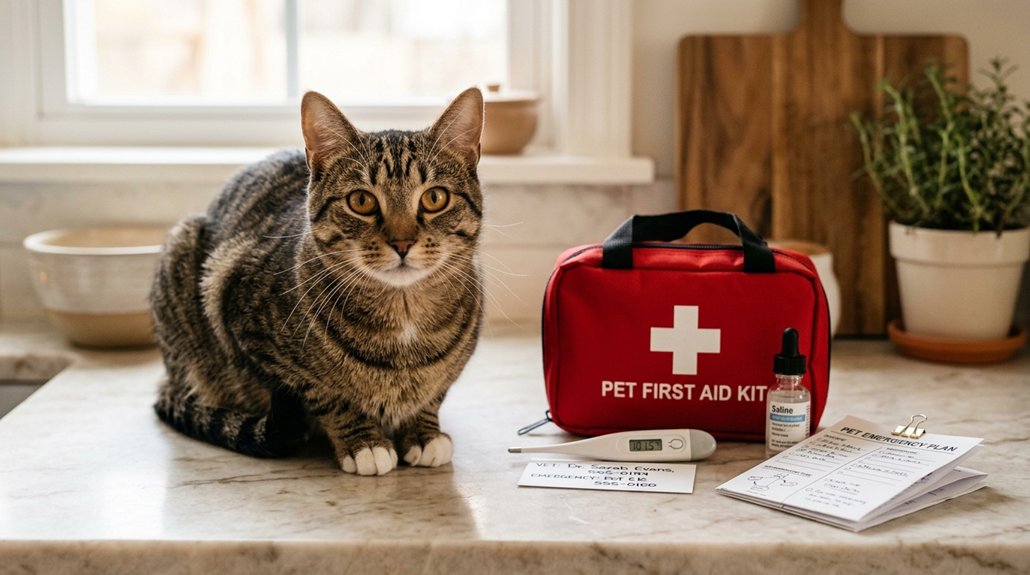
When building an essential cat first aid kit, it’s vital to include items like gauze, adhesive bandages, and a digital thermometer for swift health assessments. Don’t forget to keep a list of your vet and emergency contact numbers in the kit for immediate access during crises. Remember, having tools like an eyedropper for administering fluids and hydrogen peroxide under vet supervision guarantees you’re prepared to care for your feline friend when emergencies strike.
Essential First Aid Supplies
In the face of potential feline health emergencies, it’s vital to have an essential cat first aid kit assembled with precision and care. Start with preventive care essentials: gauze and adhesive bandages to manage minor wounds effectively. Proper first aid techniques are indispensable, and a digital thermometer will help you check your cat’s rectal temperature, guaranteeing it stays within the normal range of 100.5°F to 102.5°F. Keep hydrogen peroxide for wound cleaning, but use it under veterinary guidance. An eyedropper can be a lifesaver, allowing you to administer medication or fluids when your cat can’t drink on its own. Your thorough preparation guarantees you’re equipped to handle unexpected situations with compassion and accuracy, alleviating both your cat’s distress and your peace of mind.
Emergency Contact Information
Maneuvering a feline health emergency is a formidable prospect, so having a well-organized emergency contact list is essential for swift action. Start with your veterinarian’s details—address, phone number, and emergency hours—ensuring you’re always prepared to reach them when every second counts. Incorporate emergency protocols by including contacts for local animal poison control and nearby veterinary emergency clinics. This preparedness allows you to act decisively, allaying panic when confronted with sudden issues. Equip your first aid kit with tools such as gauze, bandages, and a digital thermometer, all while routinely checking these items are functional and up-to-date. Familiarizing yourself with common health emergencies enhances your effectiveness. Such preparedness safeguards your feline’s well-being in unpredictable scenarios.
Crafting an Urgent Cat Emergency Response Plan
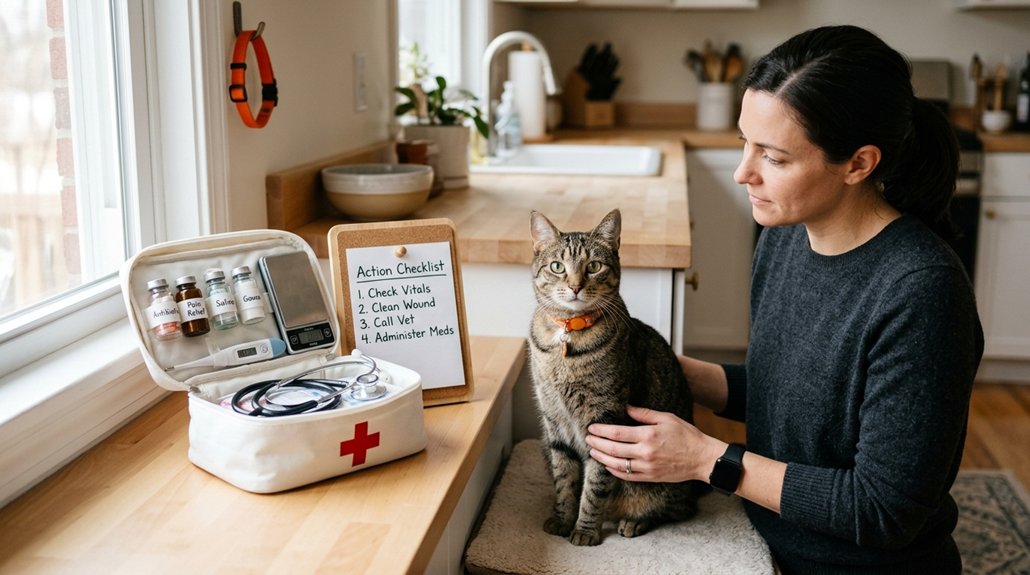
Facing an urgent cat health crisis often brings stress and urgency, so crafting a thorough emergency response plan is crucial for any cat owner. An effective plan minimizes chaos and guarantees your cat’s swift care. Here’s how to prepare:
- Well-stocked First Aid Kit: Have bandages, gauze, a digital thermometer, and vet contact numbers ready.
- Transporting Cats: Keep a sturdy carrier easily accessible for quick and safe transportation.
- Family Communication: Discuss your plan with family members to ensure everyone knows how to act confidently.
- Emergency Contacts: Regularly update your list with your vet’s and local emergency clinic’s details.
Spotting Subtle Cat Distress Signs
How can you tell if your cat is in distress when they’re masters of subtlety? Behavior observation is key. Notice if your cat is hiding more often; this could be an indicator of stress or discomfort. Changes in grooming habits, such as over-grooming or not grooming at all, can be stress indicators or signs of underlying health issues. Keep an eye on their eating habits too—reduced appetite or sudden changes call for attention. An unkempt coat, with matting or lack of shine, might signal distress or illness. Altered vocalizations or sudden withdrawal are subtle cues that shouldn’t be ignored. Detecting these signs early can lead to timely intervention and improve the outcome of your feline friend’s health concerns.
Easily Check Your Cat’s Vital Signs at Home
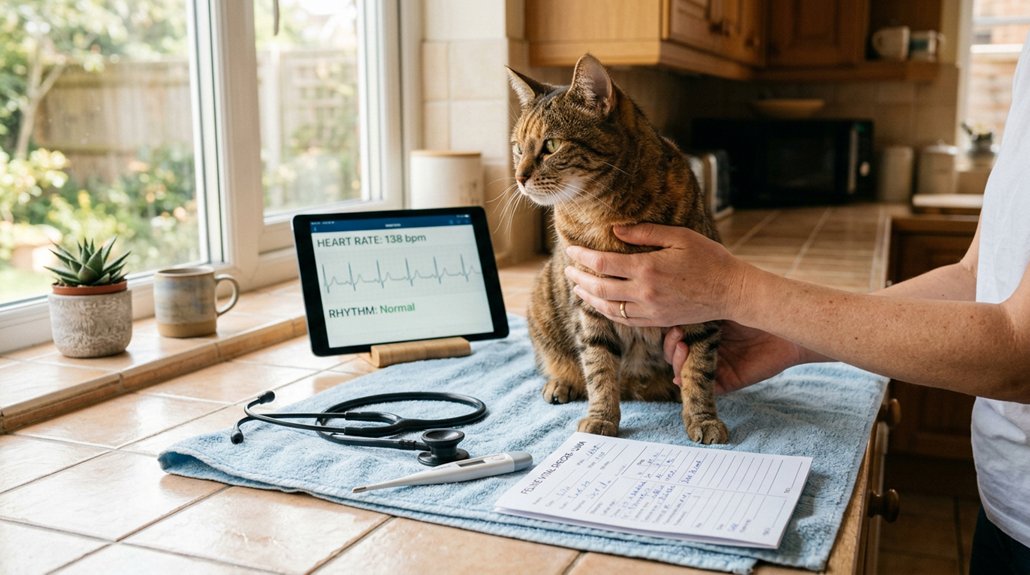
Equipping yourself with the knowledge and tools to check your cat’s essential signs at home is fundamental for early detection of health issues. By monitoring heart rate, respiratory rate, temperature, hydration, and capillary refill time, you can recognize significant symptoms and seek prompt veterinary care if needed. Remember, understanding these signs not only provides peace of mind but guarantees your feline companion’s well-being.
Essential Tools for Monitoring
When caring for your cat’s well-being, it’s important to proactively monitor their vital signs from the comfort of your home. Regularly checking these key indicators helps you detect early signs of health issues and decide when to consult a vet. Here’s how you can efficiently keep track of your cat’s health:
- Cat thermometers: Measure your cat’s temperature with a digital thermometer; normal is 100.5°F to 102.5°F. Deviations may signal a need for professional care.
- Heart rate: Count your cat’s beats per minute (normal is 140 to 220). Significant changes are concerning.
- Breathing patterns: Monitor respiration rates; 20 to 30 breaths per minute is typical.
- Weight changes: Track your cat’s weight monthly. A 10% fluctuation suggests a vet visit.
Empower yourself with these tools to guarantee your cat’s health.
Recognizing Critical Symptoms
As you diligently monitor your cat’s essential signs, it’s important to also be attentive to potential indicators of more serious health concerns. Check for vital health indicators like pulse, breathing rate, and fever using precise methods. For your cat’s pulse, gently feel the femoral artery, expecting 140-220 beats per minute. Breathing should remain between 20-30 breaths per minute when at rest. Use a digital thermometer to watch for fevers above 102.5°F, which could signal illness. Pay close attention to feline distress signals like skin pinch tests for dehydration; slow skin return warns of possible dehydration. Also, notice subtle cues such as decreased appetite or lethargy; these can quickly escalate into serious issues demanding veterinary examination. Your vigilance is essential for ensuring your furry companion’s well-being.
Efficiently Accessing Emergency Vet Care
Maneuvering an emergency with your feline friend can be stressful, but taking proactive steps guarantees you can efficiently access emergency vet care when needed. Here’s a precise approach to verify you’re always prepared:
- Create a Go-To List: Establish a list of local emergency veterinary clinics, complete with addresses and contact numbers, as part of your emergency preparedness plan.
- Organized Records: Keep your cat’s medical records, vaccination history, and relevant health information easily accessible to facilitate smooth visiting experiences.
- 24/7 Facility Awareness: Familiarize yourself with the location of 24/7 veterinary care facilities for swift response in after-hours emergencies.
- Transportation Ready: Practice a reliable transportation method like driving, assuring swift and secure journeys when accessing veterinary services.
These steps not only expedite responses but also enhance your confidence in emergencies.
Managing Your Cat’s Recovery After Emergencies
While emergencies can be intimidating, managing your cat’s recovery is just as essential and demands meticulous attention to detail. Post recovery care begins with strict adherence to medication schedules prescribed by your vet. Consult them about dietary changes to guarantee your cat receives the nutrients needed for healing. Create a quiet recovery area where your cat can rest peacefully, minimizing physical activity to prevent setbacks. Include comforting items alongside easy access to food, water, and a litter box, fostering a stress-free environment. Rehabilitation techniques might involve gradual reintroduction to normal activities. Guarantee regular follow-up appointments to monitor progress and adjust care plans as needed, offering your cat the best chance for a full, healthy recovery.
Frequently Asked Questions
What Is the 3-3-3 Rule for Cats?
The 3-3-3 rule guides you through your cat’s adjustment phases: three days of stress, three weeks of discovery, and three months of comfort. Watch for behavior changes and health warning signs that need your attention.
What Is the 3:2:1 Rule in Cats?
The 3:2:1 rule guarantees your cat’s health through precise hydration: 3 ounces of water per every 2 ounces of food, plus 1 more ounce for activity. This preventive care strategy supports urinary and kidney health, preventing dehydration-related issues.
What Is the #1 Cause of Death in Cats?
Cancer, the top feline reaper, guarantees you’ve lots of quality time with emergency veterinary care. Ignoring those oh-so-common cat ailments like lumps or unexpected lethargy could result in frequent vet visits. Stay vigilant for early detection.
What Color Cat Is Least Desired?
You’re likely to find that black cats are least desired due to cat color preferences influenced by superstition. Feline adoption trends show they’re often overlooked, so shelters promote appreciation days to combat the negative perceptions.
Conclusion
Think of your cat’s health like sailing a ship. Just as you wouldn’t set out on a voyage without a life raft, you shouldn’t care for your cat without preparation. A friend once avoided disaster by having an emergency vet on speed dial, much like knowing the stars guide sailors home. By preparing for emergencies, checking essential signs, and accessing vet care efficiently, you become your pet’s steadfast captain, ensuring smooth sailing through life’s unexpected storms.