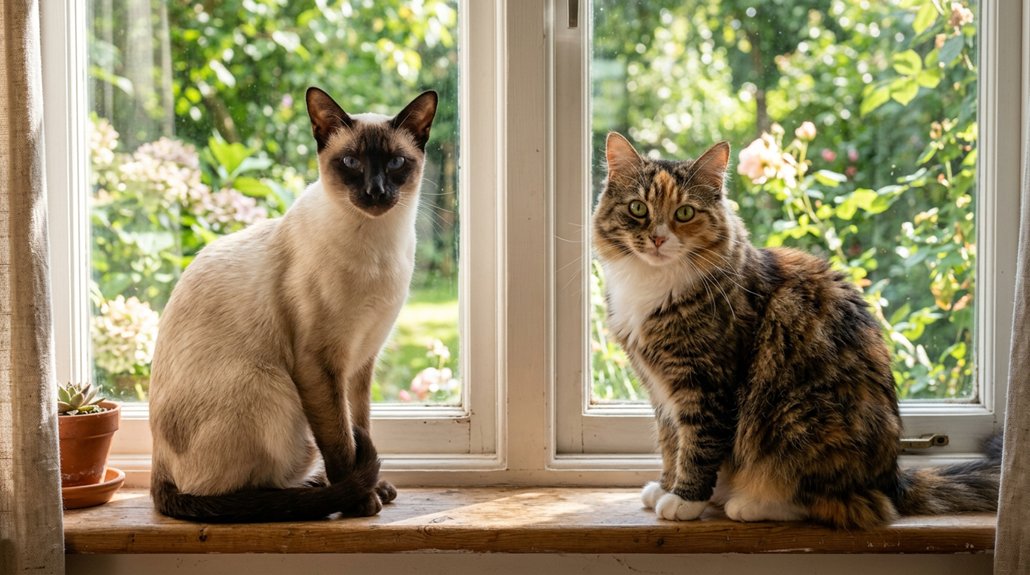
When choosing between purebred and mixed breed cats, consider your lifestyle and priorities. Purebreds offer predictability in traits and temperament, but often come with higher costs and potential health issues. Mixed breeds, while less predictable, provide unique personalities, fewer genetic health risks, and are usually more affordable. Adopting a mixed breed often creates strong bonds through rescue. Weigh the traits, health aspects, costs, and compatibility to find your perfect feline companion. Explore further to make an informed decision.
Key Takeaways
- Purebred cats offer predictable traits and temperaments, but are prone to hereditary health issues.
- Mixed breed cats tend to be healthier due to a broader genetic pool and face fewer breed-specific problems.
- Purebred cats generally cost more, while mixed breeds are affordable and accessible, often found in shelters.
- Both cat types require careful health management and regular veterinary care for overall well-being.
- The right choice depends on family needs, lifestyle, and the individual cat’s personality.
Traits and Predictability in Purebred Cats
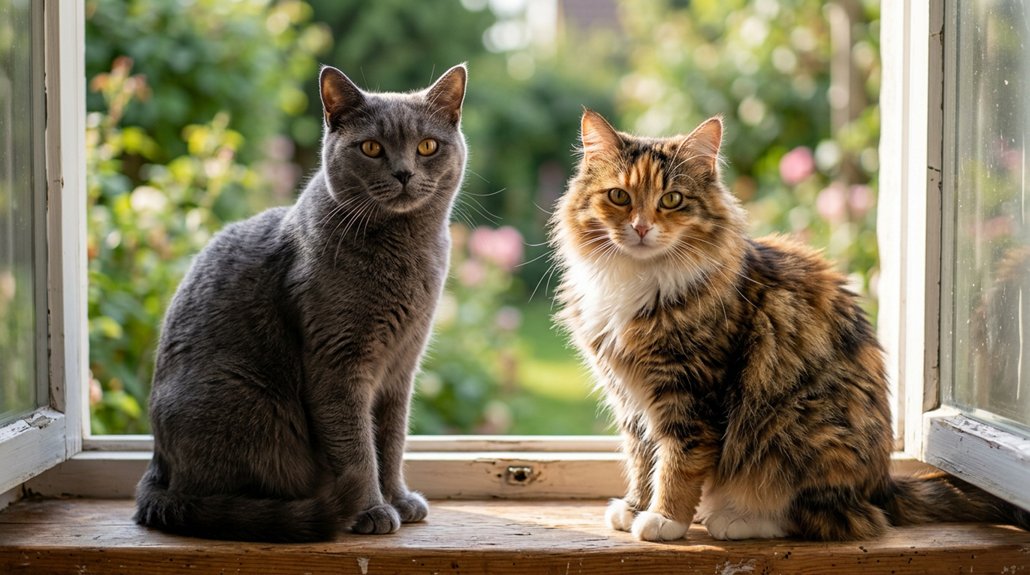
When considering purebred cats, it’s important to recognize their predictable traits, which are a result of extensive selective breeding. This process guarantees breed standards are met, maintaining consistency in physical characteristics and temperament. The Cat Fanciers’ Association acknowledges 45 breeds, each with distinct traits that prospective owners can rely on. Knowing the personality consistency of breeds like Ragdolls or Maine Coons helps you select a cat that fits your lifestyle. Purebred cats come with documented pedigrees, enabling you to assess inherited traits and potential health conditions, guaranteeing informed decisions. However, this predictability may also mean a higher likelihood of hereditary health issues, necessitating careful consideration when choosing a purebred companion. Understanding these nuances helps in choosing wisely.
Why You Might Love a Mixed Breed Cat
There’s an undeniable charm to mixed breed cats that appeals to many prospective pet owners. These cats offer unique personalities, showcasing a broad spectrum of traits and characteristics not often found in their purebred counterparts. You might find their unpredictability to be a delightful surprise, as each mixed breed cat develops distinct temperaments and behaviors. In addition, adopting from a shelter provides substantial benefits. Mixed breed cats are more readily available in such environments, making them a more accessible and affordable choice. This often fosters a stronger emotional bond, as rescuing a pet can create a deep sense of connection. Moreover, mixed breeds typically encounter fewer breed-specific health issues, leading to enhanced longevity and wellbeing, offering peace of mind for owners.
Health Comparisons Between Purebred and Mixed Breed Cats
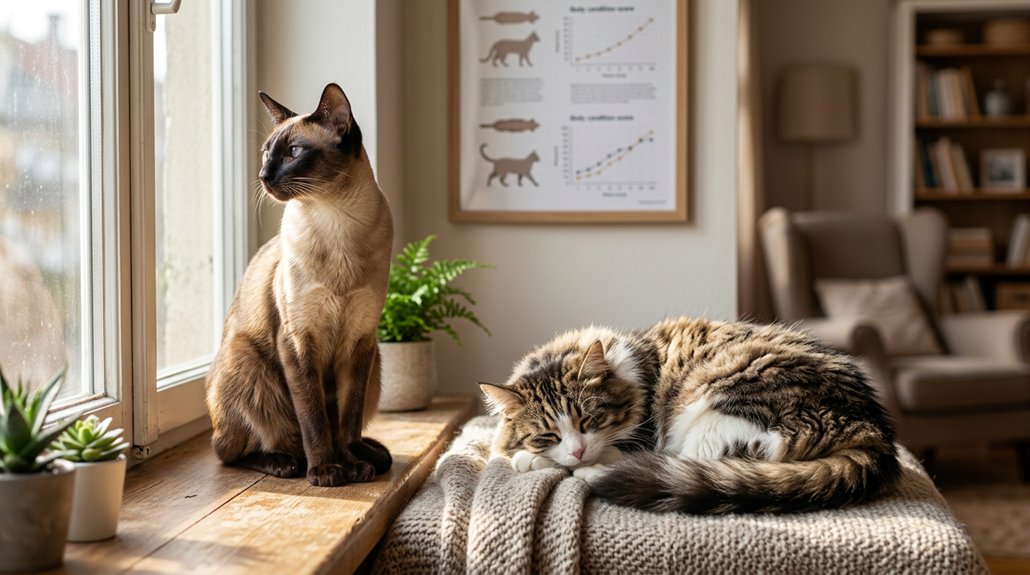
Having explored the appeal of mixed breed cats, it’s important to contemplate how health factors into choosing between purebred and mixed breed cats. Purebred cats often face genetic predispositions to certain health issues due to selective breeding practices. Health screenings are essential for these cats, as genetic testing can reveal breed-related disorders early. In contrast, mixed breed cats benefit from a wider genetic pool, which generally reduces the risk of hereditary problems. However, they aren’t entirely free from health issues, especially with their diverse and often unknown lineage. Ultimately, the health of both purebred and mixed breed cats hinges on responsible breeding practices and diligent veterinary care, underscoring the importance of considering overall health management rather than solely breed.
Cost and Availability Insights
Whether you’re considering the costs or availability, it’s clear that there are distinct differences between purebred and mixed breed cats. Price differences are significant; purebred cats can cost several hundred to a thousand dollars based on breed and breeder reputation. By contrast, mixed breeds are generally more affordable. Adoption options for mixed breeds are plentiful, often found in shelters at much lower fees or even free. This makes mixed breeds a more accessible choice financially. Purebred cats rarely end up in shelters and are typically obtained directly through breeders, limiting adoption availability. Despite higher costs, purebred cats don’t necessarily offer better health or temperament. Mixed breeds might provide equal or superior companionship, emphasizing reduced financial commitment without sacrificing quality of life.
Choosing the Right Cat for Your Family
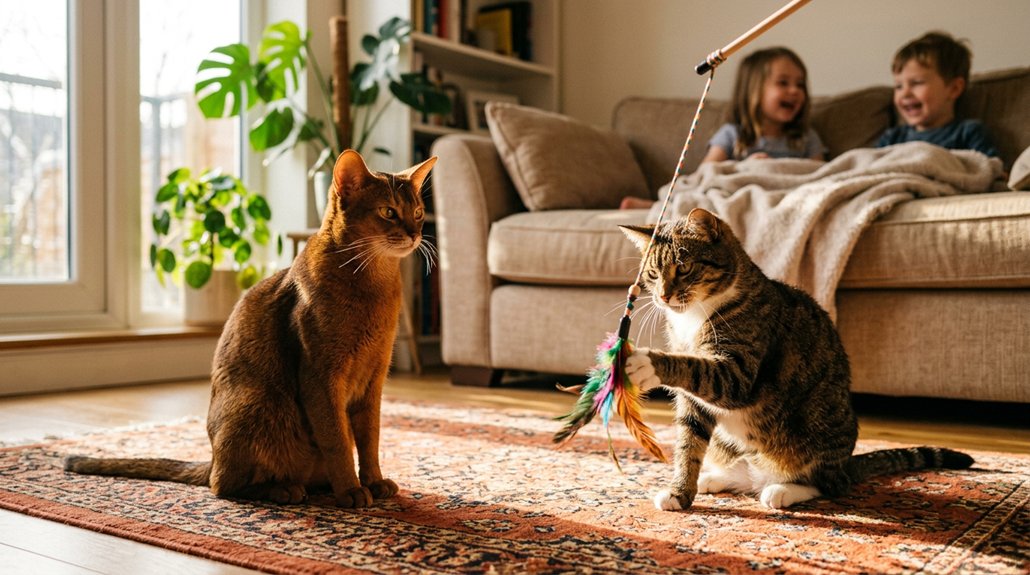
When deciding on a family cat, you’ll need to weigh several factors beyond cost and availability. Consider how your family dynamics and lifestyle compatibility align with either a purebred or mixed-breed cat. Purebreds, like calm Ragdolls or energetic Bengals, offer predictable traits through selective breeding. This can enhance compatibility with your family’s pace and preferences. Mixed-breed cats, often found in shelters, provide genetic diversity and can adapt to various family environments while supporting animal rescue efforts. Remember, the individual personality of a cat often outweighs its pedigree. Emotional connections can flourish with both types, creating loving bonds. Ultimately, understanding your household’s unique needs helps in selecting a cat that fits seamlessly into your life, ensuring harmonious companionship.
Frequently Asked Questions
Should I Get a Purebred or Mixed-Breed Cat?
You should consider both health considerations and temperament traits when deciding. Purebreds offer predictable behavior but can have genetic health issues. Mixed-breeds often boast better health diversity. Choose based on how a cat fits into your lifestyle.
What Is the 3-3-3 Rule for Cats?
The 3-3-3 rule is your new cat adoption bible! Cats transform dramatically in three days, weeks, and months. Knowing this aids your patience and understanding, regardless of breed characteristics, ensuring a smooth feline adjustment in your home.
What Color Cat Is Least Desired?
Black cats are often least desired due to enduring superstitions and cat color psychology. Rare cat colors like gray can also experience less demand compared to popular tabby patterns, despite no evidence suggesting any behavioral differences.
What Annoys Cats the Most?
Imagine a leaf in a storm. Cats despise loud noises, sudden movements, strong odors, and unfamiliar environments, causing stress and fear akin to blowing winds upset a tranquil setting, emphasizing their need for calm and consistency.
Conclusion
When deciding between a purebred and a mixed breed cat, remember that each feline has its own charm and quirks. Purebreds offer predictability in traits but can sometimes come with health nuances. Mixed breeds may have a more mysterious lineage, often leading to hardier health and unique personalities. Consider your lifestyle and budget when making your choice. Ultimately, the best cat for your family is the one that fills your home with joy and companionship.