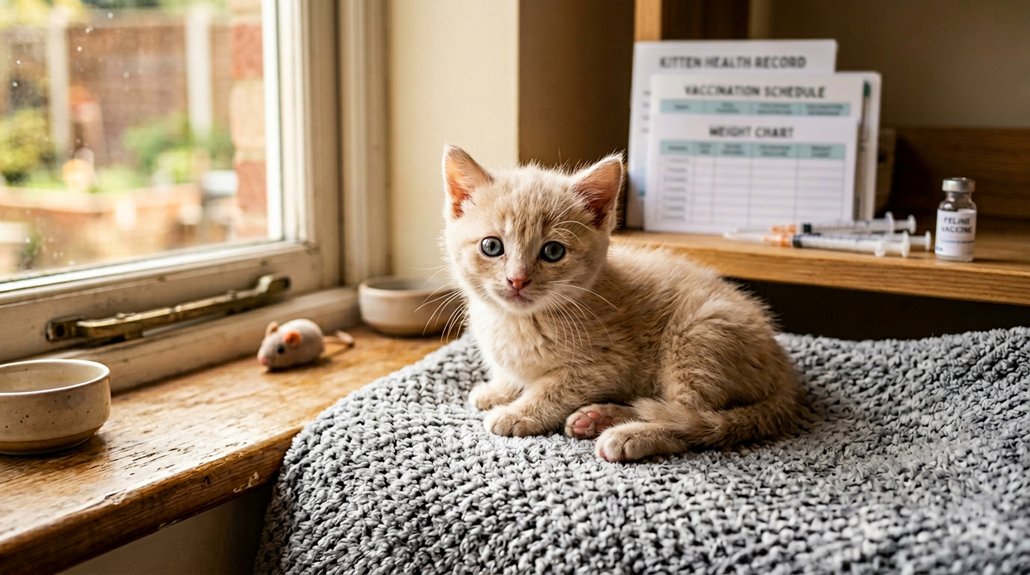
In your kitten’s first year, prioritize safety by securing hazards and creating a cozy space. Schedule a vet visit early, follow vaccination timelines, and plan for routine check-ups. Feed specially formulated kitten food, moving to adult food as they grow. Socialize broadly, using positive reinforcement and consistent routines. Implement structured play and monitor health signs like appetite and energy level changes. This foundation guarantees a thriving kitten, with further insights available for thorough care.
Key Takeaways
- Schedule initial veterinary visit within the first week and follow vaccination schedules starting at 6-8 weeks.
- Provide specially formulated kitten food with higher protein content, feeding three to four small meals daily.
- Implement year-round parasite prevention to protect against internal and external threats.
- Ensure regular socialization and behavioral training with positive reinforcement and consistent routines.
- Monitor health regularly for signs of illness, focusing on early detection and preventive care.
Ensuring a Safe Home for Your Kitten
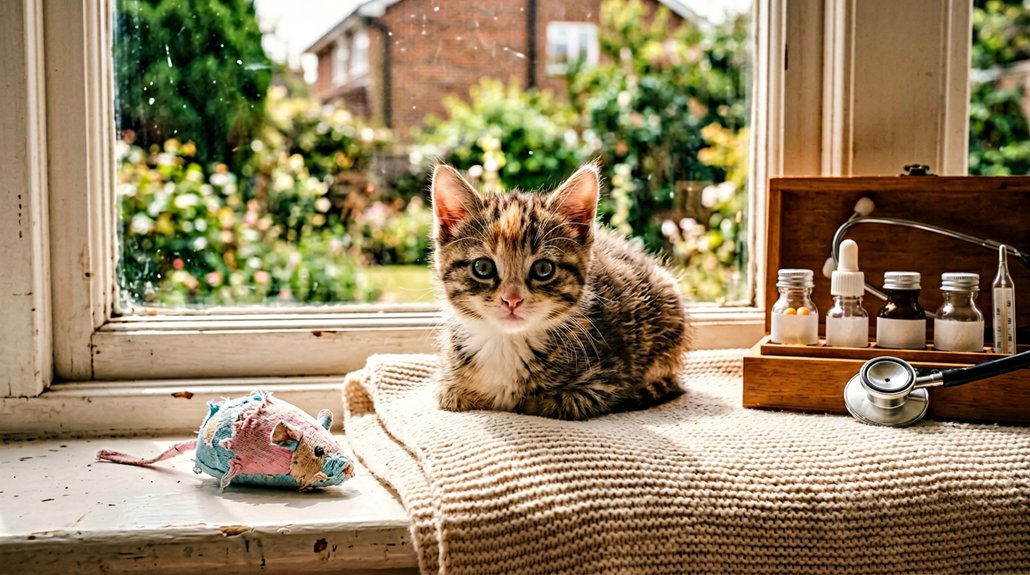
Securing your home for a new kitten involves implementing several essential steps to guarantee their safety. Begin with kitten proofing tips like securing electrical cords and removing small objects to prevent accidents. Make sure hazardous materials and fragile items are out of reach. Install childproof latches on cabinets containing cleaning supplies or medications to protect inquisitive kittens. A designated safe space should be established, complete with a cozy resting area, food and water bowls, a litter box, and safe toys. This environment allows for comfort and exploration. Removing toxic plants is vital; refer to the ASPCA’s guide to identify harmful species. Finally, provide vertical spaces such as cat trees or shelves, promoting safe climbing and exploration while engaging their curiosity.
Vet Care Essentials: Vaccinations and Check-Ups
After transforming your home into a safe haven, it’s essential to set the foundation for your kitten’s long-term health through proper veterinary care. Begin with scheduling your kitten’s first veterinary visit within their initial week at home. This is important for establishing a thorough health plan and evaluating overall wellness. Follow the kitten vaccination schedules diligently; vaccinations should start between 6-8 weeks with core vaccines like FVRCP and rabies. Booster shots every 2-4 weeks are necessary until your kitten is around 16 weeks to guarantee disease protection. Depending on lifestyle and local disease risks, additional vaccines such as FeLV might be advised. Routine health check-ups at least annually are crucial to monitor your kitten’s health and discuss future care plans.
Optimal Feeding Plans From Kitten to Cat
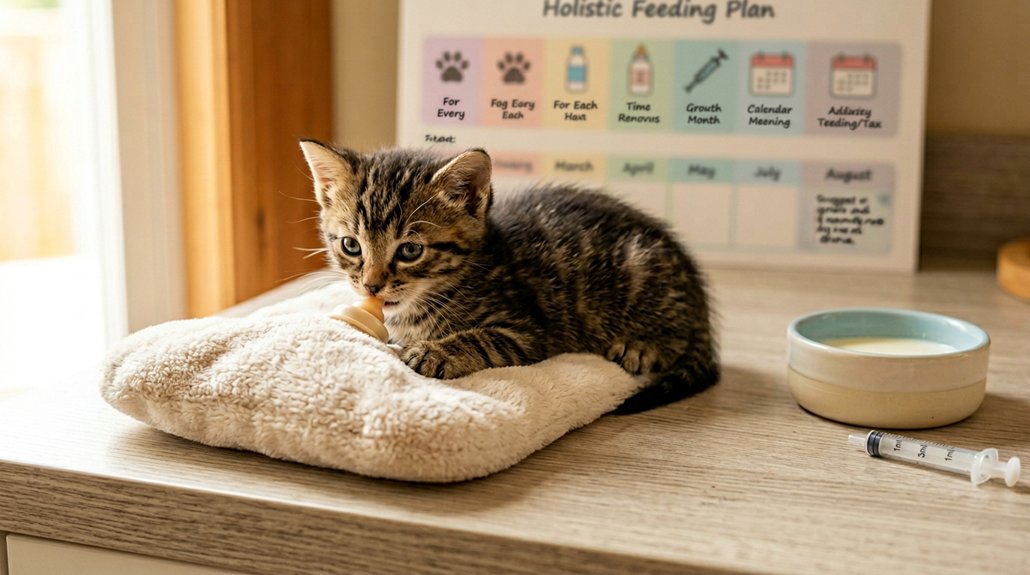
To guarantee your kitten receives ideal nutrition, it’s important to implement a well-structured feeding plan as they grow into adulthood. Kittens have distinct nutrient requirements; hence, selecting specially formulated food with higher protein and calorie content is crucial. During the initial six months, maintain a kitten meal frequency of three to four small meals daily. This supports their rapid growth and development. As they mature, shift to two meals per day. Always confirm the food meets AAFCO nutritional standards for a balanced diet. Providing both wet and dry food is beneficial: wet food aids hydration and ease of consumption, while dry food supports dental health. Around one year, gradually introduce adult cat food to maintain nutritional adequacy.
Socialization and Behavioral Training for Confidence
During the critical socialization period from 2 to 7 weeks, it’s essential to introduce your kitten to positive interactions that will build their adaptability and confidence. Consistent handling and exposure to diverse environments and stimuli can greatly improve their ability to manage new experiences as they grow. Implementing play therapy and positive reinforcement not only helps in energy management and proper behavior development but also strengthens your bond with the kitten, promoting a secure and trusting relationship.
Early Socialization Techniques
When should you start socializing your kitten for ideal behavioral health? The crucial period is between 2 to 7 weeks of age. During this time, introducing your kitten to different stimuli—including people, pets, and environments—is essential. Structured playtime activities, like socialization bingo, are excellent for encouraging exploration and adaptability, greatly impacting the kitten’s ability to trust and be confident. Consistency in routine—specifically in feeding, playtime, and social interactions—establishes security and nurtures healthy habits. Gentle handling with positive reinforcement—such as treats and praise—promotes desirable behaviors, addressing potential issues like scratching or biting. By beginning early socialization techniques, you lay a foundation that enriches behavioral health, ensuring your kitten grows into a well-adjusted adult cat.
Building Kitten Confidence
Imagine nurturing a confident kitten—it’s an achievable goal with the right approach to socialization and behavioral training. Between 2 to 7 weeks, gently handle your kitten to enhance adaptability. During this critical period, introduce them to various people and sounds. This environmental enrichment builds confidence and reduces anxiety. Engage your kitten in playtime activities using toys that mimic hunting behaviors, like wand toys or laser pointers. Such interactive gameplay stimulates both their physical and mental faculties. Establishing structured routines for feeding, play, and rest is equally essential, fostering security and predictability. Use positive reinforcement with treats and praise to encourage desirable behavior and curb negative habits like scratching. A consistent, enriched environment guarantees your kitten grows into a confident companion.
Effective Litter Box Training for Cleanliness
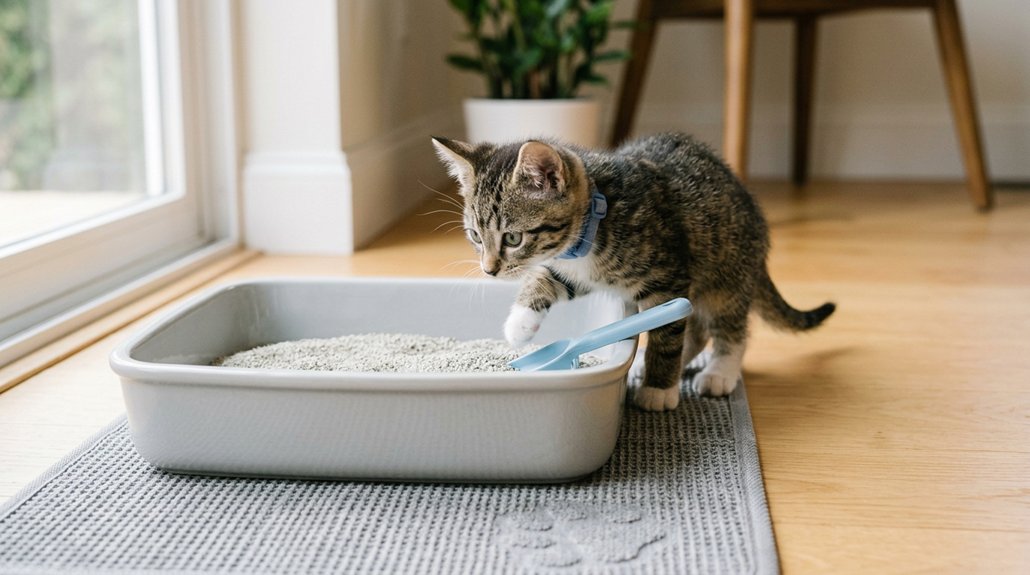
Although litter box training your kitten might seem challenging at first, adhering to some simple guidelines will facilitate a smoother process for both you and your pet. Start by selecting the appropriate litter box types for varying stages of your kitten’s growth; low-sided boxes are ideal initially. Place at least one litter box per kitten plus an extra in quiet, accessible spots. Opt for unscented, clumping litter brand recommendations that cater to sensitive noses.
| Step | Details |
|---|---|
| Litter Box Selection | Choose low sides initially; shift to taller boxes as kittens develop. |
| Litter Recommendation | Use unscented, clumping brands to accommodate a kitten’s scent sensitivity. |
| Box Placement | Position boxes away from food/water in quiet, accessible locations. |
| Maintenance | Scoop daily, change weekly, and evaluate location, cleanliness, and stress factors. |
Regular cleaning and avoiding punishment are key for success.
Identifying and Preventing Kitten Health Issues
Ensuring your kitten’s health begins with a proactive approach to identifying and preventing potential health issues. Regular veterinary visits are imperative for monitoring any signs of common illnesses, such as diarrhea and upper respiratory infections. Start vaccinations, parasite prevention, and deworming as early as 6-8 weeks. Parasite prevention is essential all year, protecting against internal parasites like heartworms and external threats such as fleas and ticks. Familiarize yourself with signs of illness in kittens—lethargy, vomiting, or changes in appetite being notable indicators—that warrant quick vet evaluation. Understanding the role vaccinations play in building immunity shields your kitten against serious diseases, ensuring a healthy progression into adulthood. Early detection, combined with preventive care, fortifies your kitten’s health effectively.
Frequently Asked Questions
What Is the 3-3-3 Rule for Kittens?
The 3-3-3 rule for kittens outlines phases of adjustment: acclimatization (3 days), trust-building (3 weeks), socialization (3 months). Focus on socialization tips for health milestones during these periods to guarantee your kitten’s positive development.
How Do I Say “I Love You” in Cat Language?
To say “I love you” in cat language, engage in cat communication by slow blinking, grooming interactions, gentle head rubs, or offering treats. These actions foster feline affection, reassuring your cat of your love and creating a bond.
What Annoys a Cat the Most?
Cats are most annoyed by loud noises and invasive petting. Understanding feline behavior, avoid restricting paws or overstimulating during play with cat toys. Routine disruption also irritates, so maintain consistent environments to reduce their stress.
What Is the Hardest Age for a Kitten?
The hardest age for a kitten is 7-9 months. You’ll encounter peak kitten development, behavioral challenges, increased energy, independence, and hormonal changes. Consistent routine and supervised environment are essential to navigate their adventurous, boundary-pushing nature.
Conclusion
As your kitten begins its first year, think of it as planting a young tree. With the right care—nutritious feeding and timely vet visits as water and sunlight—it grows strong and healthy. Socialization and training form the roots, grounding them confidently. Address health issues like removing weeds early for a flourishing life. Your efforts now, like nurturing a sapling, guarantee your kitten blossoms into a healthy cat, thriving in its new world.