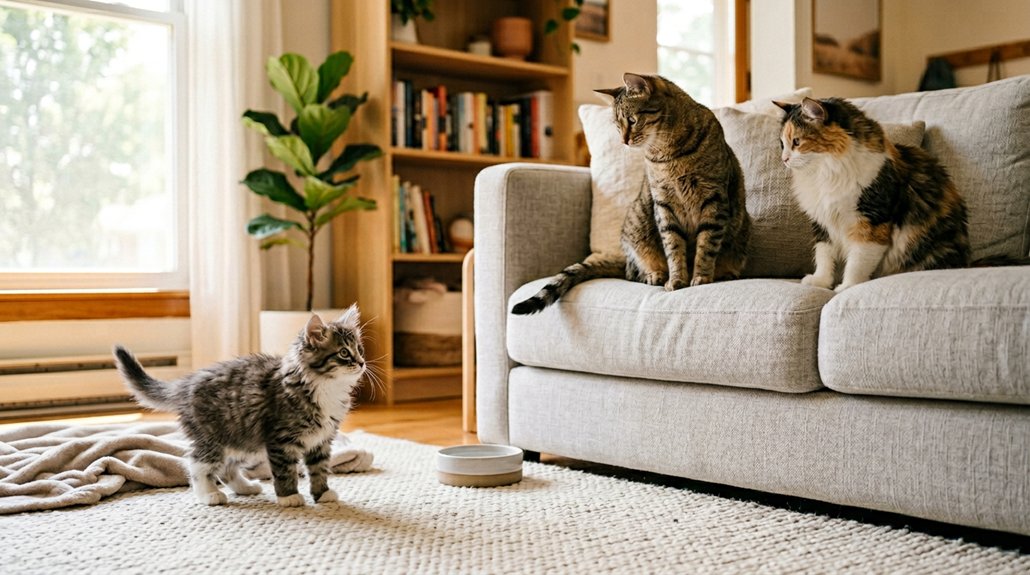
Introducing a kitten to your resident cat requires planning and patience. Start by preparing a separate room for the kitten with essentials, and guarantee scent swapping through toys and bedding to acclimate both cats. Gradual introduction is key; schedule brief, supervised meetings and use barriers if needed. Pay attention to body language and intervene if aggression arises. Over time, allow gradual exploration of shared spaces while maintaining individual resources. There’s more to uncover for a harmonious household.
Key Takeaways
- Set up a separate space initially for scent swapping between the resident cat and the kitten.
- Use scent articles to familiarize cats with each other’s scents before physical introductions.
- Plan first introductions during mealtime to distract cats and reduce conflict potential.
- Supervise initial interactions with barriers in place to prevent aggression.
- Gradually extend shared spaces, while ensuring escape routes for both cats to minimize stress.
Get Your Home Ready for the New Kitten
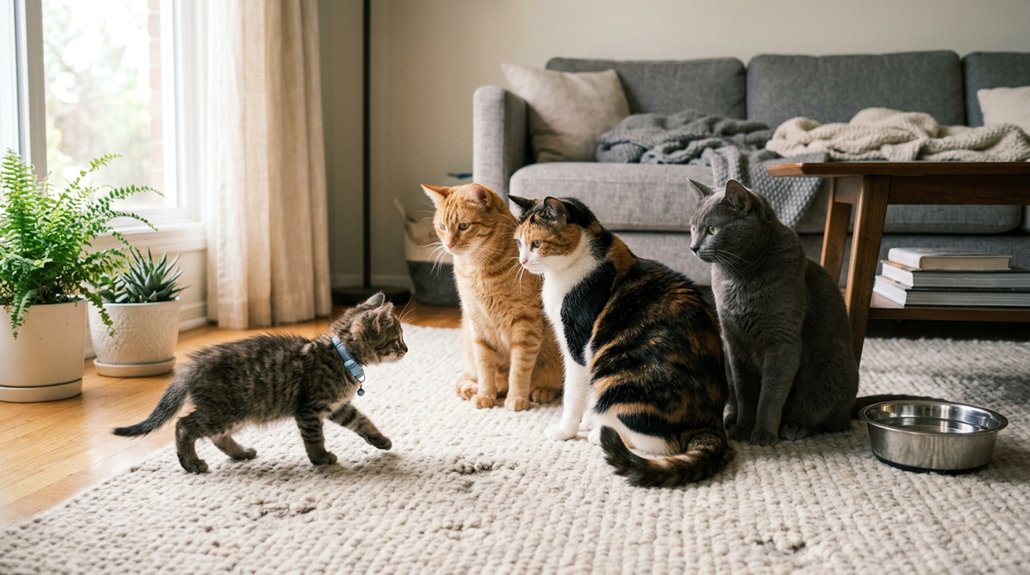
Before introducing your new kitten to your household, it’s important to get your home ready for this adjustment. Begin by preparing a designated room for your kitten, equipped with a food bowl, water, toys, and a cozy bed. This safe space will provide comfort during the initial shift. Meanwhile, start scent swapping to facilitate familiarization. Place a toy or blanket that has been in contact with the kitten in shared areas, allowing your resident cat to gradually adjust to the new scent. It’s vital that your resident cat still has access to other parts of the house to reduce territorial stress. Remember, this temporary arrangement aids in acclimatization and sets the stage for a smoother introduction process later.
Get Cats Used to Each Other’s Scents
Introducing a new kitten to existing cats can be a delicate process, but familiarizing them through scent exchange can greatly ease the shift. Start by using scent articles like a blanket or toy that carries the kitten’s scent and introduce it to the resident cat. This supports gradual familiarization and helps adjust their scent behavior. Keep the resident cat in a separate room initially, minimizing stress and preventing aggression. After interacting with the kitten, let the resident cat smell your hands to promote positive associations. Gradually swap bedding and food bowls to enhance scent-sharing. This strategy fosters a non-threatening adjustment. Employ treats during these activities to reinforce bonding and encourage harmonious relationships between your cats.
Plan and Prepare for the First Kitten-Cat Meeting
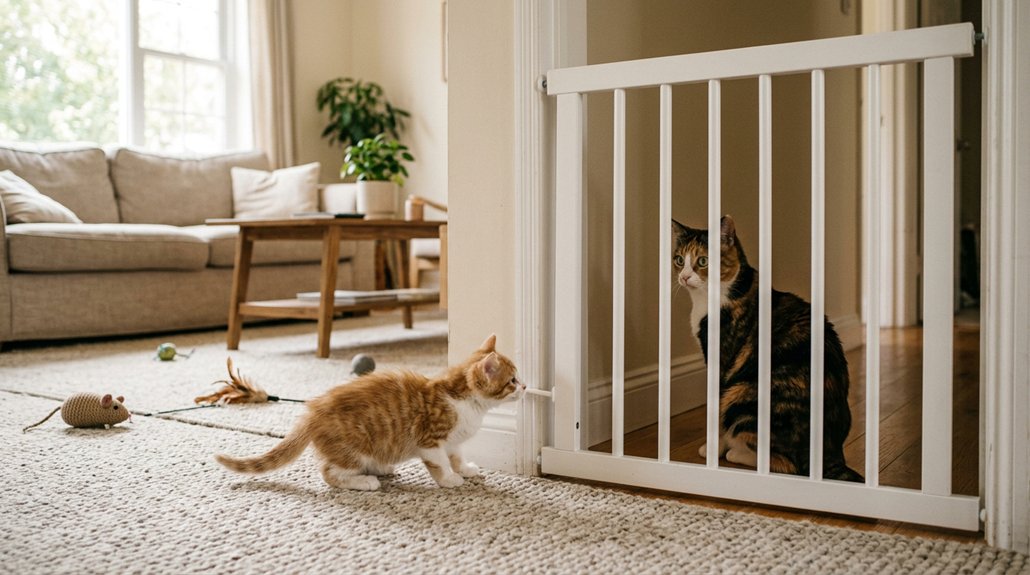
After acclimating your cats to each other’s scents, it’s important to strategically plan the first physical meeting between your new kitten and the resident cat. Prepare a separate room with essential supplies for the kitten to guarantee she feels secure. Introduction timing is vital; schedule the meeting during mealtime to provide initial distractions, diverting attention from potential confrontation. This approach enhances the likelihood of a calm and positive initial interaction. Engage in scent swapping beforehand by introducing items like a toy or blanket to familiarize the resident cat with the kitten’s scent, encouraging positive associations. Gradual interactions are key: begin with brief meetings and closely monitor for any aggressive behavior. Keep both parties on equal footing to prevent jealousy and support harmony.
Oversee Their Initial Interaction
Begin the first meeting between the kitten and resident cats during mealtime, as this distraction can foster positive associations with the new arrival. Expect possible growling or hissing, typical behaviors as cats establish their social hierarchy; however, have a blanket or barrier ready to immediately separate them if aggression occurs. Carefully monitor their body language for signs of stress, and limit the interaction to a few minutes to guarantee it remains comfortable for all involved.
Manage First Cat Meeting
During the initial interaction between your cats, scheduling this encounter during mealtime can serve as an effective distraction, easing tension between them. This meeting environment uses food as an initial distraction, allowing both cats to engage in a familiar and comforting activity. Expect some initial growling and hissing; it’s their way of establishing social boundaries. Keep these first meetings brief to minimize stress and gradually acclimate them to each other’s presence. It’s essential to create a calm meeting environment where both cats feel secure. If aggression occurs, separate them promptly using a blanket or barrier. Always prioritize their comfort and safety, ensuring they perceive these interactions as non-threatening, while also being prepared to act if aggressive behavior emerges.
Monitor Behavioral Cues
Observing your cats’ initial interactions is essential for ensuring a smooth introduction process. During this phase, closely monitor body language for stress indicators such as hissing, growling, or flattened ears. These signals suggest discomfort and necessitate a pause or adjustment. Conversely, look for positive interactions like sniffing or gentle play, which signify openness to companionship. Keep initial sessions brief, just a few minutes to prevent stress overload. Gradually extend these encounters as comfort increases, promoting more positive engagement. Employ calming techniques, such as soft speaking or distributing treats, to alleviate tension and encourage amicable behavior. Always be prepared to safely intervene with a blanket or barrier if signs of aggression emerge, safeguarding the wellbeing of both cats.
Expand Slowly to Shared Living Spaces
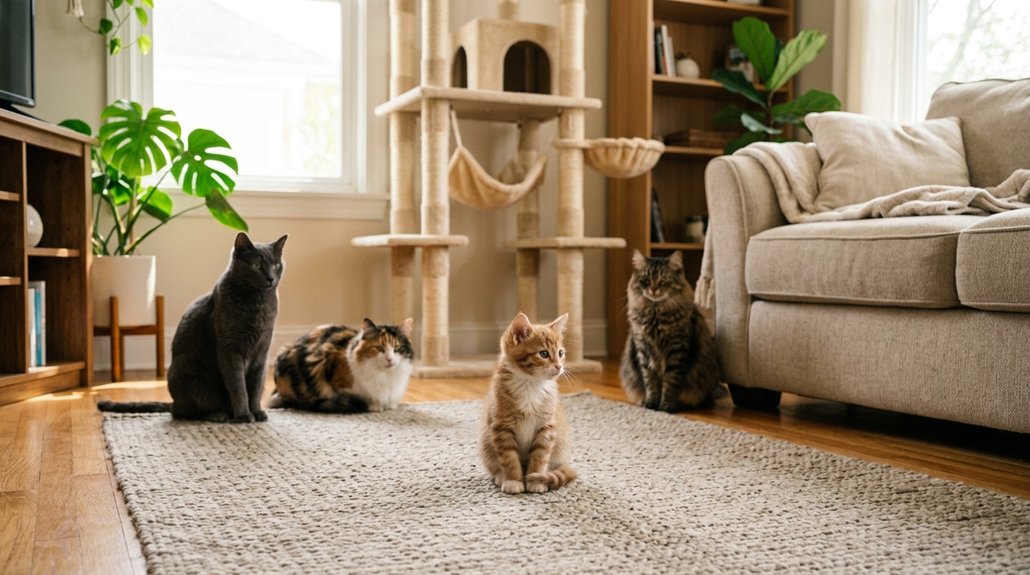
When expanding your kitten’s exposure to shared living spaces, gradually increase their time with the resident cats to foster a comfortable environment. Start with short, supervised interactions and use barriers like baby gates to promote scent familiarity while ensuring safe visual encounters. Keep a close watch on their behavior, looking for positive signals and using rewards to reinforce calm and harmonious behavior.
Gradual Space Exploration
As you initiate the gradual space exploration process, it’s important to remember that patience and keen observation are key. Begin with space swaps by allowing the resident cat to explore the new kitten’s room, keeping the kitten safely contained. This method facilitates scent mapping, helping both cats to become familiar with each other’s scents without direct confrontation. Employ a slow, methodical approach, repeating these swaps until visible signs of comfort emerge, indicating readiness for more interaction. Introduce shared key areas, like beds and blankets, to foster positive scent associations and reduce potential stress. Always monitor each cat’s body language closely during these sessions, watching for any manifestations of anxiety or aggression, and adjust the process as needed to maintain a peaceful environment.
Encourage Scent Familiarity
Building on the foundations of scent mapping established during the gradual space exploration, enhancing scent familiarity between your resident cat and the new kitten is the next logical step. Begin by swapping bedding and toys carrying the kitten’s scent with those of the resident cat, promoting familiarity building through indirect scent exposure. Use scent swapping techniques, like rubbing a cloth on the kitten and placing it near the resident cat, creating a scent trail that fosters non-threatening ambiance. Gradually allow access to each other’s spaces, without direct confrontation, ensuring the kitten remains in its designated area to support acclimation. Such scent-sharing practices encourage positive associations, enhancing comfort across shared living spaces.
| Technique | Purpose | Outcome |
|---|---|---|
| Swap Bedding & Toys | Encourage Scent Sharing | Increase Familiarity Building |
| Scent Trail | Non-threatening Exposure | Positive Associations |
| Controlled Access | Gradual Acclimation | Comfort Across Shared Spaces |
Monitor Behavioral Signals
Understanding the behavioral signals the cats exhibit is essential in ensuring a seamless introduction to shared living spaces. Employing nuanced observational tactics will help you identify key behavioral signs, such as hissing or growling, which indicate distress and necessitate caution. Gradually expanding their time together and observing body language offers insights into their comfort levels and helps you assess whether they feel safe. Reinforce positive interactions with treats or praise, promoting favorable associations and encouraging amicable behavior. Providing escape routes is vital, allowing each cat to retreat when overwhelmed, preserving harmony. Opt for slow introductions, extending over several weeks, as abrupt changes disrupt normal behavioral patterns, potentially fostering stress and aggression. Your conscientious observational approach aids in fostering a calm, friendly environment.
Help Cats Build Routine and Comfort Together
Creating a structured environment is essential for helping cats build routine and comfort together during introductions. Routine reinforcement, such as scheduled feeding times, provides predictability, facilitating security building for both cats. To encourage bonding, incorporate short, positive play sessions, gradually increasing their duration as the cats grow more comfortable. Monitor their body language to assess comfort levels, adjust interactions, and guarantee a harmonious environment. Sharing treats and attention equally to both cats can mitigate feelings of jealousy, promoting fairness and a sense of belonging. Employing the “Eat, Play, Love” approach reinforces positive experiences. By integrating these elements into their daily routine, you’ll help both cats feel safe and secure, ultimately fostering a mutually enjoyable coexistence.
Troubleshoot Common Cat Introduction Issues
While introducing a new kitten to your household, paying close attention to body language is essential in troubleshooting common issues that might arise. Observe for stress signals like hissing, growling, or puffed tails, which imply aggression or fear. Slow down the introduction process if you notice these signs. Implement a time-out strategy to allow each cat to retreat and relax before further interaction. Consider returning to earlier steps, such as scent swapping, to ease tensions. Territory disputes often arise around litter boxes; guarantee each cat has its own and add more if necessary. Gradually increase interaction durations, offering treats and praise to promote calm behavior. This reinforces positive associations, helping cats adjust smoothly and fostering a harmonious household environment.
Addressing Frequent Concerns About Cat Introductions
Introducing a new kitten into a household with resident cats can be a source of stress and concern for many pet owners. You’ll worry about territorial behavior and even sibling rivalry if the change isn’t handled correctly. Start by setting up a separate room with all necessary supplies, offering the new kitten a comfortable and secure space. Gradual introductions are key—engage in scent swapping and allow controlled visual access. This helps to build positive associations, reducing the likelihood of aggression. Observing interactions is essential; it enables you to identify discomfort early and adjust your approach accordingly. Celebrate small successes with increased shared time, ensuring both cats receive equal attention. This approach helps foster a harmonious dynamic over time.
Frequently Asked Questions
How Long Does It Take for a Cat to Accept a New Kitten?
It can take a few days to several weeks for a cat to accept a new kitten. The introduction timeline varies with individual personalities and kitten behavior, so patience and gradually integrating new social experiences are essential.
What Is the 3-3-3 Rule for Kittens?
You might think the adjustment process is quicker, but the 3-3-3 rule encapsulates a kitten’s behavioral change. It covers three days for initial adaptation, three weeks for exploring and socializing, and three months for achieving complete comfort.
What Not to Do When Introducing a Kitten to a Cat?
Don’t rush introductions or force interactions. Avoid punishment for aggressive behavior; it’s typical during territory management. Supervise encounters and balance attention to both cats to prevent jealousy. Common mistakes include neglecting these elements, causing tension.
What Is “I Love You” in Cat Language?
In cat body language, “I love you” is expressed through slow blinks, gentle bunts, soothing purrs, and mutual grooming. While humans use words, cats communicate affection through these actions and subtle feline vocalizations. They’re fascinating creatures, aren’t they?
Conclusion
Successfully introducing a kitten to your other cats requires patience, planning, and precision. By preparing your home, familiarizing scents, and supervising initial meetings, you create harmony. With gradual expansion to shared spaces, you foster coexistence. Establishing routines solidifies comfort, while troubleshooting guarantees resilience. Addressing concerns with informed strategies promotes peace. The journey to feline friendship is a proof of your dedication and understanding, resulting in a harmonious home where curiosity, companionship, and contentment coexist seamlessly.