Hypoallergenic cats aren’t truly allergy-free; they just produce fewer allergens, mainly Fel D 1, which comes from saliva and dander. Intact males have higher allergen levels, but certain breeds like Siberians and Balinese are considered to have lower allergenic loads. Despite being hairless, Sphynx cats still release allergens through skin secretions. Effective allergen management includes regular grooming, cleaning, and environmental controls. Discover more about managing cat allergies and understanding hypoallergenic breeds further.
Key Takeaways
- No cat is completely free of allergens; hypoallergenic breeds still produce some Fel D 1 protein.
- Hypoallergenic cats typically produce lower levels of allergens compared to other breeds.
- Fel D 1, the main allergen, varies in levels across individual cats and genders.
- Regular grooming and cleaning practices can help manage and reduce allergen spread at home.
- Misconceptions exist, but hypoallergenic doesn’t mean allergen-free; all breeds can cause reactions in sensitive individuals.
Understanding the Realities of Hypoallergenic Cats
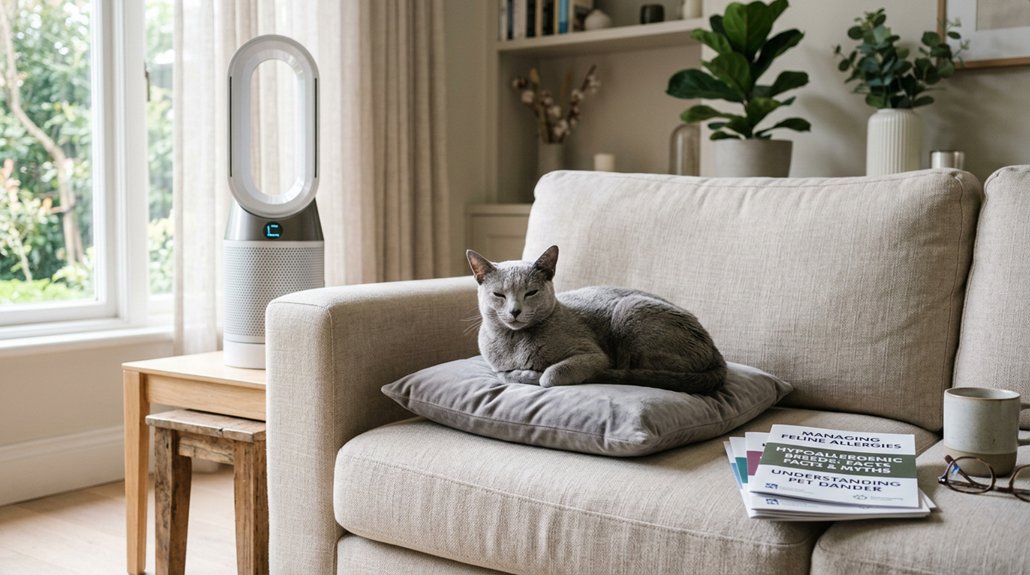
While you may come across claims of “hypoallergenic” cats, it’s important to understand that no feline is entirely free of allergens. All cats produce allergens, mainly through proteins in saliva and dander, which can impact your domestic environment. Cat behavior, such as grooming, spreads these proteins around your home. Allergy awareness is a significant component of managing pet-induced reactions. Different breeds, like Siberians and Balinese, may produce lower allergenic loads, yet individual responses vary greatly. It’s important to recognize that hypoallergenic refers to a reduced likelihood of allergic reactions, not their total absence. Extensive allergy management, including regular grooming, thorough cleaning, and possibly air purification, is crucial in reducing your allergen exposure, irrespective of your cat’s breed.
Decoding Fel D 1: the Main Protein Causing Allergies
You’re likely aware that Fel D 1 is the principal allergen in cats, present in saliva, skin oils, and dander, which triggers reactions in 95% of cat-sensitive individuals. Understanding Fel D 1 production is essential, as it’s influenced by genetic factors and varies among cats, meaning some might inherently produce less of this protein. Notably, intact male cats tend to generate higher Fel D 1 levels than neutered males and females, challenging the notion that certain cat breeds, even hairless ones, are hypoallergenic.
Fel D 1 Production
Although cat allergies are a common concern for many pet enthusiasts, Fel d 1 remains the principal culprit behind these reactions. Produced primarily in a cat’s salivary and sebaceous glands, Fel d 1 is the main allergen impacting sensitive individuals. You might be interested to know that Fel d 1 variations are influenced by cat allergy genetics. Even within the same breed, individual cats exhibit significant differences in Fel d 1 production levels. Consequently, some cats induce more severe allergic responses than others. Importantly, intact male cats generate higher levels compared to sterilized males and females.
| Factor | Influence on Fel d 1 | Interesting Fact |
|---|---|---|
| Gender | Higher in intact males | Affects allergy severity among individuals |
| Genetics | Determines variation | Drives differences within the same breed |
| Environment | Minimal effect | Production is mostly genetic |
Understanding Allergen Sources
In your quest to understand the primary allergen in cats, Fel d 1 is the pivotal protein that demands attention. Fel d 1, found primarily in cats’ saliva, skin oils, and dander, serves as the major allergen source, triggering reactions in about 95% of sensitive individuals. Scientific evidence points to saliva production as key, as the protein spreads easily when cats groom themselves. Genetics greatly influence Fel d 1 levels, causing noticeable variation even within the same breed. Remarkably, intact male cats often produce more Fel d 1 than females or neutered males. Despite the label “hypoallergenic,” every cat synthesizes this protein in some amount, so no feline is truly free of allergens. Understanding these factors can guide you in managing allergic responses effectively.
Which Cat Breeds Are Marketed as Hypoallergenic?
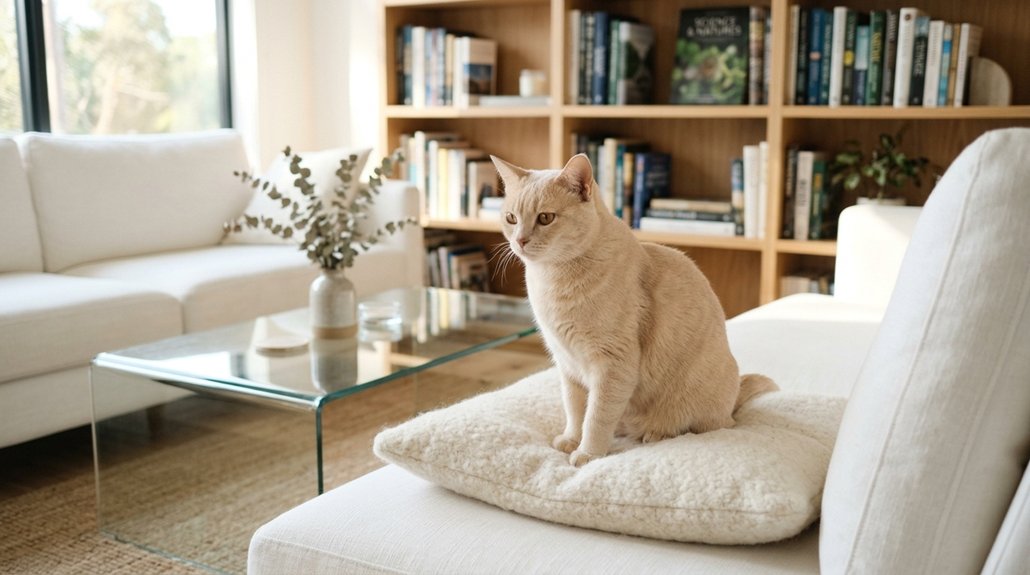
Curiously, in the quest for a feline companion that triggers fewer allergic reactions, several cat breeds are frequently singled out and marketed as hypoallergenic. Despite all cats producing the allergenic Fel d 1 protein, breeds like Siberian cats, Balinese, Russian Blue, Sphynx, and Bengal are noted for their lower allergen levels. Siberian cats possess a friendly disposition and surprisingly low allergen levels. The social Balinese, famous for Balinese traits of interaction, produces less Fel d 1 protein than many others. Sphynx cats, requiring meticulous maintenance, maintain reduced shedding. Bengals have unique characteristics with lesser allergen output, while Russian Blues display reduced allergen levels.
“`markdown
| Breed | Allergen Feature | Maintenance Element |
|---|---|---|
| Siberian | Low allergen levels | Family-friendly |
| Balinese | Less Fel d 1 | Interactive |
| Sphynx | Reduced shedding | Regular bathing |
| Bengal | Unique characteristics | Lesser allergen output |
| Russian Blue | Reduced allergen levels | Calm demeanor |
“`
Exploring Factors That Affect Allergen Levels in Cats
When selecting a hypoallergenic cat, understanding the factors influencing allergen levels can be as essential as choosing the breed itself. Remarkably, allergen variability is key; some cats within the same hypoallergenic breed still produce differing amounts of Fel d 1 protein. Individual factors like age and gender affect allergen production. For instance, intact males often generate more allergens compared to spayed or neutered females.
Environmental conditions such as humidity and temperature can alter how these allergens spread in your living space, potentially exacerbating allergy symptoms. Implementing effective grooming techniques helps manage allergen levels by reducing the fur and dander that carry them. Regular cleaning lessens allergen accumulation, providing a more tolerable environment for allergy sufferers. Understanding these factors can greatly enhance your hypoallergenic cat experience.
Dispelling Myths About Hypoallergenic Cats
While exploring factors affecting allergen levels in cats, you might become curious about the myths surrounding hypoallergenic breeds. A common myth is that some cats are completely free from allergens. However, scientific evidence debunks this misconception, as no cat breed is entirely hypoallergenic. All cats produce the Fel d 1 protein found in saliva, skin oils, and dander.
The term hypoallergenic suggests a lower potential for causing allergic reactions but doesn’t signify a lack of allergens. For instance, Siberians and Balinese might emit reduced Fel d 1, but they’re not allergen-free. Even hairless breeds like the Sphynx generate allergens through their skin and saliva. Regular cleaning and grooming can help manage allergens, but they won’t eliminate them completely, emphasizing conquering allergen misconceptions.
Why Allergy Levels Vary Among Cats of the Same Breed
Delving into why allergy levels vary among cats of the same breed reveals intriguing insights linked to genetics and environmental factors. Genetic variation leads to diverse levels of Fel d 1 production, an allergenic protein, ensuring some cats elicit stronger allergic reactions than others, even within the same breed. Understanding these differences requires examining factors like:
- Genetics: Certain genetic profiles result in lower Fel d 1 production irrespective of breed classification.
- Age and Sex: Typically, intact males produce more Fel d 1 compared to sterilized males and females.
- Environmental Influences: Diet and overall health impact allergen levels; healthier cats might produce less.
- Individual Sensitivity: Personal reaction to allergens varies, making some individuals tolerate specific cats of a particular breed better than others.
Strategies for Managing Cat Allergies
Although no feline is entirely hypoallergenic, understanding how to manage cat allergies can greatly enhance quality of life for allergy sufferers. Essential strategies include regular cat grooming and consulting an allergy specialist for appropriate allergy medications. Grooming reduces airborne dander and loose fur. Keep your home allergen-light by vacuuming often and using HEPA filters. Create a cat-free sanctuary in your bedroom, and wash linens regularly. These practices lower allergen exposure considerably. Consult an allergy specialist for tailored medication advice, alleviating symptoms effectively.
| Strategies | Benefits |
|---|---|
| Regular Cat Grooming | Minimizes dander, loose fur |
| HEPA Air Purifiers | Reduces allergens in the air |
| Cat-Free Bedroom | Decreases nighttime exposure |
| Allergy Medications | Manages symptoms |
These practices can transform your home into a more livable environment.
Testing Your Cat Allergy Reactions Safely
To safely assess your cat allergy reactions, it’s crucial to interact with hypoallergenic breeds like Siberian or Balinese in controlled environments, allowing you to monitor your body’s response to Fel d 1 protein effectively. Implementing safe interaction practices, such as limited exposure and wearing protective gear, helps minimize risks and guarantees accurate tracking of symptoms. Consulting with an allergy specialist will provide evidence-based strategies tailored to your needs, further assisting in the management of any reactions during these trials.
Allergy Symptoms Monitoring
Monitoring your allergy symptoms is essential when considering adopting a hypoallergenic cat, as cat allergens, particularly the Fel d 1 protein, can trigger diverse reactions in sensitized individuals. Engaging in symptom tracking and exposure journaling provides valuable insight into how your body reacts over time. Consider the following steps:
- Symptom Documentation: Record any reactions such as sneezing, itchy eyes, or skin rashes in an exposure journal.
- Controlled Environment Testing: Spend time with potential cats under controlled conditions to assess allergic responses.
- Breed Analysis: Track symptoms across different cat breeds to identify lesser allergenic options.
- Consultation With Specialists: Seek advice from an allergy specialist for personalized testing and management strategies, including medication recommendations.
Implementing these strategies can guide you toward making informed pet ownership decisions.
Safe Interaction Practices
When testing your cat allergy reactions safely, it’s crucial to implement strategic interaction practices that minimize risk while providing accurate insights. Start with brief exposure periods to gauge your sensitivity, gradually increasing allergen exposure duration. This systematic approach allows you to monitor symptoms like sneezing or itchy eyes effectively. To maintain control, perform tests in a friend’s home with a cat. Engage with hypoallergenic breeds, such as Siberians or Balinese, multiple times—they exhibit unique feline behavioral adaptations affecting allergen levels. Dr. Jane Smith, a leading allergist, advises washing hands and not touching your face post-exposure to reduce allergen contact. Consult with an allergy specialist regarding antihistamine usage to manage your responses throughout this testing phase.
Minimizing Allergens in Your Home
While living with a hypoallergenic cat can greatly mitigate allergy symptoms, managing allergens in your home requires strategic efforts. Implementing effective cleaning routines and using hypoallergenic products should be your priority for allergen reduction. To tackle this scientifically, consider the following measures:
- Physical intervention: Engage in regular vacuuming and bedding wash to effectively diminish cat dander and saliva build-up, essential for maintaining indoor cleanliness.
- Air quality control: Integrate HEPA air purifiers to strategically reduce airborne allergens, enhancing air quality and allergy prevention.
- Space management: Designate pet zones and establish pet-free areas like bedrooms to limit direct allergen exposure, offering a tranquil space for sleep.
- Bio-care management: Daily grooming tips suggest performing grooming outside, which will notably limit indoor allergen proliferation.
Talking to Vets and Allergy Pros for Tailored Advice
Though selecting a hypoallergenic cat can be a significant first step in mitigating allergic reactions, consulting with veterinary and allergy professionals is essential to refine your strategy. Veterinarians can identify specific dietary adjustments necessary for hypoallergenic cats, such as recommending specialized foods like Purina Pro Plan LIVECLEAR to help reduce allergens. Regular feline grooming and check-ups can prevent skin conditions that increase dander production. Allergy specialists provide tailored advice on medication and strategies to minimize allergen exposure. They often suggest observing how you react to a potential cat before adoption, ensuring compatibility. Additionally, vets can inform you about breeds that typically produce less of the allergenic protein Fel d 1, helping select the best match for your allergy concerns.
Frequently Asked Questions
Are Hypoallergenic Cats Truly Allergy-Free?
Hypoallergenic cat breeds aren’t truly allergy-free. They produce allergens like the Fel d 1 protein, an allergy trigger found in their saliva, skin, and dander. Allergy responses can vary, demanding careful management for sensitive individuals living with cats.
Does Flonase Help Cat Allergies?
Yes, Flonase effectively helps manage cat allergy symptoms. While you might be skeptical about its effectiveness, clinical evidence confirms Flonase reduces nasal inflammation, providing symptom relief like decreased congestion and sneezing with consistent use. Consult your doctor.
What Is the #1 Most Hypoallergenic Cat?
The #1 most hypoallergenic cat, often considered, is the Siberian breed. It produces lower levels of allergen proteins like Fel d 1. This makes Siberians appealing for allergy sufferers seeking pets with reduced allergenic impact.
Are There 100% Hypoallergenic Cats?
Imagine chasing a mirage, an illusion of allergy-free cats. In breeds comparison, allergy myths shatter when understanding that all cats produce Fel d 1. Allergy management’s essential, as no breed is truly 100% hypoallergenic.
Conclusion
Despite common beliefs, no cat is completely allergy-free. In fact, studies show that nearly 10% of the population is allergic to pets, primarily due to the Fel D 1 protein. While breeds like the Siberian or Balinese are often labeled hypoallergenic, real-world allergen levels can still vary considerably. To manage cat allergies effectively, consult with experts, implement household allergen-reduction strategies, and always perform controlled testing before committing to a feline companion.