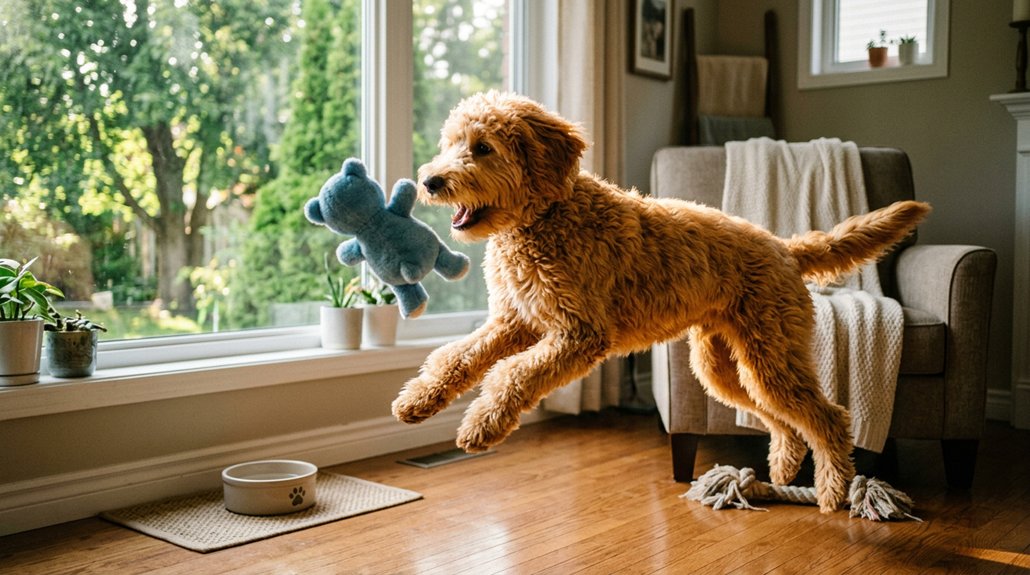
Guarantee your dog’s happiness at home by creating a stimulating environment. Incorporate dog-friendly spaces with cozy bedding and toys. Offer a balanced diet tailored to your dog’s needs, using interactive feeding methods for mental engagement. Provide regular exercise and engage in short play sessions to boost physical health. Use interactive toys and puzzles to enhance mental stimulation and socialization opportunities. Remember, consistent veterinary care is essential for their well-being. There’s more to explore to elevate their health.
Key Takeaways
- Create a dog-friendly environment with cozy spaces and interactive décor to enhance comfort and security.
- Ensure a balanced diet, proper portion control, and interactive feeding techniques for a healthy, engaging mealtime.
- Implement regular exercise routines and varied play activities to match your dog’s energy levels and breed needs.
- Introduce mentally stimulating toys and puzzles to encourage problem-solving and reduce boredom.
- Schedule regular veterinary check-ups to monitor health and address any potential behavioral or dietary concerns.
Turn Your Home Into a Dog Paradise
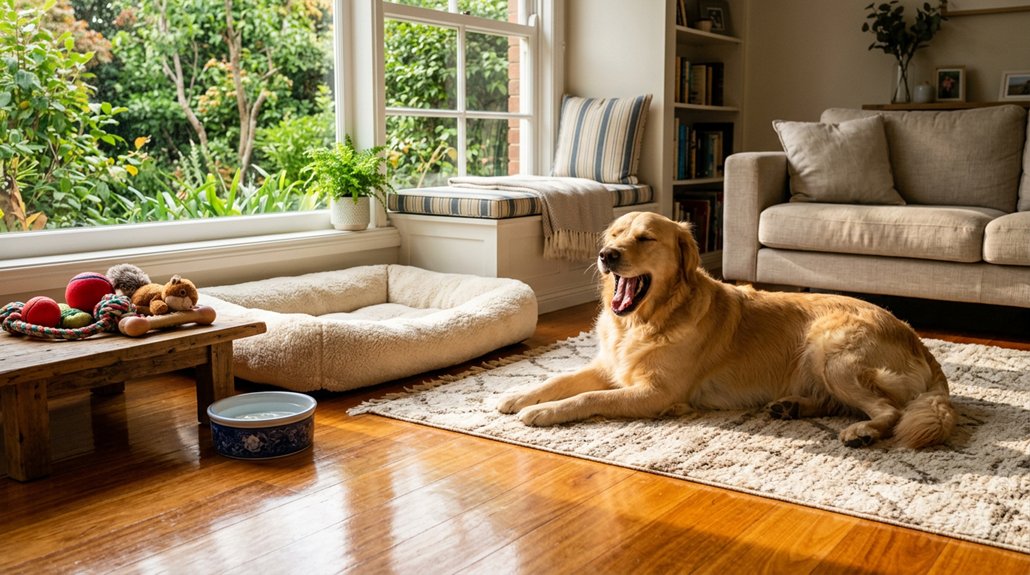
Transforming your home into a dog paradise involves recreating an environment that enriches both mind and body, promoting well-being and contentment for your furry friend. Start with dog friendly décor by setting up an indoor agility course. Utilize household items like chairs and cushions to stimulate physical and mental abilities. Interactive toys and puzzle games are essential for mental stimulation, providing prolonged entertainment. Incorporate safe spaces by establishing a cozy dog corner with comfortable bedding, toys, and safe chewables, ensuring your dog feels secure. Providing varied, stimulating activities mimics natural behaviors, fostering a balanced lifestyle. Regularly changing toys and using a snuffle mat to slow eating can be engaging. Such thoughtful arrangements contribute remarkably to your dog’s happiness and health.
Quick Tips for Immediate Enrichment
You can quickly enrich your dog’s life with DIY food puzzles and sensory exploration games designed to engage their mind and senses. Using simple materials available at home, create food puzzles that not only prolong mealtimes but also challenge their cognitive abilities. Additionally, sensory games such as finding hidden treats, tapping into their keen sense of smell, offer both mental stimulation and joyful exploration.
DIY Food Puzzles
Many dogs thrive on mental stimulation, and creating your own DIY food puzzles can be an engaging way to enrich their environment while satisfying their natural instincts. A muffin tin filled with kibble and covered with toys challenges their curiosity. Transform a cardboard box by nesting smaller boxes with hidden treats to encourage exploration. For a simple puzzle, fold one end of a paper roll, fill it with treats, and watch your dog solve the mystery. A snuffle mat stimulates foraging behaviors by engaging their sense of smell. Rotating these puzzles keeps your dog’s mind sharp and prevents boredom-related behaviors.
| Puzzle Type | How It Works | Benefits |
|---|---|---|
| Muffin Tin | Cover kibble with toys | Encourages problem-solving |
| Cardboard Box | Nest boxes with treats | Stimulates exploration |
| Paper Roll | Fold, fill, and let them figure it out | Promotes creativity |
| Snuffle Mat | Hide food, mimic foraging | Engages their sense of smell |
Sensory Exploration Games
While DIY food puzzles captivate your dog’s mind, sensory exploration games can further enhance their cognitive abilities and overall happiness. Scent games like “Find It” tap into your dog’s foraging instincts by hiding treats and encouraging them to sniff them out, promoting problem-solving skills. Texture exploration is equally important. Rotate toys of different materials to keep their curiosity alive. Set up interactive toys, like KONGs, filled with treats to engage their minds while they work for rewards.
- Find It: Hide treats, allowing your dog to use their sense of smell.
- Texture Toys: Offer varied textures and shapes, spark curiosity.
- Interactive Treat Toys: Promote problem-solving, keep the mind active.
- Scavenger Hunts: Scatter treats, encourage foraging behaviors.
Boost Physical Fitness With Ideal Routine
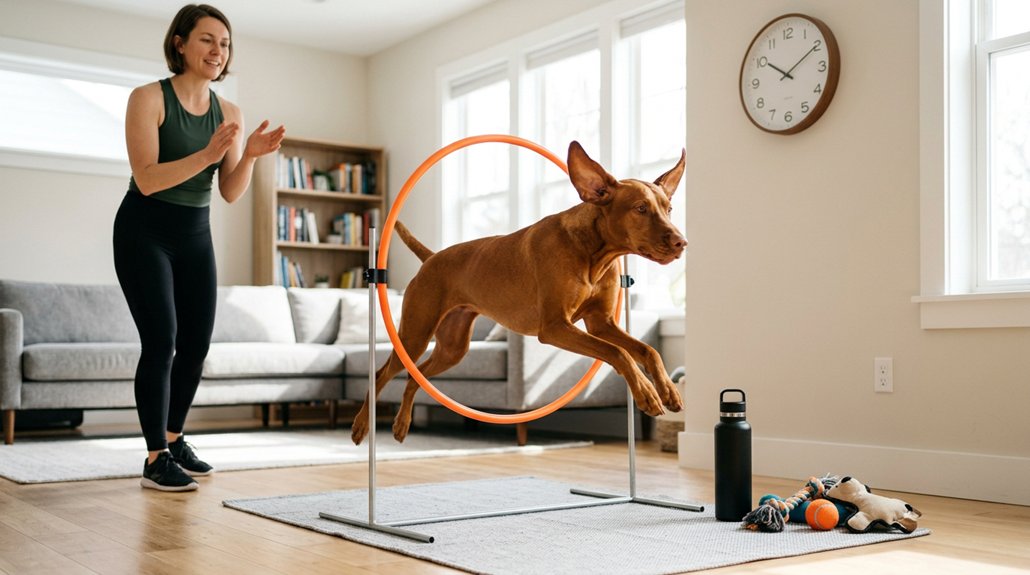
To guarantee your dog stays physically fit and mentally sharp, it’s crucial to establish a varied daily exercise regimen that includes both structured walks and interactive play sessions. Mixing short and long walks offers physical benefits while also providing mental stimulation through exploration. Additionally, incorporating activities like indoor agility courses and engaging with interactive toys can further enhance your dog’s problem-solving and physical abilities, keeping them excited and healthy.
Daily Exercise Regimen
Ensuring your dog’s happiness starts with a tailored daily exercise regimen that caters to their specific needs. Exercise variety is essential, and with breed considerations in mind, aim for 30 minutes to two hours of exercise daily. Adjust this depending on your dog’s breed, age, and energy levels. Structured walks fuel curiosity and provide sensory stimulation—opt for two to three shorter walks and one longer exploratory session for sniffing opportunities. Keep your dog’s mind sharp by mixing in varied walking routes, while days confined indoors can benefit from agility courses using household items. Seasonally, or for added variety, consider socialization through off-leash play in dog parks or with a professional dog walker.
- Shorter walks: two to three times daily.
- Long exploratory walks: engage senses.
- Indoor agility courses: create from household items.
- Varied routes and dog parks: prevent monotony.
Interactive Play Sessions
Engage in interactive play sessions to enhance your dog’s overall well-being and physical fitness. These sessions are a dynamic way to help your dog expend energy while preventing boredom. Incorporate fetch variations to maintain interest; try using different balls or adding obstacles for retrieval. Tug alternatives, like using soft ropes, provide mental stimulation alongside muscle strengthening. Short, structured bursts of 5-15 minutes effectively train your dog through positive reinforcement, fostering both physical and cognitive growth. Aim for a minimum of 30 minutes daily play to stave off inactivity-related behavioral issues, adjusting intensity based on breed specifics. Introducing flirt poles further encourages agility and speed. Diverse play routines, including scent games and obstacle courses, guarantee your dog remains happily engaged.
Elevate Mental Stimulation With Interactive Toys
Interactive toys are a remarkable way to enrich your dog’s mental stimulation and provide engaging challenges. They promote cognitive engagement and offer problem-solving challenges that keep dogs mentally sharp. Regularly using these toys can curb boredom and channel energy into productive tasks, reducing destructive behaviors. Here are some ways interactive toys can benefit your dog:
Enrich your dog’s mind with interactive toys that provide mental challenges and curb boredom.
- Fill a KONG toy: Freeze it with delightful combinations like peanut butter and banana for hours of entertainment.
- Puzzle feeders: Offer various difficulty levels; choose one that suits your dog’s skill for maximum engagement.
- Treat-dispensing balls: Release treats when rolled a certain way, rewarding your dog’s curiosity and effort.
- Interactive squeaky toys: These entice play and hunting instincts, fostering mental and physical activity.
Incorporating them into daily life enhances mental health and fulfillment.
Facilitate Social Bonds Safely at Home
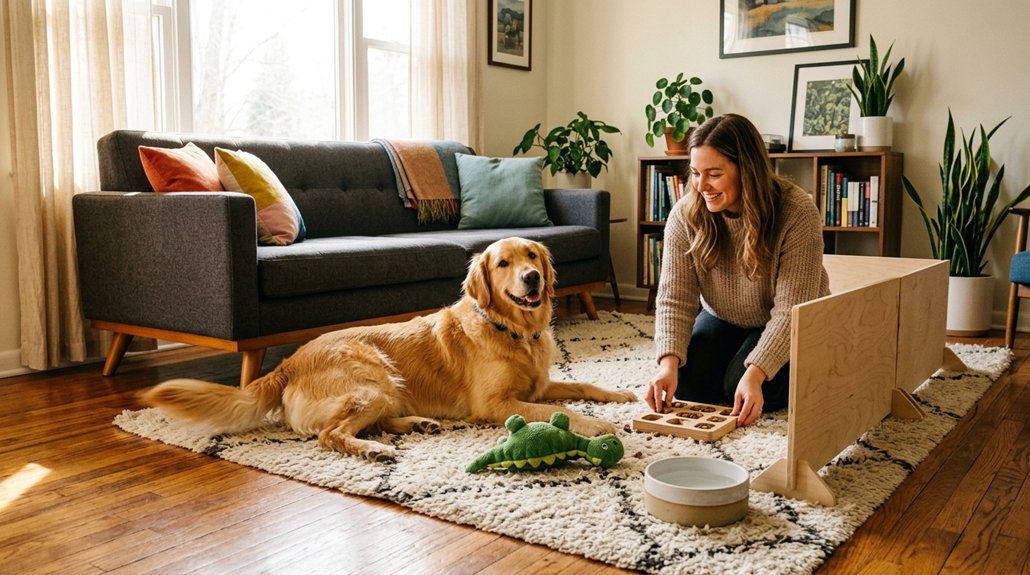
While interactive toys can markedly boost your dog’s mental agility, fostering social connections is equally important for their overall happiness. Setting up regular doggy playdates can enhance your dog’s social skills and emotional well-being. To maximize safety and enjoyment, prepare a structured environment by clearing space for running or using engaging toys. Safe introductions are essential, so always observe your dog when meeting new playmates to prevent conflicts or anxiety. Incorporating supervised activities, such as hide-and-seek with treats, strengthens bonds and provides mental stimulation. Additionally, consider joining local dog meetups or training classes. These controlled settings offer invaluable opportunities for your dog to interact positively with others, enhancing their social behavior with both canine and human companions.
Optimize Diet for Maximum Vitality
To guarantee your dog thrives, refining their diet is essential to supporting both their physical health and emotional well-being. A balanced diet tailored to your pet’s age, breed, and health needs provides ideal nutrition. You might consider supplement options to fine-tune their nutrition; however, always consult a veterinarian for personalized advice. Implement portion control to prevent overfeeding and maintain a healthy weight. Enrichment foods like fruits and vegetables can function as nutritious treats, enhancing well-being through essential vitamins and minerals.
Incorporate interactive feeding techniques to further invigorate your dog:
- KONG toys filled with food for mental engagement.
- Snuffle mats that encourage natural foraging behaviors.
- Fresh water available at all times for proper hydration.
- Regular vet consultations to detect any food sensitivities early.
Spot and Solve Behavior Changes Early
Recognizing and addressing behavior changes in your dog early can prevent small issues from escalating into significant problems. Behavior observation plays an essential role in identifying signs like lethargy, disinterest, or destructive tendencies. These may indicate too much alone time or emotional distress. Anxiety recognition is critical too, as changes in eating habits or frequent accidents often point to stress-related issues. Notice if your dog barks excessively or acts clingy when you return—this could be separation anxiety. Regular training and socialization can alleviate such anxieties, promoting your dog’s emotional well-being. If you observe any significant behavioral shifts, consult a veterinarian. They can identify medical concerns and suggest appropriate interventions, ensuring your furry companion’s health and happiness.
Frequently Asked Questions
What Is the 3-3-3 Rule With Dogs?
The 3-3-3 rule describes a dog’s adjustment period involving canine behavior changes over three stages: initial stress in three days, acclimating in three weeks, and feeling secure within three months with consistent routines, safety, and positivity.
How Do I Make My Dog Happier at Home?
Introduce interactive toys that mentally stimulate your dog and reward their engagement with positive reinforcement. Utilize treasure hunts, snuffle mats, and regular activities to enhance their happiness, promoting mental challenges and emotional well-being.
How Do You Say “I Love You” in Dog Language?
You might think dogs don’t get “I love you,” but trust me, they do. Tail wagging, playful barks, and happy zoomies are their way of reciprocating. When they show a relaxed posture around you, they’re feeling your love too.
Can a Dog Be Left Alone for 8 Hours?
Yes, a dog can often be left alone for 8 hours, but consider their age and temperament. To manage separation anxiety, use home alone tips like interactive toys and establish routines to guarantee your furry friend’s comfort.
Conclusion
Imagine your home as a vibrant ecosystem where each element, from interactive toys to nutritious meals, acts like a thriving component in your dog’s garden of contentment. Just as a plant needs light, water, and care, your furry friend thrives on mental stimulation, physical activity, and social bonds. By cultivating this harmonious balance, you’ll witness their joy flourish, warding off the weeds of anxiety and boredom. Your dedication nurtures not just their happiness, but a lifelong bond.