
When adopting a cat, you’re not just paying an adoption fee; hidden costs often surprise new owners. Initial healthcare, microchipping, and licensing fees add up quickly. Monthly costs like food, grooming, and entertainment also require budgeting, with specialized diets elevating expenses. Vet bills, especially emergencies, can be challenging, making insurance crucial. Preventive measures against household damage are another essential expense. As you plan for these costs, you’ll uncover smart strategies for managing them effectively.
Key Takeaways
- Initial adoption fees often overlook hidden microchipping and healthcare expenses, significantly increasing upfront costs for new cat owners.
- Monthly food and supply purchases, including specialty diets and grooming tools, can considerably inflate ongoing expenses.
- Routine veterinary care and pet insurance are essential yet often underestimated costs for maintaining a cat’s health.
- Travel and boarding expenses, along with potential property damages, can unexpectedly elevate the cost of cat ownership.
- Behavioral training and preventive measures, while costly, are crucial for minimizing damages and enhancing a cat’s well-being.
Uncovering Hidden Adoption Fees and Expenses
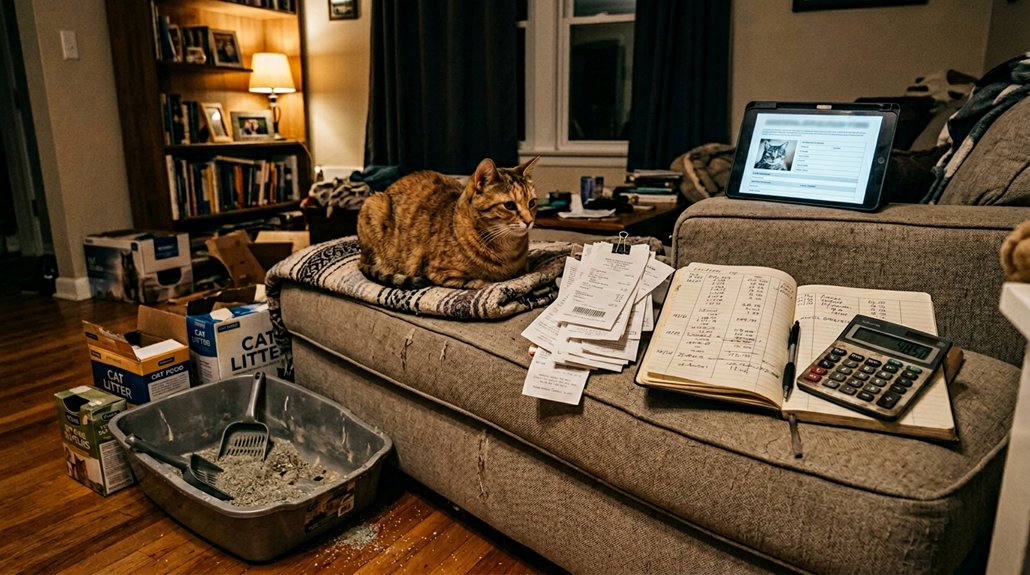
When considering cat adoption, it’s important to be aware of the potential hidden costs that can accompany bringing a feline friend into your home. Adoption fees themselves can vary greatly, ranging from $30 to over $300 depending on the shelter and the services included, such as vaccinations and spaying/neutering. However, these initial costs might not fully represent your financial commitment. Many shelters also charge additional hidden expenses, like microchipping fees, which can add another $15 to $50. Additionally, you’ll likely face initial healthcare expenses for exams and vaccinations, potentially reaching up to $340. Don’t overlook pet licensing fees either, as some local regulations require annual payments from $10 to $50. Thorough research is vital to anticipate these costs effectively.
Must-Have Supplies You Didn’t Know You Needed
When preparing for a cat, it’s critical to understand that essential supplies go beyond the basics and can greatly impact your budget. A cat carrier for trips, a durable litter box paired with monthly litter, and a cozy bed are more than conveniences—they’re central to your feline’s health and comfort. Also, don’t underestimate the importance of regular toy purchases, food and water bowls, and identification collars, which collectively form hidden expenses that can accumulate over time.
Essential Cat Supplies Guide
Diving into the world of cat ownership can quickly reveal a surprising array of significant supplies that may not immediately come to mind, yet they’re important for ensuring your feline’s comfort and health. Litter box essentials are a primary concern, with boxes ranging from $6 to $15 and the ongoing expense of high-quality cat litter at $16 to $30 monthly. Beyond this, grooming expenses deserve attention; investing in appropriate tools can be costly but imperative for a cat’s well-being. You’ll need a durable cat carrier, essential for veterinarian visits and emergencies, typically between $25 and $100. Additionally, setting up with a cat bed, collar, and entertainment toys stems from an understanding of fundamental comfort and stimulation for your cat’s life.
Hidden Costs of Gear
While new cat owners might assume they’ve accounted for all the necessary gear, the hidden costs of essential supplies often emerge as surprising budget considerations. The initial investments—litter boxes ($6-$15), carriers ($25-$100), and monthly litter expenses ($16-$30)—quickly add up. But it’s the ongoing gear maintenance that can catch you off guard. Consider the expenses of a cat bed ($30-$80) and food/water bowls ($5-$15), which are often necessary. Toys and entertainment may cost $10-$50, with added monthly treat expenses reaching $15. Additionally, grooming tools are essential for your cat’s health, creating potential costs if neglected. Finally, factor in unexpected repairs and replacements from cat-proofing your home against potential damage due to your cat’s playful antics.
Surprising Monthly Cat Food Expenses

You’ll find that your cat’s nutritional needs considerably impact their food expenses, with costs ranging from $20 to $60 monthly for standard diets. If your feline requires a specialty or limited-ingredient diet, expect expenses to skyrocket, potentially exceeding $1,000 annually. It’s crucial to consult your veterinarian about suitable nutrition, as specific dietary requirements can have financial and health implications over time.
Nutritional Needs Impact Cost
Even though cat ownership brings countless joys, the financial implications of meeting your feline friend’s nutritional needs can be unexpectedly high. A thorough nutrition assessment can reveal that monthly cat food expenses range from $20 to $60, totaling $240 to $800 annually. Factors like breed size and activity levels may push these costs higher. Engaging in a veterinarian consultation is critical, as it guarantees you’re providing the appropriate type and quantity of food. Without such guidance, you risk feeding errors that could escalate future healthcare expenses. Additionally, if your cat becomes finicky or requires dietary changes, adapting can incur costs if initial purchases are rejected. The complexity of nutritional needs, as a result, reinforces that adequate budgeting and professional advice are indispensable for proper feline care.
Specialty Diets Increase Expenses
As you assess the diverse financial aspects of feline nutritional needs, specialty diets often present unforeseen costs. Cats with dietary restrictions demand precision in budget planning. Here’s how these expenses can surprise you:
- Elevated Annual Costs: Specialty and limited-ingredient diets might push your cat food expenses beyond $1,000 annually, a steep increase from the $240 to $720 range of standard diets.
- Monthly Hikes: Standard diet costs typically span from $20 to $60 monthly. However, specialized nutrition needs can see these figures climbing considerably, especially for larger, more active breeds.
- Consultation Necessity: Engaging with a veterinarian for tailored dietary planning is essential; errors in this area can swell food costs and related healthcare expenses. Understanding these financial nuances helps in effectively managing the budget for your feline’s distinctive requirements.
Routine Vet Costs Unveiled
When considering the well-being of your feline companion, routine vet visits form the backbone of preventive healthcare, costing between $50 and $200 for basic examinations. Routine care extends beyond just vet checkups; it includes essential vaccinations, dental maintenance, and flea/tick prevention. These services collectively contribute to an average annual healthcare cost of $500 or more. Through meticulous vet checkups, you ascertain your cat stays protected against common health risks and potential issues are identified early. By allocating resources toward these regular expenses, you’re safeguarding your pet’s long-term health. Analyzing these costs sheds light on the importance of budgeting for routine care, recognizing that planning for these expected expenses helps you manage the financial responsibilities of cat ownership efficiently.
Prepare for Unexpected Vet Bills

Unquestionably, unexpected vet bills can catch cat owners by surprise, creating financial strain if not adequately prepared. Establishing a robust financial plan is essential. Consider these three keys to managing unforeseen veterinary costs:
- Emergency Fund: Set aside $2,500 to $8,000 specifically for unexpected emergencies. This emergency fund provides a critical safety net if you choose not to invest in vet insurance.
- Vet Insurance: Explore different policies to determine if vet insurance aligns with your financial planning needs. Coverage can alleviate the burden of surprise expenses.
- Budgeting Strategies: Regularly review and adjust your budget. Incorporating these savings tips will help you accommodate for unexpected veterinary expenses, ensuring you’re not caught off guard.
Navigating Cat Travel and Boarding Costs
While financial preparation can shield you from unexpected veterinary expenses, another overlooked aspect of cat ownership is the cost associated with travel and boarding. Understanding these hidden expenses guarantees your cat’s travel safety and well-being. Boarding facilities range from $20 to $45 per cat per night. If you opt for boarding alternatives like pet sitters, expect charges between $20 to over $100 per visit. Transport expenses can skyrocket, with air travel averaging $1,500 and long-distance ground transport hitting $3,500.
Here’s a quick breakdown:
| Expense Type | Cost Range |
|---|---|
| Boarding per Night | $20 – $45 |
| Pet Sitter per Visit | $20 – $100+ |
| Air Travel | Around $1,500 |
| Ground Transport | Around $3,500 |
Plan and budget wisely for these costs to avoid surprises.
Tackling Household Damage From Cats
You’ll find that cats often cause damages to household items like furniture and carpets, which can lead to frequent and costly replacements. These seemingly minor costs quickly accumulate, urging a proactive approach to addressing potential damage. To mitigate these expenses, consider investing in preventive measures like scratch-resistant covers and designated scratching posts.
Common Cat-Induced Damages
Cat ownership often comes with an array of hidden costs, particularly when considering the household damage resulting from their natural tendencies. Cats have a knack for turning furniture and belongings into scratching posts. Here are some typical damages you might encounter:
- Furniture Scratching: Despite your best efforts at furniture protection, cats can cause costly wear and tear on upholstery that requires frequent replacement or repair. Scratching solutions like pads and sprays are essential but an added expense.
- Damaged Curtains and Blinds: As climbing is instinctual, curtains and blinds can suffer rips and tears, leading to potential replacement costs ranging from $30 to $200.
- Chewed Electrical Cords: Cats often chew on cords, which not only pose safety hazards but result in the costly need to replace damaged electronics.
Preventive Measures for Damage
Preemptively addressing potential household damage from cats requires a strategic approach rooted in understanding feline behavior. To mitigate costs from frequently replacing items, offer your cat scratching alternatives like posts and cat furniture. This redirects their natural urge to scratch away from vulnerable surfaces. Opt for furniture durability by selecting cat-proof materials, reducing damage and long-term expenses. Alongside durable furniture, implementing deterrents, such as double-sided tape or citrus sprays, effectively discourages unwanted scratching or chewing. Don’t overlook grooming and maintenance; keeping your cat’s claws trimmed minimizes extensive damage. By understanding and addressing these behaviors proactively, you can markedly cut down the hidden costs associated with cat ownership while maintaining both a happy feline and a protected home environment.
Specialized Training Costs for Behavioral Issues
When faced with behavioral issues in your feline friend, addressing these problems through specialized training can become a significant yet necessary investment. Using behavior adjustment techniques, such as desensitization and counter-conditioning, can effectively tackle issues like aggression or litter box problems, preventing future expenses. Training sessions usually cost between $100 and $300, hinging on the trainer’s experience and location.
Consider these realities:
- Multiple sessions might be required, with packages surpassing $1,000 for extensive solutions.
- Behavioral consultations range from $50 to $200, providing expert insights for personalized training session recommendations.
- Tackling issues early spares you from ongoing stress and potential property damage.
Investing in these services enhances your cat’s well-being, ultimately curbing hidden costs.
Is Pet Insurance Really Worth It for Cats?
Why is it that pet insurance, despite its monthly cost, can be a strategic investment for cat owners? With coverage options averaging $30 per month, the pet insurance benefits are clear—financial protection against unforeseen veterinary expenses like accidents, illnesses, emergencies, and surgeries. A cost comparison shows vet bills can easily surpass $1,850 for emergencies, making insurance or a sizable emergency fund essential. Reimbursement rates typically range from 70% to 90%, considerably reducing your out-of-pocket costs when unexpected bills arise. This financial buffer leads to 76% of insured pet owners expressing satisfaction with their policies. Evaluating options tailored to your cat’s specific needs guarantees pet insurance aligns with your financial strategy while managing ever-increasing vet costs.
Smart Saving Tips for Managing Cat Ownership Costs
Though cat ownership can be a rewarding experience, it’s essential to incorporate smart saving strategies into your financial planning to manage hidden and ongoing costs effectively. Begin by employing budgeting strategies that account for unexpected expenses like veterinary bills.
Incorporate smart saving strategies into your financial planning to manage hidden costs of cat ownership.
- Establish a Sinking Fund: Allocate $25 to $50 monthly to cover unforeseen veterinary and hidden expenses.
- Invest in Pet Insurance: With plans starting at $17 a month, this cost saving tip mitigates high expenses from emergencies or illnesses.
- Evaluate and Budget Monthly Costs: Regularly assess expenses such as cat food, which can vary between $20 and $60 per month, to avoid financial strain.
Additionally, purchase second-hand supplies or craft DIY toys to minimize initial setup costs.
Frequently Asked Questions
What Is the One Meat to Never Feed a Cat?
You should never feed your cat raw chicken. It poses risks like bacteria and thiaminase, affecting feline nutrition. Exploring alternative protein sources is essential to avoid cat allergies and guarantee a balanced diet for your furry friend.
What Is the 3-3-3 Rule of Cats?
The 3-3-3 rule for cats explains their adaptation timeline: 3 days to process new surroundings, 3 weeks to show curiosity, and 3 months for full adjustment, revealing true feline behavior. Patience’s essential in supporting their adjustment.
What Color Cat Is Least Desired?
Black cats are often the least desired due to superstitions contrasting their affectionate nature. Despite positive traits, color biases in cat color preferences skew feline adoption trends, causing them to linger in shelters disproportionately longer than their colorful counterparts.
What Is “I Love You” in Cat Language?
In cat language, “I love you” translates to feline affection through behaviors like slow blinking, gentle head-butting, and purring contently. Understanding these subtle forms of cat communication can enhance your bond with your furry companion.
Conclusion
As a discerning cat owner, have you truly considered all the hidden costs that go beyond the initial adoption? From unforeseen vet bills to the need for specialized training, it’s important to be prepared for potential financial surprises. While cat ownership comes with its challenges, being proactive allows you to enjoy a fulfilling bond with your feline friend. So, is the joy of having a cat worth the financial commitment? With smart planning, it certainly can be.