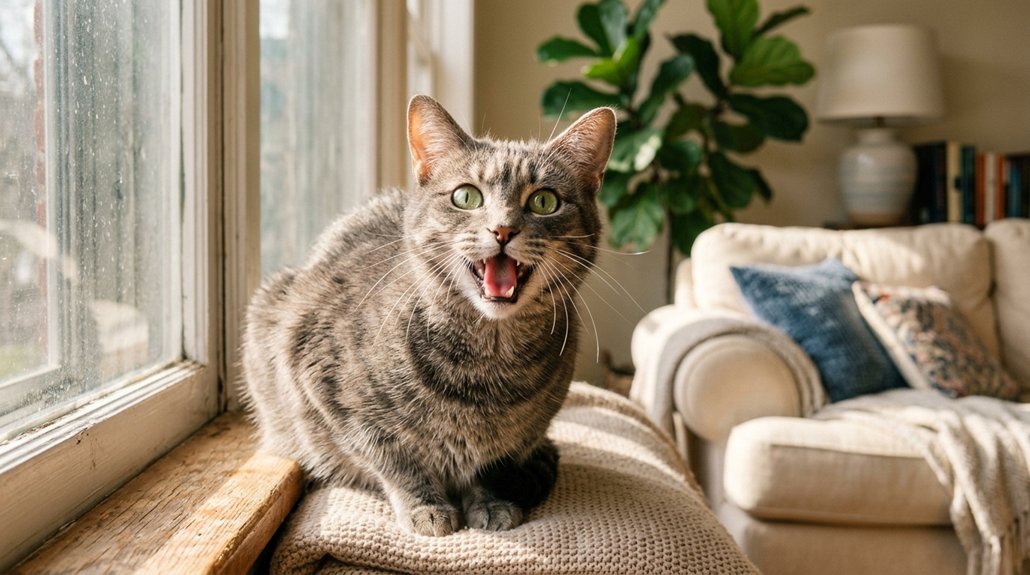
When your cat won’t stop meowing, first verify their basic needs like food, water, and a clean litter box are met. Changes in environment or stress can increase vocalization, so identify and mitigate these factors. Maintain consistent routines and reward quiet moments to encourage silence. Excessive meowing could signal health issues, so consult a vet if needed. By exploring further, you’ll uncover additional strategies to address and reduce your cat’s persistent vocal behavior.
Key Takeaways
- Ensure all basic needs like food, water, and a clean litter box are met to minimize discomfort-related meowing.
- Examine environmental changes for stress triggers, such as loud noises or shifts in household dynamics, and address these sources.
- Keep a consistent daily routine to stabilize your cat’s environment and alleviate excessive vocalization.
- Engage your cat with playtime and interactive toys to reduce boredom and vocal complaints.
- Consult a veterinarian if excessive meowing persists, especially if accompanied by symptoms like weight loss or changes in appetite.
Discover the Reasons Behind Cat Meowing
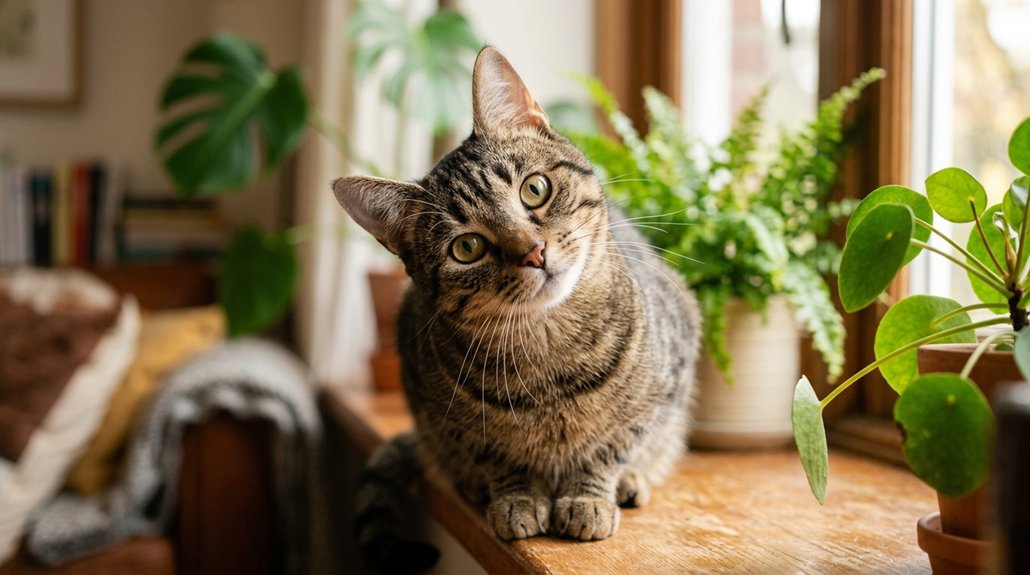
Understanding the reasons behind your cat’s meowing can greatly enhance your ability to address its needs effectively. Cat communication through vocal behavior is primarily aimed at humans, signaling needs like hunger, attention, or discomfort. Recognize that excessive meowing may hint at medical issues such as hyperthyroidism or kidney disease, warranting a veterinary check-up. Environmental changes also play a role; shifts like moving can spike vocalization as the cat communicates anxiety. You’ll notice that kittens meow more for warmth or food but usually settle as they age. Male cats, if unneutered, may increase their vocal behavior, especially yowling during mating season, which neutering can help manage. By decoding these cues, you can better support your feline companion’s well-being.
Ensuring Your Cat’s Basic Needs
While it may seem overwhelming at first, guaranteeing your cat’s basic needs are met is essential for minimizing excessive meowing. Here’s how you can address their fundamental requirements:
- Hydration Importance: Guarantee your cat has access to fresh, clean water at all times. Dehydration can lead to discomfort, increasing meowing as they seek relief.
- Litter Box: Keep the litter box clean and well-maintained. A dirty litter box often leads to vocal complaints as your cat communicates discomfort.
- Feeding Routine: Stick to a consistent feeding schedule. Hunger can frequently trigger vocalizations; enough available food helps keep meowing in check.
- Mental Stimulation: Engage your cat in daily playtime. Adequate stimulation prevents boredom-related meowing, especially in younger cats.
Addressing these areas reduces unnecessary meowing and improves overall feline well-being.
Spotting Stress and Anxiety Sources
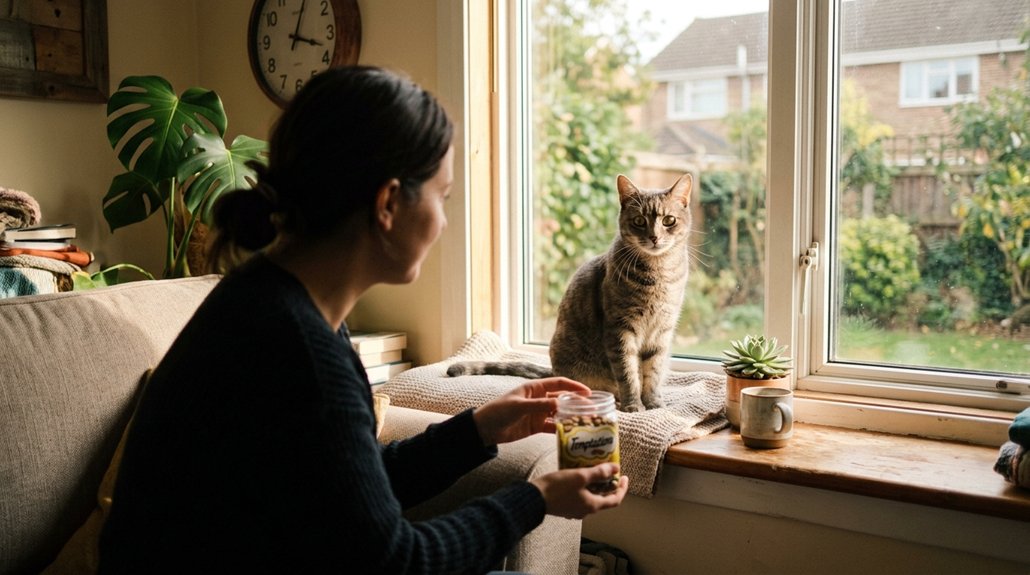
To address a cat’s persistent meowing, it’s essential to recognize any recent environmental changes, like moving homes or new household members, that might be causing stress. Pay attention to additional behaviors such as hiding or excessive grooming, which can indicate anxiety alongside meowing. Keeping a log of vocalization patterns can be instrumental in pinpointing these stress triggers and implementing a more consistent, enriching routine.
Recognizing Environmental Changes
When your cat suddenly starts meowing excessively, it’s important to contemplate recent environmental changes as potential stress triggers. Cats are sensitive to shifts in their surroundings, and these environmental factors can disrupt familiar settings.
- New Surroundings: Moving to a different home or simply rearranging furniture can unsettle your cat, resulting in increased vocalization as they adjust.
- Routine Disruptions: Altered feeding times or changes in your interaction level can lead your cat to meow for familiar comfort.
- Loud Noises: Sounds like construction, fireworks, or even barking dogs nearby can incite anxiety, driving your cat to vocalize more.
- Household Dynamics: The addition of new family members or changes in your schedule might threaten their perceived stability, triggering more frequent meowing.
Recognizing these changes helps mitigate stress.
Identifying Behavioral Triggers
Understanding your cat’s behavioral triggers is essential in addressing excessive meowing beyond recognizing environmental changes. Cats may vocalize more due to loneliness or boredom, signaling a need for environmental enrichment or social stimulation. In younger cats, these triggers can be particularly pronounced. To effectively pinpoint sources of stress or discomfort, observe their vocal patterns concerning specific stimuli. Take note of times when unfamiliar animals, visitors, or noise are present, as these may elevate their stress. Keep a log of meowing occurrences and any concurrent changes in your cat’s surroundings. Observations can aid in identifying anxiety-inducing triggers and adapting the cat’s environment accordingly, ensuring they receive adequate stimulation and comfort. This proactive approach helps reduce stress-induced meowing.
Responding to Meowing Correctly
When your cat incessantly meows, it’s essential to reward moments of silence instead of responding with food or attention, as this strengthens quiet behavior. To effectively manage your cat’s vocalization, keep an eye on their patterns and quickly identify any triggers to address underlying issues. Maintaining consistent routines and redirecting your cat’s focus to engaging toys will help reduce excessive meowing and promote a more peaceful environment.
Reward Silence, Not Noise
A quiet household is often the result of reinforcing silence rather than responding to incessant meowing. To effectively manage your cat’s vocalization, focus on rewarding patience and reinforcing calm behaviors. By doing this, you’ll help your cat understand that silence, rather than meowing, leads to positive outcomes. Follow these steps:
- Reward Patience: Wait for silence before offering treats or attention.
- Reinforce Calm: Use playtime as a reward for quiet behavior, not noise.
- Ignore Extinction Bursts: Expect and resist initial increases in meowing when you start ignoring them.
- Monitor Quiet Moments: Actively observing and rewarding moments of silence strengthens the bond and modifies vocal patterns.
These techniques can gradually reduce meowing, leading to a more peaceful home environment.
Identify Triggers Quickly
While rewarding silence sets the stage for a more tranquil environment, it’s crucial to swiftly pinpoint what’s driving your cat’s meowing. Understanding cat communication starts with observing the timing and context of their vocal patterns. They might vocalize when you arrive home or during mealtime, indicating specific triggers. Monitor for environmental stressors—new pets, loud noises, or unfamiliar visitors—that could escalate your feline friend’s vocalization. Keeping a log of vocal patterns assists in identifying changes or trends over time. Confirm basic needs—food, water, and a clean litter tray—are consistently met, as lack of these often results in persistent meowing. Pay close attention to any shift in pitch or frequency; sometimes, these alterations suggest underlying health issues necessitating veterinary attention.
Maintain Consistent Responses
Although it might be tempting to respond immediately to your feline’s cries, consistently ignoring excessive meowing is essential to prevent reinforcing this behavior. To help manage your cat’s meowing habits, establish a routine and remain consistent in your responses. Follow these steps:
- Ignore Excessive Meows: Refrain from giving attention when your cat is meowing for it; otherwise, you could inadvertently reinforce vocalization patterns.
- Reward Silence: Offer affection and treats only when your cat is quiet, promoting positive behavior through reinforcement.
- Routine Establishment: Schedule feeding, playtime, and interactions to create a structured environment, minimizing attention-seeking meows.
- Context Awareness: Pay attention to timing when addressing meows, as responding to specific triggers can guide you in reducing vocalizations.
Patience and consistency are vital to success.
Seeking Veterinary Advice
When your cat’s meowing becomes excessive and out of character, it’s important to seek veterinary advice promptly. A veterinary consultation can help identify potential medical conditions like hyperthyroidism or kidney disease. Look for accompanying signs such as weight loss or changes in appetite, which could signal a need for urgent care.
| Symptom | Potential Condition | Action Required |
|---|---|---|
| Excessive Meowing | Hyperthyroidism, dementia | Schedule a vet visit |
| Difficulty Urinating | Urinary blockage | Seek emergency care immediately |
| Change in Appetite | Kidney disease | Consult your vet for diagnosis |
Elderly cats may experience cognitive decline or sensory deficits, increasing vocalization. If a male cat strains while meowing during urination, it’s an emergency. Detailed logs of vocalization patterns and symptoms aid in diagnostics and effective treatment.
Creating an Environment to Minimize Meowing
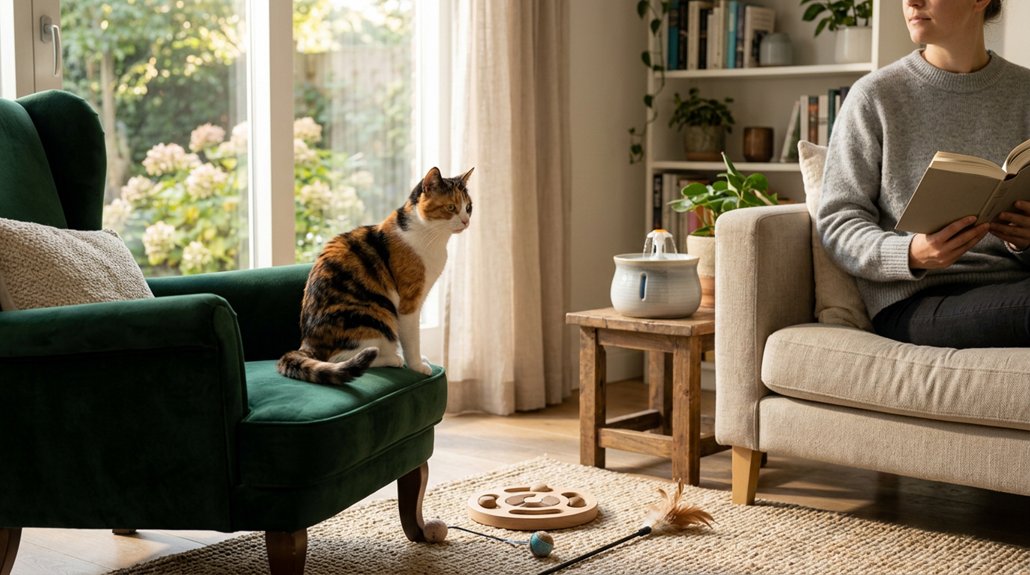
Creating an environment that minimizes excessive meowing can address both physical and psychological needs of your cat. Here are effective strategies:
- Interactive Toys: Introduce a variety of toys and climbing structures to encourage mental and physical stimulation, reducing boredom-related meowing.
- Consistent Feeding Schedule: Establish routine meal times. Cats become less likely to meow for food when they know when to expect it.
- Serene Spaces: Reduce loud noises and distractions. Consider soundproofing and closing windows to create a calming atmosphere that alleviates anxiety.
- Quiet Sanctuary: Provide a designated, tranquil area with cozy bedding and minimal stimuli. This offers a retreat when your cat feels overwhelmed, helping to dampen stress-driven vocalizations.
Implementing these strategies can greatly enhance your cat’s comfort and reduce excessive meowing.
Managing Kitten and Hormonal Cat Meowing
Managing kitten and hormonal cat meowing requires understanding the varied causes behind these vocalizations. Kittens meow frequently as they’re honing their kitten communication skills, often signaling a need for attention, food, or playtime. As they mature, this usually decreases. Hormonal behavior, however, can drive unneutered male cats to meow excessively when seeking mates. This is often mitigated through neutering. Similarly, spaying female cats reduces yowling associated with heat cycles. Hormonal imbalances might further intensify nighttime meowing, whether in developing kittens or adult cats. Engaging these cats with interactive play can help, alongside considering spaying or neutering to manage vocalization. Providing consistent stimulation and addressing their specific hormonal needs can notably reduce excessive meowing, fostering a more tranquil environment.
Tracking Vocalization Patterns and Establishing Routines
Although your cat’s meowing may seem incessant, tracking vocalization patterns and establishing routines can provide valuable insights and solutions. By observing and identifying vocalization habits, you can implement appropriate tracking techniques. Here’s how to start:
Understanding your cat’s vocal habits can lead to effective solutions for incessant meowing.
- Log Vocalizations: Note times and potential triggers of your cat’s meowing. This can reveal patterns, such as hunger or boredom.
- Consistent Feeding Schedule: Establish set meal times. Knowing when to expect food reduces meowing related to hunger.
- Regular Play Sessions: Schedule interactive play to alleviate boredom and frustration-related vocalization.
- Environmental Monitoring: Track vocal behavior during changes, like moving, to assess meowing frequency and adaptation.
Creating a predictable routine, including quiet periods, reinforces desired silent behavior and reduces excessive meowing.
Seeking Professional Help When Necessary
When your cat’s excessive meowing continues despite meeting their basic needs, it’s vital to evaluate seeking professional help. A veterinary consultation is essential to rule out medical issues like hyperthyroidism or kidney disease. Health assessments can reveal hidden conditions, especially if meowing accompanies weight loss, appetite changes, or altered behavior. Sudden vocalization changes warrant immediate attention, as they might signal distress or discomfort. In elderly cats, excessive meowing could indicate cognitive dysfunction or sensory deficits, necessitating a vet’s evaluation. Trust your instincts; if something feels off, don’t hesitate to seek professional guidance. Addressing your cat’s vocal habits with timely intervention guarantees their well-being and your peace of mind. A proactive approach can make all the difference in your cat’s health journey.
Frequently Asked Questions
What to Do With a Cat That Won’t Stop Meowing?
Identify meowing reasons: unmet needs or stress. Consult a vet for health concerns. Use quiet techniques like rewarding silence, ignoring nighttime vocalizations, and engaging in routine play to address the behavior systematically. Consistency is key.
What Is the 3-3-3 Rule for Cats?
The 3-3-3 rule is a guideline for understanding kitty acclimatization. Over three days, weeks, and months, observe feline communication and behaviors. Each phase aids in the graceful integration of your feline companion into your household tapestry.
What Is “I Love You” in Cat Language?
Your cat says “I love you” through gentle, melodic vocalizations. Understanding cat communication involves recognizing vocalization reasons, such as affectionate meows or purrs, coupled with gestures like head bumps. Each cat’s expression may vary considerably.
Do Cats Stop Meowing if You Ignore Them?
Yes, cats might eventually stop meowing if ignored, akin to a grand theater with this extinction burst climax. Understand the meowing reasons first and decode their behavioral signals, as this governs your expertise in addressing their vocal theatrics.
Conclusion
Ultimately, understanding your cat’s continuous cries requires recognizing reasons and responding right. Guarantee essentials like food, water, and a clean litter box are always available. Stress sources, such as sudden changes, should be spotted swiftly. Correct responses and routines can calm your cat’s constant calling. When warranted, consult a veterinarian to verify there aren’t underlying health issues. With watchful care, consistent communication, and sometimes professional help, you’ll create a harmonious home, minimizing meowing mishaps.