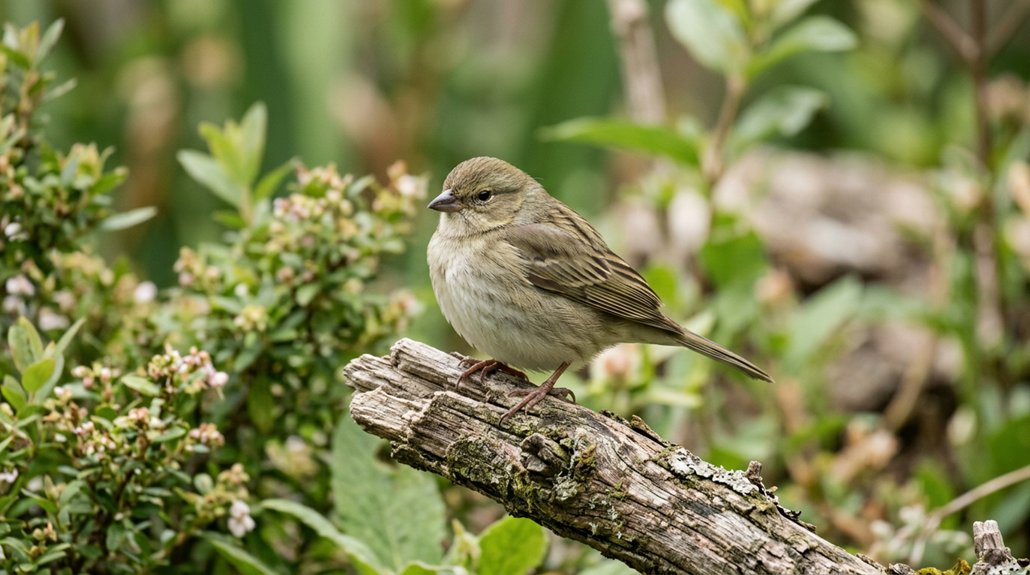
If you want a low-maintenance bird, choose a species that fits limited daily handling, routine feeding, and simple enclosure care. Finches and canaries are among the easiest: they need fresh food and water daily, weekly cage cleaning, and minimal handling. Budgies need more interaction, while calm parrots like Pionus or Poicephalus can tolerate time alone better. Doves are also practical, and the best choice depends on how much contact you can provide.
Key Takeaways
- Finches are the least interactive, need roomy flight cages, and do best with same-species companions.
- Canaries require minimal handling, live well alone, and are ideal for owners wanting song and low contact.
- Doves are calm self-entertainers with lighter mess and clear care needs, making them practical for busy households.
- Budgies are more social and engaging, but need about an hour of daily out-of-cage time and regular interaction.
- Pionus and Poicephalus parrots are quieter, more independent options that tolerate time alone better than many parrots.
What Makes a Low-Maintenance Bird?
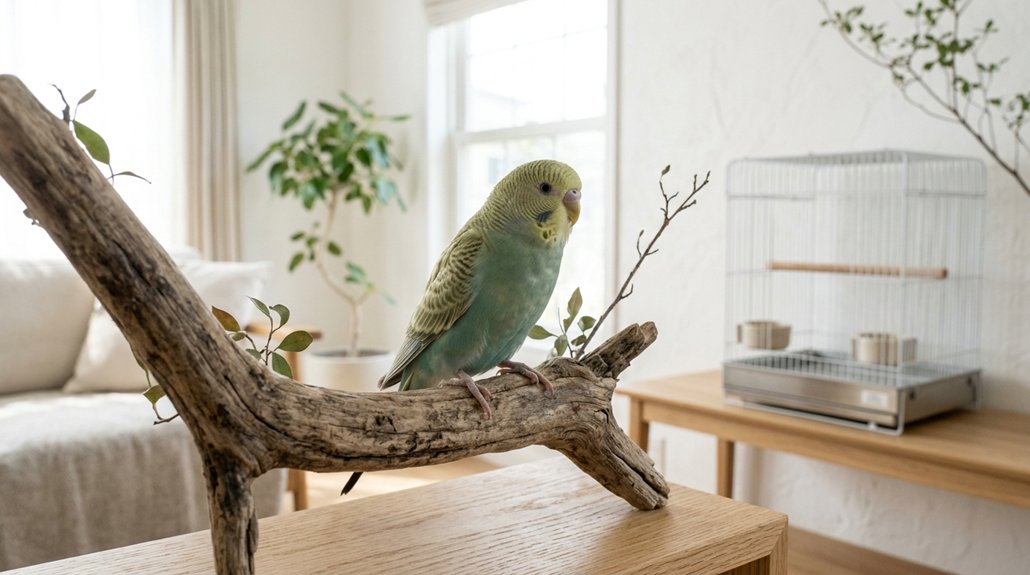
Low-maintenance birds usually need less daily hands-on interaction—often just 0 to 2 hours—and can comfortably self-entertain in a well-equipped cage, which makes species like finches, canaries, and some Poicephalus parrots a better fit for busy owners. You should expect minimal interaction to be balanced by reliable basics: fresh food and water every day, weekly cage cleaning, and simple enrichment such as perches, toys, and safe foraging items. Birds that are smaller, typically under 8 to 13 inches and lighter than 3 to 9 ounces, often need less housing space and create less mess. An independent temperament also helps, since birds that tolerate alone time are less likely to develop stress-related behavior. Even so, you’ll still need routine vet care and long-term commitment.
Best Low-Maintenance Birds for Busy Owners
For busy owners, the best low-maintenance birds are those that can stay healthy with straightforward daily care and limited hands-on interaction. Finches, such as zebra finches, fit this profile well; you can keep them in roomy flight cages with same-species companions, and their care usually stays limited to feeding, watering, and cleaning. Canaries also need minimal handling and can live alone in a properly sized cage with good nutrition and occasional flight time. If you want a bird that self-entertains, doves are practical, with clear diet requirements, UV light, and several hours out of the cage. Calm Poicephalus and Pionus parrots can suit you too, since they’re quieter and tolerate time alone better.
Budgies, Canaries, and Finches Compared
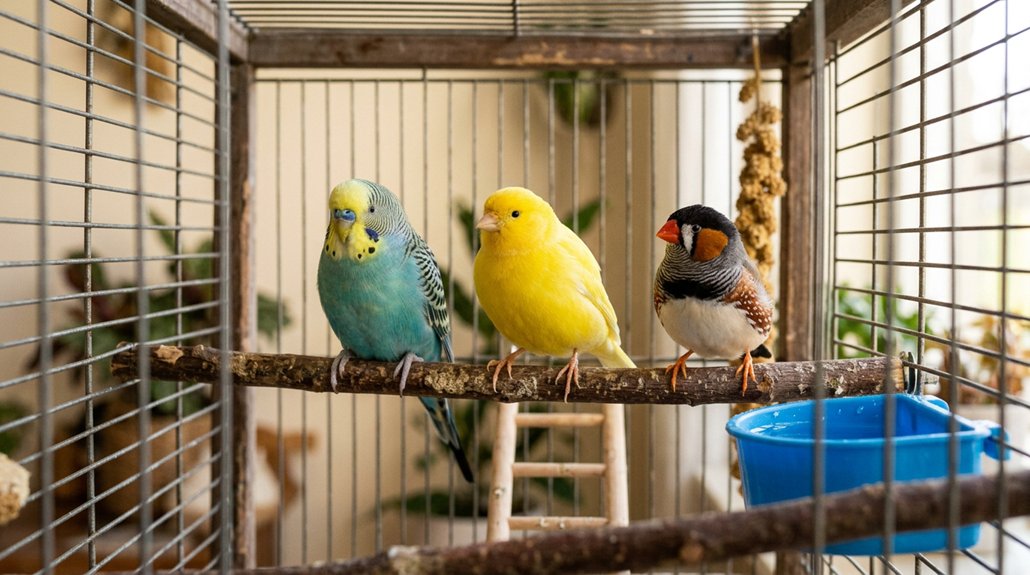
Budgies, canaries, and finches each fit a low-maintenance lifestyle, but they differ in how much interaction they need: budgies are social parrots that bond with you, can learn tricks and speech, and need at least an hour of daily out-of-cage time with toys and training; canaries are mostly hands-off singers that can live alone, prefer minimal handling, and need a flight-capable cage with a balanced seed-and-greens diet; finches are the least interactive, thriving in roomy flight cages with same-species companions and little to no handling. You should choose budgies for engagement, canaries for song and minimal contact, and finches for quiet observation. Color morphs are common in all three, while breeding behavior is easiest to manage in finches and canaries when you provide space, proper diet, and routine care.
Calm Parrots That Handle Alone Time Well
If you need a calm parrot that can manage periods of alone time, pionus parrots, Poicephalus species such as Senegals and Meyer’s parrots, and lineolated parakeets are strong options. You’ll get quiet companions with stable temperaments and modest social demands.
- Pionus parrots are quieter than many larger parrots and can stay alone for several hours, though they still need about 3 hours of supervised out-of-cage exercise.
- Poicephalus birds are low-key and often self-entertaining, so they cope better with absence than highly social parrots.
- Lineolated parakeets adapt well to routines when you’re away part of the day.
- Use independent foraging, toys, and regular interaction to reduce stress and preserve behavior.
Which Bird Fits Your Lifestyle Best?
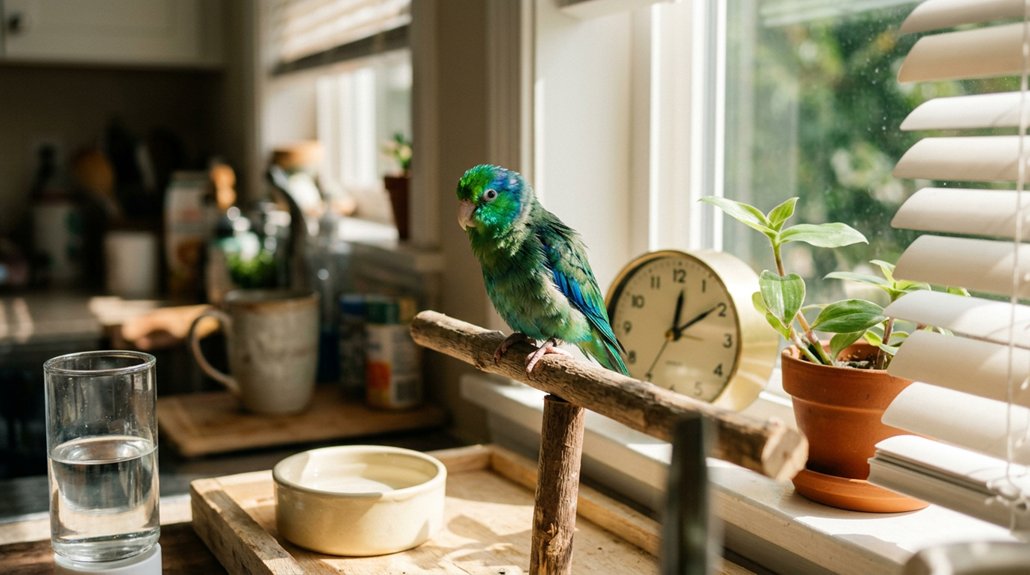
Choosing the right bird depends on how much time, noise, and hands-on interaction you can realistically provide. If you want minimal maintenance, finches fit best: they’re flock birds, do well in roomy apartment friendly aviaries, and need only feeding, watering, and same-species companions. If you prefer quiet observation, canaries are better; they’re hands-off, low-noise, and suited to owners who won’t handle them often. If you want a pet that bonds with you, budgies offer more interaction and about an hour outside the cage daily. For more independence, Pionus and Poicephalus parrots can manage several hours alone. Doves suit you if you want gentle interaction, lighter mess, and moderate exercise needs. Among allergy friendly companions, consider doves and canaries first, then assess your routine, space, and tolerance for noise.
Frequently Asked Questions
What Is the Lowest Maintenance Bird to Own?
Finches are usually the lowest-maintenance birds you can own. With proper finch care, they need a roomy cage, fresh food, water, cleaning, and a companion. Compared with parakeet basics, they’re simpler and less demanding.
What Is the 3 3 3 Rule for Birds?
The 3-3-3 rule’s your bird’s survival compass: 3 days of quiet recovery, 3 weeks of trust-building, 3 months of settling. You’ll prevent avian separation stress and support behavioral conditioning by pacing interactions.
What Kind of Birds Enjoy Being Alone?
Finches, canaries, doves, Pionus, and Poicephalus birds often enjoy alone time. You’ll notice finch companionship is flock-based, while canary independence is strong. They’re usually content with cages, enrichment, and predictable, brief interaction.
What Is a Good Pet That Doesn’t Need a Lot of Attention?
A quiet finch’s a good pet if you want low attention needs; it’s independent, social with its own kind, and easy to care for. A pocket parrot can also work, but it’ll need regular interaction.
Conclusion
If your days run full, the right bird can still fit your life. Choose a species that tolerates shorter interaction, simple care, and a predictable routine, and you reduce stress for both of you. Budgies, canaries, finches, and select calm parrots each offer different benefits, but your schedule should guide the match. After all, a bird isn’t just a pet; it’s a commitment with wings. Make your choice carefully, and you’ll build a healthier bond.