Getting a dog with kids requires evaluating your family’s readiness, including time, financial commitments, and ability to share pet care. Consider choosing breeds with gentle temperaments, like Golden Retrievers, which suit children’s activity levels. Puppies need intensive training, but adult dogs often adapt quickly. Establish clear responsibilities and safety protocols at home for kids and dogs alike. Dogs enrich family life by promoting empathy and physical activity. Explore further to guarantee you’re truly prepared.
Key Takeaways
- Assess family routines and energy to ensure time for dog care and responsibilities.
- Consider children’s age and temperament to find a suitable dog breed.
- Evaluate financial readiness for initial and ongoing dog ownership costs.
- Learn about time commitments needed for training and socializing dogs.
- Establish a safe, structured home environment with clear rules for dog interactions.
Is Your Family Ready for a Dog?
Determining if your family’s ready for a dog is an essential step before welcoming a furry friend into your home. Consider your family routines and make sure you have the time and energy levels needed for a dog’s training, care, and socialization. Assess your children’s age and temperament; younger kids often struggle with understanding boundaries, so wait until they’re developmentally prepared. Discuss and clearly define family responsibilities to make certain everyone participates in care tasks. Dogs demand a long-term commitment, typically 10-15 years, so evaluate if your household is prepared for the journey. Don’t overlook financial readiness—factor in costs like food, veterinary bills, and grooming. Preparation will make certain you all embrace the joys and challenges of dog ownership together confidently.
Choosing the Right Dog Breed for Families With Kids
When you’re choosing the right dog breed for your family, it’s important to evaluate breeds known for their gentle temperament, such as Labrador Retrievers or Golden Retrievers, to guarantee they’re child-friendly and less prone to aggression. Larger breeds like Bernese Mountain Dogs or Boxers might be a better fit if your children are active and enjoy rough play, as these dogs are often more tolerant. Additionally, reflect on your family’s activity level and any allergies to find a breed that seamlessly integrates with your family dynamics, like high-energy Border Collies for active households or hypoallergenic Poodles for allergy-sensitive homes.
Child-Friendly Dog Breeds
Choosing the right dog breed for families with kids can be a rewarding yet challenging endeavor. Consider breeds with suitable characteristics and incorporate dog training for ideal behavior. Labrador Retrievers and Golden Retrievers, known for their gentle and playful nature, are excellent choices. Large dogs like Bulldogs, with a calm demeanor, can tolerate energetic play. It’s essential to match breed characteristics with your family’s lifestyle while ensuring smaller breeds like Bichon Frises are robust enough for young kids. Child-friendly breeds thrive on regular exercise, reinforcing positive behaviors and enhancing the bond with children.
| Breed | Characteristics | Training Needs |
|---|---|---|
| Labrador Retriever | Friendly, gentle | High |
| Bulldog | Calm, affectionate | Moderate |
| Bichon Frise | Playful, adaptable | Moderate |
Compatibility With Family Dynamics
After exploring child-friendly breeds, your family’s lifestyle plays a key role in selecting the right dog. Consider your family routines; are they active or more relaxed? A high-energy breed like a Border Collie fits well with energetic outings, while Bulldogs match families who enjoy calm evenings. Think about child behavior, too. Larger breeds such as Labrador Retrievers are often more tolerant of kids’ roughhousing. If your children are very young, an adult dog with an established temperament might be advisable due to predictable behavior and easier integration into the family. Meanwhile, breeds known for their gentle nature, such as Poodles, guarantee a harmonious environment for younger kids. Research thoroughly to find a breed that seamlessly aligns with your unique family dynamics.
Puppies vs. Adult Dogs: Which Is Better for Families?
How do you decide between puppies and adult dogs for your family? Puppies can bring joy, but they require intense puppy training—a commitment that might prove challenging if you’ve got young children at home. Adult dogs, however, tend to have underwent adult adaptation, often arriving already potty trained and less inclined towards destructive behavior. This can be a relief for families balancing the hustle of raising kids. Generally, adult dogs settle into home routines with established personalities, promoting ease in family settings. Adopting an adult dog can also save you from the stress of house training, particularly if your lifestyle requires immediate adaptation. If you’ve older kids, they can lend a hand with training, making puppies a more feasible option.
Time Commitment for Dog Socialization
When bringing a dog into a family, understanding the time commitment for socialization is essential. Puppies thrive when exposed to a variety of socialization activities between 3 and 14 weeks, a critical period that shapes their confidence and adaptability. This means prioritizing consistent exposure to different people, environments, and animals. Adult dogs often need gradual introductions to adapt to new family setups, so patience is key.
To guarantee a well-rounded canine companion, involve the entire family in socialization efforts. Engage in regular playdates or social activities—building positive interactions strengthens bonds and helps your dog develop robust social skills. Remember, this journey isn’t short; ongoing training and socialization might take months, but it ultimately enriches both your dog’s life and yours.
Creating a Kid-Friendly Home for Dogs
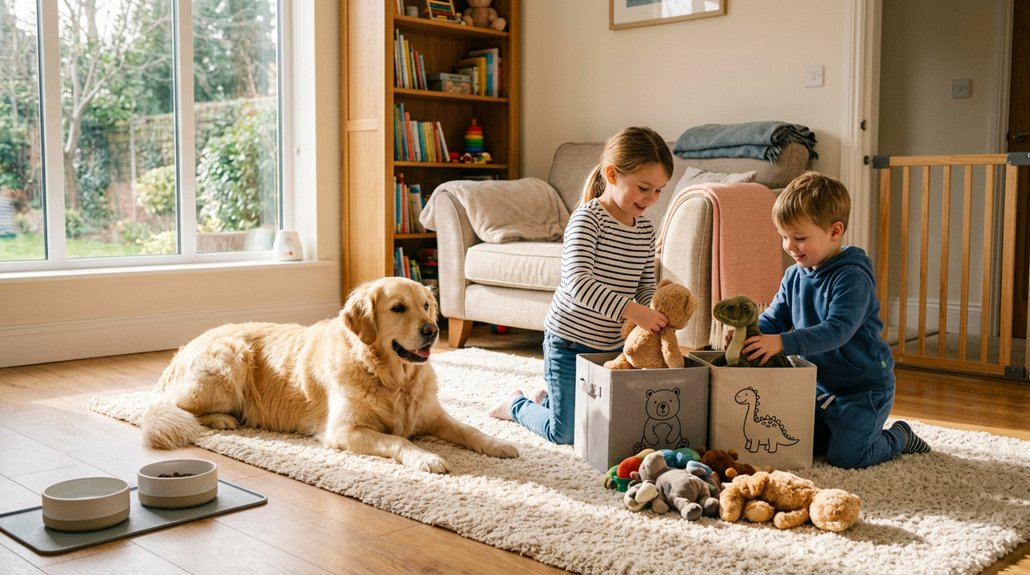
Creating a kid-friendly home for your dog involves setting up safe interaction protocols and making pet-friendly adjustments. Designate a secure space for your dog to retreat when they need a break from the bustle, and use baby gates to establish boundaries that guarantee everyone’s safety and comfort. Secure potential hazards out of reach, and encourage children to participate in care duties like feeding and grooming to build a nurturing bond with their furry friend.
Safe Interaction Protocols
While introducing a dog into a home with children, establishing safe interaction protocols is essential for fostering harmonious relationships. Start by teaching pet etiquette, encouraging calm movements, and soft hands when approaching areas like the dog’s back, steering clear of sensitive spots such as tails or bellies. Interaction guidelines should also include gradual introductions; let your dog sniff your child’s hand before petting to enhance trust. Guide your children to respect your pet’s emotional needs by modeling respectful behavior and creating clear rules, such as avoiding disturbance during mealtimes or when your dog is resting. Empower them to recognize warning signs like growling or a stiff posture, so they know when your dog needs space. You’ll cultivate a compassionate and safe environment for both kids and pets.
Pet-Friendly Home Adjustments
After establishing safe interaction protocols with your children, it’s important to make your home accommodating for both young ones and their furry friends. Start by removing potential choking hazards like small toys and hazardous items to create a safer environment. Establish pet safe spaces, such as designated areas with crates or beds, allowing your dog to retreat and feel secure amid household chaos. Installing pet gates can help you control your dog’s access to specific areas, reducing unsupervised interactions, especially during meal times.
Opt for durable, easy-to-clean furniture and flooring that can withstand the wear and tear of family life. Ultimately, a consistent routine for family pet care responsibilities not only keeps your home organized but also teaches children the importance of structure in caring for pets.
Sharing Pet Care Responsibilities in the Family
Integrating pet care responsibilities into your family routine isn’t just a chore—it’s an opportunity to nurture responsibility and empathy among your children. Task delegation encourages kids to take charge, whether they’re feeding, grooming, or helping walk the dog. Choose age-appropriate tasks to build empathy as children learn to meet the needs of their furry friend. Regular family discussions about the dog’s care routine can foster teamwork, ensuring everyone knows their role. Remember to celebrate your children’s efforts with positive reinforcement to keep them motivated. Creating a shared routine strengthens family bonds and forms lasting memories, highlighting the importance of daily care. These practices not only make pet ownership manageable but enrich your children’s development in meaningful ways.
Budgeting for a Family Dog
Owning a dog involves more than just love and companionship; it’s a financial commitment that requires thoughtful budgeting. The average annual cost can range from $1,200 to $2,000. Start by considering one-time acquisition expenses, with adoption fees averaging $50 to $300, while purebred puppies might set you back $3,000 or more. Regular costs include dog food budgeting, which varies from $250 to $700 annually, influenced by the dog’s size and nutrition needs. Vet checkups costs are crucial too; routine visits for vaccinations and check-ups typically range between $200 to $500 annually. Factor in additional pet care expenses, like grooming or training, costing upwards of $500. Pet insurance, costing $30 to $70 monthly, can relieve potential medical financial strains.
How Dogs Enhance Family Life: Emotional and Physical Benefits
While deciding to welcome a dog into your family, it’s vital to recognize the profound emotional and physical benefits this companion can bring to your household. Dogs act as incredible catalysts for dog therapy, reducing feelings of loneliness and promoting emotional well-being. Kids especially gain a sense of companionship and responsibility, which boosts their empathy and social skills. The need for regular walks and playtime increases physical activity, fostering healthier lifestyles. Family cohesion is enhanced through shared pet care duties, boosting collaboration and communication among all members. Furthermore, dogs offer a comforting sense of security, enhancing the overall atmosphere at home. Fundamentally, a dog’s presence can enrich your family life, providing invaluable support and joy.
Tackling Parenting and Dog Ownership Challenges
Welcoming a dog into your family can enhance your life tremendously, but it also comes with unique challenges that require thoughtful consideration and planning. Balancing parenting duties with pet care is essential. Utilizing effective parenting strategies tailored to dog ownership is significant. Adult dogs often ease some pressures, demanding less initial dog training than puppies, leaving more energy for your kids. Involving your children in pet care cultivates important life skills like responsibility and empathy.
Incorporating a dog into your family enhances life, teaching children responsibility and empathy through shared care.
- Assign tasks like feeding and grooming to promote discipline.
- Adult dogs often suit families better due to reduced training needs.
- Clear rules strengthen safe and positive interactions between kids and dogs.
- Ongoing communication guarantees harmony and prevents behavioral issues.
Embrace these challenges with dedication, fostering a fulfilling, cooperative household.
Frequently Asked Questions
What Is the 3-3-3 Rule With Puppies?
The 3-3-3 rule is essential for understanding puppy socialization and family dynamics. In the first 3 days, expect stress. In 3 weeks, familiarity grows. By 3 months, they’ll thrive in your family’s routine. Be patient.
What Is the 90 10 Rule for Dogs?
The 90/10 Rule for dogs insists on prioritizing positive dog training. Keep 90% of interactions joyful and controlled for kid safety. This minimizes behavioral risk, fostering a harmonious home. Always guarantee rewarding experiences for a happy, secure pup.
What Is the 10-10-10 Rule for Kids?
The 10-10-10 Rule for kids is akin to a hero’s journey—considering dog breeds, new training methods, family dynamics, and child responsibilities over 10 days, 10 months, and 10 years to guarantee you’re truly prepared.
Is It Better to Get a Dog Before or After Having Kids?
It’s better to get a dog when your youngest is at least 2, considering family dynamics, pet costs, and child responsibilities. Prioritize age considerations, safety measures, training tips, and fitting dog breeds when introducing pets.
Conclusion
Bringing a dog into a family with kids is a big decision that requires careful consideration. Did you know that families with pets tend to have fewer stress-related health issues? Studies show a 31% reduction in stress levels. By embracing this commitment, you’re not just adding a furry friend but also nurturing emotional bonds and lifelong memories. With the right preparation, sharing responsibilities and joys, you’ll find pet ownership rewarding for everyone.