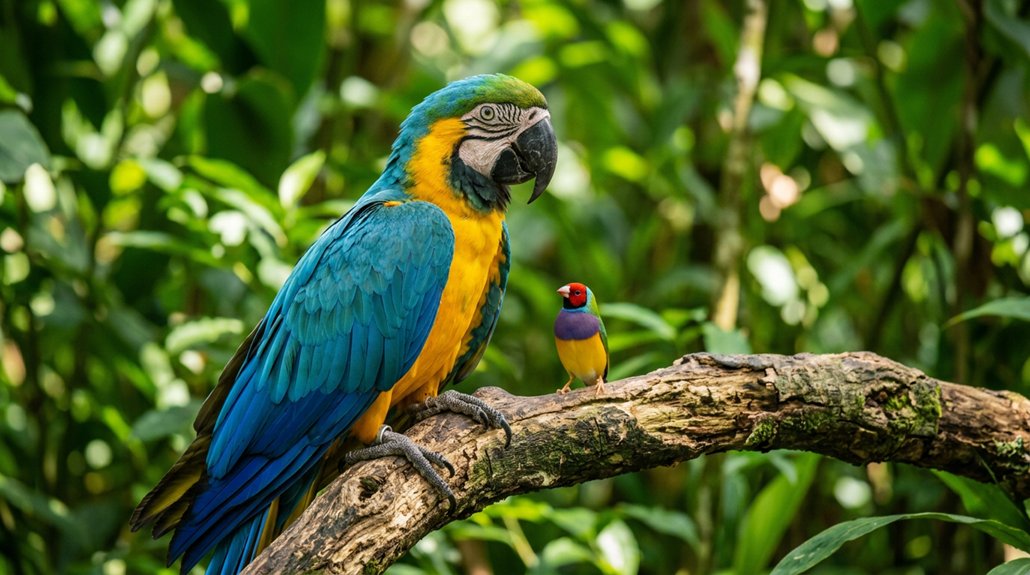
Choosing between small and large pet birds depends on your space, time, noise tolerance, and budget. Small birds like budgies, cockatiels, finches, and canaries usually need less room and cost less, but they still need daily interaction and enrichment. Large parrots such as African greys, macaws, and cockatoos need much larger enclosures, more hours of attention, and a longer financial commitment. If you compare lifespans, housing, and care needs, the best fit becomes clearer.
Key Takeaways
- Small birds suit busy or apartment lifestyles better because they need less space, noise, and daily hands-on time.
- Large parrots need much bigger cages, more durable housing, and far more room for safe flight and exercise.
- Small birds usually need 1–3 hours of daily interaction, while large parrots often require 3–5+ hours of attention.
- Large parrots can live 30–80 years, so they demand a long-term commitment far beyond most small birds.
- Small birds cost less to buy and maintain, while large parrots bring much higher startup, food, toy, and veterinary expenses.
Small Vs Large Pet Birds: What’s the Difference?
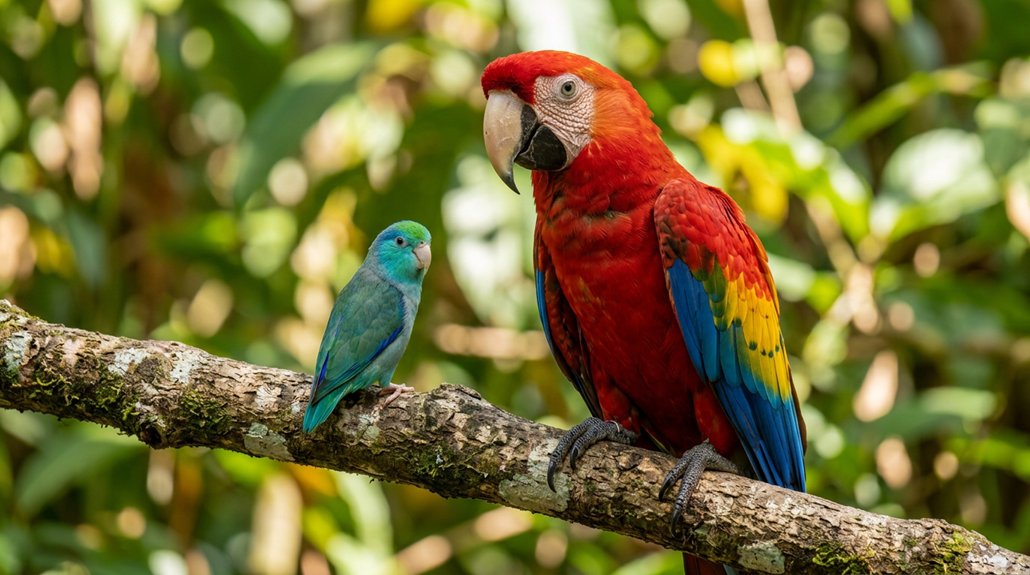
Small and large pet birds differ most in size, lifespan, space needs, cost, and social demands. You’ll also notice clear housing differences: small birds like parakeets, canaries, finches, and cockatiels usually weigh under 4 ounces and can live in compact cages, while large parrots such as African greys, macaws, and cockatoos need flight-capable enclosures. Their dietary needs also scale with size, because larger species usually require greater food volume and more specialized feeding support. Small birds often live 7–20 years and are generally less expensive to buy, house, and maintain. Large parrots may live 30 years or more, sometimes far longer, and usually need higher spending for enrichment, veterinary care, and daily interaction. You’ll also find large birds are typically louder and more socially demanding.
Which Bird Size Fits Your Space?
When it comes to space, the best bird for you is the one that fits your home’s footprint and your daily routine. Start with room measurement: a single budgie or cockatiel can live in a cage about 18–24 inches wide and deep, while conures, macaws, and similar parrots need much larger enclosures. In apartments, tabletop cages and compact species usually fit better than floor-to-ceiling setups. Your noise tolerance matters too; finches, canaries, and many budgies are generally easier on neighbors than larger parrots. Consider these space-related tradeoffs:
Choose a bird that fits your space, routine, and noise tolerance.
- Relief from clutter
- Less stress from crowding
- Cleaner sightlines in small rooms
- Lower risk of neighbor complaints
- A more manageable housing commitment
How Much Time Do Pet Birds Need?
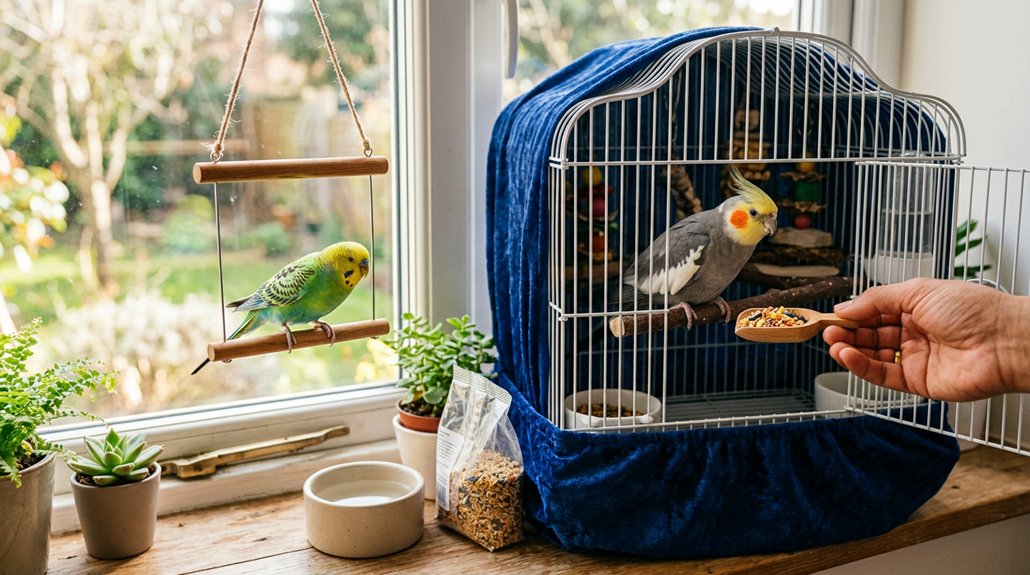
You’ll need to budget daily time for social contact, supervised out-of-cage activity, and basic care, even with smaller birds. Small parrots often need 1–3 hours of interaction or exercise each day, while larger parrots commonly need 3–5+ hours of direct attention, training, and enrichment. If you choose an intelligent species, you’ll also need short, repeated mental-stimulation sessions, plus routine cleaning and regular veterinary care.
Daily Social Time
Daily social time is a major factor in a bird’s mental and physical health, and the amount needed varies widely by species. You’ll need to match your bird’s baseline to its age, species, and history, then track behavioral milestones and adjust enrichment schedules accordingly.
- Budgies and cockatiels: 1–2 supervised hours daily
- African greys, macaws, cockatoos: 3–5+ hours, sometimes more
- Finches and canaries: daily visual, auditory, and flock contact
- Young hand-reared birds: extra early interaction
- Older or rehomed birds: gradual trust-building time
Consistent routines matter: flight, exercise, and human contact should occur every day. If you skimp on social time, you’re increasing the risk of feather plucking, screaming, and other stress-related behaviors.
Training And Enrichment
Training and enrichment also need to be matched to your bird’s size, species, and temperament. | Bird type | Time needed |
| — | — |
|---|---|
| Small parrots | 30–60 min |
| Large parrots | 3–5 h |
| Training | 5–15 min |
| Enrichment | Multiple bouts |
| Flight time | Daily |
You should provide foraging enrichment, chewable items, and puzzle feeders every day. Use positive reinforcement in brief sessions to teach step up, target, and recall. Small birds usually do well with 30–60 minutes of focused interaction, while African greys and macaws need several hours of mental stimulation and supervised out-of-cage activity. Rotate toys every 1–2 weeks to reduce boredom and unwanted behaviors. Consistent routines improve learning and welfare. If your schedule can’t support this level of engagement, a lower-demand species may be the better fit for you.
How Do Bird Lifespans Affect Commitment?
A bird’s lifespan directly determines the length of your commitment, and that commitment can range from several years to several decades. If you choose a longer-lived species, you’ll need to plan for sustained housing, veterinary care, enrichment, and daily social interaction over time. You should also make contingency plans for future changes in your finances, health, or living situation.
Lifespan And Commitment
Bird lifespan should be treated as a primary commitment factor, because the time horizon changes dramatically by species size. Small parrots, like budgies, may fit a 6–15-year plan, but cockatiels often require 15–20 years, and large parrots can exceed 30–80 years. You’ll need age planning for your own future availability and realistic daily interaction.
- Relief: a short commitment can feel manageable
- Anxiety: longer lifespans demand sustained focus
- Respect: each bird’s needs stay constant
- Pressure: housing and veterinary costs accumulate
- Security: inheritance arrangements matter for very long-lived birds
Choose a size that matches your willingness to provide years of social contact, enrichment, and medical care. If your circumstances change, the bird’s lifespan makes continuity, not convenience, the core issue.
Planning For Long-Term Care
Planning for long-term care starts with matching your commitment to the bird’s lifespan, because that timeline shapes every practical decision you’ll make. If you choose a budgie, you’re planning for 6–15 years of food, annual wellness checks, and routine supervision. If you choose an African grey or macaw, you’re committing to decades of specialized veterinary care, daily enrichment, and housing that may need permanent upgrades. Build long term budgeting around food, toys, diagnostics, boarding, and future treatment. Review insurance options early, since large parrots can incur high costs. You should also create emergency planning and legacy arrangements so the bird has continuity if your circumstances change or you outlive it.
Small Pet Birds: Budgies, Finches, And Cockatiels
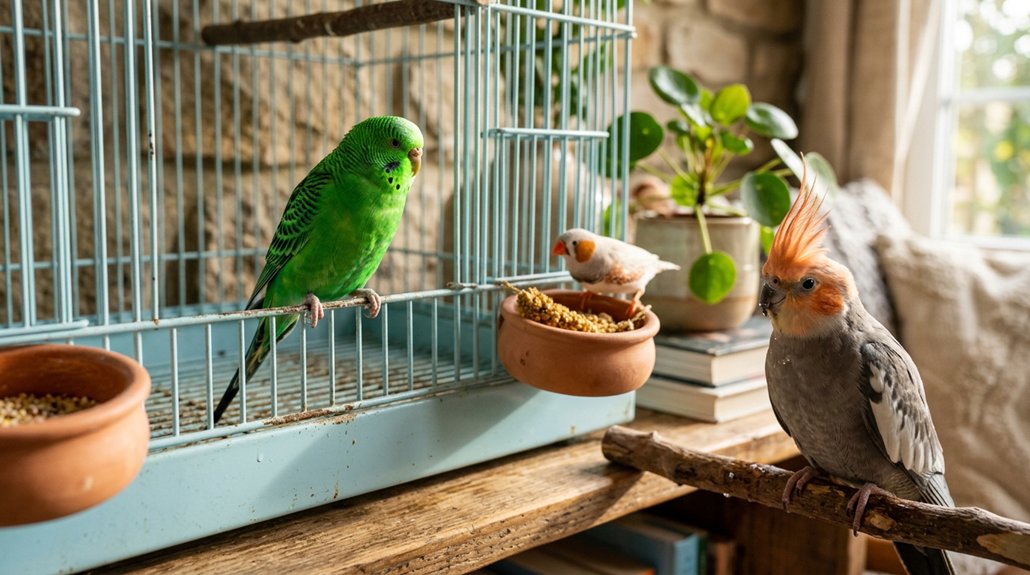
If you’re considering a small pet bird, budgies, finches, and cockatiels each offer different social and care needs. Budgies are 6–8 inches long, alert, and often trainable; with socialization, they can learn words and tricks. Cockatiels are larger, more communicative, and need a roomy cage with perches and daily exercise. Finches are tiny, best kept with their own species, and usually don’t want handling.
- Feather dust can affect your home.
- Noise levels vary from soft finch chirps to budgie chatter.
- Budgies may reward you with interaction.
- Finches can ease you with calm flock behavior.
- Cockatiels may feel deeply engaging.
Choose the species that fits your space, companionship goals, and commitment to balanced diets, vet care, and years-long responsibility.
Large Parrots: Greys, Macaws, And Cockatoos
Large parrots like African greys, macaws, and cockatoos can be rewarding, but they’re a major long-term commitment: many live 30+ years, and some macaws and cockatoos can reach 50–70 years. You should plan for daily management that matches their intelligence and social needs. African greys need about 4–5+ hours of mental stimulation and interaction to reduce boredom-related behaviors. Their vocal mimicry is advanced, but it doesn’t replace enrichment. Macaws, especially hyacinths, need very large enclosures, strong perches, flight space, and materials that meet chewing needs. Cockatoos require intense handling and contact; if neglected, they can develop screaming, feather-plucking, or excessive egg laying. You’ll also need to maintain regular avian veterinary care and appropriate housing.
How Much Do Pet Birds Cost To Care For?
Bird ownership has a predictable base cost, but the total rises quickly with species size and longevity. Your budget breakdown should include startup housing, food, veterinary care, and enrichment. Small birds often need $150–$400 yearly for food and supplies, plus $50–$200 for toys and perches. Initial setup can be $150–$400. Routine exams usually run $75–$250, while sick visits may add $200–$800 or more. Larger parrots cost more: cages alone can reach $800–$3,000+, and annual care can be several hundred dollars before diagnostics. Build emergency savings early, because illness or injury can create sudden, high bills.
- Rising costs can strain your plan.
- A larger cage changes your finances.
- Veterinary surprises can feel urgent.
- Cheap toys wear out fast.
- Long lifespans amplify commitment.
Which Pet Bird Is Right For Your Lifestyle?
Cost is only one part of the decision; the better question is whether a bird’s size, noise level, lifespan, and daily care demands fit your routine and living space. If you live in an apartment, smaller birds such as budgies, cockatiels, canaries, or finches usually offer better apartment compatibility because they’re quieter and need less room. You’ll still need daily out-of-cage exercise and 1–2 hours of interaction. If you want a long-term companion, consider that large parrots may live 30–60+ years and require more training, enrichment, and veterinary care. For busy schedules or frequent travel considerations, a smaller species may be more manageable, but only if you can provide consistent socialization. Match the bird to your time, noise tolerance, budget, and commitment horizon.
Frequently Asked Questions
What Is the 3 3 3 Rule for Birds?
It’s a guideline for your bird’s behavioral milestones and bonding timelines: first 3 days, stress and little eating; 3 weeks, testing boundaries; 3 months, stronger trust and personality. It’s not a strict protocol.
What Is the Friendliest Small Pet Bird?
Parakeets, especially budgerigars, are usually the friendliest small pet birds. You’ll often get talkative companions with colorful plumage; they can live 7–15 years, bond readily, and some even mimic speech with consistent interaction.
How to Select the Right Pet Bird for You?
You should select a bird by matching its lifespan, social needs, noise levels, space requirements, and budget to your routine. If you can’t commit long-term, choose a smaller, less demanding species with manageable care.
What Is the Best Large Bird to Own?
African greys are usually your best large bird: they’re highly intelligent, can live 30+ years, and mimic speech exceptionally well. Hyacinth macaws are impressive, but you’ll need far more space, money, and specialized care.
Conclusion
Choosing between small and large pet birds comes down to your space, time, budget, and long-term commitment. As with Icarus, enthusiasm alone can lead to trouble if your expectations are too high. Small birds may suit you if you want lower costs and easier housing, while large parrots demand more interaction and resources. Before you decide, assess your routine honestly. The right bird for you is the one you can care for consistently and responsibly.