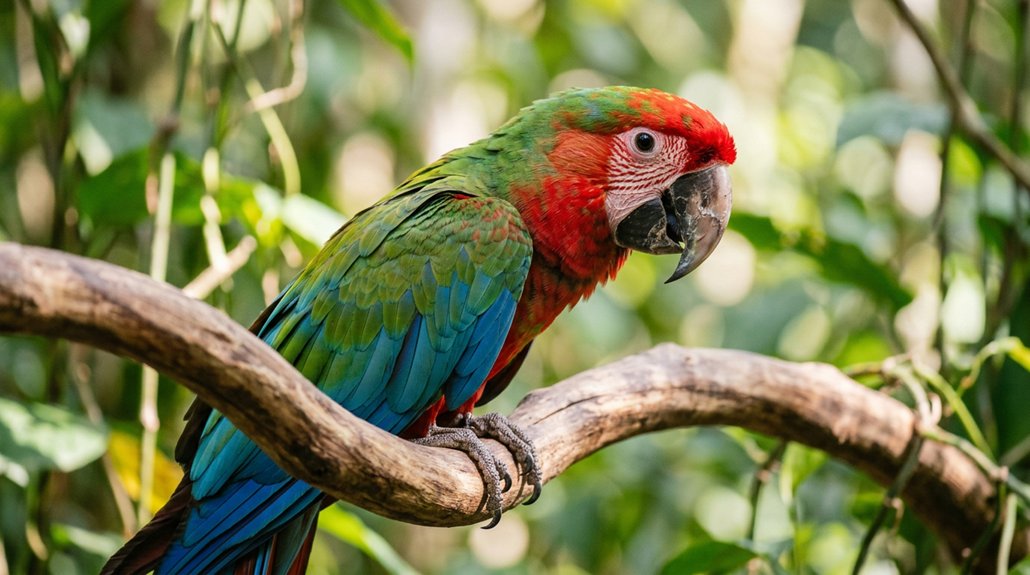
Healthy adult birds should see an avian vet for a thorough wellness exam once a year, but young birds, seniors, and birds with chronic disease usually need visits every 6 to 12 months, sometimes twice yearly. You should book sooner if you notice breathing changes, appetite loss, weight loss, abnormal droppings, or neurologic signs. Regular exams help track weight, baseline health, and subtle changes, and the details ahead can help you plan each visit well.
Key Takeaways
- Healthy adult parrots should have a thorough wellness exam once a year.
- Young or newly acquired birds should see an avian vet within the first few weeks.
- Senior birds and those with chronic disease often need exams every 6–12 months.
- More frequent visits are needed for new symptoms, weight loss, or exposure to sick birds.
- Seek immediate care for breathing trouble, seizures, major droppings changes, or not eating.
How Often Should Your Bird See a Vet?
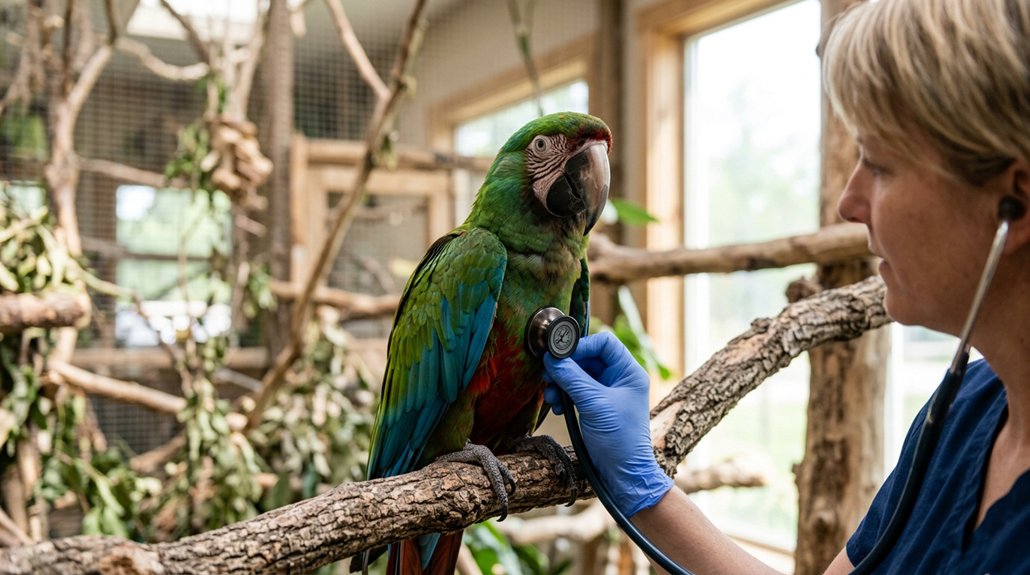
Healthy adult parrots should generally see an avian veterinarian once a year for a thorough wellness exam to establish and monitor baseline health. If you’ve recently acquired a young bird, schedule an early visit for screening, baseline bloodwork, and diet assessment. If your bird is over about 10 years old, twice-yearly exams can help detect age-related disease sooner. Don’t wait for a routine appointment if you notice changes in droppings, appetite, behavior, or breathing, or if your bird has a chronic condition. Regular visits may include a physical exam, fecal testing, beak and nail checks, and bloodwork every 1–2 years as advised. These exams also support behavioral enrichment planning and safe travel preparation, helping you protect health, reduce stress, and respond to subtle problems before they become serious.
Annual Bird Vet Visits for Healthy Adults
If your adult bird is healthy, you should schedule a thorough wellness exam with an avian veterinarian once a year to establish and track baseline health. These visits usually include a physical assessment of weight, feathers, beak, and nails, plus diet and environment review, with fecal testing or bloodwork added if indicated. Because birds often hide illness, annual exams help you catch subtle changes early and keep you prepared for faster care if new symptoms appear.
Annual Wellness Exams
For most healthy adult parrots, a thorough wellness exam once a year is the standard way to establish and monitor baseline health. You’ll get a full physical exam: weight check, feather and beak assessment, and auscultation. If your bird’s history or exam suggests it, your veterinarian may recommend fecal testing or bloodwork as preventive diagnostics. These annual visits matter because parrots often hide early problems; subtle weight loss, feather changes, or developing infections can be caught before they become severe. Your vet will also review diet, enrichment, housing, and routine care, including nail or beak trimming and wing checks. This visit supports owner education and helps reduce future risk. If it’s been over a year, schedule promptly and consider CBC, chemistry, or a mouth swab.
Baseline Health Monitoring
Annual wellness exams give your bird a reliable baseline for health, so your veterinarian can track weight, body condition, feather quality, and other subtle changes over time. During the visit, you’ll usually review body weight, beak and feet, diet records, and husbandry details, while the vet performs feather scoring and other observations to document normal status. If indicated, fecal or blood screening may be added to characterize baseline physiology and support future comparisons. These records help your veterinarian interpret small shifts in condition across visits. For healthy adults, once-yearly monitoring is typically enough; birds over about 10 years old, or those with chronic disease, may benefit from exams every six months to keep age-related changes under close supervision.
Early Illness Detection
Healthy adult parrots should have a thorough wellness exam once a year so your veterinarian can establish baseline weight, feather condition, and organ function and catch early illness before it becomes obvious. Birds often hide disease, so annual checks help reveal subtle symptoms like slight weight loss, mild droppings changes, or feather abnormalities.
| What’s checked | Why it matters |
|---|---|
| Physical exam and fecal test | Finds parasites, pain, or digestive disease |
| Diet and environment review | Identifies risk factors linked to illness |
| Trend records | Tracks weight and behavioral changes over time |
If your bird has subtle symptoms, your vet may add bloodwork or cultures. Yearly records make pattern recognition faster and more accurate. For senior birds or those with known concerns, ask about exams every 6–9 months to improve early detection and timely care.
When Birds Need Vet Visits More Often
A bird’s health can change quickly, so some situations call for vet visits more often than a routine annual checkup. If you’ve just acquired a young bird or a new companion, schedule an avian exam within the first few weeks for screening, baseline bloodwork, and diet review. Healthy adult parrots usually need yearly wellness care, but senior birds and those with chronic disease should be rechecked every 6 months. You shouldn’t wait if you notice changes in droppings, appetite, breathing, energy, or neurologic function, or if your bird stays fluffed up. Behavioral changes can signal pain or infection, and breeding complications also justify prompt evaluation. After procedures like trims, or with exposure to new birds or respiratory outbreaks, your vet may advise extra testing.
What Happens During a Bird Wellness Exam?
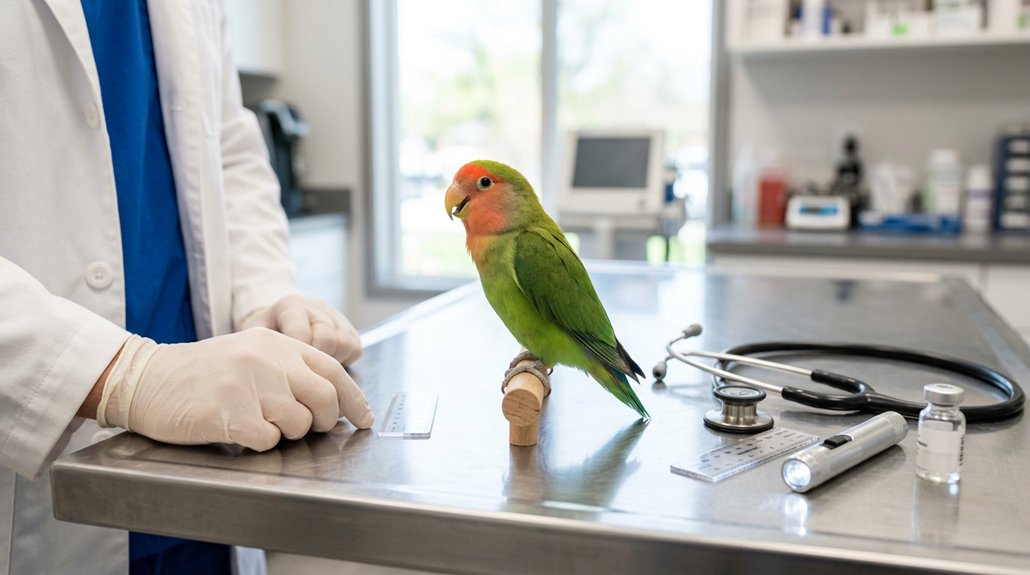
If your bird needs an exam more often than a routine checkup, the wellness visit gives your veterinarian a detailed picture of overall health. Your vet will start with a head-to-claw physical exam, checking weight, body condition, feathers, skin, beak, wings, nails, eyes, ears, and feet. They’ll listen to the heart and lungs and watch breathing rate and effort for subtle changes.
| Step | What’s checked | Why it matters |
|---|---|---|
| Physical exam | Body condition | Baseline health |
| Auscultation | Heart and lungs | Detects hidden issues |
| Testing | Bloodwork, fecal parasite screening | Confirms status |
Your visit also includes a behavioral assessment and review of diet, housing, enrichment, sleep, and routine trims. Depending on your bird’s age, species, or concerns, your vet may recommend swabs or other baseline tests.
Bird Warning Signs That Need a Vet
Birds often hide illness until it’s advanced, so even subtle changes can be meaningful. If you notice persistent fluffing, decreased vocalization, or your bird tucking its head under a wing, don’t wait; these signs warrant prompt veterinary attention. Labored breathing, tail-bobbing, open-mouthed breathing, or mouth-breathing is an emergency and can indicate serious respiratory disease. Sudden neurologic signs, such as shaking, seizures, incoordination, circling, or head tilt, need urgent care. Watch droppings closely: a new white watery component, very loose green or brown stool, or fewer droppings may signal kidney, liver, or gastrointestinal disease. Not eating, vomiting outside normal feeding, excessive lethargy, or sleeping much more than usual also merit immediate assessment. Feather plucking and other behavioral changes can be warning signs too.
How to Prepare for a Bird Vet Visit
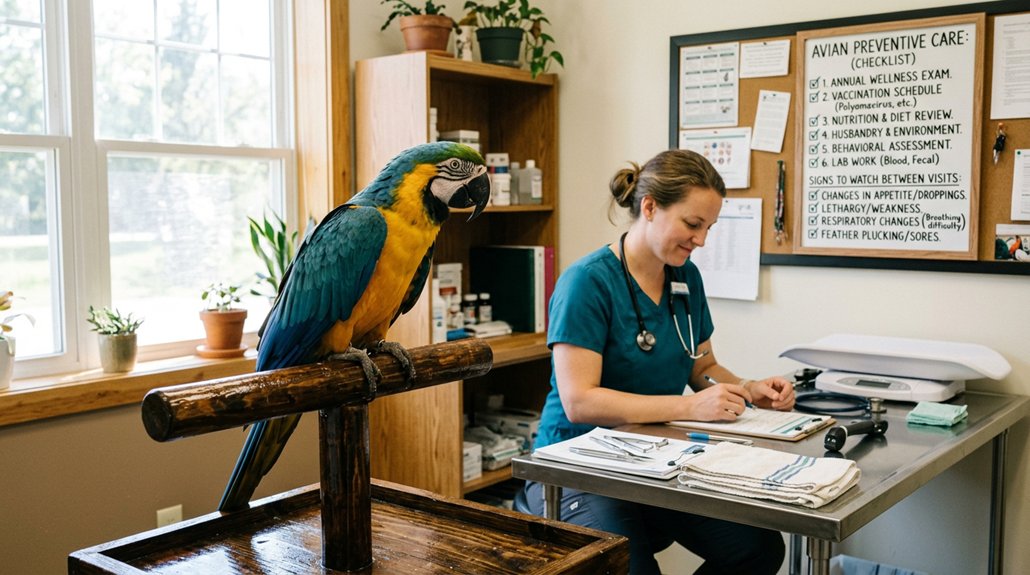
To keep a bird vet visit as low-stress and informative as possible, prepare a secure, well-ventilated carrier that’s escape-proof and lined with fresh cage paper from home, but don’t add food or toys that can create mess or increase anxiety. Keep carrier sanitation high by cleaning and drying it before use. Plan travel timing for your bird’s normal awake hours, cover the carrier for privacy, warm the car, and arrive quietly to reduce noise exposure. Bring a recent photo of the diet packaging, a small sample of daily food, and concise notes on the last molt, medications, clipping history, and any behavior or dropping changes. If diagnostics are expected, ask ahead about fecal testing, a mouth swab, bloodwork, or fasting instructions. Towel-train at home and bring prior records.
Bird Care Between Wellness Exams
Between wellness exams, you’ll want to monitor your bird’s droppings, weight, appetite, and activity each day, because small changes can be the earliest sign of illness. Keep up with basic home care by cleaning dishes daily, sanitizing toys weekly, and checking the beak, nails, feathers, and feet for abnormalities. If you see watery or green droppings, a 5–10% weight loss, breathing changes, or disrupted sleep, you shouldn’t wait for the next visit—contact your avian vet the same day.
Daily Health Watch
Every day, you should watch your bird closely for subtle changes that can signal illness before a routine exam does. Pair daily enrichment with brief feather inspection, then check droppings, appetite, posture, breathing, and behavior.
| What to track | Why it matters |
|---|---|
| Droppings | Color, consistency, or frequency changes can indicate disease. |
| Appetite | Refusal to eat is urgent in small parrots after 24 hours. |
| Breathing | Tail-bobbing or open-mouth breathing needs immediate vet care. |
| Behavior | Hiding, aggression, or seizures can reflect neurologic illness. |
| Log | Weight, sleep, and environment reveal concerning trends. |
Call an avian vet for watery, bloody, or very pale/green stool, prolonged anorexia, labored respiration, or abrupt behavioral shifts. A simple daily record helps you catch problems early and act fast.
Home Care Basics
At home, the best bird care supports health between wellness exams by reducing the risks that most often lead to illness: malnutrition, stress, poor hygiene, and toxin exposure. Feed a balanced diet daily, using pellets as the base with fresh vegetables and only limited seeds or treats, so you don’t encourage fatty liver disease. Weigh your bird and inspect droppings at least weekly. Maintain sleep hygiene by providing 10–12 hours of uninterrupted rest in a dark, quiet space. For environmental enrichment, rotate toys, add foraging tasks, and allow supervised out-of-cage time each day. Keep cages and dishes clean, change food and water daily, deep-clean weekly, and avoid aerosols, nonstick fumes, and smoke to protect respiratory health and wellbeing.
When To Call Vet
Birds often hide illness until it’s advanced, so you should contact your avian vet promptly any time you notice a change from your bird’s normal behavior or body function. Watch for behavioral changes, fluffed posture, quietness, hiding, or not eating. Call urgently for loose, green, bloody droppings or increased watery urine, which can signal digestive, kidney, or systemic disease. Seek immediate care for tail-bobbing, open-mouthed breathing, wheezing, or hoarse calls, because airway problems can worsen fast. Neurologic signs, including seizures, severe shaking, loss of balance, head-tucking, or sudden inappropriate behavior, need the clinic right away. If you can’t reach the office, use the emergency hotline.
| Sign | Meaning | Action |
|---|---|---|
| Not eating | Serious illness | Call now |
| Breathing hard | Airway distress | Emergency |
| Bloody droppings | Internal disease | Urgent |
Frequently Asked Questions
What Is the 3-3-3 Rule for Birds?
The 3-3-3 rule means your bird may spend 3 days stressed, 3 weeks exploring, and 3 months bonding. It tracks behavioral signals, not avian nutrition or health. Watch for illness and don’t wait if signs appear.
How Much Does a Vet Checkup Cost for a Bird?
A bird vet checkup usually costs you $50–$150 for avian exams, plus consult fees. You may pay more for bloodwork, fecal tests, or imaging, so budget roughly $200–$500 yearly for routine care.
What Is the 60/40 Rule for Birds?
You’d feed about 60% pellets and 40% fresh foods, balancing nutrition, enrichment, and fiber. You’ll support behavior training and wing trimming with better health; adjust ratios for age, species, and vet guidance.
Do Birds Need Regular Vet Visits?
Yes, you do need regular vet visits for your bird. They catch subtle illness early, support behavior training and dietary enrichment, and help you monitor weight, feathers, droppings, and age-related changes before problems worsen.
Conclusion
Your bird’s annual exam is like a lighthouse check on a dark coast: it doesn’t change the sea, but it helps you steer safely through it. When you watch for subtle shifts in appetite, droppings, breathing, or behavior, you become the first line of defense. If your bird’s young, senior, ill, or stressed, don’t wait for the next scheduled visit. Prompt veterinary care can catch hidden problems early and protect the life you’re entrusted to guide.