Taking your dog to the vet regularly is essential for their health. Puppies need visits every 3-4 weeks until they’re about 4-5 months old. Young adults, ages 1-7, should see the vet yearly for preventive care. Once they’re seniors, aged 7 and above, biannual checkups guarantee early detection of age-related issues. Routine vet visits help prevent illnesses and extend your dog’s life. Stay informed on maintaining your dog’s well-being by exploring further.
Key Takeaways
- Puppies need vet visits every 3-4 weeks until they are 4-5 months old for vaccinations and growth checks.
- Young adult dogs should visit the vet annually for health maintenance and vaccine updates.
- Senior dogs require biannual vet checkups starting at 7 years old to monitor age-related health issues.
- Regular vet visits are essential for proactive care, disease prevention, and extending a dog’s lifespan.
- Some breeds might need more frequent vet visits, depending on specific health requirements.
Why Regular Vet Visits Matter for Your Dog
Although it might seem unnecessary to visit the vet when your dog appears healthy, regular vet visits are essential for early detection of health issues that often go unnoticed until they’ve become severe. Health screenings allow veterinarians to catch conditions early, saving potential costs and stress. Regular checkups provide the opportunity for behavioral assessments, enabling vets to spot changes that might indicate underlying issues. They’re not just about vaccinations—these visits monitor fluctuations in weight, dental health, and more. Identifying subtle changes guarantees diseases like obesity or dental issues don’t escalate. Proactive care through routine vet consultations is your best strategy to maintain your dog’s health, offering insights into preventive measures that help sustain their well-being throughout life stages.
Puppy Vet Visits: Frequency and Schedule
Taking proper care of puppies involves more than just cuddles and playtime—it’s about ensuring their health through regular veterinary visits. Here’s a detailed schedule for those important early months:
- First Visit (6-8 Weeks): Begin with a thorough exam and start their vaccination schedule. It’s a great time to discuss puppy socialization tips with your vet.
- Follow-up Visits (Every 3-4 Weeks): Continue until they’re 4-5 months old. These visits help complete core vaccinations and support early training strategies.
- Rabies Vaccine (Around 4 Months): At this age, they’ll receive the legally required rabies vaccine.
- First-Year Wellness Checks: Regular check-ups are essential for monitoring growth, adjusting nutrition, and reinforcing training techniques.
Prioritize these vet visits to keep your puppy developing healthily and thriving.
Key Vaccinations and Timing for Puppies
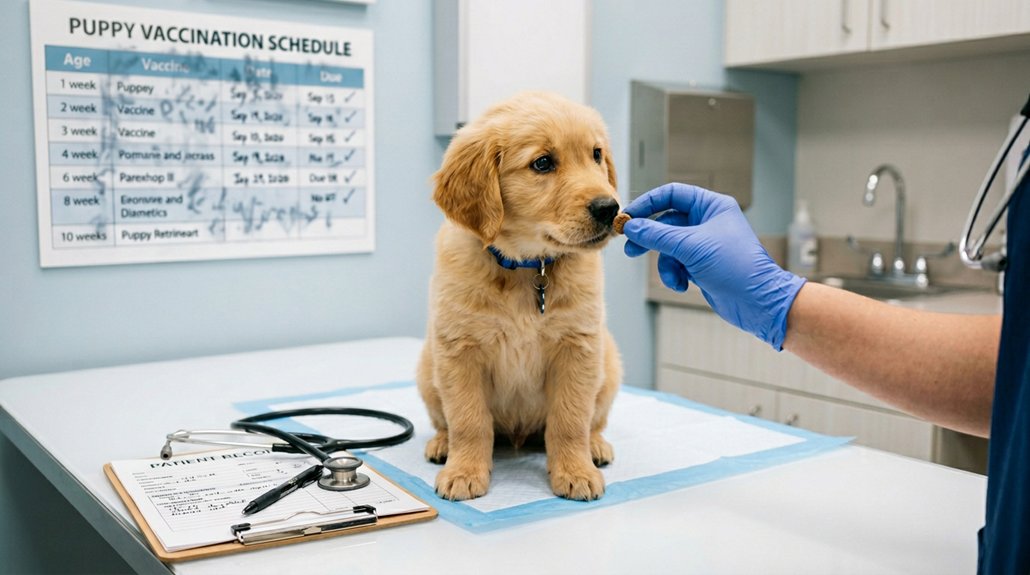
Ensuring your puppy receives the correct vaccinations at the right time is essential for their health and well-being. Generally, your vet will start the core vaccination series between 8 to 12 weeks, with booster shots every 3 to 4 weeks, while the rabies vaccine is typically administered at 4 months. Additionally, non-core vaccines like Bordetella and canine influenza might be recommended based on factors such as your puppy’s lifestyle and risk of exposure.
Core Vaccine Schedule
Curious about the important vaccinations for your new puppy? Ensuring the right puppy vaccination schedule is key to successful immunity development. Start with core vaccinations between 8 to 12 weeks old. Here’s a breakdown of the significant vaccinations:
- Distemper, Adenovirus, Parvovirus, Parainfluenza: Administer these initial doses between 8 to 12 weeks, which are essential for bridging the immunity gap from maternal antibodies.
- Top-Up Vaccines: Schedule follow-up shots every 3 to 4 weeks until they’re 16 weeks old to strengthen their immune system further.
- Rabies Vaccine: It’s legally required in North America and usually given around 4 months of age.
- Follow these important steps to keep your puppy’s health ideal during its critical early months while establishing a robust foundation for lifelong wellness.
Additional Lifestyle Vaccines
While core vaccinations lay the foundation for immunity, understanding additional lifestyle vaccines is vital for tailoring your puppy’s health plan. The Bordetella vaccine helps prevent kennel cough, essential if your puppy frequents dog parks or boarding facilities. Canine influenza vaccination is recommended for areas prone to outbreaks or if your pet’s often around other dogs. Other non-core vaccines, like Lyme disease, depend on regional tick prevalence. Collaborating with your vet guarantees timely protection.
| Vaccine | Recommended Timing |
|---|---|
| Bordetella | First dose at 8-12 weeks |
| Canine Influenza | After initial core vaccines |
| Lyme Disease | Depending on tick exposure |
| Bordetella Booster | Annually or as advised |
| Canine Influenza Booster | Annually |
Following your veterinarian’s schedule prevents diseases during significant growth stages.
How Often Should Young Adult Dogs See the Vet?
For young adult dogs, a yearly vet visit is vital to guarantee their continued health and well-being. These routine checkups provide an opportunity for thorough physical exams that can detect early signs of illnesses, allowing for prompt intervention. During these visits, you’ll also update necessary vaccinations and discuss important preventative health measures like parasite control, dental care, and dietary needs to keep your dog thriving.
Routine Annual Checkups
Ensuring your young adult dog receives routine annual checkups is essential for maintaining their health and longevity. These visits allow for a thorough evaluation that covers key aspects of their well-being:
- Preventive Care: Address vaccinations and options like flea and tick protection.
- Dietary Discussions: Shift your dog from puppy food to an adult diet, focusing on nutritional needs and weight management.
- Behavioral Analysis: Discuss any behavioral concerns and obtain guidance on training techniques.
- Health Screenings: Conduct routine bloodwork and diagnostic tests to catch potential chronic conditions early.
Preventative Health Measures
As a responsible pet owner, understanding the frequency of veterinary visits for your young adult dog is crucial for their ideal health. Young adult dogs, typically aged 1 to 7 years, should have wellness checks annually. These visits include a thorough physical examination to detect early signs of illness and guarantee vaccinations are current. During these sessions, your vet will discuss essential preventative health measures like flea prevention, tick control, and heartworm protection. It’s also an ideal time to seek dietary advice and conduct a behavioral assessment. Some breeds, particularly those with existing conditions or higher disease risks, might benefit from twice-yearly visits. Regular vet consultations help sustain your dog’s health and address any concerns efficiently.
Annual Health Checkups for Adult Dogs
An annual health checkup for your adult dog is a significant aspect of maintaining their well-being and preventing disease. These visits guarantee vaccinations are up-to-date, like those critical rabies boosters, and offer an all-encompassing examination to detect hidden illnesses early. Here’s what to expect:
- Physical Examination: Vets check weight, dental health, and overall condition, addressing issues like obesity and dental disease.
- Annual Bloodwork: Essential for uncovering hidden health conditions and confirming internal organs are functioning properly.
- Dietary and Exercise Review: Discuss potential dietary adjustments and exercise recommendations to support ideal health and prevent obesity.
- Behavioral Consultation: Use this time to address any behavioral changes, safeguarding your dog’s well-being and happiness.
These annual exams are key to your dog’s long-term health.
Why Biannual Checkups Matter for Your Senior Dog
There’s a reason many dog owners schedule extra vet visits as their pets age. Biannual checkups are vital for senior wellness, often starting when your dog reaches 7 years old. During these visits, your vet performs essential health monitoring, using diagnostic tests like bloodwork and X-rays. These tests are key in identifying potential issues like kidney disease, diabetes, and arthritis before they worsen. Regular vet visits also allow for adjustments in diet and medication, tailored to the evolving needs of older dogs, enhancing their overall quality of life. By proactively managing chronic pain, mobility, and cognitive decline, you’re supporting better health outcomes. Ultimately, routine care greatly contributes to extending your senior dog’s lifespan, making these extra visits indispensable.
How to Recognize Signs That Require Emergency Vet Care?
When should you rush your dog to emergency veterinary care? Recognizing emergency symptoms and knowing when to seek a quick vet response is essential. Here are key signs that demand immediate attention:
Identifying emergency symptoms ensures your dog’s wellbeing and timely veterinary intervention during critical situations.
- Breathing Issues or Bloat: Difficulty breathing or a bloated abdomen can signify severe conditions like gastric dilatation-volvulus, demanding swift intervention.
- Persistent Vomiting or Diarrhea: Excessive episodes might indicate a serious health crisis that needs urgent vet assessment.
- Uncontrolled Bleeding: Whether external or internal, it requires quick care to prevent shock and significant blood loss.
- Toxin Ingestion: Consuming harmful substances, including certain foods, necessitates immediate contact with your vet to avoid life-threatening outcomes.
Behavioral changes, such as unresponsiveness, may also suggest distress and warrant a vet’s evaluation.
Customizing Vet Visits Based on Age and Health Needs
While customizing your dog’s vet visits based on age and health needs, it’s essential to align their healthcare routine with the specific life stage they’re in. Puppies require monthly vet visits during their first year for vaccinations and thorough health monitoring, ensuring each phase is closely managed. Once they reach young adulthood, between 1 and 7 years, shifting to an annual wellness exam is recommended to maintain vaccinations and monitor overall health effectively. As your dog becomes a senior, around 7 years and older, biannual visits are important to manage age-related issues with more focused, custom care. Additionally, for dogs with ongoing health conditions or those recovering from illnesses, more frequent visits may be necessary to tailor their care and optimize health outcomes.
Proactive Health Planning for Your Dog’s Wellbeing
Guaranteeing your dog’s well-being requires diligent and proactive health planning, a critical aspect of maintaining their overall health. Regular vet visits aren’t just about treating illness; they’re about preventing it. Here’s how you can contribute to your dog’s longevity:
- Dietary Habits: Collaborate with your vet to tailor nutritious meals suitable for your dog’s specific needs, age, and lifestyle.
- Exercise Routines: Establish consistent exercise programs to maintain ideal weight and boost cardiovascular health, preventing obesity-related issues.
- Scheduled Vet Visits: For dogs of all ages, plan and adhere to regular vet visits, allowing for vaccinations and assessments.
- Preventive Care: Stay ahead with treatments like flea, tick, and heartworm prevention, supported by routine bloodwork and diagnostics.
Implementing these strategies guarantees your dog leads a healthy, fulfilling life.
Frequently Asked Questions
What Is the 3-3-3 Rule for Dogs?
The 3-3-3 rule helps guide you through your dog’s adoption adjustment period. Initially, they’ll show stress signs like hiding. In three weeks, expect settling in. After three months, they’ll likely fully integrate into your home.
What Is the 7 7 7 Rule for Dogs?
Imagine your dog’s health as a garden you tend. The 7-7-7 rule advises vet visits every 7 months for preventive care, ensuring blossoms of wellness and longevity. Puppies, adults, and seniors benefit from tailored health schedules.
What Is the Silent Killer of Dogs?
The silent killer of dogs is often cancer. Pay attention to early symptoms and prioritize regular checkups. Preventative measures like health screenings and veterinary care can help detect chronic conditions, ensuring you’re proactive in illness detection and dog health.
How Often Should a Dog Go for a Wellness Check?
Your dog should have wellness checkups annually if they’re an adult, more frequently as a puppy, and biannually for senior care. Each stage requires attention to guarantee vaccinations, diet, and lifestyle needs are addressed thoroughly.
Conclusion
In caring for your dog, regular vet visits are essential at every life stage to guarantee peak health. Puppies need frequent check-ups to establish a strong foundation, while young adults benefit from annual checkups. Senior dogs require biannual visits to monitor aging-related issues. Always be vigilant about signs that need immediate care. Tailor vet visits based on your dog’s age and unique needs, and prioritize proactive health planning to secure a happy, healthy life for your furry companion.