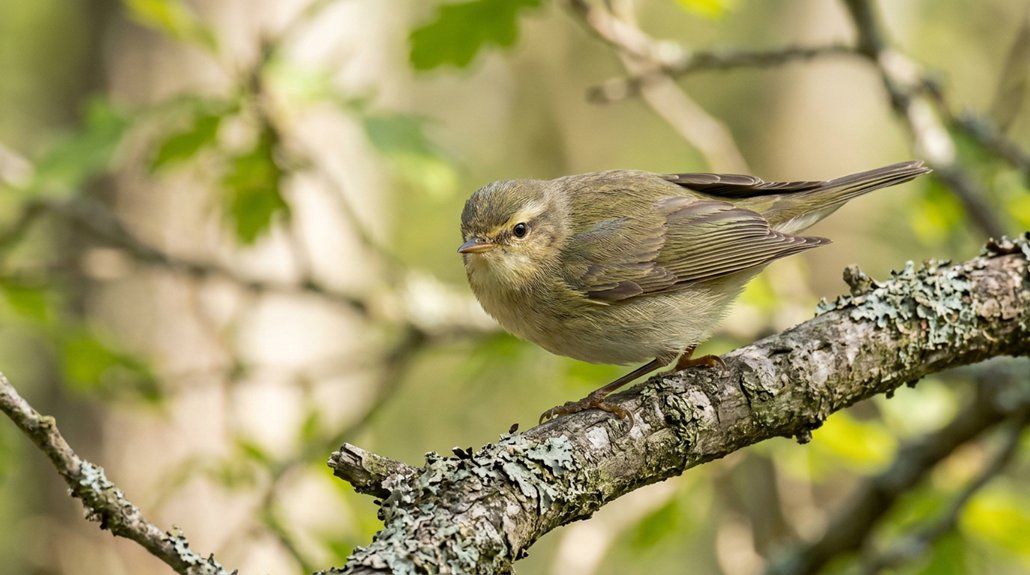
To handle a nervous or skittish bird, watch for fear signals like slicked feathers, rapid breathing, wide eyes, freezing, or biting. Move slowly, speak softly, and avoid direct eye contact. If your bird leans back, crouches, or retreats, stop and give it space. Build trust with short, calm visits at a consistent distance. Use treats and a gentle step-up cue only when your bird stays relaxed, and you’ll soon see how to make each interaction easier.
Key Takeaways
- Watch for fear signals like slicked-down feathers, rapid breathing, freezing, or leaning back, and stop before the bird escalates.
- Approach slowly and quietly with smooth movements, soft speech, and minimal eye contact to avoid triggering flight.
- If the bird shows discomfort, hold still, soften your gaze, and give it space until its posture relaxes.
- Use short, repeated calm visits several times daily to help the bird become comfortable with your presence.
- Build trust with tiny training steps, using treats and a target perch or hand at foot level, and reward calm behavior.
How to Spot Fear in Your Bird
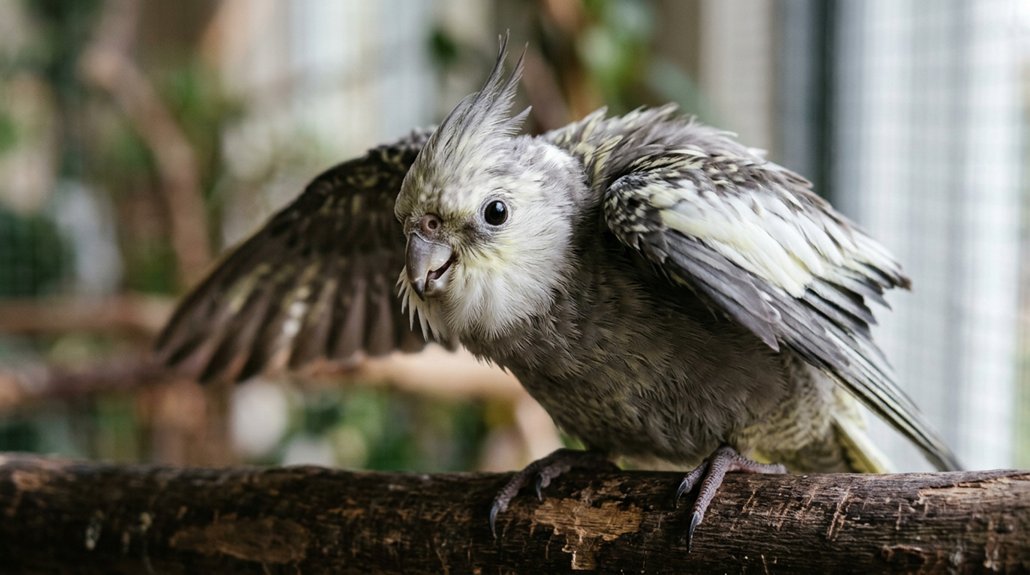
Fear in birds often shows up first in body language and physiology. You’ll often see feathers held tight, rapid breathing, and eye dilation with wide, pinpoint pupils. Watch for posture changes such as leaning back, crouching, stepping one foot aside, or compressing feathers; these usually mean your bird’s discomfort is increasing. Some birds freeze instead, becoming stiff and unusually silent, so don’t assume calm just because they aren’t moving. If you notice lunging, hissing, or biting, treat it as a survival response to feeling cornered, not simple “aggression.” A practical guide is flight distance: note how far away you are when your bird first moves off, and use that measure to judge its current comfort level. Careful observation helps you respond safely and respectfully.
Approach Your Bird Slowly and Quietly
You’ll want to approach your bird slowly, with smooth, predictable movements and a calm voice, so you don’t trigger a flight response. Read the bird’s body language closely for early signs of discomfort, such as leaning back, stepping away, or feather compression. If you see any of these signals, stop immediately and give the bird space before trying again.
Read Body Language
Read your bird’s body language before you get any closer, and move slowly and quietly so you don’t escalate its stress. Watch posture shifts and breath rate: slicked-down feathers, leaning back, crouching, stepping aside, or sudden stillness mean the bird’s comfort is dropping.
| Signal | Meaning |
|---|---|
| Normal posture, slight fluffing | Calm |
| Ready-to-flee stance easing | Tension falling |
| Slicked feathers, stillness | Discomfort |
Use the bird’s flight distance as your boundary, then reduce it only when calm stays consistent. Keep your movements predictable, avoid direct eye contact, and hold position if you notice tension. When the bird relaxes, turn away and remove pressure; this reinforces that calm behavior reduces threat and gives it control.
Stop At Discomfort
Approach slowly and quietly, and stop immediately at the first sign of discomfort—such as leaning back, crouching, stepping a foot aside, or feather compression—so you don’t trigger a flight response. Then hold still and quiet until you see clear calming cues, like normal posture, slight feather fluff, and relaxed weight distribution. In gradual desensitization, you’ll use many short sessions and smaller approach steps, reducing distance by about 0.1 m each time the bird tolerates it. When calm returns, briefly turn away and walk off to remove pressure; this teaches that relaxed behavior leads to safety. Avoid forcing handling or advancing while the bird is uneasy, because rushed contact can increase fear and set back progress. Environment modification can also help by lowering overall stress.
Stop When Your Bird Shows Discomfort
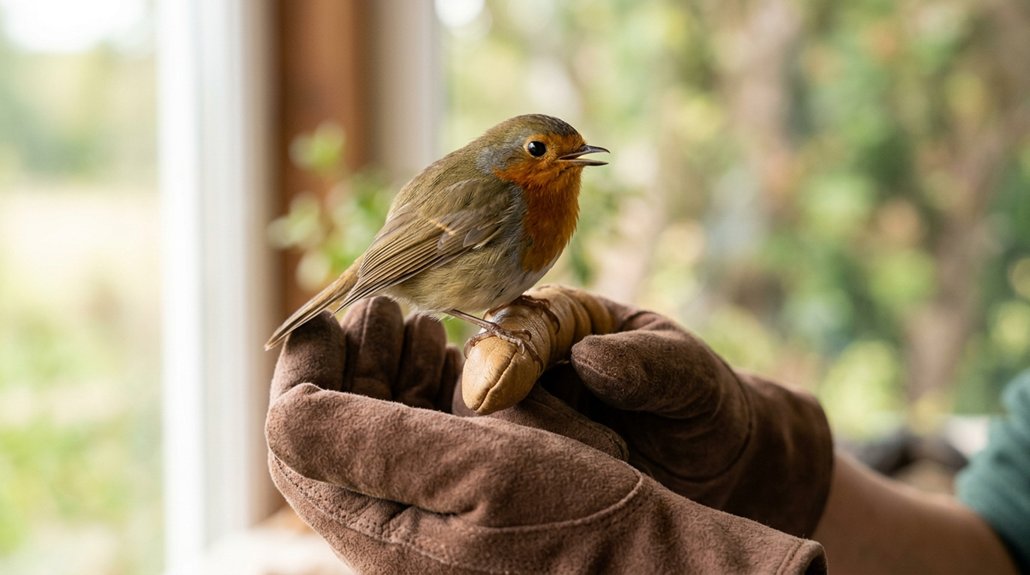
You should stop approaching the cage at the first early discomfort signs, such as leaning back, crouching, feather compression, stepping aside, or widened pupils, so you don’t push the bird past its flight distance. Hold your position and stay still, then wait for clear calming cues before moving again. If your bird retreats, don’t chase or force contact; instead, remove pressure and let that calm response guide the session.
Spot Early Discomfort
Spotting discomfort early helps prevent a bird from escalating into a full flight response. You should watch for subtle shifts in perch orientation, leaning back, crouching, a foot stepping aside, or feather compression. These micro behavioral cues often appear before escape, along with tiny weight shifts, brief freezes, or quick head turns. The moment you see any of them, stop your approach. If you’re working with measured distances, reduce them gradually, such as 1.0 m to 0.9 m to 0.8 m, but halt at the first sign of stress. Don’t force contact or rush. When the bird shows normal posture, relaxed weight distribution, and slight feather fluffing, you can resume only after those calm signals remain steady.
Pause To Reset
When a bird shows early discomfort, stop immediately and hold still to prevent triggering a flight response. Your goal is a brief visual disconnect: soften eye contact, keep your body neutral, and give the bird breathing breaks.
| Signal | Action | Goal |
|---|---|---|
| Leaning back | Stop | Reduce threat |
| Feather compression | Hold still | Prevent escalation |
| Normal posture | Resume slowly | Confirm calm |
| Persistent discomfort | Step back | Restore control |
Wait for normal posture, a slight feather fluff, or a weight shift off the ready-to-run position before moving again. If calm returns, reward it by turning away and ending pressure. Use short sessions, then reduce distance only in small steps after repeated success. If discomfort keeps appearing, back up and rebuild trust; don’t force contact or flood the bird with repeated handling.
Repeat Calm Visits to Build Trust
Repeat brief, calm visits 2–5 times daily to help your bird learn that your presence isn’t a threat. Keep each session 3–5 minutes, at a consistent distance outside its flight zone. This consistent proximity supports progressive desensitization without overstressing your bird. During visits, avoid direct eye contact and sudden movement; speak softly or read quietly so the bird can habituate to you as a neutral presence. If it shows normal posture or slight feather fluffing, decrease distance in small, planned steps, about 10 cm at a time. End each visit by calmly turning away while the bird is still relaxed, reinforcing that calm behavior reduces pressure. After days to weeks, depending on fear level, you can introduce a still hand at the cage edge and pair acceptance with treats dropped into the food bowl.
Teach Your Bird to Step Up
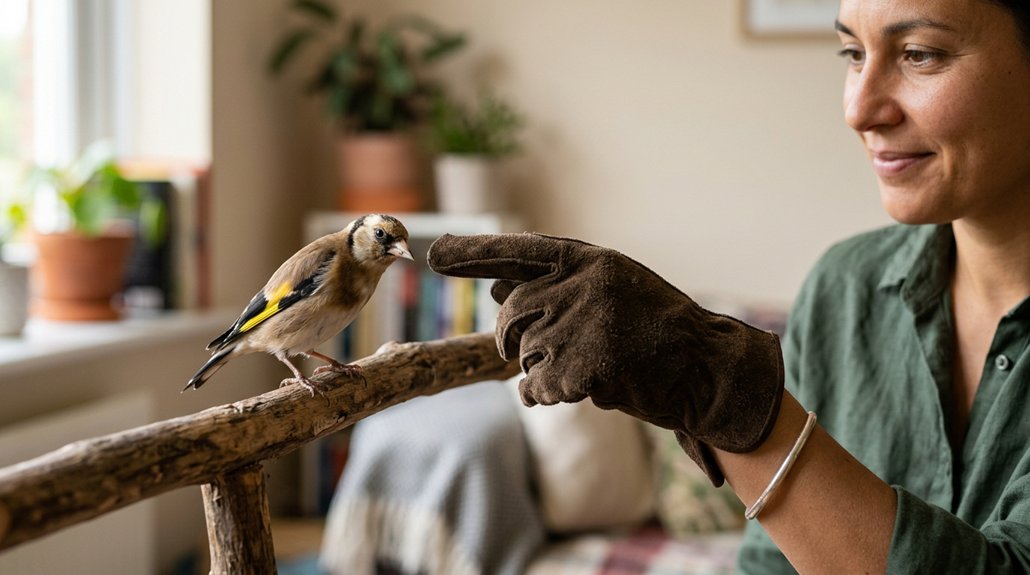
To teach your bird to step up, begin by approaching only to the point where you notice the first subtle signs of discomfort, such as leaning back, a lifted foot, or slight feather compression, then stop and hold your position until the bird calms again.
| Step | Action |
|---|---|
| 1 | Use your bird’s flight distance as your guide. |
| 2 | Rest your hand flat at cage-entrance foot level, or use a target perch. |
| 3 | Let the bird choose to take food, then shift slightly for step training. |
| 4 | Say “step up” just before contact, and stay still if it retreats. |
Keep sessions to about 5 minutes, 2–5 times daily. Progress slowly, allow retreat, and praise calmly when one foot lands on your finger.
Use Treats to Reward Calm Handling
Start by dropping a favorite treat into the food dish from outside the cage so your bird begins to associate your calm presence with something positive before you attempt hand-feeding. Then, once it tolerates your hand near the bars, offer a high-value treat at foot level and let it choose to approach. In short sessions, repeat this 2–5 times daily, keeping each interaction brief and predictable. Use gradual elevation of the treat over sessions to encourage stretching, then stepping onto your finger only when calming signals are clear.
- Watch for relaxed posture
- Stop if it leans back
- Withdraw when feathers compress
- Reinforce calm with immediate distance
- Move from dropping treats to an open hand
Frequently Asked Questions
How to Calm Down an Anxious Bird?
You can calm an anxious bird by reducing stressors, offering environmental enrichment, and using behavioral training with brief, quiet desensitization sessions. Stop if it tenses, wait for calm posture, and reward relaxed behavior with distance.
What Is the 3 3 3 Rule for Birds?
You use 3 minutes, 3 times daily, for 3 days at each step; one study found brief, consistent exposures cut fear responses. Watch bird bodylanguage, add environment enrichment, and advance only when you’re calm and steady.
How to Tell if a Bird Is Nervous?
You’ll notice nervous body language: slick feathers, frozen posture, rapid breathing, wide pupils, or leaning away. Watch vocal cues too—sudden silence, hissing, or repeated calls. If it relaxes, it’s likely feeling safer.
How to Stop a Bird From Being Scared?
Slow and steady wins the race: you’ll reduce fear with gradual desensitization, calm presence, and positive reinforcement. You shouldn’t cross its flight distance; instead, stop at stress signs, reward relaxation, and advance in tiny steps.
Conclusion
Handling a nervous bird can feel slow, but patience is the most effective tool you have. If you worry that moving gently will delay progress, remember that trust is built through repeated safe experiences, not force. By watching for fear, approaching quietly, stopping at signs of stress, and rewarding calm behavior, you help your bird feel secure. With consistent, respectful contact, you’ll reduce fear and create the foundation for easier handling.