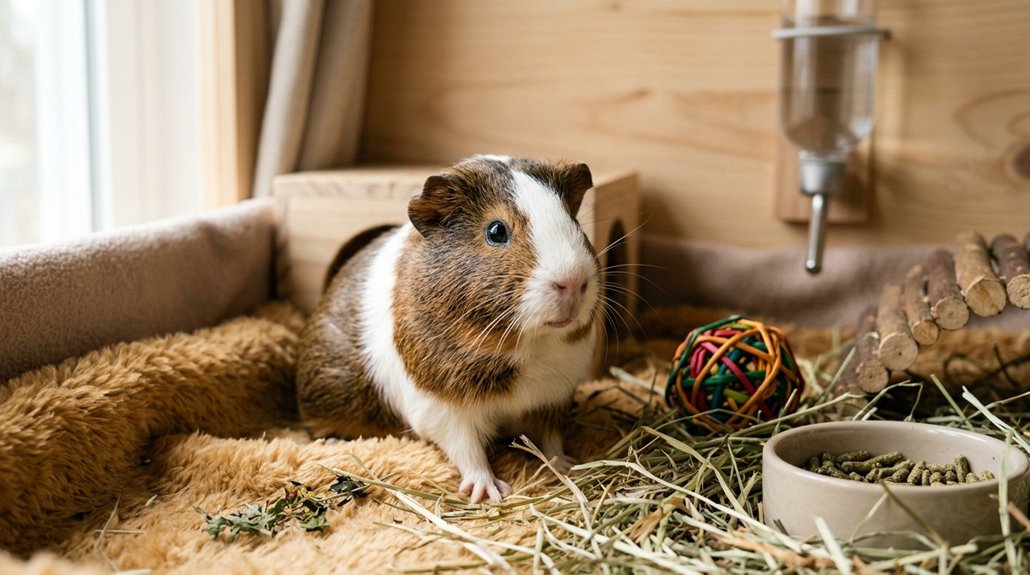
If your guinea pig seems stressed or unhappy, first recognize signs like teeth chattering or excessive hiding. Check for stress triggers: cramped conditions, loud noises, or presence of larger pets. Guarantee their space is at least 7.5 square feet, uses soft bedding, and has plenty of hiding spots. Introduce same-sex companions for social bonding and provide a balanced diet rich in hay and vegetables. Keep exploring to guarantee your furry friend’s environment and care support their happiness.
Key Takeaways
- Provide ample hiding spots like tunnels to help your guinea pig feel secure and reduce stress.
- Ensure the living space is minimally 7.5 square feet to prevent cramped conditions.
- Reduce environmental noise by placing the cage in a quiet, low-traffic area.
- Monitor for signs of illness such as decreased appetite and consult a veterinarian if needed.
- Introduce a same-sex companion gradually for social interaction and improved well-being.
Recognize Signs of Guinea Pig Stress
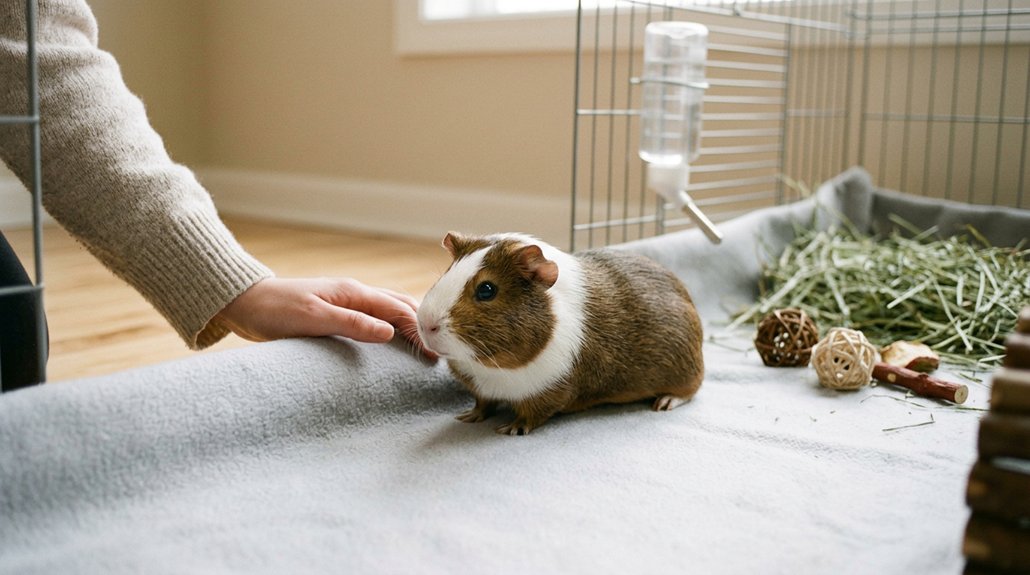
Guinea pigs, small and often misunderstood creatures, can experience stress just like any other pet. Recognizing stress in guinea pig behavior is essential for effective stress management. Look for aggressive actions such as head tossing or teeth baring, which suggest discomfort. A stressed guinea pig may become lethargic, lose interest in food and play, or hide excessively. Listen for vocal cues like teeth chattering, hissing, or growling, signaling unhappiness. Watch for unusual behaviors, such as bar chewing or over-grooming, indicating distress. Sudden changes in activity levels also warrant your attention. Monitoring their appetite and social activities is important; any ongoing disinterest in food could mean health issues, requiring a vet visit. Understanding these signs guarantees you’re offering the best care.
Identify Stress Triggers in Their Environment
When evaluating stress triggers in your guinea pig’s environment, it’s crucial to carefully consider various factors that might cause anxiety. Monitor their behavioral responses; frequent hiding and aggressive signs like teeth baring or head tossing often signal discomfort. Identify environmental factors such as the presence of larger pets like dogs or cats, which can lead to insecurity. Cramped living conditions are another stressor, so guarantee a minimum of 7.5 square feet for one guinea pig and 10.5 square feet for two. Take note of any sudden changes, like the arrival of new household members, loud noises, or bright lights, as they profoundly impact comfort levels. Finally, provide sufficient hiding spots for a sense of security and reduced stress.
Make Your Guinea Pig’s Home More Comfortable
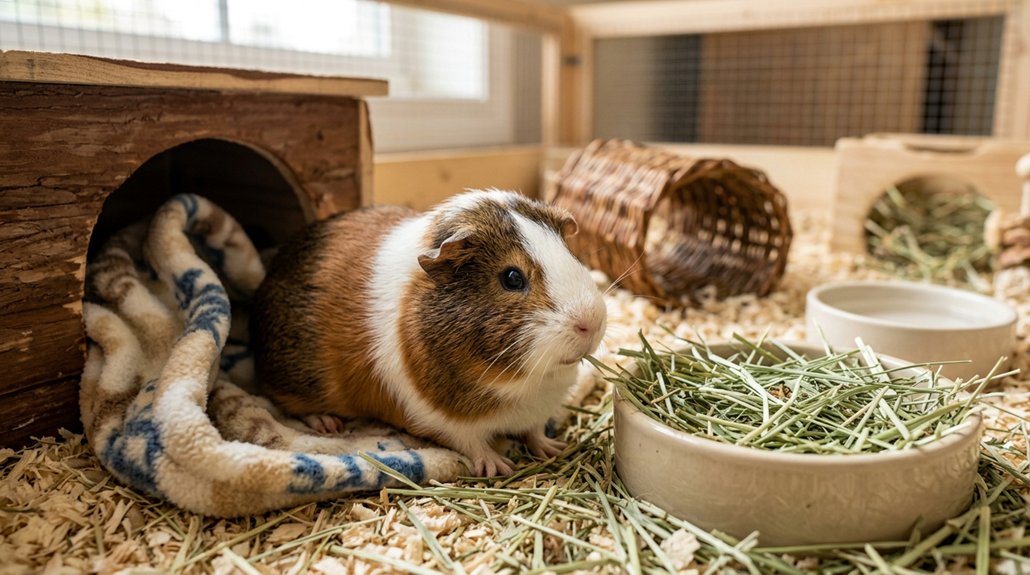
Although guinea pigs are resilient creatures, ensuring their home is comfortable can greatly boost their well-being. Start by considering the cage size: a minimum of 7.5 square feet for one, or 10.5 for two. This space allows them to move freely and reduces stress. Opt for fleece bedding material, which not only enhances comfort but also aids in maintaining body temperature and simplifies cleaning.
| Feature | Recommendation |
|---|---|
| Cage Size | At least 7.5 square feet |
| Bedding Material | Fleece for comfort |
| Hiding Spots | Tunnels and shelters |
| Environment | Quiet, away from loud noises |
| Enrichment | Rotate toys and activities |
Create quiet surroundings, away from loud noises and bustling areas. Offer multiple hiding spots to reduce anxiety, and regularly change toys to engage their minds.
Introduce Companions for Social Bonding
Introducing companions to your guinea pigs can substantially enhance their well-being, as these social animals truly thrive when they have company. It’s important to guarantee successful bonding by starting with same-sex pairings and allowing gradual introductions through a barrier to minimize stress and territory issues. Keep a close eye on their behavior during this process, as quick intervention can prevent potential issues and lead to a harmonious environment.
Benefits of Guinea Pig Companionship
Guinea pigs, cherished for their vibrant personalities and gentle nature, truly flourish when they have the companionship of their peers. These naturally social animals crave social interaction to stave off loneliness and stress. The companionship benefits are clear: guinea pigs housed in pairs or small groups enjoy reduced anxiety and increased opportunities for natural behaviors like grooming and playful popcorning. These active behaviors, such as wheeking with joy, signal their happiness and well-being, showing how essential friends are to them.
Having companions fosters strong bonds, promoting long-term happiness and a healthier lifestyle. Ensuring mates are of the same sex helps prevent fights, creating a harmonious environment. Your guinea pigs will thrive with friends, leading to a content, stress-free life filled with joyful interactions.
Tips for Successful Pairing
How can you make sure your guinea pigs thrive together in harmony? Start with effective pairing techniques. Opt for same-sex companions to prevent unwanted breeding and foster healthy social dynamics. Choose a buddy similar in size and temperament to minimize dominance issues. Gradually introduce them by positioning their cages side by side, letting them acclimate to each other’s scent over days.
Take their first meeting to a neutral area, supplying plenty of hiding spots. Supervise closely, keeping an eye out for aggression signs, like teeth chattering or posturing. If aggression surfaces, separate them for safety. Finally, explore adopting bonded pairs from shelters; they simplify introductions as these pals are already accustomed to each other, making your social bonding journey smoother.
Enhance Your Guinea Pig’s Well-Being With Proper Nutrition
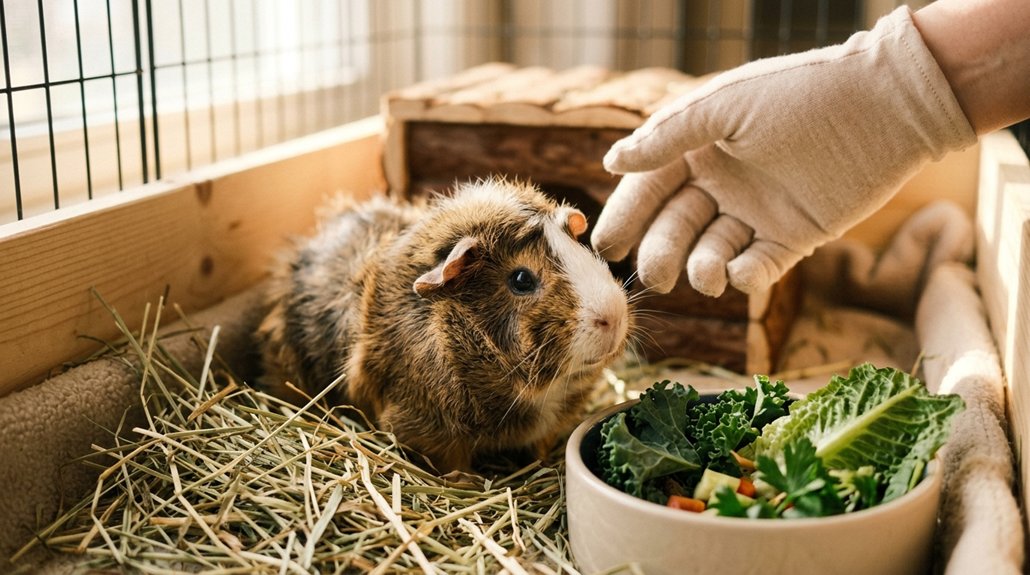
An essential component of enhancing your guinea pig’s well-being is guaranteeing its diet is balanced and nutritious. Start with diet variety. Provide 80% high-quality hay, essential for digestion and preventing obesity. Complement it with about 50 grams of fresh vegetables daily, focusing on those rich in vitamin C to promote health. Due to guinea pigs’ inability to synthesize this vitamin, consider nutritional supplements only if necessary. Limit pellets to one tablespoon daily, selecting low-grain options to reduce carbohydrate overload. Always keep fresh, clean water accessible to maintain hydration. When introducing new foods, do it gradually, observing your guinea pig’s response to prevent digestive issues. Monitoring and adapting your guinea pig’s diet is critical to guarantee its happiness and health.
Know When to Consult a Veterinarian
While ensuring your guinea pig has a nutritious diet is essential, watching for signs of stress is equally important for its overall health. If your guinea pig exhibits a poor appetite lasting more than 6–8 hours or shows behavioral changes like excessive hiding, aggression, or overgrooming, it’s time for a stress evaluation. These symptoms can be indicators of underlying health issues, necessitating immediate veterinary intervention. Regular check-ups every 6–12 months are vital to monitor these potential concerns. Also, pay attention to any noticeable changes in coat condition, such as thinning or messiness, as they might also suggest health problems needing expert care. If stress persists despite adjustments, a veterinarian can explore further treatment options to help your pet.
Frequently Asked Questions
How Do I Help My Stressed Guinea Pig?
Start by evaluating stress indicators like changes in behavior or appetite. Introduce environmental enrichment with toys, tunnels, and hiding spots to offer comfort. Gently handle your guinea pig with a soothing voice, and minimize loud noises and disruptions.
How to Cure a Depressed Guinea Pig?
Is your guinea pig’s frown upside down? Start by identifying symptoms like lethargy or lack of appetite. Enhance their environment with enrichment activities, social companions, and a balanced diet. Consult a vet if their mood doesn’t improve.
How to Tell if a Guinea Pig Is Happy or Sad?
You’ll know if a guinea pig’s happy by observing excited body language, playful vocalizations, and active social interaction. Sad signs include disinterest. Enhance environment, offer dietary preferences, and guarantee stimulating playtime activities for well-being.
How to Make a Sad Guinea Pig Happy?
Imagine their little heart lighting up as you introduce playtime activities and social interactions. Provide puzzles, tunnels, and gentle handling sessions. Consistently engage, ensuring enrichment and companionship to uplift their spirits and banish sadness.
Conclusion
You’ve noticed the signs, identified potential stressors, and made your guinea pig’s home a sanctuary. You’ve introduced companionship and provided nutritious meals. Yet, a question lingers—is it enough? If you feel uncertainty creeping in, remember, a caring heart’s your greatest tool. Your diligence in ensuring their happiness is unmatched. But when in doubt, don’t hesitate—trusting your instincts and seeking a veterinarian’s advice could be the key to revealing the peace your furry friend truly deserves.