Ever stare at a bag of puppy kibble, totally unsure how much to actually scoop out?
That confusion is completely normal for new puppy parents. Puppies grow fast, and most eat three meals a day until they hit six months old.
Get the portions wrong, though, and you risk real problems like bloating, obesity, or stunted growth.
Here’s the good news. This guide breaks down puppy nutrition, feeding schedules, and the foods that could seriously harm your new best friend.
I’ll walk you through the exact math, timing, and safety tips you need, so grab a coffee and let’s get your puppy eating right.
Key Takeaways
- Calculate your puppy’s daily calories using the RER formula: multiply weight in kilograms by 30, add 70, then multiply by 2 or 3 depending on age.
- Feed puppies under three months four to five meals daily, transition to three meals at three months, then two meals at six months and beyond.
- Never feed puppies chocolate, grapes, raisins, onions, garlic, avocado, xylitol, macadamia nuts, alcohol, or caffeine. These foods cause serious poisoning.
- Large breed puppies need specialty formulas with restricted calcium to prevent joint problems, while small breeds need nutrient-dense, high-energy formulas for their faster metabolism.
- Watch for vomiting, diarrhea, lethargy, and loss of appetite as warning signs of food poisoning, and contact your veterinarian right away if symptoms show up.
How to Determine Puppy Food Portions
Your puppy’s weight tells you almost everything about how much food they need each day. Start by checking a puppy feeding chart that matches your dog’s age and size, then fine-tune from there.
How do I calculate the right amount of food based on my puppy’s weight?
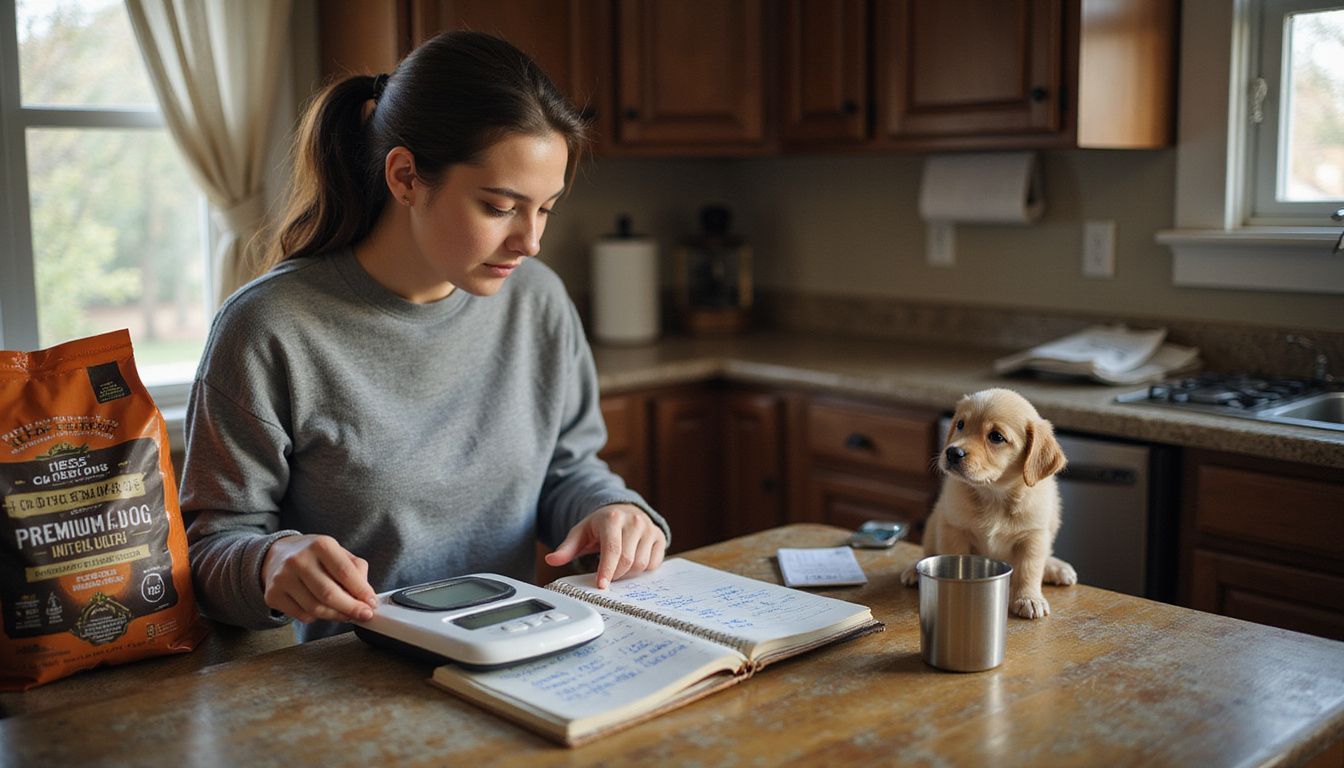
Figuring out how much food your puppy needs takes a little math, but it’s easier than it sounds. The Resting Energy Requirement, or RER, gives you a solid starting point for calculating daily calories.
| Puppy Weight | RER Calculation Formula | Daily Calories (Ages Under 4 Months) | Daily Calories (Ages Over 4 Months) |
|---|---|---|---|
| 10 pounds (4.5 kg) | 30 × 4.5 + 70 = 205 calories | 615 calories | 410 calories |
| 20 pounds (9 kg) | 30 × 9 + 70 = 340 calories | 1,020 calories | 680 calories |
| 30 pounds (13.6 kg) | 30 × 13.6 + 70 = 478 calories | 1,434 calories | 956 calories |
| Under 2 kg or Over 45 kg | 70 × (weight in kg)^0.75 | Multiply result by 3 | Multiply result by 2 |
Here’s the quick version of the math:
- Convert your puppy’s weight to kilograms.
- Multiply that number by 30, then add 70. This gives you the RER.
- Puppies under four months need triple this number. Puppies over four months need double it.
- For very small or very large puppies, use the alternative formula with 70 instead.
Real numbers help here. A 10-pound puppy needs around 600 calories a day. A 20-pound puppy needs closer to 1,200 calories, and a 30-pound pup should eat about 956 calories once it passes the four-month mark.
Activity level matters too. Playful puppies burn more calories than calm ones, and growth rate affects needs as well. Some pups zoom through development while others take their time. The math gives you a baseline, nothing more.
Puppy food bags include feeding charts, but they’re generic guides. Individual needs can vary by up to 50 percent.
Here’s why that matters. According to a landmark 2010 study by the Cummings School of Veterinary Medicine at Tufts University, dry dog foods vary wildly in calorie density, ranging anywhere from 217 to 440 kilocalories per cup depending on the brand. That’s almost double the calories packed into the exact same “cup” of food. This is exactly why I tell puppy owners to swap the scoop for a digital kitchen scale whenever they can.
Monitor your puppy’s body condition weekly. Ribs should feel easy to find but not stick out, and a waist should be visible when you look down at your pup from above.
A group of puppy owners tracked their mixed-breed puppies over four weeks using a digital kitchen scale to measure portions based on the RER formula. Twelve puppies weighing between 7 and 32 pounds were weighed weekly. The RER-based portions matched healthy weight gain targets in nine of the twelve puppies, while three needed a 15 to 30 percent adjustment for unusually high or low activity levels. One foster volunteer noted that pairing the RER calculation with a kitchen scale made portioning simple and kept most puppies on a healthy growth path, though a few needed small tweaks.
Weigh your puppy every two weeks and track the pattern. Adjust portions if growth slows down or speeds up too much.
Talk with your veterinarian about what’s normal for your puppy’s breed and age. Vets see puppies every single day, so they know exactly what healthy growth looks like.
Where can I find an accurate puppy feeding chart?
Finding an accurate puppy feeding chart doesn’t require a treasure hunt. Your puppy food packaging already has one printed right on the back. One quick tip: look for the words “Complete and Balanced” on the label. According to the Association of American Feed Control Officials (AAFCO), U.S. pet food labels must carry this exact nutritional adequacy statement for growth, so you know the chart on the bag is backed by real, regulated nutritional science.
| Resource Type | Where to Find It | Key Information Provided |
|---|---|---|
| Puppy Food Package | Back of the bag or can | Feeding amounts based on current weight; caloric recommendations; daily portion sizes |
| Weight Category: 13-20 lbs | Puppy food label guidelines | 1/2 to 1-1/4 cups per day |
| Weight Category: 21-50 lbs | Puppy food label guidelines | 1/2 to 1-1/2 cups per day; upper range reaches 1-1/2 to 2-3/4 cups |
| Weight Category: 51-75 lbs | Puppy food label guidelines | 5/8 to 2-1/3 cups per day; daily range extends to 1-1/2 to 4 cups |
| Weight Category: 76-100 lbs | Puppy food label guidelines | 1 to 2-2/3 cups per day; higher range reaches 2-7/8 to 7 cups daily |
| Weight Category: Over 101 lbs | Puppy food label guidelines | 2-2/3 cups plus 1/3 cup for each additional 10 lbs over 100 lbs, up to 11 cups maximum |
| Caloric Needs: Under 4 Months | Veterinary nutrition resources | 5 lbs = 392 kcal/day; 10 lbs = 649 kcal/day; 20 lbs = 1100 kcal/day; 30 lbs = 1487 kcal/day; 45 lbs = 2016 kcal/day |
| Caloric Needs: Over 4 Months | Veterinary nutrition resources | 10 lbs = 433 kcal/day; 25 lbs = 863 kcal/day; 50 lbs = 1456 kcal/day; 80 lbs = 2070 kcal/day; 130 lbs = 2980 kcal/day |
| Professional Guidance | Your veterinarian’s office | Personalized feeding plans; weight management strategies; breed-specific recommendations |
Your veterinarian is still your best resource when questions come up about feeding amounts. They know your specific puppy’s growth rate and health status, and what works for one pup may not work for another.
Brand-specific charts typically account for calorie density and ingredient quality. Manufacturers test their formulas on real dogs, gathering data on what portions produce healthy development.
A few other pointers worth remembering:
- Weight is the biggest factor in portion size, so weigh your puppy regularly. Most vet offices let you use their scale for free.
- Age matters just as much as weight. A 10-pound puppy under four months needs around 649 kilocalories a day, while that same 10-pound puppy over four months needs only 433 kilocalories.
- Large breed puppies follow different growth curves than small breeds. Their charts use slower calorie ratios on purpose, since overfeeding large puppies early can cause joint problems later.
If your puppy needs weight management, your vet can recommend portion adjustments or a food switch based on your pup’s specific nutritional needs. That personalized approach beats guesswork every time.
Best Puppy Feeding Schedules
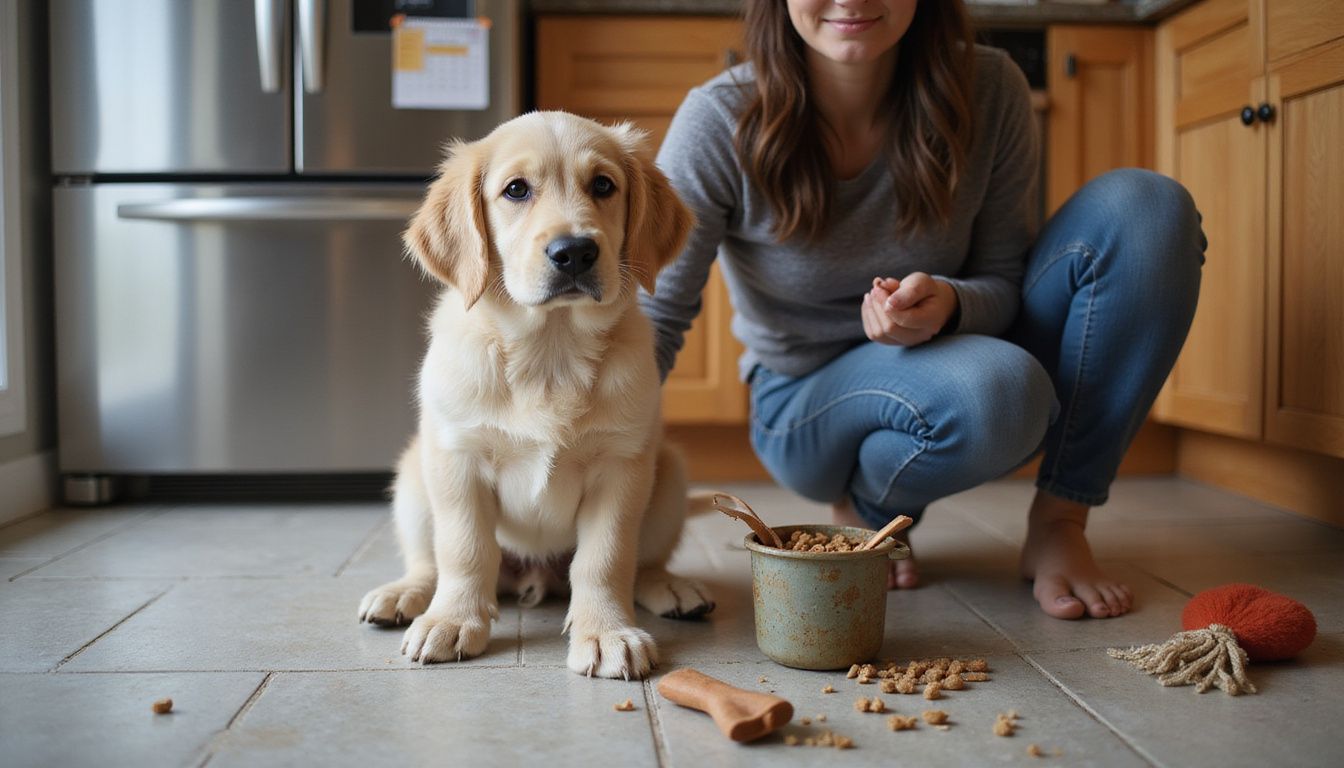
Your puppy’s age matters more than you think when it comes to feeding frequency. Young pups need multiple meals throughout the day to fuel their rapid growth and keep their energy steady.
How often should I feed my puppy at different ages?

When you bring a puppy home, feeding schedules matter more than most new owners realize. Here’s what you need to know about feeding your puppy at each stage of growth.
| Puppy Age | Feeding Frequency | Key Details |
|---|---|---|
| Birth to 3 Months | 4 to 5 meals daily | Feed frequently to support rapid growth. Small portions work best. Puppies at this stage have tiny stomachs and high energy needs. Space meals evenly throughout the day, including morning, midday, afternoon, and evening feedings. |
| Around 3 Months | 3 meals daily | Begin transitioning to solid puppy food. Reduce feeding frequency as your puppy’s digestive system matures. This shift helps establish a routine. Most puppies handle three meals without trouble at this age. |
| 6 to 12 Months | 2 meals daily | Move to a twice-daily schedule. Adjust portion sizes after neutering or spaying, as metabolism changes. Growth slows down, so calorie needs decrease slightly. Maintain consistent timing for feedings. |
| After 1 Year | 2 meals daily | Continue twice-daily feeding and begin the switch to adult dog food. Small breeds transition to adult food between 9 to 12 months. Medium breeds shift between 12 to 14 months. Large breeds continue puppy food up to 24 months for proper bone development. |
Feeding schedules create structure, and puppies thrive on predictability. Morning, noon, and evening feedings work well for young puppies since they prevent low blood sugar and support steady growth.
This isn’t just a nice-to-have for small breeds. According to veterinary experts at the American Kennel Club, toy and small breed puppies have limited glycogen reserves, which makes them prone to a dangerous blood sugar crash called hypoglycemia if they go too long without food. That’s exactly why sticking to frequent, small meals matters so much in those early months.
Consistency helps with house training too. Regular meals lead to regular bathroom breaks, so your schedule does double duty.
One household with two small-breed puppies at 10 weeks old struggled with digestive problems during free-feeding. Over 10 days, both puppies had loose stools and two mild vomiting episodes, with daily intake estimated at 160 calories above their RER needs. The household switched to three scheduled meals with measured portions, and within four days the loose stools resolved with no further vomiting. By week six, the puppies’ body condition scores improved from 4 out of 9 to a healthier 5 out of 9.
Large-breed puppies need special attention too. Growing too fast can damage their joints, so they stay on puppy formulas longer than smaller breeds, often until they reach full maturity around 24 months. Medium breeds graduate around 12 to 14 months, while small breeds can switch between 9 to 12 months.
Portion control matters just as much as frequency. Overfeeding leads to obesity and health problems down the road, while underfeeding stunts growth and weakens immunity. Check the food bag for weight-based guidelines, and weigh portions on a scale rather than eyeballing them.
Watch for hunger cues between meals. A satisfied puppy plays happily and sleeps well, but constant whining might mean hunger (or it could just mean boredom or anxiety). Resist the urge to overfeed when those puppy-dog eyes show up, and stick to the schedule you’ve built.
As your puppy grows into adulthood, the switch to fewer meals happens naturally. Two meals a day, spaced 8 to 12 hours apart, keeps adult dogs healthy, prevents bloating, and supports good digestion. This rhythm becomes their normal, and they’ll start to anticipate feeding times.
What are the recommended feeding times for puppies?
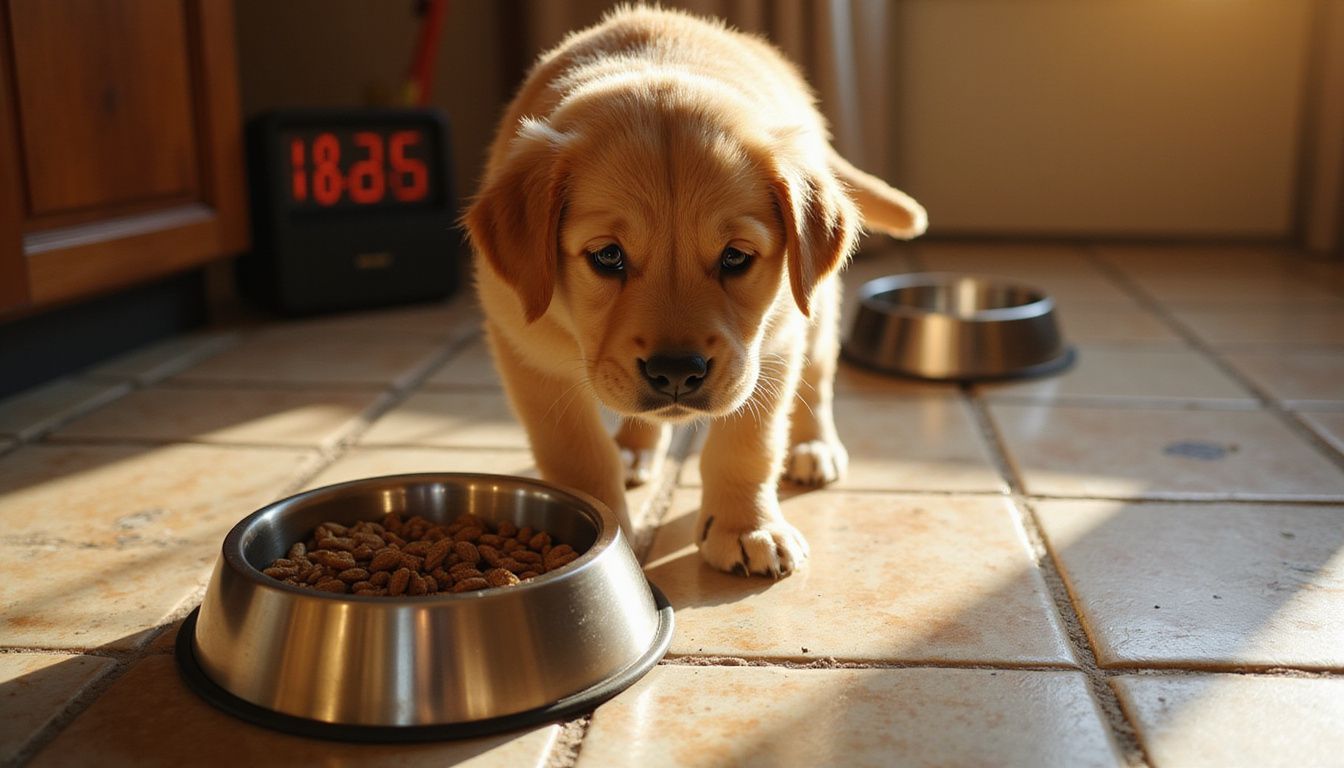
Knowing how often to feed your puppy sets the foundation, but timing matters just as much. Your puppy thrives on consistency, and specific feeding times help you monitor their growth and prevent digestive troubles.
- Feed your puppy breakfast at 6:30 a.m. to start their day with energy and nutrients for play and learning.
- Offer lunch at 12:30 p.m., roughly six hours after breakfast, to maintain steady blood sugar and support their rapid growth.
- Serve dinner at 6:30 p.m., which gives your puppy time to digest before bedtime and cuts down on nighttime accidents.
- Space meals about six hours apart to match your puppy’s natural digestion rhythm and calorie intake needs throughout the day.
- Schedule the last meal early in the evening so your puppy finishes eating well before sleep, preventing bloating and discomfort.
- Use an automatic dog feeder to stick to your puppy-feeding schedule, especially if work keeps you away from home during meal times.
- Hire a pet sitter or dog walker to maintain your feeding guidelines if you can’t be present for scheduled meals.
- Remove uneaten food after about ten minutes to teach your puppy that meals happen at set times, not whenever they feel hungry.
- Adjust your puppy feeding schedule around your own daily routine so consistency becomes second nature.
- Consult your veterinarian about the best feeding times for your specific breed size, since large breed puppies and small breed puppies have different nutritional needs.
Types of Puppy Food
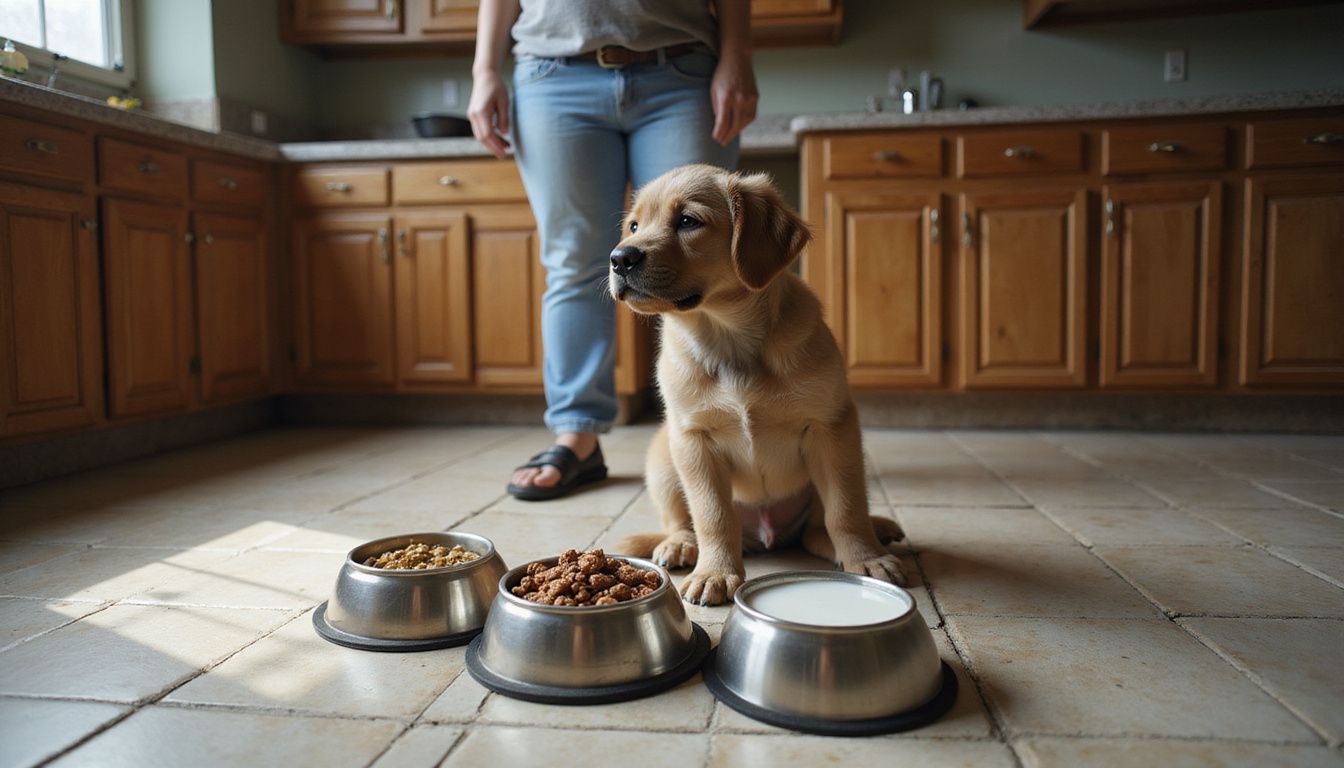
Your puppy needs food that fits their body and age. Dry kibble, wet food, and milk replacer each play a different role in your pup’s growth.
What are the differences between dry and wet puppy food?
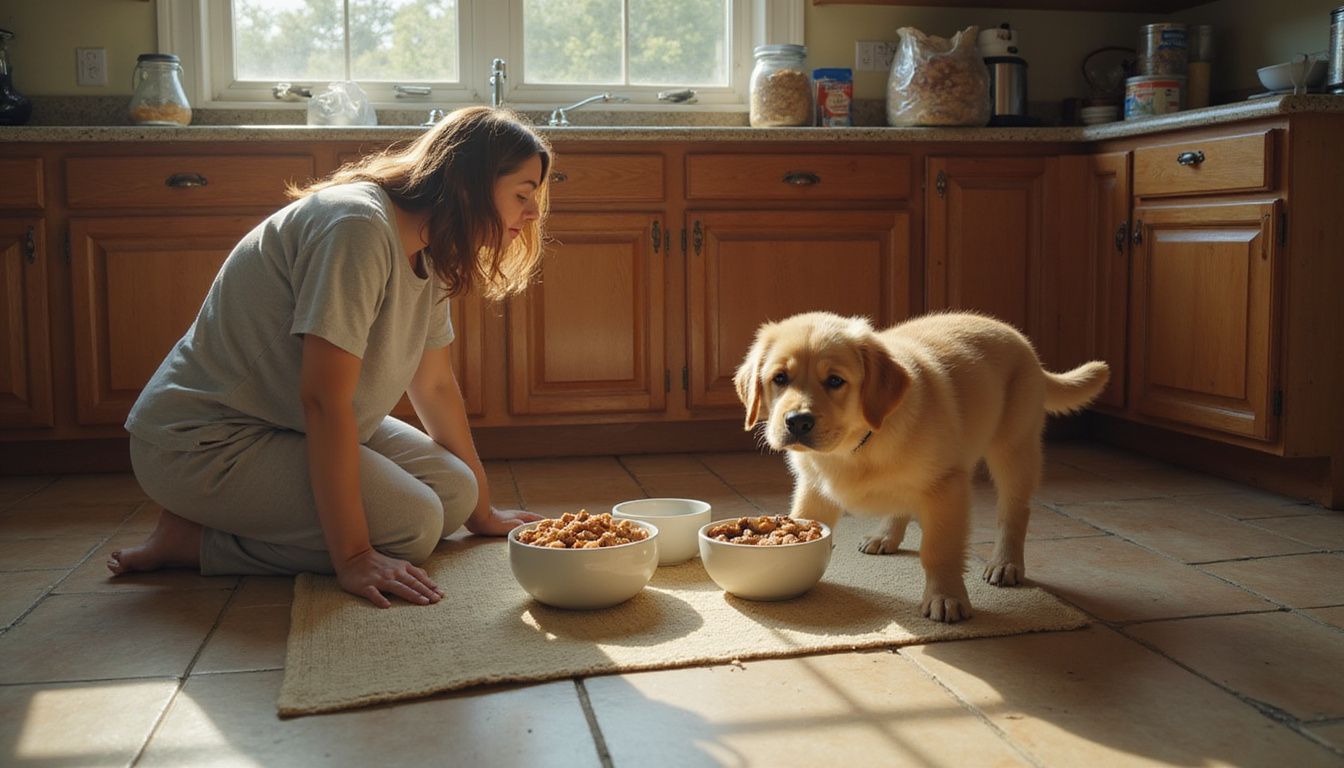
Dry kibble and wet puppy food each bring different strengths to the table. Dry food costs less, stays fresh longer once opened, and helps clean your puppy’s teeth through chewing. Wet puppy food packs more moisture and makes eating easier for pups with smaller mouths.
A 13-ounce can of wet puppy food has roughly 475 kilocalories, which may replace about one cup of dry puppy food with a similar calorie count. That means you’ll feed smaller portions of wet food to hit the same calorie targets. Both types work fine as long as they’re complete and balanced for growth, so the real choice comes down to what fits your routine and what your puppy actually enjoys eating.
Many puppy parents find that mixing both types creates the perfect middle ground. At six weeks old, puppies can transition to a mix of wet food and kibble, softening the kibble to make it more appealing to young mouths. Brands like Purina Pro Plan Puppy, Hill’s Science Diet Puppy Small Bites, and Eukanuba Premium Performance Puppy Pro offer both dry and wet options that pair well together.
Allison Millican, PhD, advises keeping an eye on caloric intake when mixing wet and dry foods, so you don’t accidentally overfeed. Check with your veterinarian on the pros and cons of each food type for your puppy, since every pup has different digestive needs and preferences. Understanding these differences helps you make smart feeding choices that keep your growing puppy healthy and satisfied.
What specialty diets are best for large vs. small breed puppies?
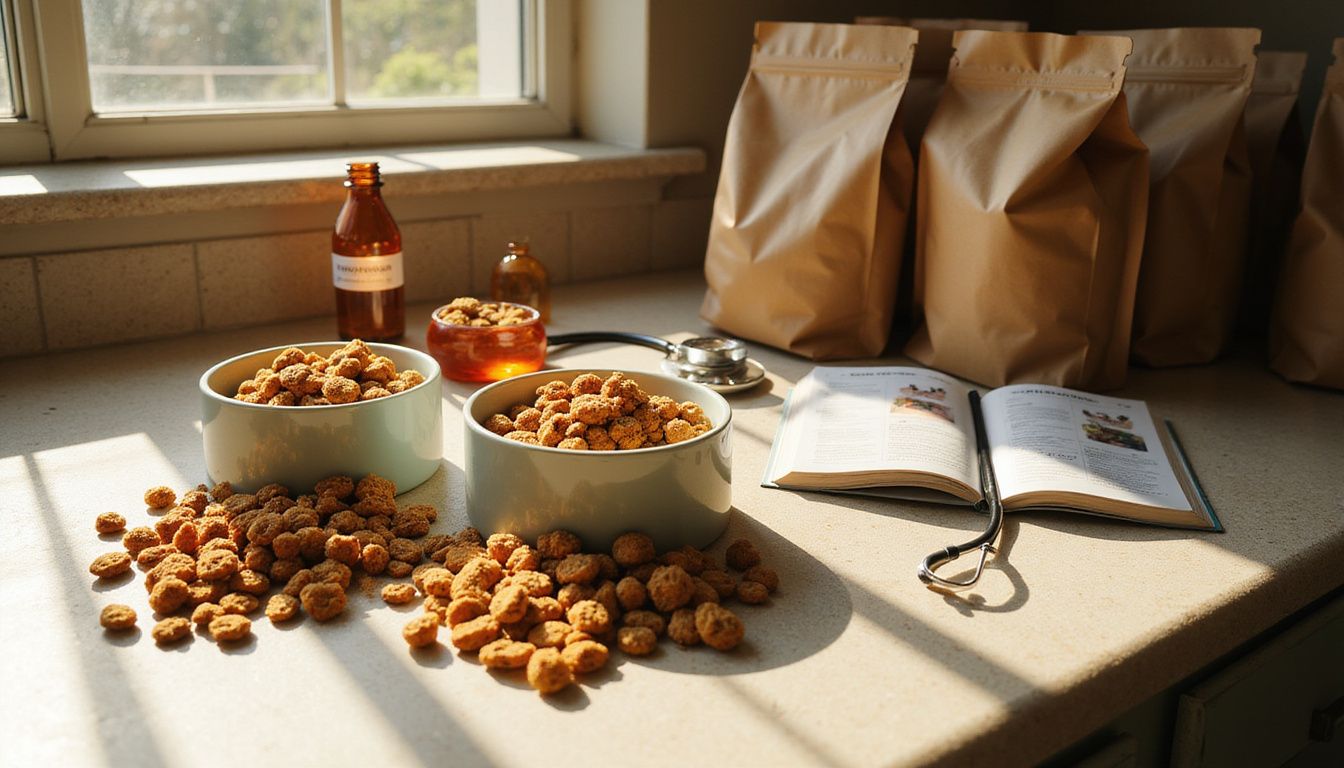
Now that you know the difference between wet and dry food, here’s another piece of the puzzle. Your puppy’s breed size matters just as much as the food type itself. Large and giant breed puppies need specialty formulas with restricted calcium to prevent excessive growth and joint problems down the road.
Here’s the exact number to look for. Based on updated nutritional regulations from the Association of American Feed Control Officials (AAFCO), large breed puppy formulas must cap calcium at a maximum of 1.8% on a dry matter basis. Check the guaranteed analysis panel on the bag for this figure before you buy. It’s one of your best defenses against joint and bone growth problems.
These breeds grow so fast that too much calcium actually works against them, causing bones to develop unevenly. Small breed puppies need the opposite: nutrient-dense, high-energy formulas, since their faster metabolism burns through calories quickly.
| Breed Size | Main Nutrition Concern | What to Look For |
|---|---|---|
| Large & Giant Breeds | Excess calcium speeding up bone growth | Calcium capped at 1.8% (dry matter basis) |
| Small Breeds | Fast metabolism, small stomach | Nutrient-dense, high-energy formula with smaller kibble |
| Medium Breeds | Moderate growth rate | Small-breed formula usually works fine |
Karina Carbo-Johnson, MS, notes that small breeds need these concentrated nutrition blends to support their rapid development. Kibble size matters too. Small breed puppies do better with smaller kibble that’s easier to chew and digest.
Brands like Bil-Jac and Purina make formulas built specifically for your puppy’s size category, which takes a lot of the guesswork out of feeding. Your veterinarian can point you toward the right large breed puppy food or small breed puppy food for your pup, and medium breed puppies usually do fine with a small-breed formula suited to their moderate growth rate.
One detail many owners miss is copper. If a puppy’s food doesn’t have enough of it, copper deficiency can develop, leading to hair pigment loss, splayed toes, and anemia.
Checking labels on products from Chewy or resources from the American Kennel Club helps you spot formulas with the right mineral balance. Regular body condition score checks with your vet confirm whether your puppy is really getting what it needs from the diet you’ve chosen.
Toxic Foods to Avoid
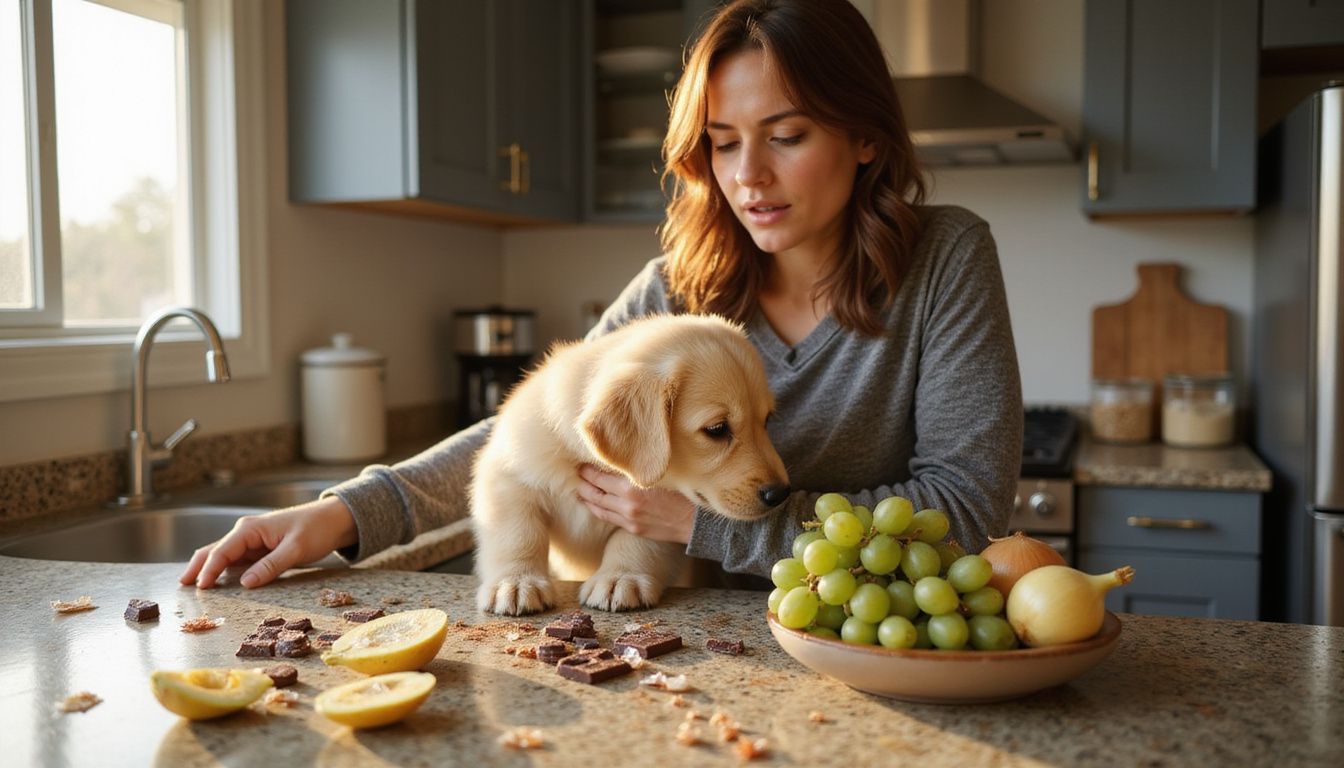
Your puppy’s safety starts with knowing what foods can hurt them. Some everyday snacks from your kitchen can make your puppy seriously sick, so learn which ones to keep far away.
Which common human foods are toxic to puppies?
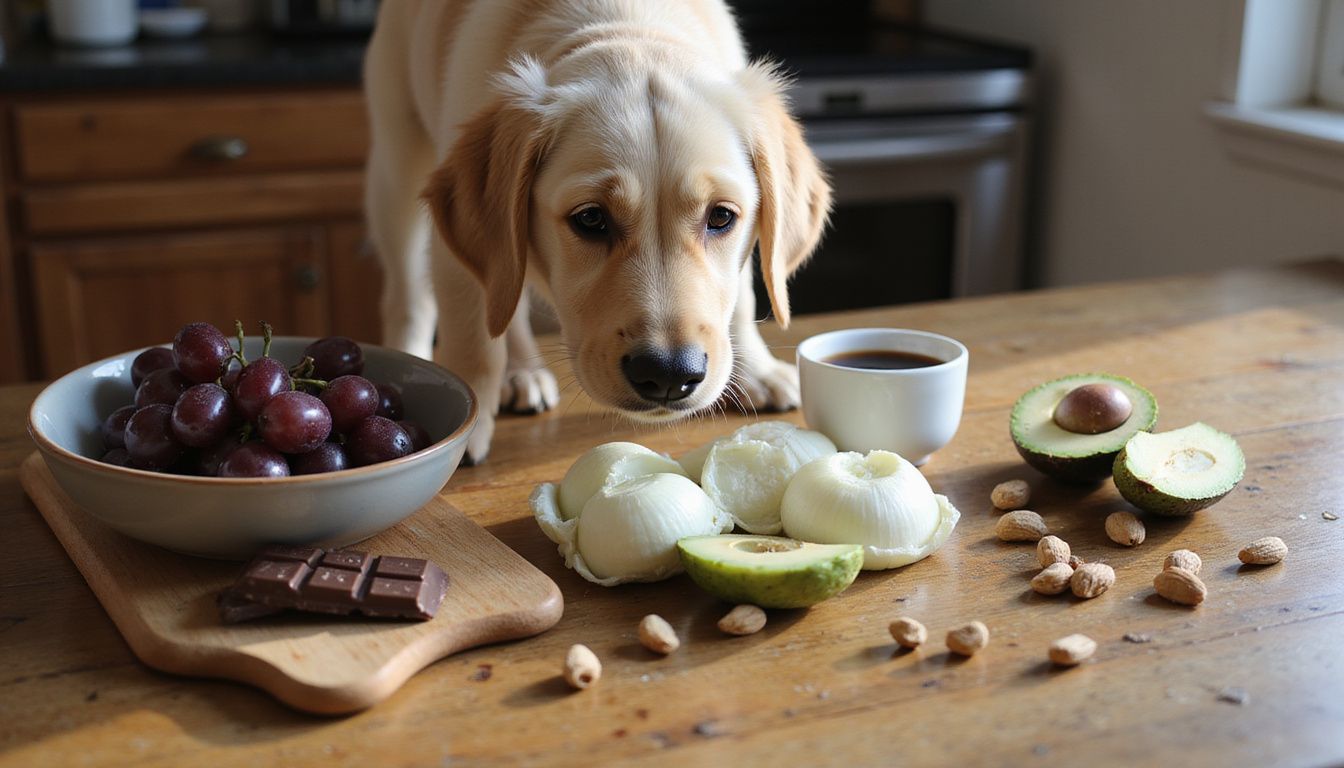
Puppies eat things they shouldn’t, and plenty of human foods can poison them. Knowing what stays off your puppy’s plate keeps your new friend safe and healthy.
- Onions and garlic damage your puppy’s red blood cells and cause serious illness. Both cooked and raw forms are toxic, so avoid all dishes with these ingredients.
- Chocolate contains theobromine, which acts like poison in a puppy’s body. Dark chocolate poses the biggest threat, but all types can cause harm.
- Grapes and raisins can trigger kidney failure in puppies, sometimes within hours. Even small amounts create dangerous reactions, so keep these fruits completely out of reach.
- Avocado contains persin, a compound that causes vomiting and diarrhea in puppies. The pit and leaves are especially risky for a growing pup.
- Xylitol, a sweetener in sugar-free products, causes rapid insulin release and liver damage. Check labels on gum, candy, and baked goods before offering anything to your puppy.
- Table scraps often hide toxic ingredients like onions or garlic that you might miss. Only unprocessed meat scraps are sometimes safe, but processed foods carry hidden dangers.
- Feeding human food encourages begging and nutritional imbalances. Stick to puppy treats made specifically for pups, limiting them to 10% of daily calories.
- Macadamia nuts cause weakness and tremors in puppies within hours of eating. Fatty foods and bones create digestive problems and choking hazards too.
- Alcohol and caffeine affect a puppy’s heart and nervous system in dangerous ways. Even small amounts can cause seizures or collapse.
- Always check ingredient labels before giving anything off-menu to your puppy. A veterinarian consultation helps you understand safe feeding practices for your specific breed, whether you’re raising a Bernese Mountain Dog or a Bichon Frise.
What are the warning signs of food poisoning in puppies?

Once you know which foods can hurt your puppy, the next job is spotting trouble fast. Food poisoning shows up in a few clear ways, and your puppy might vomit or get diarrhea within hours of eating something bad.
- Vomiting or diarrhea, especially right after a meal
- Bloating or refusing food at scheduled meal times
- Loss of appetite paired with lethargy
- A puppy that seems tired, weak, or just “off”
Vomiting and diarrhea can get serious fast, so don’t wait around to see if it passes. According to 2026 guidance from Dr. Meredith Miller at the Cornell University College of Veterinary Medicine, diarrhea or vomiting that doesn’t clear up within 48 to 72 hours, or stool that turns black and tarry, crosses the line into a real emergency because of how quickly dehydration sets in. If you see either of those signs, call your vet right away instead of waiting it out.
Watch closely during the first few meals with any new food. If your puppy turns away from food for about 10 minutes, pull the bowl and try again at the next scheduled meal. Persistent refusal to eat can signal illness or a bigger problem.
Some digestive upset comes from overeating through free-feeding, which can cause bloating that mimics food poisoning. Highly digestible foods help puppies with an upset stomach bounce back faster.
Copper deficiency from an improper diet is another thing to watch for. It can cause hair pigment loss, splayed toes, and anemia, which is one more reason proper nutrition matters from day one.
Your veterinarian can walk you through the most common puppy feeding FAQs and help you find the right options for your new best friend.
Conclusion
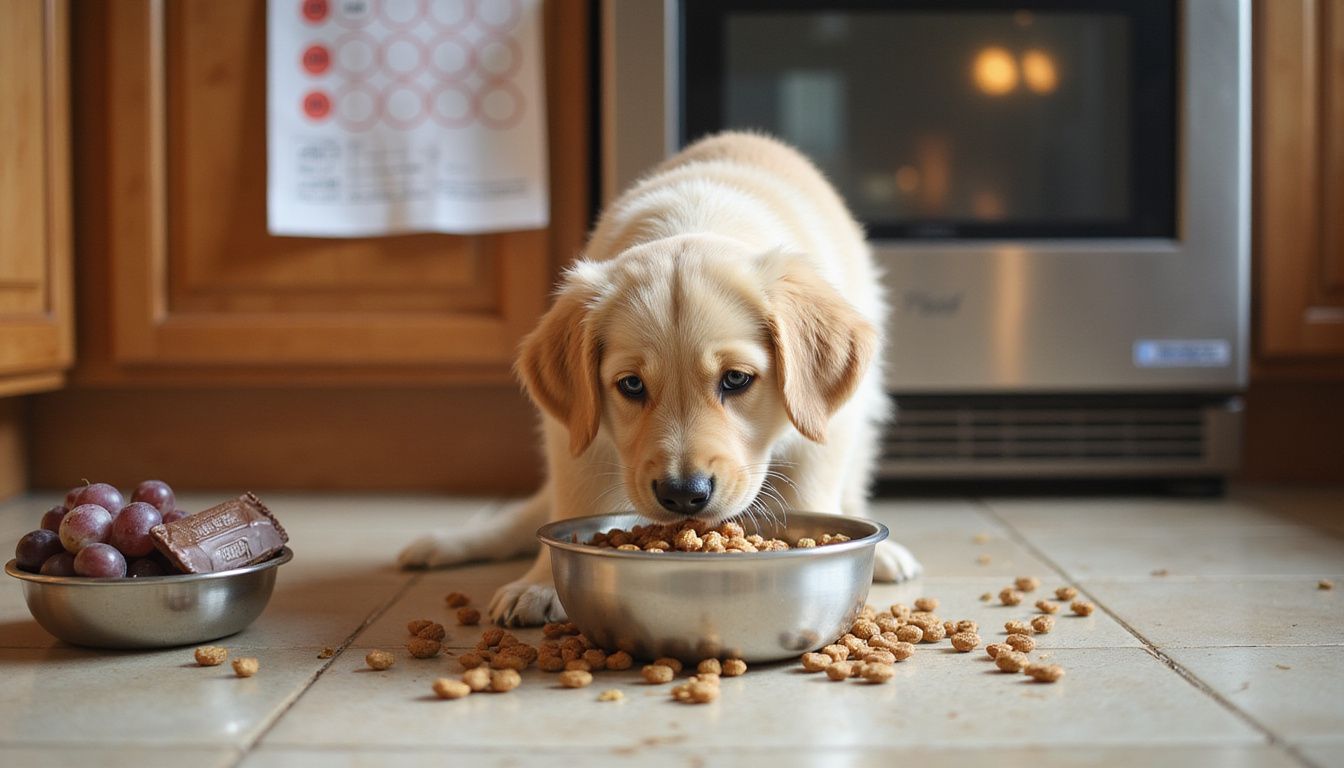
You’ve now got the core playbook for feeding your puppy right: calculating portions with the RER formula, sticking to three meals a day until your pup hits six months, and steering clear of toxic foods like chocolate, grapes, onions, and xylitol.
Food-restricted meals, not free-feeding, give you real control over your puppy’s growth. That control is exactly what prevents bloating and obesity down the road.
Resources from the AKC and vets like Dr. Emma Fulton offer solid guidance whenever new questions pop up about your pup’s nutrition.
Starting your puppy on the right feeding path now shapes their entire life. It builds strong bones, healthy digestion, and lasting energy.
Take action today. Measure your portions, mark your puppy feeding schedule on the calendar, and treat every meal as an investment in years of tail wags ahead.
FAQs
1. How many puppy treats can I give my dog each day?
Treats should make up no more than 10% of your puppy’s daily calories. Brands like Little Jacs and WhiskerWitty make small training treats that let you reward your pup without overfeeding.
2. What do vets say about food-restricted meals for puppies?
Vets like Dr. Emma Fulton and Dr. Helle Brandrup recommend controlled feeding to prevent rapid growth. Growing too fast can put extra stress on developing bones and joints, especially in larger breeds.
3. Does the AKC have official feeding guidelines for puppies?
The AKC provides general feeding advice, but every puppy needs a personalized approach based on their breed and size. Online tools like MyPurina’s calculator can help you determine the right portion for your specific pup.
4. Who is Richard Patton, and why does he matter in puppy nutrition?
Richard Patton is a respected animal nutritionist who has researched canine growth and diet for decades. His work has helped shape feeding recommendations used by brands like PetAg.