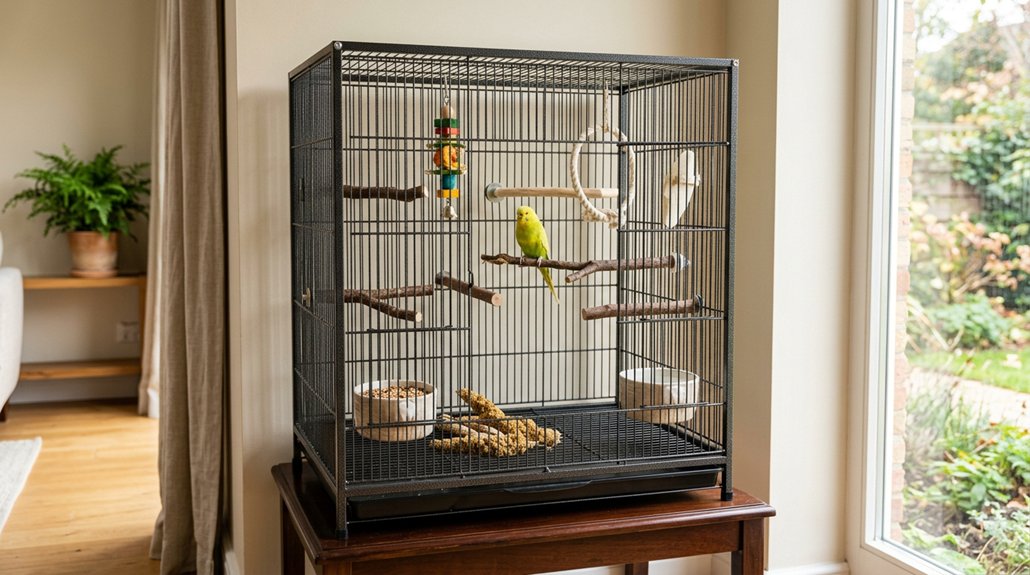
Set up your bird’s cage with a spacious, wider-than-tall design, secure latch, safe metal finish, and bar spacing matched to the species. Place it in a quiet, draft-free room with indirect light, away from kitchens and vents. Add varied natural perches, stainless-steel or ceramic bowls, and 6–10 safe toys with foraging items. Clean daily, change liners often, and give 10–12 hours of uninterrupted sleep. A few details can make the setup even better.
Key Takeaways
- Choose a spacious, non-toxic cage with proper bar spacing, secure latches, horizontal bars, and easy-clean trays and dishes.
- Place the cage in a bright, quiet room away from kitchens, drafts, vents, smoke, and direct sun.
- Use multiple natural perches of varying diameters to support foot health and prevent pressure sores.
- Provide clean stainless-steel or ceramic food and water bowls, plus toys and foraging items rotated regularly.
- Clean the cage daily, deep-clean weekly, and ensure 10–12 hours of uninterrupted sleep each night.
Choose the Right Bird Cage
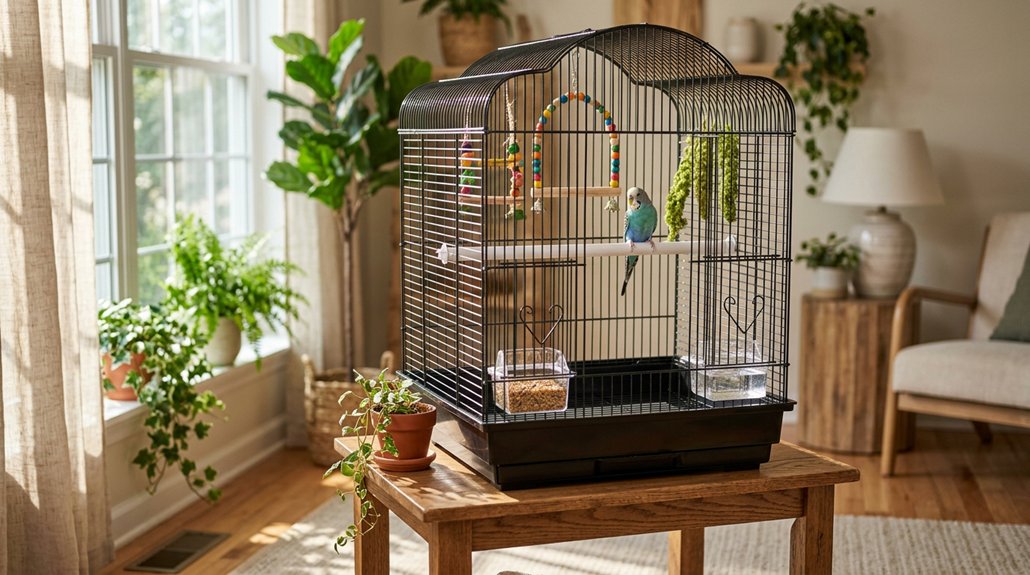
Start by choosing a cage that’s at least twice your bird’s wingspan, with a minimum size of about 18 x 18 x 24 inches for most small birds, and favor width over height to support horizontal flight. You should select durable, non-toxic construction such as stainless steel or powder-coated metal, and verify that material finishes don’t chip or flake. Match bar spacing to species; 1/4″–1/2″ suits many small parrots, while larger birds need wider spacing. Check door orientation so access is safe and efficient during cleaning and handling. Choose horizontal bars for climbing, a secure latch, removable tray and grate, and lock-in-place dishes. If you’re unsure, choose the larger cage; added space reduces stress and supports exercise, perching, toys, and separate bowls without overcrowding.
Pick a Quiet, Draft-Free Cage Location
Place the cage in a bright, quiet room away from kitchens and appliances, because fumes from nonstick cookware and strong odors can irritate a bird’s sensitive respiratory system. For ideal room placement, keep the cage several feet from drafty windows, exterior doors, and air vents so cold airflow and sudden temperature shifts don’t trigger stress. Protect air quality by avoiding nearby smoke, aerosol sprays, and cooking vapors. Choose a location with indirect light and some shade; you don’t want prolonged sun exposure that can overheat the bird or cause sunburn. Situate the cage near normal household activity, ideally at eye level or higher, so your bird can observe the room without constant startle responses. Once you’ve selected the spot, keep it consistent; frequent moves can disrupt routine and increase anxiety.
Add Perches That Protect Bird Feet
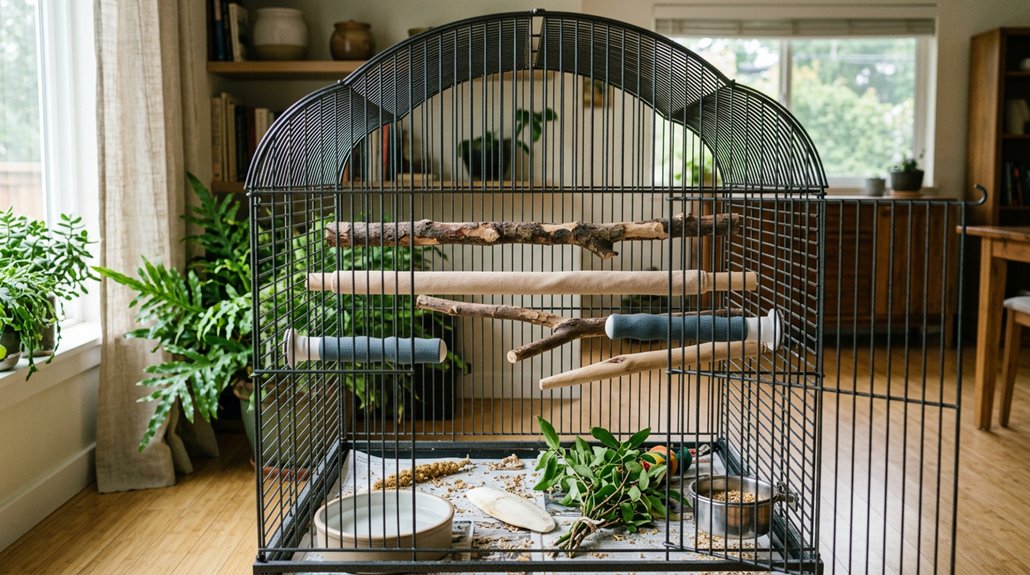
Choose perches that let your bird’s toes wrap about three-quarters of the way around the surface, since the correct diameter helps distribute weight and reduce foot strain. Use varying diameters to match species needs and prevent constant loading of the same pressure points. Natural wood perches, such as manzanita or cholla, support grip and foot exercise better than smooth, coated surfaces.
| Perch type | Benefit | Note |
|---|---|---|
| Natural wood | Promotes grip | Avoid sharp edges |
| Textured rope | Adds variety | Replace frayed sections |
| Different heights | Encourages movement | Don’t place above dishes |
Position perches at different heights so your bird shifts posture throughout the day. Avoid sandpaper coverings, which can abrade skin, and inspect all surfaces for non-toxic finishes. If toes splay or curl tightly, the perch’s fit isn’t safe and bumblefoot risk rises.
Set Up Food and Water Bowls
After the perches are in position, set up food and water bowls that stay clean, stable, and easy for your bird to reach. Use stainless-steel or ceramic bowls with lock-in holders; they’re less likely to tip and don’t support bacterial growth. For bowl placement, mount food dishes away from perches, at head height or slightly lower, to limit droppings and feather dust.
- Choose sizes matched to species: 1–2 oz for budgies, 2–4 oz for conures, larger for macaws.
- Provide two water sources: one for drinking and one shallow bathing dish.
- Rinse and refill water every 24 hours; clean all bowls daily with hot water and mild soap.
Maintain strict water hygiene, and deep-clean or sterilize bowls weekly during your monthly cage clean.
Add Toys and Foraging Enrichment
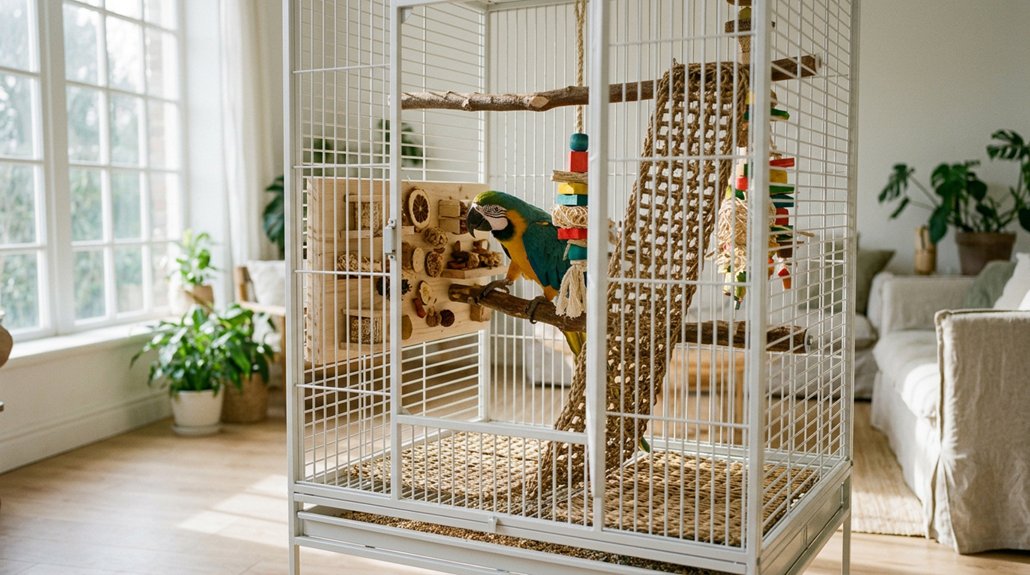
To keep your bird mentally engaged and physically active, add a small, varied set of toys and foraging items to the cage, and rotate them every 1–2 weeks to preserve novelty. Aim for 6–10 items, including chewable wood, vegetable-dyed rope, bells, and foraging puzzles. You should rotate toys on a regular schedule so birds don’t habituate to them. Provide at least one safe chewing assortment graded to your bird’s size, such as untreated wood, rope, and fall-apart chew toys, to support beak wear and help reduce feather plucking. Create foraging opportunities by hiding treats in shreddable toys, paper-wrapped cups, or puzzle feeders so your bird spends 20–40% of active time working for food. Match toy size and complexity to species, and inspect items weekly for loose strings, detachable parts, or sharp edges.
Build a Simple Cleaning Routine
A simple cleaning routine will keep the cage sanitary and reduce odor, bacterial growth, and pathogen exposure. Build a daily schedule that includes spot-cleaning droppings, uneaten food, and soiled bedding, then replacing food and water bowls with fresh supplies. Wipe perches and bars each day, and clean dishes with hot water and a brush; if they’re soiled, do it more often.
- Change the cage liner at least every other day, with weekly minimum replacement.
- Schedule a weekly deep clean with a bird-safe cleaner or a disinfectant choice such as 1 cup white vinegar to 4 cups water plus unscented dish soap.
- Inspect toys, perches, and hardware for frayed ropes, loose parts, or cracks, and replace damaged items immediately.
Help Your Bird Sleep Through the Night
Consistently giving your bird 10–12 hours of uninterrupted sleep each night helps reduce stress and supports normal circadian rhythms. You should keep lights-out at the same time every evening, because predictable timing reinforces sleep regulation. Use a breathable cage cover or place the cage in a quiet, dark room with minimal activity. Maintain ambient temperature control in the 65–80°F range, and keep the sleep area free of drafts, direct sunlight, kitchen fumes, and sudden noise. Provide one perch toward the back of the cage and leave one side partially covered so your bird can retreat securely. Avoid nighttime lighting, TV noise, and frequent handling. If transient sounds are unavoidable, a quiet white-noise source or dim lighting can reduce arousal without fully disturbing sleep.
Avoid Common Bird Cage Setup Mistakes
Even with a good sleep routine, setup mistakes can still undermine your bird’s health. Choose a cage that’s at least twice your bird’s wingspan; for most small species, 18 x 18 x 24 inches is the minimum, so you can avoid overcrowding and preserve normal flight. Place it away from kitchens, direct sun, and drafts, and monitor humidity to reduce respiratory stress and heat injury.
Choose a cage at least twice your bird’s wingspan, and keep it clear of kitchens, drafts, and direct sun.
- Use multiple natural wood perches with varied diameters; sandpaper perches can cause foot sores.
- Select stainless-steel or ceramic bowls, and inspect toys often for wear, bacteria, or entanglement risk.
- Clean daily, change liners every 1–2 days, and deep-clean monthly with bird-safe products to lower infection risk.
Frequently Asked Questions
What Is the 3 3 3 Rule for Birds?
You use the 3-3-3 rule: 3 days of quiet adjustment, 3 weeks of supervised interaction, and 3 months of gradual socialization. It tracks behavioral milestones, supports territory training, and reduces stress while building trust.
How Should a Bird Cage Be Set Up?
You should set your cage wide, not tall, with multiple perches, secure bowls, toys, and a bathing dish. Like a well-planned aviary, balance Perch placement and Light exposure, and provide privacy, cleanliness, and sleep.
What Is the Best Thing to Put in the Bottom of a Bird Cage?
Use plain paper or washable liners on the cage bottom; they’re hygienic, low-dust, and easy to replace. You shouldn’t use sandpaper, wood shavings, or loose natural fiber bedding, since they can injure feet or harbor contaminants.
What Are Common Bird Cage Mistakes?
You often mistake your bird’s cage for a castle, but it’s a cage. You may choose one that’s too small, use unsafe perches, place it badly, neglect cleaning, overload toys, or rely on window perch, mirror training.
Conclusion
In the final analysis, your bird’s cage should function as a stable, low-stress environment that supports normal behavior and physiological well-being. When you choose appropriate dimensions, maintain a quiet, draft-free location, provide correctly sized perches, and keep food, water, and enrichment well arranged, you’re reducing preventable risk. Consistent cleaning and proper sleep conditions aren’t optional; they’re essential. If you avoid setup errors, you’ll give your bird a more favorable home environment and a better long-term outcome.