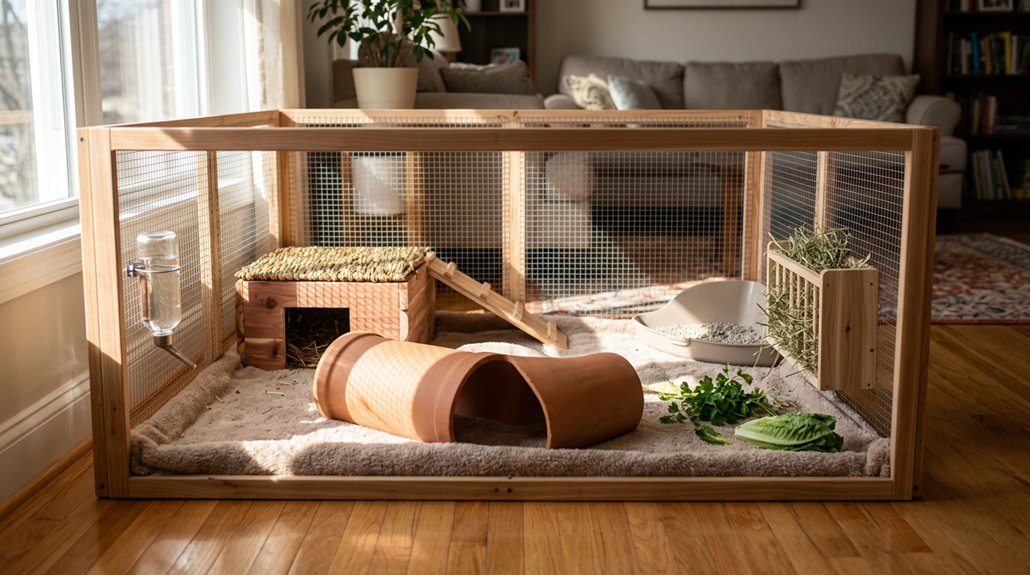
To set up the perfect rabbit habitat at home, guarantee the space is at least 10ft x 6ft x 3ft, with zones for eating, resting, and toileting for cleanliness. Use heavy gauge wire mesh for predator protection, and provide waterproof shelters and enrichment items. Regularly change bedding and monitor health with fresh vegetables and water. Address their social needs with companionship. There’s more to learn about optimizing your rabbit’s habitat for health and happiness.
Key Takeaways
- Ensure habitat size of at least 10ft x 6ft x 3ft for natural rabbit behaviors.
- Implement predator-proofing and weather protection with heavy gauge wire mesh and waterproof shelters.
- Design distinct zones for eating, resting, and toileting to maintain cleanliness.
- Incorporate hiding spots, toys, and climbing platforms for enrichment and mental stimulation.
- Provide fresh vegetables, clean water, and monitor rabbit health and behavior for well-being.
Designing the Ideal Living Space for Your Rabbits
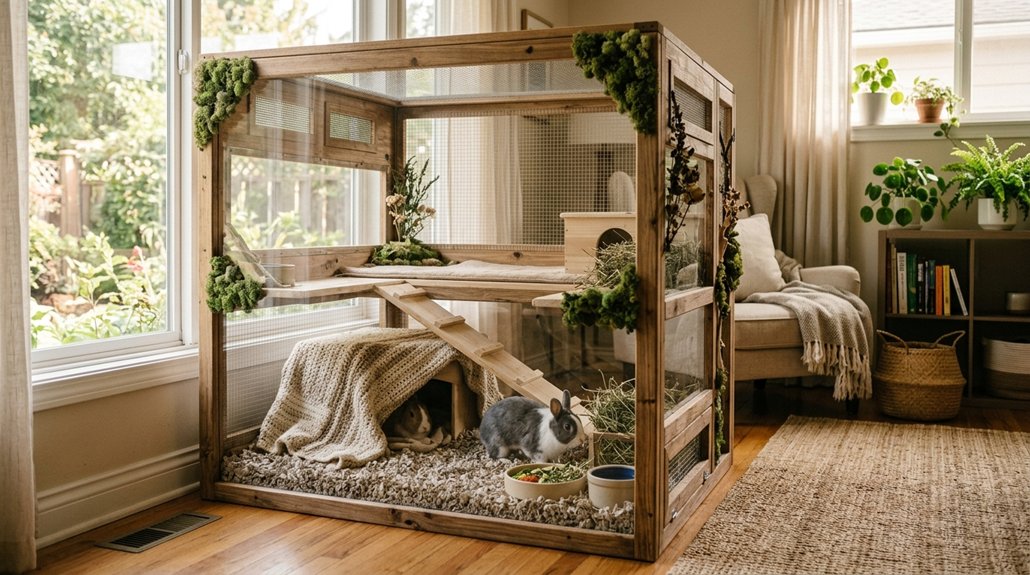
When you’re designing the ideal living space for your rabbits, it’s critical to guarantee the environment meets their physical and psychological needs. A minimum habitat layout of 10ft x 6ft x 3ft assures sufficient rabbit activity, allowing movement, such as running and jumping. It’s essential to structure separate zones within the habitat for eating, resting, and toileting, promoting cleanliness and comfort. A sturdy, elevated shelter that’s waterproof is crucial to protecting them from ground dampness, maintaining health. Continuous access to a exercise space is important, encouraging fitness and mental stimulation. Incorporate hiding places to assure security, accompanied by enrichment elements like toys, tunnels, and climbing platforms, facilitating natural behaviors and engagement. This meticulous design sustains ideal rabbit welfare.
How to Protect Your Rabbits From Predators and Harsh Weather
You’ll need to prioritize a robust shelter design using heavy gauge wire mesh raised off the ground, providing key protection against predators and damp conditions. Implement rigorous predator-proofing techniques such as inspecting and reinforcing escape points to guarantee no breach occurs, safeguarding your rabbits effectively. For weather protection, invest in waterproof shelters and shade structures to mitigate harsh environmental factors like rain and extreme heat, maintaining ideal conditions for rabbit well-being.
Secure Shelter Design
Creating a secure shelter for your rabbits necessitates meticulous attention to design elements that address both predator protection and harsh weather conditions. Elevating the shelter above ground level is vital to prevent dampness and deter ground-level predators. Incorporating shelter elevation in conjunction with robust ventilation systems guarantees a dry, predator-resistant environment. Proper ventilation systems are fundamental for maintaining airflow, reducing humidity, and expelling odors, thereby enhancing rabbit health and comfort. Waterproofing materials are essential for standing against inclement weather, while the application of heavy gauge wire mesh fortifies the structure against predator intrusion. It’s imperative to design the base to resist infiltration by burrowing animals, while providing shaded exercise zones further guarantees protection from excessive heat, reducing stress and promoting well-being.
Predator Proofing Tips
While setting up a secure environment for your rabbits, it’s vital to focus on predator-proofing techniques that also safeguard against adverse weather. Employing robust rabbit proofing techniques will protect your pets from both predators and harsh elements. An ideal enclosure incorporates the following strategies:
- Utilize heavy gauge wire mesh with strong fastenings as effective predator deterrents.
- Elevate the shelter off the ground to minimize moisture accumulation and deter burrowing predators.
- Implement underground barriers like buried wire or concrete to prevent escape through digging.
Ensure you routinely inspect the habitat for signs of wear or potential entry points. Reinforce any weak spots promptly to maintain a consistent, secure environment for your rabbits. These measures play an important role in safeguarding your rabbits’ wellbeing.
Weather Protection Essentials
To effectively protect your rabbits from predators and harsh weather, it’s essential to integrate weather protection essentials into their habitat design. Guarantee the main shelter is elevated to mitigate dampness, fundamental for humidity control. Use heavy gauge wire mesh to fortify against predators while allowing ventilation. This guarantees robust protection and aids in temperature regulation by promoting airflow. The shelter must be waterproof and insulated with materials that stabilize internal temperatures, guarding against climatic extremes. Shade is important in exercise areas as it prevents overheating, maintaining a healthy body temperature. Regular inspections for escape routes and reinforcing potential digging spots are necessary. Such measures prevent flooding and restrict predator access, imperative for a secure rabbit habitat.
Creating a Comfortable and Stimulating Environment
Although it may seem straightforward, establishing a rabbit habitat that effectively balances comfort and stimulation requires careful consideration of space, materials, and environmental enrichment elements. A minimum habitat size of 10ft x 6ft x 3ft is essential for a pair of rabbits, facilitating hopping and natural behaviors like binkies and zoomies. Integrate diverse hiding spots, such as cardboard boxes and tunnels, to satisfy their instinctual need for security. Environmental enrichment plays a fundamental role in preventing boredom, and as a result, enhancing welfare.
Establishing a rabbit habitat requires careful balance of space, materials, and enrichment for optimal comfort and stimulation.
- Place interactive toys like willow balls for mental stimulation.
- Include flatweave rugs allowing activity while being easy to clean.
- Guarantee regular bedding changes with dust-free straw and absorbent litter for hygiene.
Implementing these elements provides a thorough approach to rabbit care.
Introducing Your Rabbits to Companionship
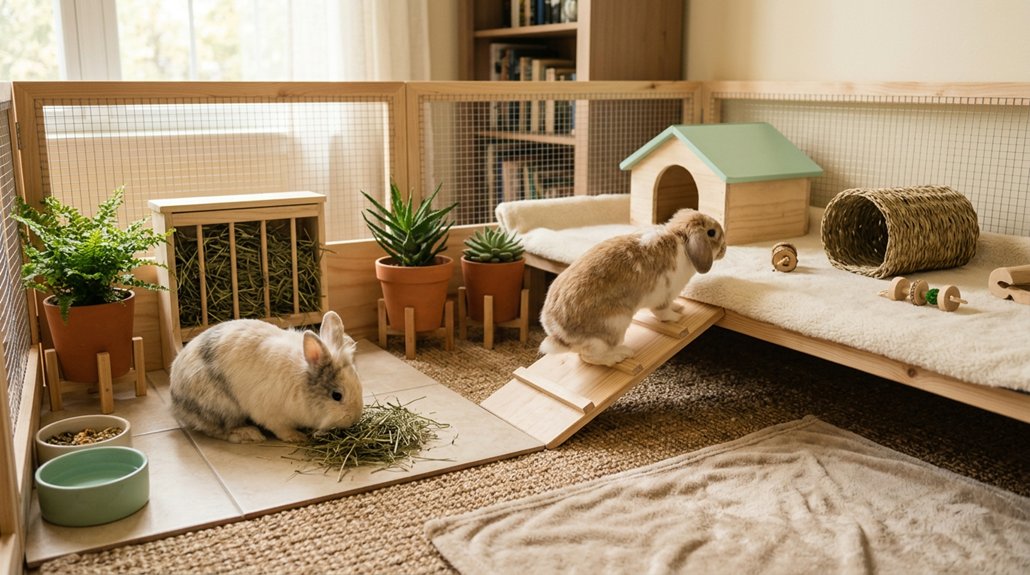
Establishing a rabbit habitat integrates both comfort and stimulation, supporting their well-being. Social creatures by nature, rabbits thrive with companionship. Begin with scent swapping as an initial bonding technique. Place shared items, like toys or bedding, in separate enclosures to familiarize each rabbit with the other’s scent. This gradual olfactory introduction can ease potential stress.
Following scent swapping, allow visually monitored interactions. Initially, keep them physically separated but within sight. Spaying or neutering is advised to diminish aggression, making bonding more successful. As familiarity grows, introduce controlled meetings in a neutral space. Carefully observe behaviors to guarantee compatibility and intervene if necessary. Regular monitoring and engagement help to cement a positive social dynamic, essential for their psychological enrichment and harmonious living.
How to Keep Your Rabbit’s Home Clean and Cozy
When maintaining a rabbit’s habitat, cleanliness is paramount for ensuring their health and comfort. Implementing efficient cleaning routines can markedly enhance the living conditions. Remove dirty bedding daily and replace it with fresh straw or hay. Clean food and water bowls using pet-safe products to prevent bacterial contamination. Examine all chew-resistant materials routinely to maintain a safe environment.
- Use dust-extracted wood-based litter pellets topped with soft straw for ideal warmth, comfort, and hygiene.
- Establish distinct zones for sleeping, eating, and toileting to streamline cleaning and create orderliness.
- Conduct a thorough scrub of the enclosure weekly, ensuring all surfaces are sanitized and dried properly to prevent odors and maintain overall sanitary conditions.
Effective habitat maintenance involves commitment to regular inspections, offering your rabbit a cozy sanctuary.
Enhancing Your Rabbit’s Diet and Health
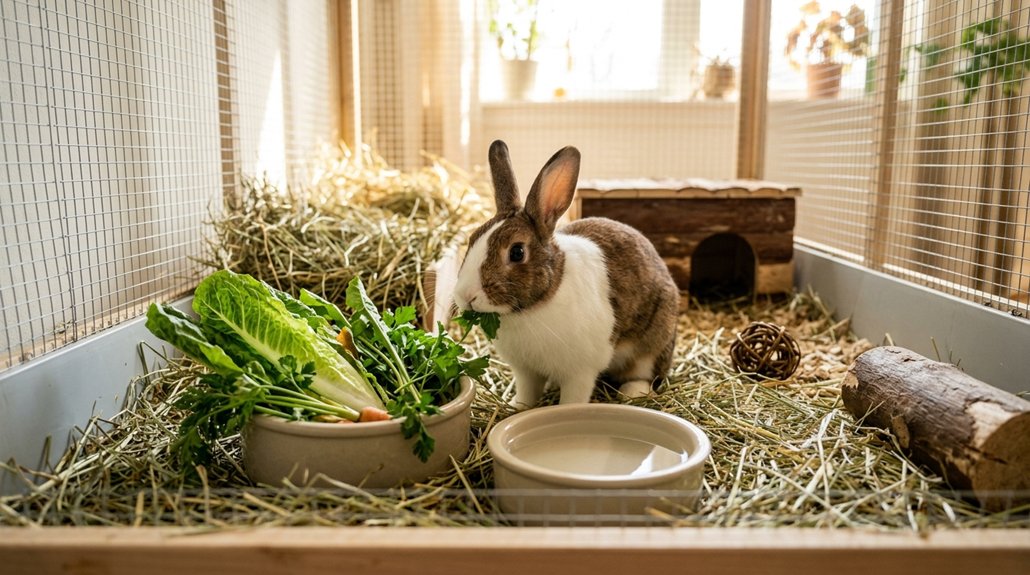
A rabbit’s diet should be meticulously structured to guarantee ideal health, particularly focusing on the fundamental role of Timothy Hay as it provides necessary fiber for digestive function and dental maintenance. Incorporate high fiber foods to support their gastrointestinal tract, prevent blockages, and make sure their teeth remain in prime condition. Gradually supplement their diet with fresh vegetables, such as romaine lettuce and parsley, which furnish essential nutrients. High-quality pellets serve to complete their nutritional intake, though portion control is imperative: administer 1/4 cup per 5 pounds of rabbit weight daily. Introduce treats sparingly, sticking to natural options like small fruits or herbs. Offer fresh, clean water in reliable containers daily to maintain hydration. Regularly monitor their weight to avert obesity and adapt dietary needs accordingly.
Creating a Safe and Stimulating Environment for Your Bunnies
While maximizing a rabbit’s diet can considerably boost their health, it’s equally important to confirm their environment meets their behavioral and physical needs. Design your rabbit’s habitat to encompass social interaction and sensory enrichment through strategic structural elements. Ascertain the minimum dimensions of 10ft x 6ft x 3ft to facilitate natural behaviors like hopping, running, and jumping. A raised shelter with heavy gauge wire mesh not only offers security but also acts as a barrier against dampness and predators.
- Integrate hiding spots such as tunnels and boxes to encourage security and natural behavior.
- Provide exercise space with toys and climbing platforms to enable physical activity.
- Utilize safe, chew-resistant materials and maintain cleanliness to prevent injuries and enhance comfort.
This holistic habitat promotes prime rabbit well-being.
Frequently Asked Questions
What Is the 3-3-3 Rule for Bunnies?
The 3-3-3 rule for bunnies outlines their adjustment period: three days to adapt, three weeks to feel comfortable, and three months to fully acclimate. Their behavior and social needs evolve with each phase, requiring patient, consistent care.
How to Make the Perfect Rabbit Habitat?
Make certain rabbits have an indoor space with 10ft x 6ft x 3ft dimensions, including waterproof shelter, resting, eating, and toileting zones. Enhance the outdoor environment with exercise areas, toys, and climbing structures for mental and physical stimulation.
How Do You Say “I Love You” in Rabbit Language?
To say “I love you” in rabbit language, mirror their behaviors: gently nudge back, do a calm blink, or sit nearby. Such intimate bunny communication tips express affection through rabbit body language, cementing trust and companionship.
Why Do Rabbits Scream at Night?
Rabbits scream at night due to fear or pain. Their nighttime behavior includes vocalizations when facing threats or discomfort, like health issues. Ensuring a secure environment and addressing any medical concerns can minimize this distressing behavior.
Conclusion
In creating the ideal rabbit habitat, some may worry it’s overly complex, but it’s essential for their well-being. By designing a space that balances safety and stimulation, you guarantee your rabbits thrive. Don’t underestimate the significance of companionship and a clean environment—it’s as critical as diet for health. Investing time in setting up their habitat leads to happier, healthier rabbits. Remember, a well-planned environment maximizes their lifespan and enriches their daily experiences.