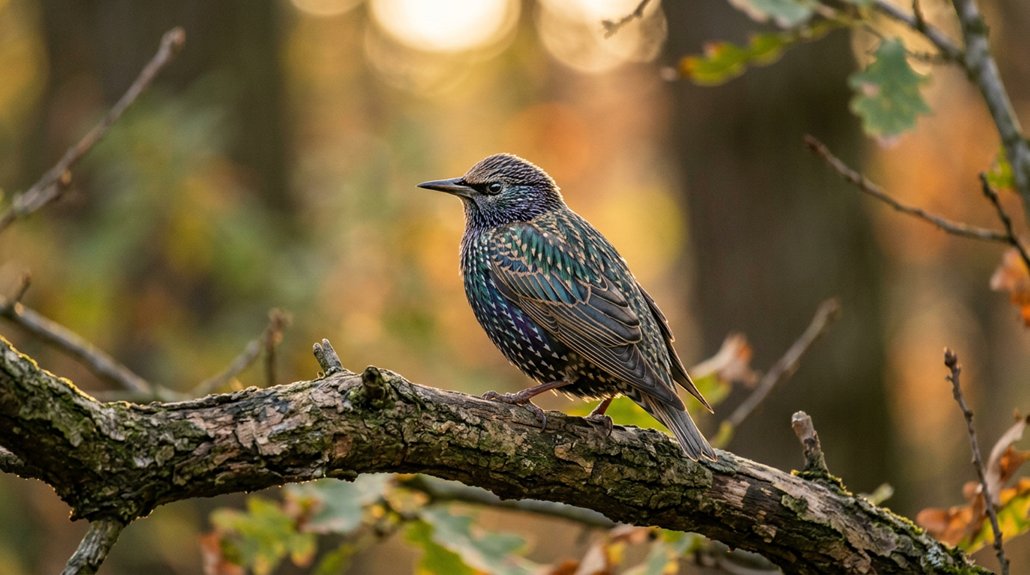
If you need a bird that can handle more solo time, you should look at naturally independent species such as finches, canaries, doves, budgies, parrotlets, Pionus parrots, or Senegal and Meyer’s parrots. These birds are generally quieter, calmer, and less attention-seeking than many other pet parrots. Finches and doves do well with same-species companions, while budgies and parrotlets still need daily interaction and out-of-cage time. The best fit depends on your routine, and there’s more to compare.
Key Takeaways
- Finches, especially zebra finches, are highly self-sufficient and do best in pairs or small groups.
- Canaries are quiet, independent birds that usually do not need frequent handling and can live alone.
- Doves, especially diamond doves, are calm, low-contact birds that tolerate longer periods alone.
- Pionus parrots are relatively quiet and independent, and can handle part-day absences with exercise and enrichment.
- Poicephalus parrots, including Senegal and Meyer’s, are warm but self-entertaining and suit busy owners better than many parrots.
Which Birds Are Best for Busy Owners?
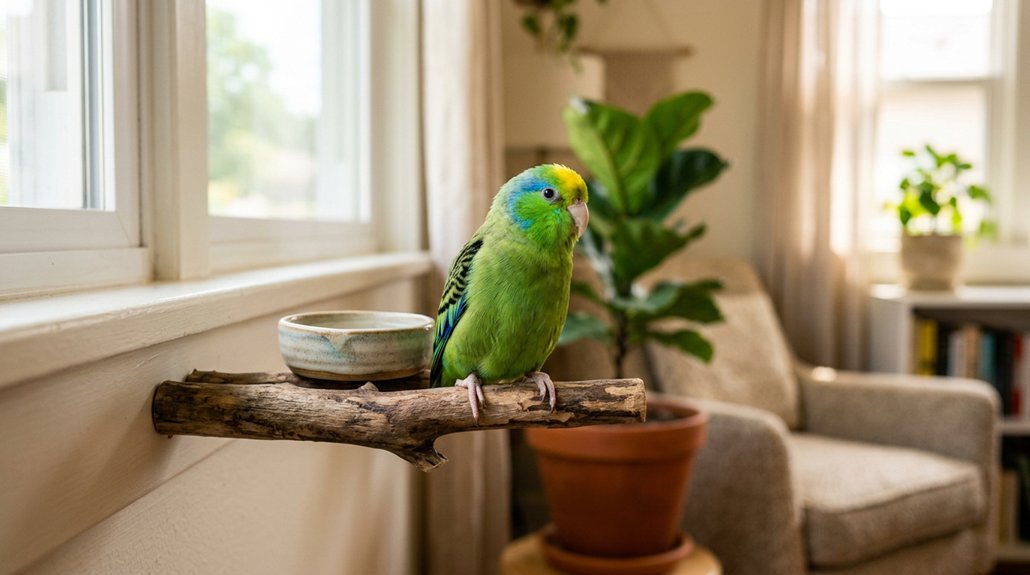
For busy owners, the best bird species are typically those that are either highly self-sufficient or can stay content with limited, predictable interaction. You’ll usually get the best fit from doves, canaries, Poicephalus parrots, Pionus parrots, or budgies and parrotlets, depending on your schedule. Doves and canaries are low-contact, observational species; they don’t demand frequent handling. Poicephalus parrots are warm but self-entertaining, and Pionus parrots tolerate part-day absences if you provide several hours of exercise when you’re home. Budgies and parrotlets can also work in apartments if you can offer daily flight time, toys, and either a companion or brief interaction. For longer absences, good travel care and reliable pet sitters are important.
Finches: The Easiest Birds to Keep
Finches are among the easiest pet birds to keep because they’re highly self-sufficient, especially when housed in pairs or small groups. You’ll see them spend much of the day foraging, preening, and interacting with cage mates, which reduces reliance on you. A spacious flight cage, daily fresh seed mixes, greens, and seed enrichment support normal activity and nutrition. Because they prefer their own species, keeping two or more together helps prevent loneliness and lowers attention-seeking calls. You won’t need extensive training; instead, provide routine observation, clean water, and periodic health checks. Their breeding behavior is usually best managed by experienced keepers, since species-specific needs vary. With proper housing and diet, many zebra finches live about 5–10 years.
Canaries: Quiet Birds for Low-Key Homes
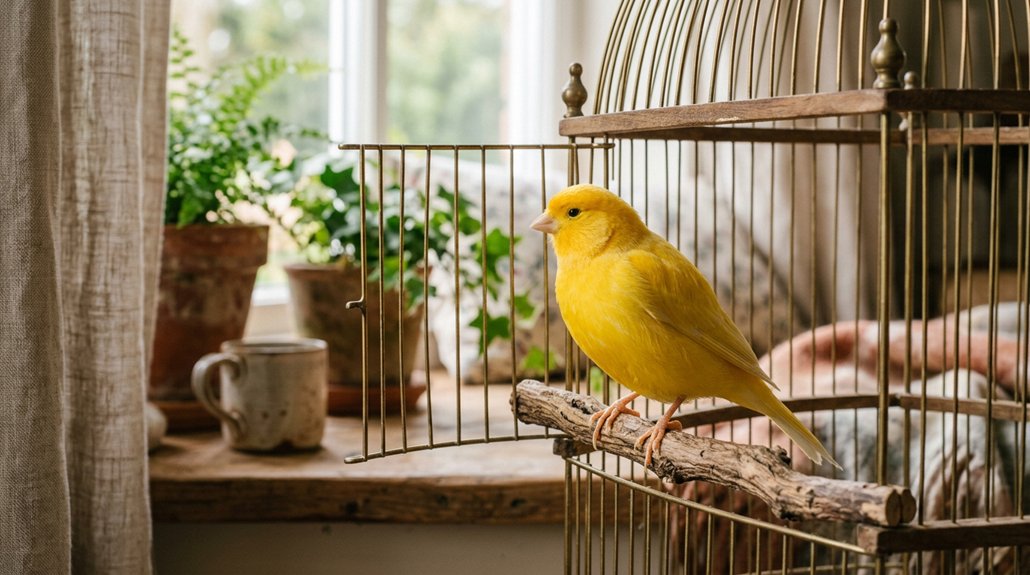
Canaries suit low-key homes because they’re quiet, self-contained birds that don’t usually seek handling or constant interaction. You can keep one alone, and it won’t need a companion to stay stable. Males are especially notable for male singing during daylight, giving you melodic output without frequent loud calls; females are usually quieter. At 4–8 inches and under 1 ounce, canaries fit efficiently into a spacious flight cage, but they still need room for movement. Provide daily flight enrichment when possible, ideally 1–2 hours, plus varied perches, toys, fresh seed, and greens. They’re observational pets, not cuddly ones, and a typical lifespan of 9–10 years means you’re choosing a long-term, lower-maintenance bird.
Doves: Gentle Birds That Need Less Attention
Doves are a good fit if you want a calm bird that doesn’t require constant attention, especially diamond doves, which are small, gentle, and known for their soft cooing and tolerance of being left alone for long periods. You’ll still need to meet their flight requirements with a large cage or aviary, because they can’t climb bars like parrots and depend on open space between perches. Ringneck doves are larger and a bit louder, but they remain relatively quiet and can live solo if housed properly. For companion selection, pair them with at least one dove of their own species to support normal social behavior. Their 8- to 15-year lifespan means you’re choosing a medium-term commitment, though daily hands-on care stays modest.
Budgies: Small Parakeets With Big Personality
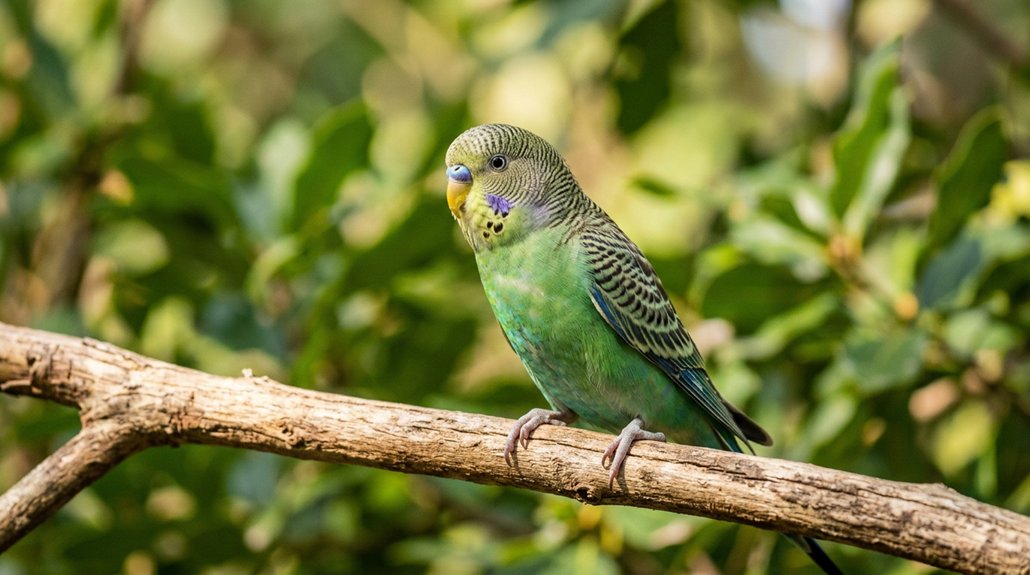
Budgies are small parrots, typically about 1 ounce and 6–8 inches long, so they fit well into compact living spaces and are relatively easy to manage. You’ll find that they’re social yet adaptable, and they can stay content alone if you provide regular interaction, toys, and foraging opportunities. With daily flight time, a spacious cage, and basic enrichment, you can support their active, independent nature without adding much complexity.
Easy Care Basics
Small parakeets like budgerigars are easy to care for when you set up their routine well: they’re only about 6–8 inches long, weigh roughly 1 ounce, and usually live 7–15 years, making them a practical choice for apartment living. Your housing setup should include perches, toys, and space for daily enrichment.
| Need | Target | Why |
|---|---|---|
| Cage size | Spacious | Prevents boredom |
| Flight time | 1 hour daily | Maintains fitness |
| Diet | Seed/pellet mix | Base nutrition |
| Vegetables | Fresh, varied | Adds micronutrients |
| Calcium | Cuttlebone | Supports health |
You’ll get the best results with short, consistent training sessions, since both sexes learn well. Use high-quality food and monitor intake. A male may mimic speech more readily, but careful observation and routine matter more for long-term care.
Friendly, Independent Nature
Although they’re compact birds, budgerigars often form strong bonds with people and can learn speech, tricks, and routine-based behaviors with consistent handling. You’ll usually see the best results when you keep bonding routines predictable and brief.
- Daily interaction: about an hour of supervised flight and direct contact supports trust.
- Social buffering: a same-species cage mate can reduce stress when you’re away.
- Structured enrichment scheduling: rotate toys, foraging tasks, and perches to limit boredom.
Males often bond faster and may learn talking behaviors more readily, but either sex can adapt well to measured attention. Compared with larger parrots, you’ll notice budgies are moderately quiet, with chirps and songs that suit apartments. Their 7–15-year lifespan means you’re managing long-term care, but the workload stays relatively low.
Parrotlets: Independent Birds for Apartments
Parrotlets are a practical choice for apartment settings because you’re working with a bird that’s only about 4–5 inches long. You’ll usually notice soft vocalizations and manageable care demands compared with larger parrots. With basic enrichment, they can stay occupied without needing constant attention.
Apartment-Friendly Size
At just 4 to 5 inches long and often under 1.5 ounces, these compact parrots are well suited to apartment life because they need relatively little cage space. You can fit a medium flight cage, and with space saving perches and compact playstands, you’ll use your floor area efficiently. Their small body mass doesn’t reduce their need for movement, though, so plan daily supervised out-of-cage time.
- Small footprint for limited rooms
- Efficient use of vertical space
- Manageable setup for enrichment
You’ll still need durable chew toys, foraging items, and rotating stimulation to prevent boredom. Because they’re intelligent and spunky, they may become destructive if underoccupied. A single parrotlet can live comfortably in an apartment when you provide structured exercise, regular interaction, and a layout that supports both containment and activity.
Soft Calls, Easy Care
Their compact size also comes with relatively soft calls, which helps keep noise levels manageable in apartment settings. At about 4 to 5 inches long and 1 to 2 ounces, you’ll find parrotlets are easier to house than larger parrots, yet they still need structured care. You can leave them alone for parts of the day if you provide quiet enrichment, soft sounding toys, and a spacious cage with chew-safe materials. They’re independent, but they’re not low-need: after training, they require several hours of supervised out-of-cage exercise daily. Regular handling helps maintain their bond with you, and a single-bird setup can work if you offer consistent interaction. A varied seed-and-pellet diet and routine veterinary checkups support long-term health and stable behavior.
Pionus Parrots: Calm and Quieter Companions
Pionus parrots are markedly quieter than many larger parrot species, including Amazons, with softer and less frequent vocalizations that make them a practical fit for apartment living. You’ll notice that their calm baseline supports effective noise management while still allowing normal social interaction.
Pionus parrots are notably quieter than many large parrots, making them a practical, apartment-friendly companion.
- Their affectionate, independent temperament helps them handle part-day solitude.
- Behavioral enrichment, including toys and foraging tasks, reduces boredom and supports welfare.
- Daily 3+ hours outside the cage help maintain physical and mental condition.
At about 8–9 ounces and 11 inches long, you’re managing a compact, long-lived bird that can exceed 30 years with proper care. For new owners, this combination of gentle demeanor and tolerance for alone time makes Pionus parrots a measured, low-demand choice.
Senegal and Meyer’s Parrots: Easygoing Pet Birds
If you’re looking for another quiet, manageable parrot species, Senegal and Meyer’s parrots fit that profile well. These small-to-medium Poicephalus birds are typically warm, affectionate, and comparatively low-key. You’ll notice they’re often self-entertaining and can tolerate being left alone for parts of the day, although they still do best with regular interaction and out-of-cage time. Senegal parrots usually weigh about 4–5 oz and measure 9–10 inches, and Meyer’s parrots are similar in size. Both can live 20–30 years. Their softer vocal behavior makes them less likely to produce frequent screaming than many conures or larger parrots, which can help in apartments. A spacious cage, foraging toys, diet enrichment, training enrichment, and daily supervised exercise support health and mental stimulation.
How to Care for Birds Left Alone
When caring for birds that spend time alone, start by choosing species with a naturally independent temperament, such as finches, canaries, Pionus, and Poicephalus parrots, since they tend to self-entertain more readily.
- Provide a spacious cage with multiple perches and safe foraging toys for environmental enrichment.
- Keep fresh food and water available, place the cage away from drafts and direct sun, and dim lights toward evening.
- Use emergency planning, a predictable routine, daily out-of-cage exercise, and focused interaction when you’re home.
You should also monitor behavior closely; individual temperament varies, and prolonged boredom can increase noise, inactivity, or feather-plucking. Pionus typically need about three hours outside the cage, and larger parrots need more.
Frequently Asked Questions
What Birds Can Be Left Alone?
You can leave quiet finches, solitary doves, budgies, canaries, Pionus parrots, and some Poicephalus parrots alone for several hours. You’ll still need daily food, water, and enrichment, plus species-appropriate cage space and social contact.
What Is the 3 3 3 Rule for Birds?
It’s a bird adjustment guideline: 3 days of stress, 3 weeks of gradual bonding, and 3 months of settling in. You’ll track behavior, follow a socialization schedule, and maintain emergency preparedness throughout.
What Bird Needs the Least Amount of Attention?
You’d likely find independent finches need the least attention, with quiet doves close behind, practically running on autopilot. Scientifically, they’re low-contact, self-entertaining birds that thrive in pairs, need modest care, and don’t demand constant handling.
What Bird Stays Alone?
You’d find canaries and budgies tolerate solitude best; a quiet parrot like a pionus or Poicephalus can handle some alone time, while a solitary finch can live singly, though pairs usually thrive more.
Conclusion
If you need a bird that can handle time alone, you should choose one with a calm temperament and moderate social needs. Finches, canaries, doves, budgies, parrotlets, Pionus parrots, and Senegal or Meyer’s parrots each offer different levels of independence. You’ll still need to provide food, water, enrichment, and a safe habitat. When you match the species to your schedule, you’re not just buying time—you’re setting up a steadier life for both of you.