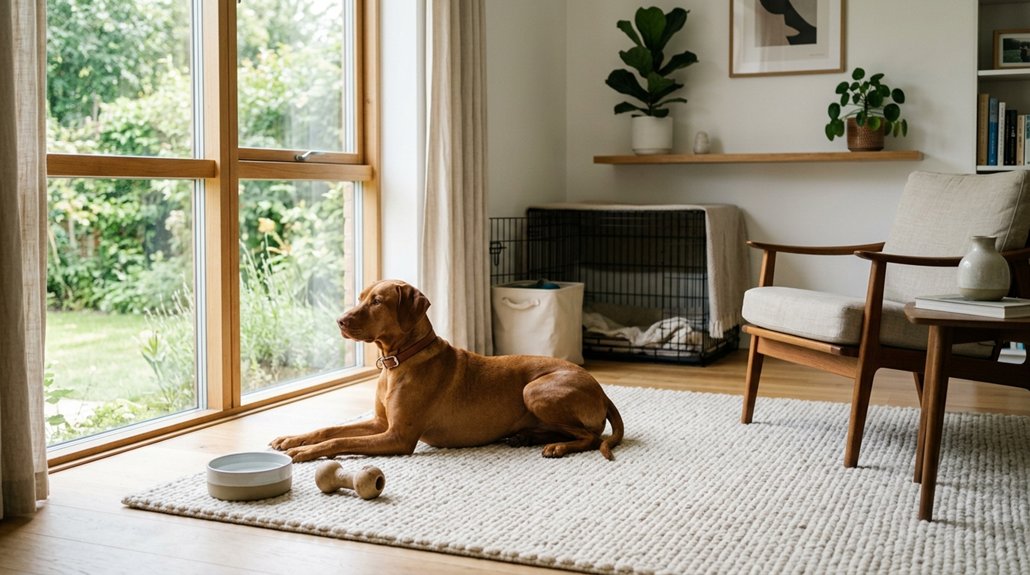
You’ll find that independent dog breeds, like the Chow Chow, Basenji, and Greyhound, thrive on autonomy and can handle solitude with minimal stress. These breeds possess self-assured temperaments, requiring less tactile interaction yet still needing grooming and cognitive engagement. Understand the significance of environmental enrichment for maintaining their well-being. Structuring your lifestyle to accommodate their unique characteristics is essential. By exploring further, you’ll gain insights into choosing the perfect independent companion for your busy life.
Key Takeaways
- Chow Chows are autonomous and can handle extended solitude with daily grooming and consistent exercise.
- Basenjis excel in low-interaction settings, known for independence and entertainment self-sufficiency.
- Greyhounds prefer quiet environments and handle long solo periods with regular exercise.
- Basset Hounds manage alone time well due to their low energy needs and calm demeanor.
- Standard Poodles adapt to solitude but require mental stimulation through engaging toys.
What Defines an Independent Dog Breed?
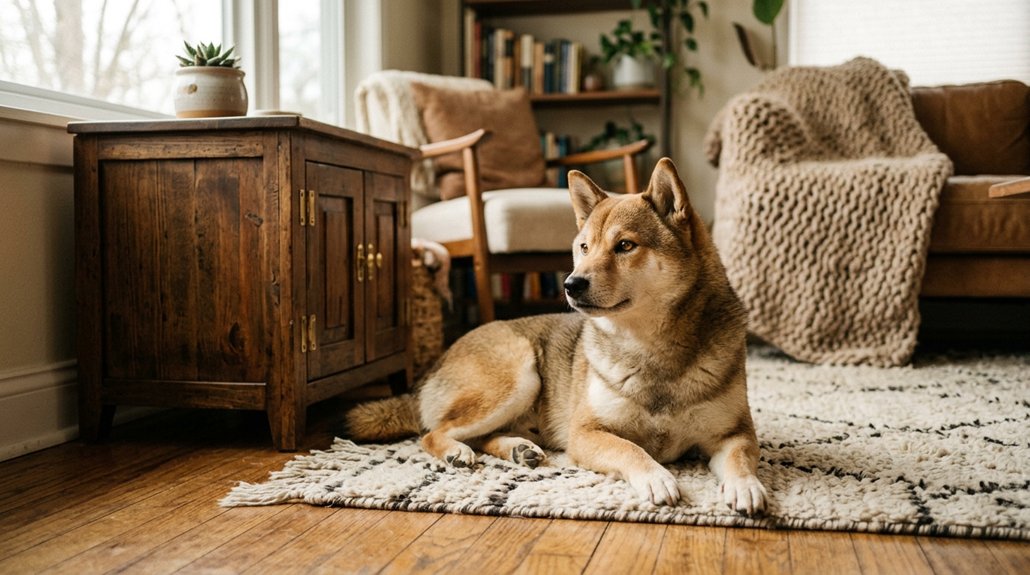
Some might wonder what truly characterizes an independent dog breed, and it’s essential to understand that these breeds possess a greater degree of autonomy compared to their more sociable counterparts. These dogs are marked by independent characteristics like self-assuredness and the intrinsic ability to experience solo comfort. Unlike more dependency-oriented dogs, they require less tactile interaction, often expressing affection in subtler forms, such as nearby presence without the need for physical cuddling.
While these breeds appreciate their solitude, it’s important to remember that they still require regular care, cognitive engagement, and measured socialization. Adaptability in solo comfort varies considerably; individual temperament greatly governs whether a dog thrives or merely copes when left alone. Consequently, personalized observation guarantees the best care for their unique requirements.
Top Independent Dog Breeds for Busy Owners
As a busy owner, you’re likely seeking dog breeds that exhibit self-sufficiency and adaptability, minimizing the demand for constant supervision. Consider breeds like the Chow Chow, with their ability to be alone for extended periods, and the Basenji, whose unique behavioral adaptations make them thrive in low-interaction environments. These breeds, along with others such as the Greyhound and Boston Terrier, naturally balance companionship and independence, ensuring a harmonious blend for those with bustling lifestyles.
Breeds With Minimal Supervision
Steering the responsibilities of a busy lifestyle often compels potential dog owners to seek breeds that require minimal supervision. When considering a dog’s ability to thrive solo, training independence and understanding solitude become paramount. Breeds like the Chow Chow excel in this domain, embracing solitude with aplomb, although they necessitate consistent exercise. The Basset Hound’s placid demeanor guarantees they handle extended solitude adeptly, aided by their low energy requisites. The Basenji, famed for its bark-free existence, epitomizes self-sufficiency. Greyhounds, despite their agility, showcase a preference for quietude, needing only periodic activity. Meanwhile, the Standard Poodle, with unparalleled intelligence, displays adaptability, thriving on mental stimulation during alone hours. Such breeds cater to the demands of bustling lives.
Managing Alone Time Well
Balancing the demands of modern life with pet ownership can be challenging, but selecting the right breed can alleviate stress. For instance, independent breeds like Chow Chows and Basset Hounds demonstrate the benefits of independence by handling alone time effortlessly, reducing owner anxiety. Scientific findings reveal that Greyhounds, thanks to their placid nature, can endure alone periods without behavioral issues. A common misconception is that all dogs suffer from isolation stress, yet breeds like the Basenji defy this notion with their minimal need for human interaction. Shiba Inus, once trained, thrive independently, contrary to popular belief of universal canine dependency. In addition, Bulldogs benefit from environmental enrichment such as toys, further facilitating effective solitary management. Choosing such breeds supports harmonious cohabitation.
Adaptable Busy Lifestyle Breeds
Many dog breeds have adapted to suit a busy lifestyle, offering unique advantages for owners with demanding schedules. Chow Chows, with their independent temperament, can comfortably endure a full workday alone, fitting seamlessly into daily routines while benefiting from a midday walk. Basset Hounds exhibit great adaptability to solitude, thriving on moderate exercise that caters to their calm nature. Basenjis display self-sufficiency, engaging in autonomous entertainment during extended separations. Standard Poodles, known for their cognitive prowess, require pre-workday mental stimulation and physical activity to manage isolation effectively. Bullmastiffs, with their docile demeanor, remain content for several hours, equipped with engaging toys. Strategically evaluating exercise needs ensures harmony between dog autonomy and owner commitments, promoting sustainable living solutions within fast-paced environments.
Behavior Traits of Independent Dog Breeds
When understanding independent dog breeds, you’ll notice they possess unique behavioral traits such as valuing personal space and displaying affection on their terms. These breeds, including the Shiba Inu and Basenji, exhibit innate adaptability to alone time, often engaging in autonomous activities without distress. It’s essential to recognize that, despite this independence, they require consistent care and interaction to guarantee psychological and physiological health.
Valuing Personal Space
Though companion dogs are traditionally seen as sociable creatures, certain breeds demonstrate a marked preference for personal space, distinguishing themselves through behavior traits indicative of independence. Breeds such as the Chow Chow and Greyhound have evolved to appreciate alone preferences, spending time in solitude without emotional distress. The Shiba Inu and Basenji, with their strong-willed, cat-like personalities, exemplify an innate comfort with solitude, yet still require mental and physical engagement. The Chinese Shar-Pei and Afghan Hound exhibit loyalty, choosing interaction based on individual volition while needing consistent socialization to avert aloofness. Meanwhile, the Basset Hound’s calm demeanor supports lengthy solitary naps, aiding in managing alone time effectively. Finally, breeds like the Basenji and Standard Poodle thrive when provided with mental stimulation.
Affection on Their Terms
Several dog breeds exemplify affection that aligns with their innate independence, often preferring to express closeness on their own terms. Breeds like the Chow Chow and Greyhound exhibit selective engagement, a demonstration of their unique affection styles. These breeds often form bonds through connection nuances, marking their territory of comfort and self-determined interaction periods. You’ll observe how a Basset Hound, with its unruffled demeanor, enjoys serene companionship, while a Shiba Inu or Basenji opts for mental stimulation through self-directed play. Their intelligent, strong-willed nature doesn’t negate their potential for deeply rooted connections. Meanwhile, aloof breeds like the Afghan Hound and Borzoi may show subtle attachment displays, emphasizing the necessity of understanding individual expressions of canine affection.
Adaptability to Alone Time
Independent dog breeds exhibit a fascinating balance between their innate desire for affection and their ability to thrive in solitude. Their independent temperament makes them well-suited for alone time, provided that effective alone time strategies are implemented. Consider the following:
- Chow Chow and Basset Hound: These breeds exhibit low-maintenance behaviors, making them comfortable for several hours when left alone due to their calm demeanor.
- Basenji and Greyhound: Thriving in solitude, they require minimal interaction, though regular exercise is essential for maintaining mental wellness.
- Great Pyrenees and Standard Poodle: Capable of managing being alone for extended periods, up to eight hours, they benefit from mental stimulation and exercise to sustain overall well-being.
Their adaptability to alone time is notably enhanced through consistency and effective training.
Care Essentials for Independent Dog Breeds
While caring for independent dog breeds involves addressing their unique behavioral traits, it’s equally important to meet their specific physical and mental needs to guarantee ideal well-being. Grooming needs are pivotal; breeds like the Chow Chow necessitate daily brushing due to their dense coat which can harbor debris and lead to dermatological issues if not properly maintained. Beyond physical care, mental stimulation is a cornerstone. Engaging toys or puzzle feeders are scientifically validated methods for activating cognitive functions. These stimulate problem-solving abilities, consequently keeping the dog intellectually engaged and reducing stressors associated with being left alone. Gradual exposure to solitary periods expands their adaptability window, mitigating risks of separation anxiety. Prioritizing these aspects harmonizes their robust independence with peak health and happiness.
How to Socialize Your Independent Dog
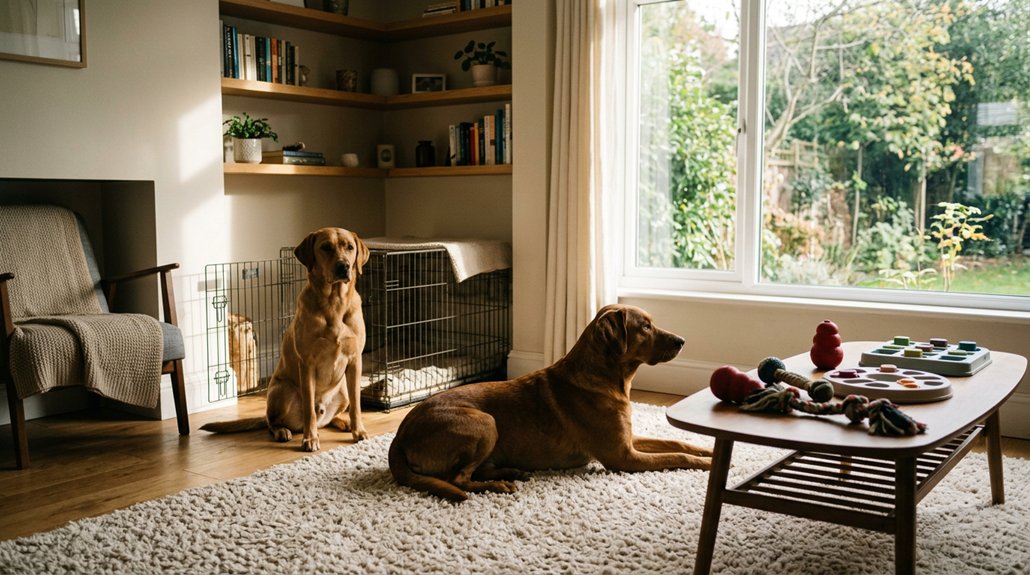
Although socializing your independent dog can present challenges, starting the process early is paramount for ideal development. Implementing strategic socialization techniques, you can enhance your dog’s confidence and reduce potential anxiety. Consider these steps:
- Gradual Exposure: Begin with controlled introductions to diverse environments and gradually increase exposure. Breeds like Shiba Inus benefit considerably from this method, feeling secure as new experiences are introduced incrementally.
- Positive Reinforcement: Use this technique to reward calm behavior, fostering a positive association with new stimuli. Independent breeds like Chow Chows respond well when calmness is acknowledged with treats or praise.
- Regular Social Interactions: Schedule structured playdates or outings, which enhance social skills in a controlled setting. Consistency in socialization efforts will solidify adaptability and confidence in breeds with strong independence.
Choosing the Right Independent Dog for Your Lifestyle
How can you determine which independent dog breed aligns best with your lifestyle? Begin by evaluating lifestyle compatibility. Analyze your routine: do breeds like the Greyhound or Chow Chow suit busy schedules with their ability to be alone, or do you prefer a self-sufficient Basenji? Remember, lifestyle compatibility extends beyond busyness; consider how much exercise space you offer—a lounging Greyhound still demands regular physical exertion.
Owner responsibility involves recognizing the breed’s inherent traits, like the strong-willed Shiba Inu or Akita. Early training can mitigate potential dominance issues. Opt for adaptable breeds such as the Standard Poodle for balanced companionship amid extended absences. Carefully evaluate your capacity for commitment to guarantee a harmonious coexistence with your chosen independent canine.
Frequently Asked Questions
Which Dog Breed Can Be Left Alone All Day?
Independent breeds like Chow Chows and Basset Hounds handle alone time effectively due to their evolved solitary tendencies and low separation anxiety. Ascertain proper enrichment and care management to maintain their well-being during extended solitude periods.
What Is the 7 7 7 Rule for Dogs?
Imagine your dog’s solitude as a dance—balance is key. The 7-7-7 rule helps counter separation anxiety. Training tips: maintain social interaction and mental stimulation to guarantee psychological homeostasis, preventing behavioral pathology linked to extended isolation.
What Annoys Dogs the Most?
What annoys dogs the most is unpredictable stimuli and lack of mental stimulation. Recognize barking triggers like loud noises and prevent boredom by providing appropriate boredom remedies, such as interactive toys, to maintain their psychological equilibrium and mitigate stress responses.
What Is the 3-3-3 Rule With Dogs?
The 3-3-3 rule outlines the acclimation process for dogs after adoption: first three days of stress-induced separation anxiety, three weeks of gradual trust-building, and three months for full behavioral adjustment showcasing true dog behavior and personality.
Conclusion
In choosing an independent dog breed, you’re embracing a companion akin to Odysseus on his solitary quest—self-sufficient yet loyal to the core. These breeds embody autonomy, requiring minimal supervision yet thriving through structured socialization. By understanding their ethology and aligning care essentials with scientific rigor, you both benefit. Evaluate lifestyle needs to find a canine that complements your daily rhythm, ensuring a bond as steadfast as nature itself, grounded in mutual respect and understanding.